
Therapy Near Me
Australia-Wide Psychology & Counselling Services
Affordable evidence-based mental health therapy for individuals, families, and communities. Medicare rebates and NDIS funding available.
Why Choose Therapy Near Me?
Therapy Near Me has registered psychologists, accredited counsellors, behaviour support practitioners and speech therapists available for in-clinic, telehealth, and at-home services. We are available across major cities and regional areas.
Nationwide Therapy Coverage
In-clinic services across Melbourne, Sydney, Brisbane, Canberra, Adelaide, Parramatta, Southbank, and the Gold Coast, with telehealth available Australia-wide.
Flexible Appointment Options
Choose in-clinic sessions at locations across Australia, secure telehealth via video or phone, or at-home services for eligible NDIS participants.
Compassionate Care
We provide a safe, non-judgmental environment where you can discuss your concerns openly. Client information is handled in accordance with Australian privacy obligations.
AHPRA-Registered Psychologists
Our psychologists are registered with the Psychology Board of Australia through AHPRA and use evidence-based therapeutic approaches.
Evidence-Based Therapy
Our practitioners may draw on established, research-informed approaches such as CBT, ACT, trauma-informed care, behavioural strategies, exposure-based approaches, mindfulness-based strategies and DBT-informed skills. DBT-informed support means selected skills and principles may be used where appropriate; it is not the same as a comprehensive DBT program unless this has been specifically assessed, planned and offered by a suitably trained practitioner.
Treatment approach, session format and goals are discussed with the practitioner and depend on clinical suitability, practitioner scope, client preference, risk factors and funding requirements.
Therapy for Every Stage of Life
Our psychology and counselling services support individuals at every life stage, from early childhood through to later life.

Children & Adolescents
Adults
Psychology and counselling for adults may support anxiety, stress, trauma-related concerns, grief, relationship difficulties, workplace issues, life transitions, self-esteem and emotional wellbeing. The most suitable practitioner depends on presentation, goals, risk level and scope of practice.

Seniors
Mental health support for older Australians may include grief and loss, adjustment, social connection, life transitions, mood concerns, carer stress and wellbeing strategies. Some concerns may also require GP or specialist medical review.

NDIS Participants
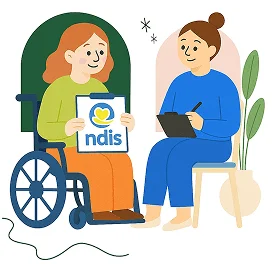
NDIS-funded supports may include psychology, counselling, behaviour support, speech therapy, early intervention and support coordination where the support is reasonable and necessary and related to the person’s disability support needs. Therapy Near Me currently supports plan-managed and self-managed NDIS participants. NDIA-managed participants should confirm provider registration requirements before booking.
Our Therapy Services
Therapy Near Me provides psychology, counselling, behaviour support, speech therapy and related supports across a range of mental health, developmental, communication, disability and wellbeing needs. Services are delivered by practitioners working within their qualifications, registration, accreditation and scope of practice. Clinical suitability, risk, goals, location, funding type and referral requirements are considered before a practitioner is matched.
Support for generalised anxiety, panic attacks, social anxiety, phobias and excessive worry. Approaches may include CBT, ACT, exposure-based strategies, mindfulness-based strategies and practical coping skills, depending on clinical suitability.
Support for depression, low mood, motivation, emotional withdrawal and mood-related concerns. Approaches may include CBT, behavioural activation, interpersonal strategies, mindfulness-based approaches and relapse-prevention planning.
Counselling may support workplace stress, burnout, grief, life transitions, relationship stress, self-esteem, parenting stress and coping skills. Counsellors work within their accreditation, training and scope of practice and do not provide medical diagnosis.
Therapy Near Me provides neurodiversity-affirming support for autistic children, teenagers and adults. Depending on each person’s needs and goals, support may focus on emotional regulation, communication, sensory needs, daily routines, social participation, confidence and family guidance. Our practitioners work collaboratively with each person and, where appropriate, their family or support network to develop practical strategies that respect individual preferences, autonomy and strengths.
Support for ADHD may include psychoeducation, CBT-informed strategies, skills training, behaviour strategies, parent guidance, school-related strategies and support with routines and emotional regulation. ADHD assessment and diagnosis must be completed by appropriately qualified practitioners and may require GP, paediatrician, psychiatrist or clinical psychology involvement.
Speech therapy may support communication, speech clarity, language, fluency, AAC, social communication and functional communication goals. Swallowing or dysphagia concerns must only be handled by an appropriately qualified speech pathologist and may require medical referral.
Relationship counselling may support communication, conflict patterns, separation adjustment, pre-marriage counselling and relationship stress. It is inclusive of diverse relationship structures and identities. It is not legal, financial, mediation or family law advice. Where domestic violence, coercive control or safety risk is present, joint sessions may not be clinically appropriate and safety planning or specialist support may be required.
Trauma-informed therapy may support post-traumatic stress, adjustment difficulties and trauma-related symptoms. Approaches may include TF-CBT, EMDR, stabilisation strategies, grounding, psychoeducation and trauma-informed care where clinically suitable. Acute risk, severe dissociation, psychosis, unsafe home environments or crisis presentations may require urgent or specialist care.
Online Therapy and Telehealth Psychology Services
Telehealth allows many Australians to access therapy by secure video or phone without travelling to a clinic. Telehealth sessions must meet the same privacy, consent, documentation and professional standards as in-clinic appointments. Suitability depends on the person’s goals, risk level, therapy type, access to a private space, internet or phone stability and practitioner scope.
Access Therapy From Anywhere
Whether you are in a city, a regional town, or a remote area, telehealth removes the barrier of distance. No travel, no waiting rooms, and flexible scheduling including after-hours options where available.
Secure and Confidential Therapy
Sessions are conducted through a secure telehealth platform. Information is handled in accordance with Australian privacy obligations. Sessions are not recorded without consent. Clients should use a private and safe location where they can speak freely.
Online Therapy Appointments at Any Time
Online booking requests can be submitted at any time through the booking form. This does not mean clinical sessions are available at all times. Appointment times depend on practitioner availability, location, funding type and clinical suitability.
At-Home Therapy for NDIS
At-home therapy is available for eligible NDIS participants in selected service areas. Travel charges may apply. Contact our intake team to confirm availability in your area.
When Telehealth Therapy May Not Be Suitable
Telehealth therapy may not be suitable where there is immediate danger, active suicide risk, severe dissociation, acute psychosis, coercive control, domestic violence risk, unsafe home circumstances or no private space for the session. In these situations, the practitioner may recommend in-person care, GP review, emergency support or another clinically appropriate pathway.
How To Start Therapy With Us
Getting started with therapy at Therapy Near Me is straightforward.
1
Book Online or Refer
Book an appointment or submit an NDIS referral through our referral form. You can also call our intake team on 1800 632 763.
2
We Recommend a Suitable Therapist
Our intake team will review your needs and preferences and recommend a suitable Therapy Near Me practitioner.
3
Begin Therapy
Your first session focuses on understanding your situation and goals. Your practitioner will explain their recommended approach and develop a plan tailored to you.
What Are Psychology and Counselling Services?
Psychology and counselling services provide professional support for mental health, emotional wellbeing, behaviour, relationships, adjustment and life stress. In Australia, psychologists are regulated health professionals registered with the Psychology Board of Australia through AHPRA. Counsellors may hold accreditation through professional bodies such as the Australian Counselling Association or PACFA.
A registered psychologist can provide psychological assessment and evidence-informed therapy for a range of mental health and behavioural concerns. Counsellors can provide therapeutic support for personal, relational, emotional, workplace, grief, adjustment and wellbeing concerns, depending on their training, accreditation and scope of practice.
Therapy Near Me supports individuals, families and NDIS participants through telehealth, in-clinic and selected at-home services. The right provider and format depend on the person’s needs, risk level, funding type, location and clinical suitability. Some presentations may require GP, paediatrician, psychiatrist, speech pathology, occupational therapy or multidisciplinary review.
verified
Crisis and emergency support
If you or someone else is in immediate danger, has attempted suicide, taken an overdose or cannot be kept safe, call Triple Zero (000) immediately.
For 24/7 mental health crisis support in Australia:
• Lifeline: call 13 11 14, text 0477 13 11 14 or use Lifeline online chat.
• Suicide Call Back Service: call 1300 659 467.
• If domestic, family or sexual violence is involved, contact 1800RESPECT on 1800 737 732.
Therapy Near Me is not an emergency or crisis response service.
What Clients Can Expect at Therapy Near Me
Our intake team asks about your goals, location, funding type, preferred appointment format and practitioner preferences so we can help identify a suitable option.
Depending on availability and clinical suitability, appointments may be available by telehealth, in clinic or at home for eligible NDIS participants in selected service areas.
We provide clear information about private fees, Medicare rebate requirements, NDIS plan-managed and self-managed funding and referral documents before appointments are confirmed.
Meet Some of Our Therapists
Our team includes AHPRA-registered psychologists and accredited practitioners available for in-clinic, telehealth, and at-home appointments across Australia. Below are some practitioners who currently have availability.

Behaviour Support Practitioner
Victoria is an NDIS-approved behaviour support practitioner with extensive experience supporting children, teens, and adults with autism, ADHD, and complex behaviours. She develops evidence-based Positive Behaviour Support plans and works closely with families and support teams.



Behaviour Analyst
Credentials: Board Certified Behaviour Analyst / BCBA
Mohamed is a Board Certified Behaviour Analyst with a Master’s in Professional Behaviour Analysis and international experience in autism and developmental disabilities. He specialises in Functional Behaviour Assessments, Positive Behaviour Support plans, and parent training.

Psychologist
AHPRA Number: PSY0001373322
Ross has over 25 years’ experience as a psychologist across a number of industries in both the public and private sectors. He provides psychological support for presentations including depression, anxiety, phobias, work-related stress, post-traumatic stress, autism, ADHD, substance abuse, addictions, sleep disorders, workplace conflict, relationship difficulties, financial difficulties, grief and loss, pain management, vocational guidance, and parenting difficulties.

Psychologist
AHPRA Number: PSY0002124836
Nadia is a bilingual English and Spanish psychologist with more than 7 years’ clinical and hospital experience. She is trained in CBT, DBT, and trauma-informed approaches, and supports adults aged 18+ with trauma, anxiety, and mood difficulties.

Psychologist
AHPRA Number: PSY0001911815
Alyson is a trauma-informed psychologist with more than 15 years’ experience across TAFE, headspace, private practice, and community services. She holds a BSc in Psychology, a BA in Anthropology, and a Postgraduate Diploma in Psychology, and is a Board-Approved Supervisor.

Counsellor & Social Worker
Registration: ACA Level 2 Member, Membership No. 22399
Jimmy is an ACA-registered counsellor and social worker with more than 10 years’ frontline experience in disability, aged care, trauma, and community mental health. He holds a Bachelor of Social Work and is completing a Master of Counselling.

Behaviour Support Practitioner
Lidija is an NDIS behaviour support practitioner with a Diploma of Counselling, Certificate IV in Alcohol and Other Drugs, and advanced training in NLP and hypnotherapy. She has strong experience in disability and community services, blending behaviour support with counselling and mindset coaching.

Speech Pathologist
Shine is a speech therapist supporting children with communication, early intervention, AAC, and functional communication goals. She may be suitable for children with developmental delays, autism-related communication needs, and paediatric speech or language goals, subject to availability and clinical suitability.

Psychologist
AHPRA Number: PSY0002815041
Eamon brings experience from private-clinic, school, community and Telehealth psychology settings. In postgraduate placements he worked with adults and children through therapy, clinical interviews, triage, risk management and cognitive/ADHD assessment, and he facilitated an eight-week group-based DBT skills program. He has also liaised with GPs, case workers, AOD services, parents, guardians, teachers and multidisciplinary teams to support continuity of care.

Provisional Psychologist
AHPRA Number: PSY0002928131
Melissa Chrys is a Provisional Psychologist with experience across community mental health, forensic, education and community-support settings.
This practitioner is currently completing onboarding with Therapy Near Me. They are not currently providing psychology services or accepting Therapy Near Me clients. Their profile and appointment availability will be updated once the required supervised-practice arrangements have been confirmed.

Psychologist
AHPRA Number: PSY0002728765
Bharanika Amaresan is a psychology practitioner with experience supporting children, adolescents and adults across NDIS and private settings. Her background includes work with autism, ADHD, intellectual disability, anxiety, depression and mood-related difficulties, together with CBT, ACT-informed, DBT skills-based, psychoeducational and mindfulness approaches.

Provisional Psychologist
AHPRA Number: PSY0004086713
Josefina Ewertz Falcone is a Provisional Psychologist with a psychology degree from Pontificia Universidad Católica de Chile and a strong background in People & Culture, organisational development and competency-based assessment.
This practitioner is currently completing onboarding with Therapy Near Me. They are not currently providing psychology services or accepting Therapy Near Me clients. Their profile and appointment availability will be updated once the required supervised-practice arrangements have been confirmed.

Provisional Psychologist
AHPRA Number: PSY0004085818
Jean is a Melbourne-based provisional psychologist with experience across assessment, therapy, EAP, school and Telehealth settings.
This practitioner is currently completing onboarding with Therapy Near Me. They are not currently providing psychology services or accepting Therapy Near Me clients. Their profile and appointment availability will be updated once the required supervised-practice arrangements have been confirmed.

Provisional Psychologist
AHPRA Number: PSY0002937299
Lauren Durbridge is a Provisional Psychologist with postgraduate training in psychological assessment, clinical interviewing, risk assessment, case formulation and treatment planning.
This practitioner is currently completing onboarding with Therapy Near Me. They are not currently providing psychology services or accepting Therapy Near Me clients. Their profile and appointment availability will be updated once the required supervised-practice arrangements have been confirmed.

Provisional Psychologist
AHPRA Number: PSY0002929312
Dante Martino is a Provisional Psychologist with a background spanning professional psychology, neuroscience, research, psychometrics, crisis support and university teaching.
This practitioner is currently completing onboarding with Therapy Near Me. They are not currently providing psychology services or accepting Therapy Near Me clients. Their profile and appointment availability will be updated once the required supervised-practice arrangements have been confirmed.

Provisional Psychologist
AHPRA Number: PSY0004010699
Ana has experience providing psychological assessment and intervention across private practice, NDIS and telehealth settings. She supports people presenting with anxiety, depression and mood concerns, workplace stress, adjustment difficulties, life transitions, interpersonal stressors and emotional regulation challenges.
Provisional Psychologist
AHPRA Number: PSY0004010131
Divya Sabu is a Melbourne-based provisional psychologist with experience supporting children and adolescents in education settings.
This practitioner is currently completing onboarding with Therapy Near Me. They are not currently providing psychology services or accepting Therapy Near Me clients. Their profile and appointment availability will be updated once the required supervised-practice arrangements have been confirmed.

Provisional Psychologist
AHPRA Number: PSY0004022354
Stephanie Favorito is a provisional psychologist based in Western Melbourne. Her postgraduate training and placement experience include individualised psychology sessions in a school setting, using evidence-based therapeutic approaches and adapting treatment plans to the needs of the client.
This practitioner is currently completing onboarding with Therapy Near Me. They are not currently providing psychology services or accepting Therapy Near Me clients. Their profile and appointment availability will be updated once the required supervised-practice arrangements have been confirmed.
We believe cost should never be a barrier to therapy. Our rates remain transparent and below national standards.

|
Funding / Client type
|
Service
|
Rate
|
Rebate / Notes
|
|---|---|---|---|
|
Private (self-funded)
|
Psychology (Registered Psychologist)
|
$195
|
Medicare rebate: $101.55 for a 50+ minute session
|
|
Private (self-funded)
|
Clinical Psychologist
|
$240
|
Medicare rebate: $149.05 for a 50+ minute session
|
|
Private (self-funded)
|
Counselling
|
$175
|
No Medicare rebate (private health extras may apply depending on fund).
|
|
Private (self-funded)
|
Speech Pathology
|
$193.99
|
Some clients may be eligible for a Medicare rebate (up to 5 sessions per year) through a GP plan.
|
|
NDIS plan-managed or self-managed
|
Psychology (NDIS-funded)
|
NDIS Price Limit Rate
|
Billed at the current NDIS price limit for the applicable psychology item.
|
|
NDIS plan-managed or self-managed
|
Behaviour Support
|
NDIS Price Limit Rate
|
Billed at the current NDIS price limit for the applicable behaviour support item
|
|
NDIS plan-managed or self-managed
|
Speech Pathology
|
NDIS Price Limit Rate
|
Some clients may be eligible for a Medicare rebate (up to 5 sessions per year) through a GP plan.
|
NDIS funding can only be used where the support is reasonable and necessary, related to the participant’s disability support needs and included in the participant’s plan. Therapy Near Me can assist plan-managed and self-managed participants. NDIA-managed participants should confirm provider registration requirements before booking. The NDIA or plan manager makes the final funding decision.
Medicare rebates available for up to 10 sessions/year with a GP Mental Health Treatment Plan.
Medicare Rebates & NDIS Funding Options for Therapy
Therapy Near Me provides clear information about Medicare rebates, private fees, and NDIS plan-managed or self-managed funding options. Our intake team can help you understand which pathway may apply before your first appointment.

Medicare Psychology Rebates
Eligible clients may be able to claim Medicare rebates for psychology sessions with a valid Mental Health Treatment Plan and referral from a GP, psychiatrist, or paediatrician.
Medicare rebates may apply for eligible psychology sessions. A Mental Health Treatment Plan is usually arranged through your GP. Rebates are available for up to 10 individual mental health sessions per calendar year, subject to eligibility and current Medicare rules.

NDIS Plan-Managed & Self-Managed Supports
NDIS participants may be able to use plan-managed or self-managed funding for psychology, counselling, behaviour support, speech therapy, or related services where the support is reasonable and necessary and related to their disability support needs.
Supports may be available for eligible plan-managed and self-managed NDIS participants. Services may include psychology, counselling, behaviour support, speech therapy, and early intervention where clinically and funding appropriate. The NDIA, plan manager, or participant’s plan rules determine whether funding can be used.
Medicare and NDIS funding availability depends on eligibility, referral requirements, practitioner type, plan structure, and current government rules. Therapy Near Me can provide general information, but Medicare, the NDIA, plan managers, and referring practitioners make the final decisions about rebates, referrals, and funding use.
Official information: Medicare Better Access initiative | NDIS reasonable and necessary supports
Therapy Near Me - Mental Health Library
Expert insights and practical advice for your mental health journey

NDIS Psychology in Australia: What It Covers, Which Budget It Comes From, and How to Avoid Payment Problems (2026)
This guide is written to answer the questions participants and families actually run into, using primary sources (NDIS and NDIS Commission guidance) and practical steps to reduce avoidable delays…

Mental Health Crisis Support in Australia: What to Do, Who to Call, and How to Get Immediate Help
This guide explains how to recognise a crisis, when to call emergency services, and how to access Australia’s major crisis support services…
Emergency warning: If you or someone else is in immediate danger, has attempted suicide, taken an overdose, or cannot be kept safe, call Triple Zero (000) immediately.

Mental Health Care Plan in Australia: How Medicare Psychology Rebates Work (2026 Guide)
This guide explains, in plain English, how Medicare-subsidised psychology works in Australia in 2026, what you can realistically expect to pay, and the key 2025–2026 rules that can trip people up…

Content Coordinator | Therapy Near Me Editorial Team
Bachelor of Science (Psychology)
Rona supports editorial coordination, content preparation, quality assurance, and publication workflows across Therapy Near Me. She contributes to content structure, readability, consistency, and editorial standards. Rona does not provide clinical advice, diagnosis, treatment, or clinical review.

Registered Clinical Supervisor
PhD Educational Psychology | MEd Counselling | ACA Registered Clinical Supervisor
This homepage service information has been reviewed for counselling accuracy, behaviour support relevance, trauma-informed language, consumer readability, crisis escalation wording and appropriate scope-of-practice language.
This clinical information has been written by Rona Castañeda and clinically reviewed by Dr Julia Tilling PhD to support accuracy, clarity, and alignment with contemporary psychological practice. Content is reviewed in accordance with our Editorial Policy and is intended as general information only. It does not replace individual assessment, diagnosis, or treatment.
Frequently Asked Questions
What does a psychologist help with?
A registered psychologist can help with a wide range of mental health, emotional, behavioural and adjustment concerns, including anxiety, depression, trauma-related symptoms, grief, stress, phobias, relationship difficulties, ADHD-related challenges, autism-related support needs and behavioural concerns. Psychologists are trained in psychological assessment and evidence-informed therapeutic approaches. Some assessments, diagnoses, medication questions, complex risk concerns or disability-related reports may require GP, paediatrician, psychiatrist, clinical psychologist, speech pathology, occupational therapy or multidisciplinary input.
Can I access psychology services online in Australia?
Yes. Telehealth psychology and counselling may be available across Australia by secure video or phone. Telehealth can be suitable for many concerns, but suitability depends on risk level, privacy, connection quality, therapy type, practitioner scope and the person’s circumstances. Your practitioner will discuss whether telehealth is appropriate.
Do I need a referral to see a psychologist?
No referral is required to book a psychology or counselling appointment. A GP Mental Health Treatment Plan is required only if you want to access Medicare rebates for psychology sessions. Private appointments are available without a referral. NDIS participants should confirm their plan inclusions before booking.
How do Medicare psychology rebates work?
With a valid GP Mental Health Treatment Plan, eligible clients may be able to claim Medicare rebates for sessions with a registered psychologist. Rebates are available for up to 10 individual sessions per calendar year under the Better Access initiative. Your GP, psychiatrist, or paediatrician can assess your eligibility and provide the required referral. Rebate amounts are set by the Australian Government and may change.
Does the NDIS cover psychology services?
Eligible NDIS participants may be able to use plan funding for psychology, behaviour support, speech therapy, counselling, early intervention or related supports where the support is reasonable and necessary and related to their disability support needs. Funding may come from Capacity Building or Core Supports depending on the support type and plan structure. Therapy Near Me supports plan-managed and self-managed participants. The NDIA or plan manager makes the final funding decision, and funding is not guaranteed.
What is a Mental Health Care Plan?
A Mental Health Care Plan (MHCP) is a document prepared by your GP that assesses your mental health needs and outlines a treatment plan. It is required to access Medicare rebates for psychology sessions under the Better Access initiative. Your GP will refer you to a psychologist as part of the plan. Plans are reviewed at 5 sessions and again at 10 sessions.
How quickly can I get an appointment?
Appointment availability varies depending on the practitioner, location, and demand. Some clients are able to book within the same week, while others may need to wait longer. We encourage you to contact our intake team on 1800 632 763 to discuss current availability and find the right practitioner for your needs.
What conditions can counselling help with?
Counselling may help with a range of personal, relational, emotional, workplace, grief, adjustment, parenting and wellbeing concerns. Counsellors do not provide medical diagnosis and must work within their training, accreditation and scope of practice. Where there is complex trauma, acute risk, psychosis, eating disorder risk, ADHD or autism diagnostic questions or significant safety concerns, a psychologist, GP, psychiatrist, paediatrician or multidisciplinary team may be more appropriate.
Is telehealth therapy effective?
Research supports telehealth for a range of mental health presentations, including anxiety, depression and some trauma-related concerns. It is not suitable for every person or every presentation. Suitability depends on privacy, safety, risk level, therapy type, technology access and whether the practitioner can provide care within their professional scope. Telehealth is not an emergency service.
Can children access psychology services?
Yes. Children and adolescents may access psychology, counselling, behaviour support and related services where clinically suitable. Support may focus on emotional regulation, anxiety, school-related stress, developmental concerns, ADHD-related challenges, autism-related support needs, trauma-related concerns, behaviour, communication and family adjustment. Parent and carer involvement is often recommended. Some concerns may require GP, paediatrician, psychiatrist, speech pathology, occupational therapy, school or multidisciplinary input.
Get in Touch with Therapy Near Me
Have questions or ready to book? Fill out the form and we'll get back to you within 24 hours.
Contact Information
We're here to support you 24/7. Reach out anytime.
Availability
24/7 Support Available
Telehealth: 7 days a week