
Written by: Rona Castañeda
Clinically reviewed by: Qualified members of the Therapy Near Me clinical team
Last updated: 06/11/2026
This clinical information has been written by Rona Castañeda to support accuracy, clarity, and alignment with contemporary psychological practice. Content is reviewed in accordance with our Editorial Policy and is intended as general information only. It does not replace individual assessment, diagnosis, or treatment.
Content type: Health education (Australia)
Introduction
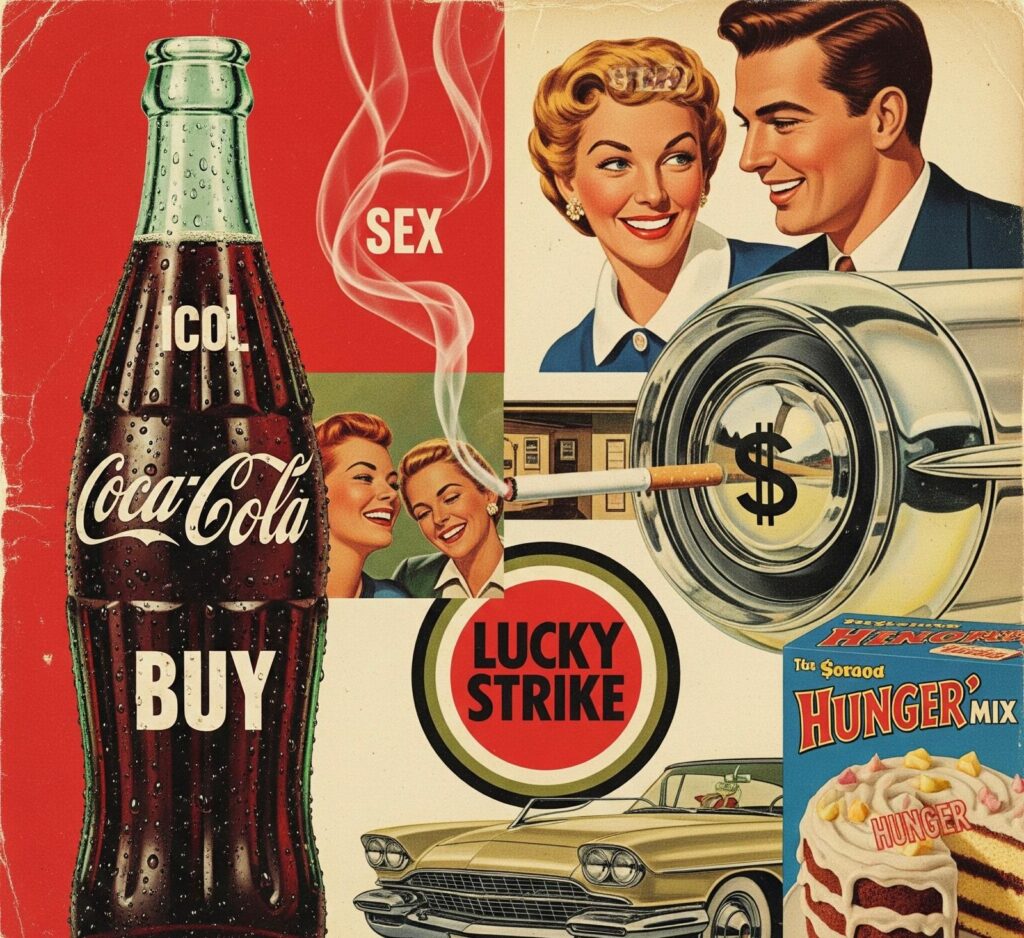
The concept of subliminal messages in marketing has long captured public imagination, raising questions about whether hidden signals can influence consumer behaviour without conscious awareness. While often sensationalised in popular culture, subliminal advertising has been the subject of rigorous scientific inquiry. Research suggests that subliminal stimuli can affect perception and behaviour under certain conditions, though the magnitude and ethical implications remain contested (Trappey, 1996; Pratkanis, 1992).
This article examines the psychology of subliminal messages, their effectiveness in marketing, associated ethical debates, and potential mental health impacts.
1. What are subliminal messages?
Subliminal messages are stimuli presented below the threshold of conscious perception. These can include:
- Visual cues: Images flashed too quickly to be consciously registered.
- Auditory signals: Words or sounds embedded in music or background noise.
- Embedded images: Hidden shapes or words in advertisements.
The theory is that subliminal stimuli bypass conscious awareness, influencing attitudes or behaviours indirectly (Greenwald et al., 1991).
2. Historical background
Subliminal marketing gained notoriety in the 1950s when James Vicary claimed that flashing messages like “Drink Coca-Cola” and “Eat Popcorn” in cinemas boosted sales (Danziger, 2017). Although later admitted as fabricated, Vicary’s experiment sparked decades of debate and research.
3. Psychological mechanisms
Research indicates that subliminal messages can influence mental processes through priming. Priming occurs when exposure to a stimulus increases the likelihood of related responses:
- Behavioural priming: Subliminal exposure to brand logos can influence consumer choices (Karremans et al., 2006).
- Emotional priming: Subliminal images of smiling faces can increase positive affect towards products (Winkielman et al., 2005).
However, the effect is often small and context-dependent, requiring motivation or relevance for measurable influence (Trappey, 1996).
4. Effectiveness of subliminal marketing
Meta-analyses show that subliminal messages can shape attitudes and preferences, but not to the extent of overriding conscious decision-making (Kouider & Dehaene, 2007). For example, subliminal advertising may nudge consumers towards a product they are already inclined to choose but is unlikely to create new desires from scratch.
5. Ethical considerations
Subliminal marketing raises concerns about autonomy, manipulation, and informed consent. Critics argue that influencing consumers without their awareness undermines free choice (Pratkanis, 1992). Many countries, including the UK and Australia, have banned subliminal advertising under consumer protection laws (Wilkey, 2013).
6. Mental health implications
a) Anxiety and paranoia
Knowledge of subliminal messaging can provoke anxiety or distrust towards media and corporations (Danziger, 2017).
b) Cognitive overload
Constant exposure to persuasive techniques may contribute to mental fatigue, stress, or reduced media trust (Greenwald et al., 1991).
c) Potential positive applications
Subliminal priming has also been investigated in therapeutic contexts, such as reducing smoking or improving mood, though evidence remains inconclusive (Egermann et al., 2006).
7. Alternatives to subliminal persuasion
Modern marketing relies less on subliminal cues and more on neuromarketing, behavioural economics, and personalised advertising. These approaches use conscious and unconscious processes but are generally more transparent, raising fewer ethical concerns (Ariely & Berns, 2010).
FAQs
Q: Do subliminal messages in marketing work?
Yes, but only modestly. They can prime attitudes and behaviours but cannot force consumers to act against their will.
Q: Is subliminal advertising legal?
In many countries, including Australia and the UK, subliminal advertising is banned due to ethical concerns.
Q: Can subliminal messages affect mental health?
They may provoke anxiety or distrust, though research on long-term effects is limited.
Q: Are subliminal messages still used today?
While largely banned in formal advertising, subliminal techniques are sometimes used in entertainment, self-help products, and experimental marketing.
References
- Ariely, D. & Berns, G.S. (2010) ‘Neuromarketing: The hope and hype of neuroimaging in business’, Nature Reviews Neuroscience, 11(4), pp. 284–292.
- Danziger, S. (2017) Subliminal: How Your Unconscious Mind Rules Your Behavior. London: Penguin.
- Egermann, H., Kopiez, R. & Altenmüller, E. (2006) ‘Effects of subliminal messages in music on the smoking behaviour of listeners’, Psychology of Music, 34(4), pp. 465–478.
- Greenwald, A.G., Klinger, M.R. & Liu, T.J. (1991) ‘Unconscious processing of dichoptically masked words’, Memory & Cognition, 19(6), pp. 617–626.
- Karremans, J.C., Stroebe, W. & Claus, J. (2006) ‘Beyond Vicary’s fantasies: The impact of subliminal priming and brand choice’, Journal of Experimental Social Psychology, 42(6), pp. 792–798.
- Kouider, S. & Dehaene, S. (2007) ‘Levels of processing during non-conscious perception: A critical review’, Philosophical Transactions of the Royal Society B, 362(1481), pp. 857–875.
- Pratkanis, A.R. (1992) ‘The cargo-cult science of subliminal persuasion’, Skeptical Inquirer, 16(3), pp. 260–272.
- Trappey, C. (1996) ‘A meta-analysis of consumer choice and subliminal advertising’, Psychology & Marketing, 13(5), pp. 517–530.
- Wilkey, M. (2013) ‘Subliminal advertising and regulation: An international perspective’, International Journal of Advertising, 32(2), pp. 207–219.
- Winkielman, P., Berridge, K.C. & Wilbarger, J.L. (2005) ‘Unconscious affective reactions to masked happy versus angry faces influence consumption behavior’, Psychological Science, 16(4), pp. 321–325.