Written by: Therapy Near Me Editorial Team
Clinically reviewed by: qualified members of the Therapy Near Me clinical team
Last updated: 18/09/2025
This article is intended as general information only and does not replace personalised medical or mental health advice. Learn more about our Editorial Policy.
Introduction
Solitary confinement refers to the practice of isolating incarcerated individuals for 22–24 hours per day with minimal human contact. Globally, this method has been used as a disciplinary tool, but research consistently shows that solitary confinement has severe and often long-lasting consequences for mental health (Haney, 2018). This article explores the psychological effects of solitary confinement, its implications for rehabilitation, and alternatives supported by scientific research.
1. Definition and prevalence
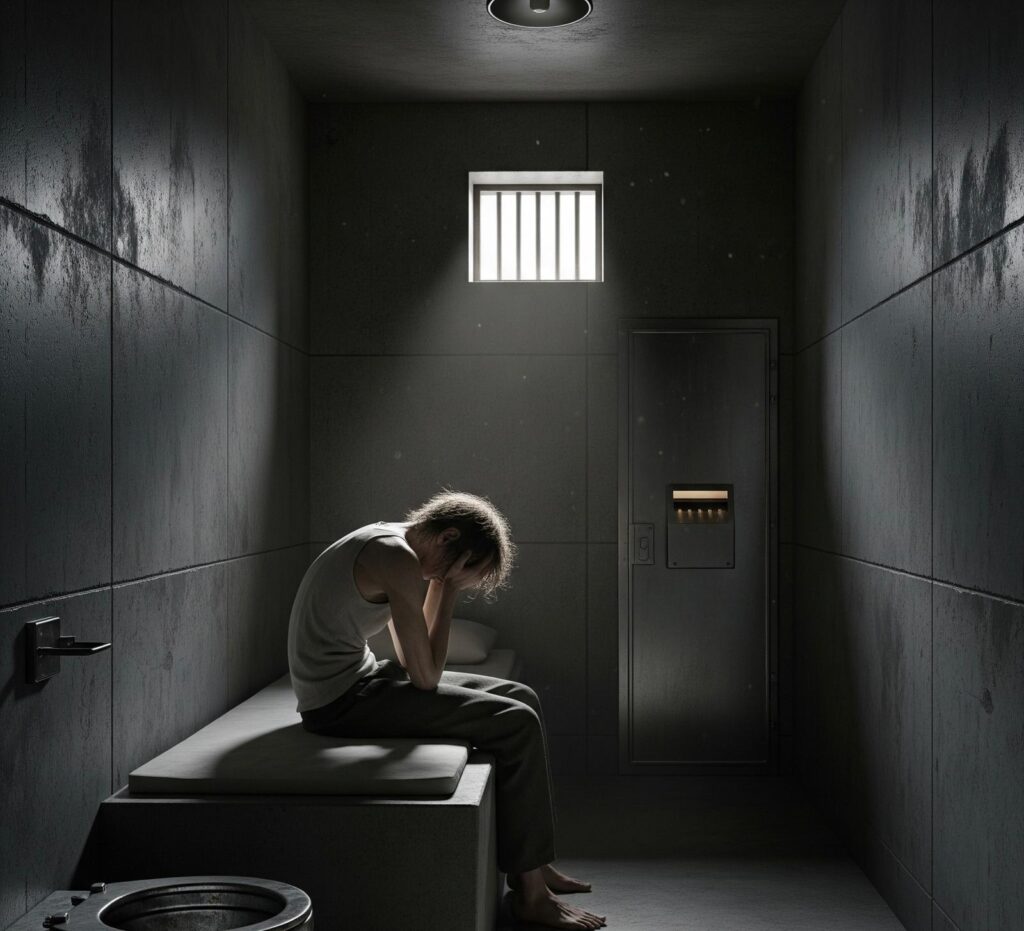
Solitary confinement is also called segregation, isolation, or supermax detention. While exact conditions vary, common features include:
- Confinement in small cells (6×9 feet) for up to 23 hours a day.
- Minimal social interaction.
- Restricted access to educational, recreational, and rehabilitative programs.
In some jurisdictions, individuals have spent months or even decades in solitary confinement (Shalev, 2008).
2. Psychological effects of solitary confinement
a) Short-term symptoms
Studies show that even brief periods of isolation (more than 10 days) can trigger acute distress, including:
- Anxiety, panic, and irritability.
- Depressive symptoms.
- Disturbances in sleep and appetite.
- Cognitive decline, such as difficulties with concentration and memory (Grassian, 2006).
b) Long-term impacts
Extended confinement can lead to enduring mental health problems:
- Chronic depression.
- Hallucinations and psychosis.
- Post-traumatic stress disorder (PTSD).
- Heightened risk of self-harm and suicide (Kaba et al., 2014).
3. Vulnerable populations
Research indicates that certain groups are particularly vulnerable to the harms of solitary confinement:
- Adolescents: More susceptible to developmental disruption (American Academy of Child & Adolescent Psychiatry, 2012).
- People with pre-existing mental illness: Symptoms often worsen dramatically under isolation (Haney, 2018).
- Elderly prisoners: Increased risk of cognitive decline.
4. Mechanisms of harm
The negative psychological effects of solitary confinement are linked to the human need for social interaction and environmental stimulation. Neuroscience shows that social isolation alters brain functioning, particularly in regions related to emotional regulation and cognitive control (Cacioppo & Hawkley, 2009). Prolonged isolation deprives individuals of sensory input, leading to dysregulation of stress hormones and heightened emotional reactivity.
5. Rehabilitation and reintegration challenges
Solitary confinement undermines rehabilitation goals. Individuals released from isolation often struggle to reintegrate, showing increased social withdrawal, paranoia, and difficulty adapting to community life (Haney, 2018). This can increase recidivism and place additional strain on public health systems.
6. Alternatives to solitary confinement
Evidence-based alternatives focus on safety while preserving human dignity:
- Step-down programs: Gradually reintegrating individuals into the general prison population.
- Mental health treatment units: Addressing behavioural issues through therapy rather than punishment.
- Restorative justice programs: Emphasising accountability and social repair.
These approaches reduce harm while supporting rehabilitation (Cloud et al., 2015).
FAQs
Q: What are the mental health effects of solitary confinement?
It can cause anxiety, depression, hallucinations, psychosis, and increased risk of suicide.
Q: How long does it take for solitary confinement to affect mental health?
Research suggests symptoms can appear within days, with long-term impacts after extended periods.
Q: Who is most vulnerable to solitary confinement?
Adolescents, people with mental illness, and the elderly are particularly at risk.
Q: What are alternatives to solitary confinement?
Alternatives include step-down programs, mental health treatment units, and restorative justice models.
References
- American Academy of Child & Adolescent Psychiatry (2012) ‘Policy statement on solitary confinement of juvenile offenders’, AACAP Official Action, pp. 1–2.
- Cacioppo, J.T. & Hawkley, L.C. (2009) ‘Perceived social isolation and cognition’, Trends in Cognitive Sciences, 13(10), pp. 447–454.
- Cloud, D.H., Drucker, E., Browne, A. & Parsons, J. (2015) ‘Public health and solitary confinement in the United States’, American Journal of Public Health, 105(1), pp. 18–26.
- Grassian, S. (2006) ‘Psychiatric effects of solitary confinement’, Washington University Journal of Law & Policy, 22, pp. 325–383.
- Haney, C. (2018) ‘The psychological effects of solitary confinement: A systematic critique’, Crime and Justice, 47(1), pp. 365–416.
- Kaba, F. et al. (2014) ‘Solitary confinement and risk of self-harm among jail inmates’, American Journal of Public Health, 104(3), pp. 442–447.
- Shalev, S. (2008) Supermax: Controlling Risk Through Solitary Confinement. Portland, OR: Willan Publishing.