
Written by: Rona Castañeda
Clinically reviewed by: Qualified members of the Therapy Near Me clinical team
Last updated: 06/11/2026
This clinical information has been written by Rona Castañeda to support accuracy, clarity, and alignment with contemporary psychological practice. Content is reviewed in accordance with our Editorial Policy and is intended as general information only. It does not replace individual assessment, diagnosis, or treatment.
Content type: Health education (Australia)
Introduction
The Feldenkrais Method is a mind–body practice that uses gentle, mindful movement to enhance self-awareness, reduce pain, and improve overall functioning. Developed by physicist and judo expert Moshe Feldenkrais (1904–1984), it emphasises neuroplastic learning—the brain’s ability to form new connections—through novel, non-habitual movement patterns (Feldenkrais, 1972).
This article examines the science behind the Feldenkrais Method, its mental health and physical benefits, and its relevance as an evidence-informed approach to pain, stress, and functional rehabilitation.
1. What is the Feldenkrais Method?
The method is taught in two formats:
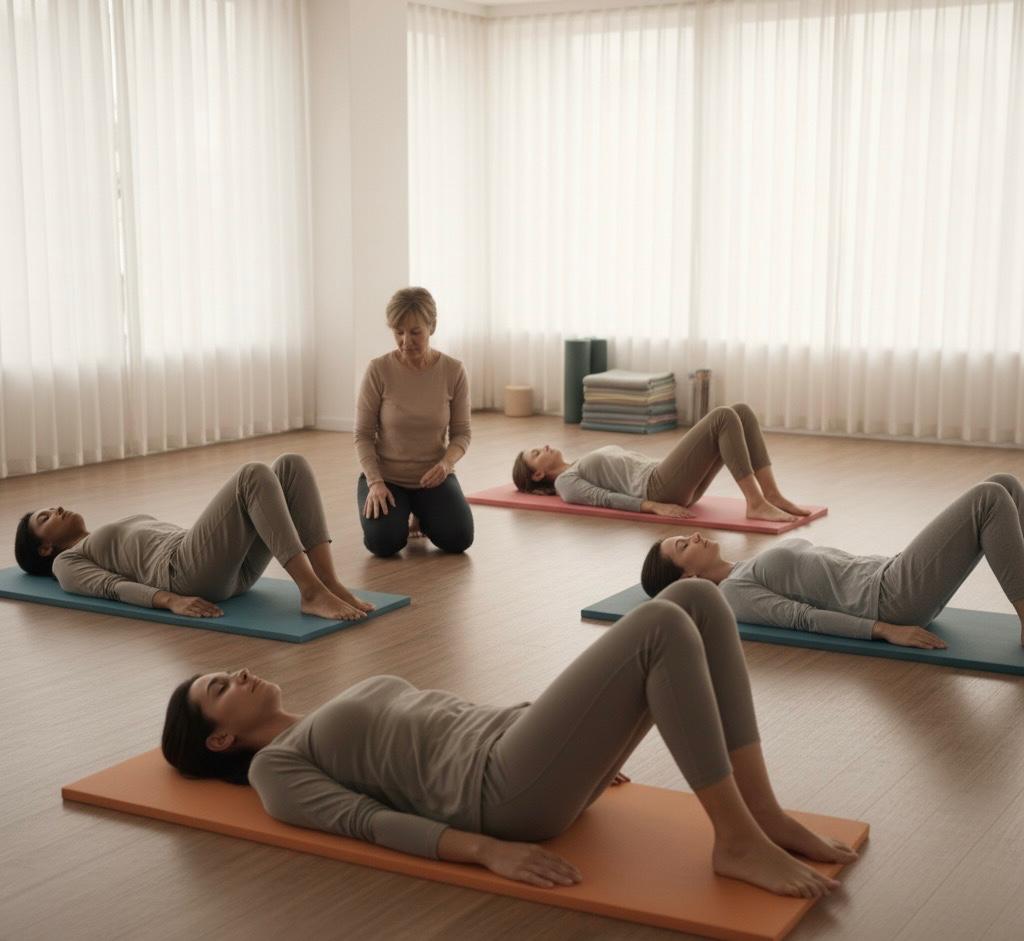
- Awareness Through Movement (ATM): Group lessons where participants follow verbal cues to explore gentle, varied movements.
- Functional Integration (FI): One-on-one, hands-on sessions in which a practitioner guides the student through passive and active movement explorations.
Both formats aim to expand movement options, improve posture, and reduce unnecessary muscular effort.
2. Neurobiological and psychological principles
a) Neuroplasticity
By presenting the nervous system with new sensory-motor experiences, Feldenkrais practice engages neuroplastic mechanisms—promoting cortical reorganisation and more efficient movement strategies (Kwakkel et al., 2004).
b) Somatic learning
The method develops interoceptive and proprioceptive awareness, helping individuals sense and correct maladaptive movement habits (Mehling et al., 2011).
c) Mind–body integration
Gentle, non-forced movement lowers sympathetic arousal and facilitates relaxation, supporting mental wellbeing (Russell & Mehdizadeh, 2019).
3. Evidence-based benefits
Chronic pain and musculoskeletal disorders
Randomised controlled trials report reductions in chronic neck and back pain, improved posture, and enhanced mobility following Feldenkrais lessons (Hillier & Worley, 2015).
Neurological rehabilitation
The method shows promise in supporting stroke recovery and balance in older adults through improved motor control and sensory integration (Stephens et al., 2001).
Anxiety, depression, and stress
By fostering mindful awareness and reducing physical tension, Feldenkrais sessions contribute to decreased anxiety and stress, similar to mindfulness-based interventions (Russell & Mehdizadeh, 2019).
Functional movement and performance
Athletes, dancers, and musicians use Feldenkrais to increase efficiency, flexibility, and injury prevention by refining coordination and kinaesthetic intelligence.
4. The structure of a Feldenkrais session
- Preparation and scanning: Lying or sitting comfortably, participants scan their body to notice current sensations.
- Movement exploration: Slow, small, varied movements with verbal guidance (ATM) or gentle touch (FI).
- Integration and rest: Time to sense changes and integrate new patterns.
The emphasis is on effortless, curiosity-driven exploration rather than stretching or strengthening.
5. Mechanisms of action
- Sensorimotor reorganisation: Novel movement sequences encourage the brain to form more efficient motor pathways (Feldenkrais, 1972; Kwakkel et al., 2004).
- Reduced muscle co-contraction: Relaxed, slow movements lower habitual tension, reducing pain and fatigue (Hillier & Worley, 2015).
- Interoceptive awareness: Enhanced body awareness supports emotional regulation and self-care (Mehling et al., 2011).
6. Clinical and community applications
The Feldenkrais Method is applied in:
- Pain management clinics for chronic back or neck pain.
- Neurological rehabilitation after stroke, brain injury, or in Parkinson’s disease.
- Mental health programs to complement psychotherapy for anxiety, trauma, or stress-related conditions.
- Arts and sports performance for musicians, dancers, and athletes seeking refined coordination.
7. How to get started
- Certified practitioners: Search professional registries such as the Australian Feldenkrais Guild.
- Class formats: Choose between group Awareness Through Movement sessions or private Functional Integration lessons.
- Frequency: Weekly sessions with daily home practice are typical for sustained benefit.
8. Safety and accessibility
The Feldenkrais Method is gentle and adaptable to people of all ages and fitness levels. It is generally safe, but those with acute injuries should consult a healthcare provider for tailored guidance.
FAQs
Q: What is the Feldenkrais Method used for?
To relieve chronic pain, improve posture, aid neurological rehabilitation, and support mental health.
Q: How does Feldenkrais differ from yoga or Pilates?
It focuses on neuroplastic learning and effortless movement rather than stretching or strengthening.
Q: Can Feldenkrais help with anxiety or stress?
Yes. By improving body awareness and lowering muscle tension, it helps calm the nervous system.
Q: Is Feldenkrais evidence-based?
Yes. Clinical studies support benefits for chronic pain, balance, and psychological wellbeing.
References
- Feldenkrais, M. (1972) Awareness Through Movement. New York: Harper & Row.
- Hillier, S. & Worley, A. (2015) ‘The effectiveness of the Feldenkrais Method: A systematic review of the evidence’, Evidence-Based Complementary and Alternative Medicine, 2015, Article ID 752160.
- Kwakkel, G., Kollen, B. & Lindeman, E. (2004) ‘Understanding the pattern of functional recovery after stroke: Facts and theories’, Restorative Neurology and Neuroscience, 22(3-5), pp. 281–299.
- Mehling, W.E., Wrubel, J., Daubenmier, J.J. et al. (2011) ‘Body awareness: A phenomenological inquiry into the common ground of mind–body therapies’, Philosophy, Ethics, and Humanities in Medicine, 6, 6.
- Russell, D. & Mehdizadeh, S. (2019) ‘The impact of Feldenkrais Method classes on anxiety, depression and self-efficacy: A pilot study’, Journal of Bodywork and Movement Therapies, 23(4), pp. 857–861.
- Stephens, J., Davidson, J., DeRosa, J., Kriz, M. & Saltzman, N. (2001) ‘Feldenkrais Method and balance: A pilot study’, Journal of Neurologic Physical Therapy, 25(1), pp. 23–29.