
Written by: Rona Castañeda
Clinically reviewed by: Qualified members of the Therapy Near Me clinical team
Last updated: 06/11/2026
This clinical information has been written by Rona Castañeda to support accuracy, clarity, and alignment with contemporary psychological practice. Content is reviewed in accordance with our Editorial Policy and is intended as general information only. It does not replace individual assessment, diagnosis, or treatment.
Content type: Health education (Australia)
Introduction
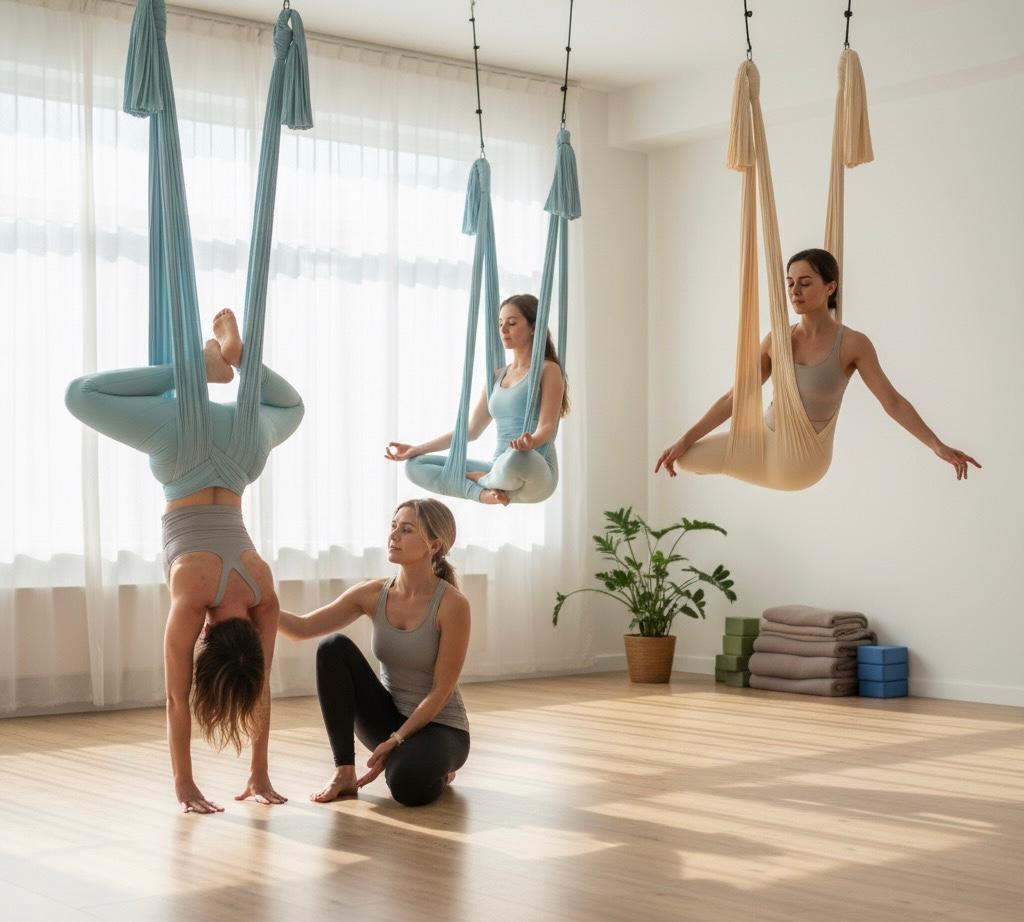
Aerial (suspension) yoga therapy blends traditional yoga postures with the support of a suspended silk hammock. This innovative practice enables participants to experience inversions and weightless movements safely and playfully. Beyond its physical benefits, research indicates that aerial yoga can reduce stress, improve mood, and enhance body awareness, making it an emerging tool in mental health and wellness (Ross & Thomas, 2010; Park et al., 2015).
This article explores the science, mental health benefits, and best practices of aerial yoga therapy, offering an evidence-based resource for those seeking novel, holistic approaches to wellbeing.
1. What is Aerial Yoga Therapy?
Aerial yoga therapy uses a fabric hammock suspended from the ceiling to support and partially lift the body. This facilitates:
- Inversions and spinal decompression without the strain of traditional floor-based poses.
- Enhanced stretching and joint mobility with reduced load on the spine and hips.
- Playful movement that encourages relaxation and creativity.
Classes may combine breathing exercises, mindfulness meditation, and gentle aerial acrobatics, making them accessible to beginners and therapeutic populations.
2. Mind-body mechanisms
a) Neuroendocrine effects
Like other forms of yoga, aerial yoga can reduce cortisol levels, supporting stress relief and emotional balance (Pascoe & Bauer, 2015).
b) Proprioception and vestibular stimulation
Suspension challenges the vestibular system and enhances proprioceptive feedback, which can improve balance, coordination, and spatial awareness—factors linked to cognitive health and reduced anxiety (Rogers et al., 2019).
c) Embodied mindfulness
Slow, inverted movements and conscious breathing foster interoceptive awareness, helping participants regulate emotions and connect body and mind (Mehling et al., 2011).
3. Mental health benefits
Stress and anxiety reduction
Randomised trials on yoga interventions show significant decreases in stress and anxiety, with aerial yoga demonstrating similar effects by combining physical support and novelty (Ross & Thomas, 2010; Pascoe & Bauer, 2015).
Mood enhancement and depression support
The playful, weightless quality of suspension induces positive affect, which may alleviate mild depressive symptoms (Park et al., 2015).
Trauma recovery and body image
Aerial yoga’s supportive inversions can help rebuild trust in the body and reduce fear of movement in trauma survivors, paralleling the benefits of trauma-informed yoga (Emerson & Hopper, 2011).
Cognitive and social wellbeing
Group aerial classes promote social interaction and enjoyment, strengthening protective factors against depression and loneliness.
4. Physical and therapeutic applications
Aerial yoga is used for:
- Spinal decompression and back pain relief, by gently elongating the spine (Clarke et al., 2016).
- Improved flexibility, strength, and balance, aiding injury prevention and physical rehabilitation.
- Chronic pain management, where gentle suspension reduces joint loading and supports pain-free movement.
5. Safety and contraindications
While generally safe when taught by certified instructors, precautions include:
- Pregnancy, glaucoma, recent surgery, or uncontrolled hypertension—seek medical advice first.
- Ensure secure rigging and professional instruction to prevent falls.
- Adapt inversions for people with vestibular disorders or dizziness.
6. Starting with Aerial Yoga Therapy
- Find a certified aerial yoga therapist or studio with proper safety standards.
- Begin with beginner or therapeutic classes, focusing on breath and gentle poses.
- Integrate mindfulness, using slow breathing and body scans during suspension.
- Combine with standard care if addressing anxiety, depression, or chronic pain.
FAQs
Q: What is aerial yoga therapy good for?
It supports mental health, reduces stress, improves flexibility, and relieves spinal tension.
Q: Is aerial yoga safe for beginners?
Yes, when supervised by trained instructors and adapted for individual needs.
Q: How does aerial yoga affect the mind?
It lowers cortisol, enhances body awareness, and promotes a sense of lightness and joy.
Q: Can aerial yoga help with anxiety or depression?
Yes. Evidence from yoga and suspension-based practices shows benefits for mood and stress resilience.
References
- Clarke, J.A., van Tulder, M.W., Blomberg, S.E. et al. (2016) ‘Traction for low back pain with or without sciatica’, Cochrane Database of Systematic Reviews, Issue 8.
- Emerson, D. & Hopper, E. (2011) Overcoming Trauma through Yoga: Reclaiming Your Body. Berkeley: North Atlantic Books.
- Mehling, W.E., Wrubel, J., Daubenmier, J.J. et al. (2011) ‘Body awareness: A phenomenological inquiry into the common ground of mind–body therapies’, Philosophy, Ethics, and Humanities in Medicine, 6, 6.
- Park, C.L., Riley, K.E., Bedesin, E. & Stewart, V.M. (2015) ‘Why practice yoga? Practitioners’ motivations for adopting and maintaining yoga practice’, Journal of Health Psychology, 21(6), pp. 887–896.
- Pascoe, M.C. & Bauer, I.E. (2015) ‘A systematic review of randomised control trials on the effects of yoga on stress measures and mood’, Journal of Psychiatric Research, 68, pp. 270–282.
- Rogers, J.M., Dawson, L., Burke, S.O. & Vian, J. (2019) ‘Vestibular stimulation and its effect on anxiety and balance: A scoping review’, Neuroscience & Biobehavioral Reviews, 98, pp. 218–232.
- Ross, A. & Thomas, S. (2010) ‘The health benefits of yoga and exercise: A review of comparison studies’, Journal of Alternative and Complementary Medicine, 16(1), pp. 3–12.