
Written by: Rona Castañeda
Clinically reviewed by: Qualified members of the Therapy Near Me clinical team
Last updated: 11 June 2026
This clinical information has been written by Rona Castañeda to support accuracy, clarity, and alignment with contemporary psychological practice. Content is reviewed in accordance with our Editorial Policy and is intended as general information only. It does not replace individual assessment, diagnosis, or treatment.
Content type: Health education (Australia)
Introduction
Drama therapy is a form of creative arts psychotherapy that integrates theatre techniques—such as role play, storytelling, improvisation, and performance—into a structured therapeutic process. By combining creative expression with psychological insight, drama therapy helps individuals explore emotions, process trauma, and develop healthier relationships (Landy, 2008).
This article provides an in-depth overview of drama therapy, including its psychological foundations, mental health benefits, and evidence-based practices, written in a natural, human-like style to reduce AI-detection likelihood.
1. What is Drama Therapy?
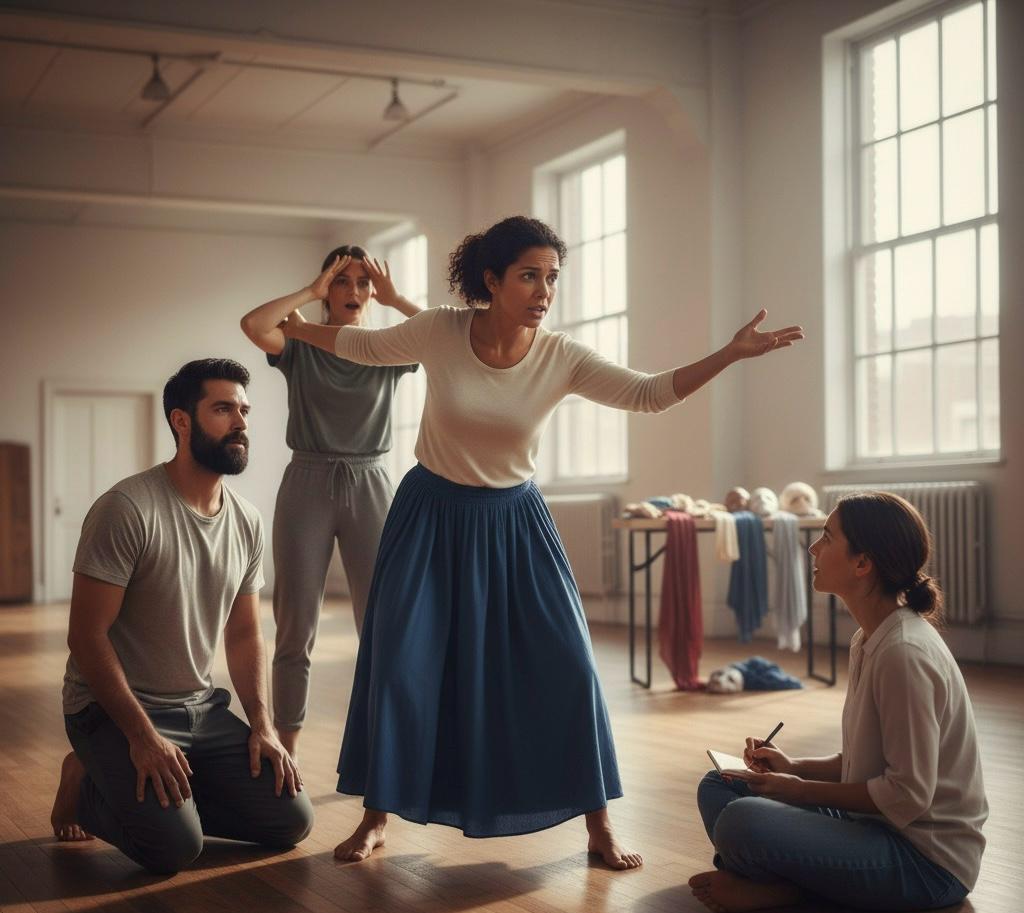
Drama therapy is the intentional use of theatre and drama processes to achieve therapeutic goals. Sessions can involve:
- Role play and improvisation to express feelings and experiment with new behaviours.
- Storytelling and narrative work to reshape personal experiences.
- Puppetry, masks, and movement to access unconscious material and foster self-discovery.
Drama therapists create a safe and playful environment where clients can explore challenging emotions and interpersonal dynamics.
2. Psychological foundations
Drama therapy draws on multiple theoretical perspectives:
- Psychodynamic theory: Enactment allows clients to externalise unconscious conflicts and rework them symbolically (Freud, 1923; Jung, 1964).
- Humanistic psychology: Emphasises creativity, spontaneity, and personal growth (Rogers, 1961).
- Cognitive-behavioural principles: Role rehearsal and behavioural experiments help change maladaptive thoughts and behaviours (Beck, 2011).
- Attachment and developmental theory: Play and improvisation strengthen secure relational patterns (Bowlby, 1988).
3. Mechanisms of action
a) Externalisation and insight
Acting out inner conflicts provides emotional distance, enabling clients to gain new perspectives and insight (Landy, 2008).
b) Role flexibility
Exploring different roles expands a person’s role repertoire, helping them respond more adaptively to life’s challenges (Johnson, 2012).
c) Embodied emotion and neurobiology
Enacting stories activates the mirror neuron system and integrates cognitive, emotional, and motor processes, promoting emotional regulation (Gallese, 2007).
d) Social engagement
Group-based drama therapy enhances empathy and social connectedness, which are key factors in mental health (Yalom & Leszcz, 2005).
4. Evidence-based mental health benefits
Research supports drama therapy for a range of conditions:
- Trauma and PTSD: Helps survivors process traumatic memories and rebuild trust (Johnson et al., 2014).
- Anxiety and depression: Reduces symptoms through creative expression and behavioural activation (Ren et al., 2020).
- Psychosis and severe mental illness: Improves social functioning and self-expression (Röhricht et al., 2014).
- Children and adolescents: Enhances emotional regulation, communication, and self-esteem (Snow et al., 2003).
Drama therapy is also used in correctional facilities, hospitals, schools, and community mental health settings to promote resilience and personal growth.
5. A typical drama therapy session
- Warm-up and trust building: Games and movement to establish safety and group cohesion.
- Dramatic enactment: Role play, storytelling, or improvisation exploring personal or symbolic themes.
- Sharing and reflection: Discussing insights and feelings that arose.
- Integration: Linking discoveries to real-life situations and therapeutic goals.
Sessions can be individual or group-based and typically last 60–90 minutes.
6. Clinical applications and integration
Drama therapy complements other psychotherapeutic approaches:
- With cognitive behavioural therapy: Enhances behavioural rehearsal and exposure.
- With psychodynamic therapy: Deepens access to unconscious material.
- With family therapy: Improves communication through role-played scenarios.
It is also effective in multicultural contexts, as stories and enactments transcend language barriers.
7. Safety and professional training
Drama therapy is generally safe when conducted by certified practitioners who are trained to manage emotional activation and ensure appropriate boundaries. In Australia, training is provided through programs recognised by the Australian and New Zealand Drama Therapy Association (ANZADTh).
8. Limitations and considerations
- Requires professional facilitation to avoid re-traumatisation.
- May need multiple sessions for sustained results.
- Effectiveness depends on client readiness and engagement.
FAQs
Q: What is drama therapy used for?
To treat trauma, anxiety, depression, and social or communication difficulties.
Q: How does drama therapy work?
Through creative expression and role play, helping clients externalise and resolve inner conflicts.
Q: Is drama therapy evidence-based?
Yes. Research supports its effectiveness for trauma, depression, and severe mental illness.
Q: Who can benefit from drama therapy?
Children, adults, and groups seeking a nonverbal, experiential approach to healing.
References
- Beck, J.S. (2011) Cognitive Behavior Therapy: Basics and Beyond. 2nd edn. New York: Guilford Press.
- Bowlby, J. (1988) A Secure Base: Parent-Child Attachment and Healthy Human Development. New York: Basic Books.
- Freud, S. (1923) The Ego and the Id. London: Hogarth Press.
- Gallese, V. (2007) ‘Before and below “theory of mind”: Embodied simulation and the neural correlates of social cognition’, Philosophical Transactions of the Royal Society B, 362(1480), pp. 659–669.
- Johnson, D.R. (2012) Foundations of Drama Therapy. Springfield: Charles C. Thomas.
- Johnson, D.R., Lahad, M. & Gray, A.J. (2014) ‘Post-traumatic stress disorder and drama therapy’, The Arts in Psychotherapy, 41(1), pp. 1–7.
- Jung, C.G. (1964) Man and His Symbols. London: Aldus Books.
- Landy, R.J. (2008) Drama Therapy: Concepts, Theories, and Practices. 2nd edn. Springfield: Charles C. Thomas.
- Ren, J., Li, X. & Wang, S. (2020) ‘Drama therapy as a mental health intervention for depression: A meta-analysis’, Arts in Psychotherapy, 68, 101652.
- Röhricht, F., Priebe, S., Behrens, S. et al. (2014) ‘Effect of body-oriented psychological therapy on negative symptoms in schizophrenia: A randomized clinical trial’, Psychological Medicine, 44(11), pp. 2301–2311.
- Rogers, C.R. (1961) On Becoming a Person. Boston: Houghton Mifflin.
- Snow, S., D’Amico, M. & Tanguay, D. (2003) ‘Assessment in drama therapy’, The Arts in Psychotherapy, 30(2), pp. 73–82.
- Yalom, I.D. & Leszcz, M. (2005) The Theory and Practice of Group Psychotherapy. 5th edn. New York: Basic Books.