Written by: Rona Castañeda
Clinically reviewed by: Qualified members of the Therapy Near Me clinical team
Last updated: 06/11/2026
This clinical information has been written by Rona Castañeda to support accuracy, clarity, and alignment with contemporary psychological practice. Content is reviewed in accordance with our Editorial Policy and is intended as general information only. It does not replace individual assessment, diagnosis, or treatment.
Content type: Health education (Australia)
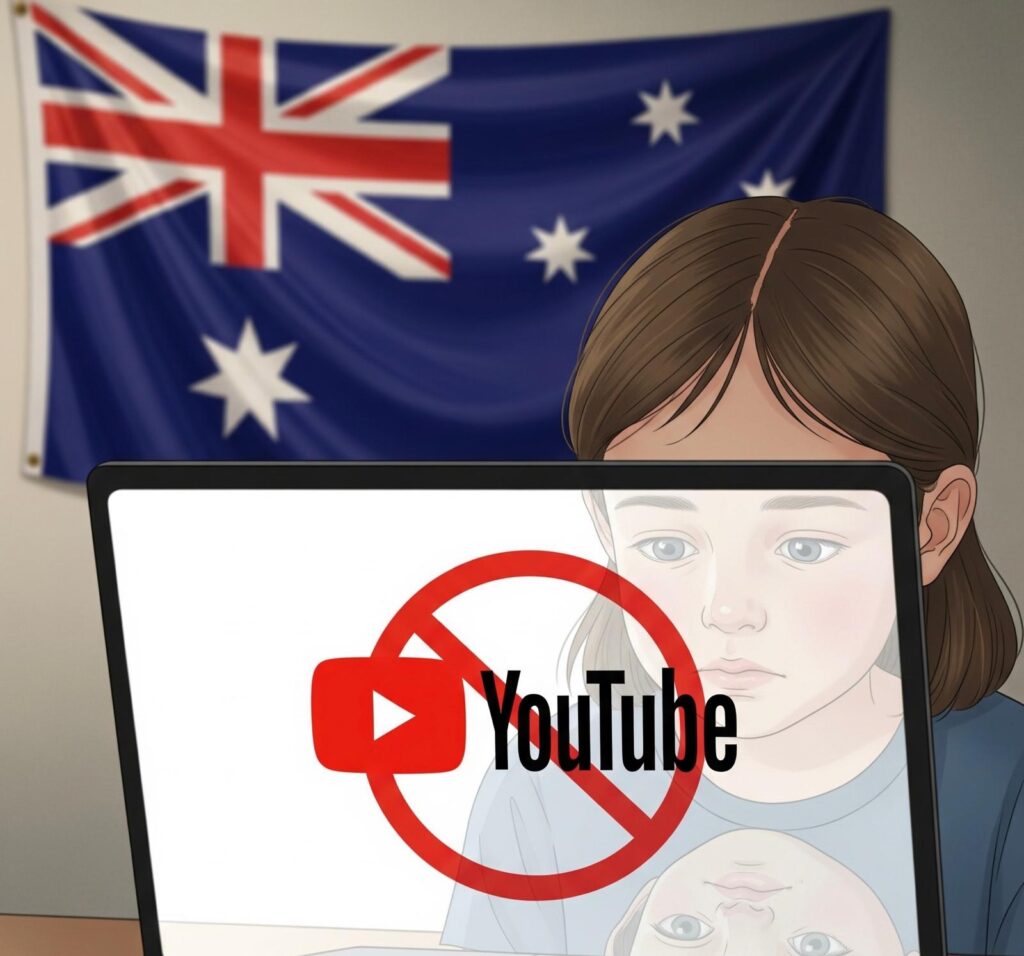
In December 2025, Australia will become one of the first nations to implement a legal ban preventing users under 16 from creating personal accounts on social media platforms—including YouTube (AP News, 2025) . While the law aims to protect young minds, psychologists offer a nuanced view: beyond intent, effectiveness depends on context, support, and digital literacy.
Keywords: YouTube ban under 16 psychologists, social media ban mental health opinion, digital age restrictions teens Australia, psychologist view YouTube ban, youth mental health screen time ban, adolescent social media access debate, digital literacy vs bans teens, YouTube under 16 policy, online safety amendment 2025, psychological expert opinions on social media age ban
1. The Legislation Explained
The Online Safety Amendment (Social Media Minimum Age) Act 2024, passed in late 2024, requires platforms to block new user accounts for anyone under 16—including YouTube, which was previously exempt (Wikipedia, 2025) . Violations may incur fines up to AU$50 million per platform (AP News, 2025; The Australian, 2025) .
2. Psychologists’ Perspectives: Cause for Caution
A. APS Leadership and Developmental Risks
Australian Psychological Society leaders—such as Catriona Davis‑McCabe—argue bans alone risk unintended consequence: withdrawal anxiety, social disconnection, and exclusion of already dependent users (Psychology.org.au, 2024) . Similar warnings come from the eSafety Commissioner, who sees the move as an overly simplistic response to deeply complex youth mental health issues (Wikipedia, 2025) .
B. Education Over Exclusion
Psychologist Dr Angela Hinz highlights the ban as a “window of opportunity” to embed digital literacy, emotional resilience, and body-image education rather than simply imposing restrictions (UniSC, 2024) . Smiling Mind’s Kerrie Forbes similarly notes early mental fitness skills must precede legislative limits to prevent risk escalation post-16 (Smiling Mind blog, 2024) .
C. Mixed Research Outcomes
A 2024 meta-analysis by Ferguson found little to no mental health benefit from social media bans; Haidt and colleagues contested these findings, arguing that more nuanced methodologies show modest benefits when screen use is reduced (UOW, 2024; Haidt, 2024) . Another analysis found bans moderately reduced bullying and improved social wellbeing—but only when implemented alongside schooling and emotional support (Psychology Today blog, 2024) . JMIR Mental Health stresses that bans often eliminate both risks and vital benefits like belonging and support communities for LGBTQ+ youth (McAlister et al., 2024) .
3. Impact Specifically on YouTube Access
While educational content remains fully accessible, losing logged-in features on YouTube removes personalized safety settings such as Restricted Mode or matured content filtering—ironically increasing exposure to harmful content (News.com.au, 2025) . Critics argue banning YouTube may punish responsible young users and contradict parental choice (Puglisi, 2025) .
4. Psychological Harms vs Potential Benefits
Psychologists emphasize two key points:
- Regulatory bans alone don’t address root causes: social isolation, cyberbullying, early onset anxiety, low self-esteem (UQ, 2025; APS, 2024) .
- Young people risk losing access to vital resources, peer support groups, and mental health communities—particularly for marginalized youth—if platforms limit account access prematurely (CMY, 2024) .
5. Clinical Implications and Recommendations
- Emphasize digital literacy and emotional resilience skills before restricting access (Forbes, Smiling Mind; Hinz, UniSC) .
- Offer alternative social connection structures: youth groups, school-based therapy, supervised offline activities.
- Engage mental health professionals in rollout: embed wrap-around support rather than relying solely on digital exclusion (Davis‑McCabe, APS; NDTV expert briefings) .
- Monitor and evaluate implementation: age-verification systems, moderation tools, and outcomes data must be transparent and responsive.
References
American Psychological Society (2024) APS calls for more consideration on social media ban for young Australians. Psychology.org.au.
Business Insider (2025) CTE, YouTube and shooter manifesto [online].
CMY (2024) Social media ban and multicultural youth views, CMY News.
Cosmos (2024) Phiddian, E. Expert verdicts on social media ban show why it’s contentious.
Daily Telegraph (2025) YouTube ban for under‑16s announced.
Ferguson, C.J. (2024) Meta-analysis shows social media reduction doesn’t improve mental health, UOW.
Haidt, J. (2024) The Anxious Generation: How smartphones are reshaping childhood. Penguin.
McAlister, K.L., Beatty, C.C. et al. (2024) ‘Social Media Use in Adolescents: Bans, Benefits, and Emotion Regulation Behaviors’, JMIR Mental Health.
Puglisi, L. (2025) ‘Opinion: Ban punishes responsible youth’, The Guardian.
Psychology Today (2024) ‘Will banning social media make youngsters safe and healthy?’
Puglisi, L. (2025) ‘Teen ban criticism’.
Psychology.org.au (2024) Kids helpline CEO and APS president warn of ban risks.
Smiling Mind blog (2024) Forbes, K. ‘Paradox of banning social media’.
UNiSC (2024) Hinz, A. ‘Body image and identity’ commentary.
Wikipedia contributors (2025) ‘Online Safety Amendment’; ‘Problematic social media use’; ‘Cyberbullying’; ‘MindSpot Clinic’.
AP News (2025) ‘Australia includes YouTube in under‑16 ban’.
The Australian (2025) ‘Albanese to take ban to UN’.