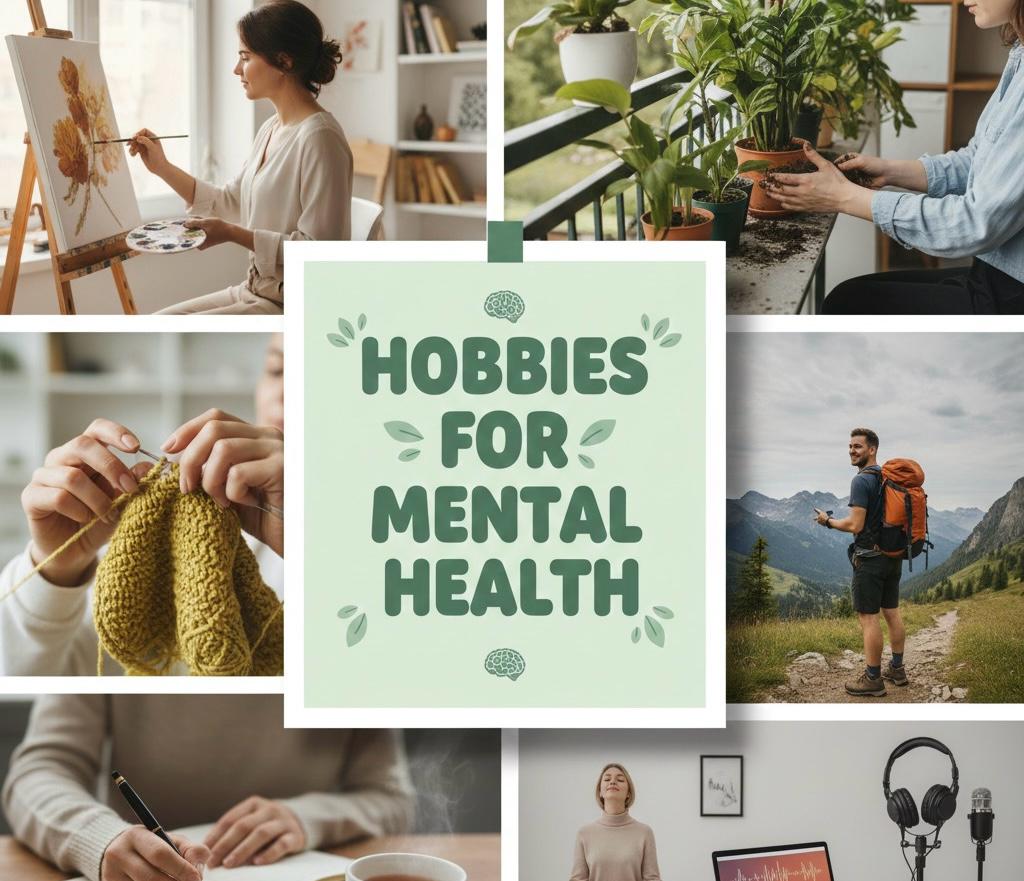
Best hobbies for mental health: an evidence‑based guide
By TherapyNearMe.com.au. General information only; not a substitute for individual medical or psychological advice. If you are in crisis, call 000. For 24/7 support: Lifeline 13 11 14; Beyond Blue 1300 22 4636.
Key points at a glance
- There is no single best hobby for everyone. The strongest evidence clusters around: physical activity (walking, running, strength, dance, yoga/tai chi), creative arts (music, singing, visual arts, crafts), nature‑based activities(gardening, green/blue‑space time), social and prosocial hobbies (team sports, choirs, volunteering), and contemplative practices (mindfulness, meditation) (Cooney et al., 2013; Schuch et al., 2016; Koch et al., 2014; Fancourt and Finn, 2019; Twohig‑Bennett and Jones, 2018; Jenkinson et al., 2013; Goyal et al., 2014; Cramer et al., 2013; Wang et al., 2010).
- Benefits arrive through multiple mechanisms: behavioural activation and routine, social identity and belonging, physiological regulation (sleep, stress hormones, inflammation), cognitive engagement/flow, and exposure to restorative environments (Karoly et al., 2005; Haslam et al., 2018; Bratman et al., 2015).
- The winning strategy is fit over fashion: choose an activity you want to repeat, with a small, regular dose, clear cues, and a social or environmental hook (Fortney et al., 2017).
How hobbies improve mental health (the mechanisms)
- Behavioural activation: Doing rewarding, mastery‑building activities counters avoidance and low mood (Cuijpers et al., 2007).
- Physical‑activity effects: Exercise reduces depressive and anxiety symptoms; 3×/week moderate sessions often yield clinically meaningful change (Cooney et al., 2013; Schuch et al., 2016; Aylett, Small and Bower, 2018).
- Social identity & belonging: Shared group pursuits (choirs, clubs, team sports, Men’s Sheds) strengthen identity resources that buffer stress and support recovery (Haslam et al., 2018).
- Attention restoration & nature contact: Time in green/blue spaces calms rumination and lowers stress physiology (Bratman et al., 2015; Twohig‑Bennett and Jones, 2018; Gascon et al., 2017).
- Flow and meaning: Absorbing tasks (music, craft, gardening, coding, dance) foster a sense of competence and purpose (Csikszentmihalyi, 1990).
- Expressive and contemplative processes: Art‑making, music, and mindfulness reduce stress and improve mood via emotional processing and regulation (Stuckey and Nobel, 2010; Fancourt and Finn, 2019; Goyal et al., 2014).
Evidence‑based hobby categories (with “why it helps”, starter doses, and cautions)
1) Movement‑based hobbies
Examples: Brisk walking, running, cycling, swimming, parkrun, resistance training, dance, yoga, tai chi.
- Evidence: Exercise as monotherapy or adjunct reduces depressive symptoms (moderate effect sizes) and anxiety symptoms (small‑to‑moderate) (Cooney et al., 2013; Schuch et al., 2016; Aylett, Small and Bower, 2018). Dance/movement therapy improves mood and vitality (Koch et al., 2014). Yoga and tai chi show small‑to‑moderate benefits for anxiety/depression and stress (Cramer et al., 2013; Wang et al., 2010).
- Starter dose: 3 sessions/week × 30–45 min at moderate intensity; for yoga/tai chi, 2–3 guided sessions/week for 8–12 weeks.
- Cautions: Start low, progress gradually; check with a GP if you have cardiac/metabolic risks or are pregnant.
2) Nature‑based hobbies
Examples: Gardening, bushwalking, birdwatching, urban green‑space picnics, beach/river blue‑space walks, nature photography.
- Evidence: Access to green space associates with lower depression risk and improved wellbeing; experimental studies show reduced stress and rumination after nature walks (Twohig‑Bennett and Jones, 2018; Bratman et al., 2015). Gardening interventions improve mood and reduce anxiety (Soga, Gaston and Yamaura, 2017). Blue‑space exposure relates to better mental‑health indicators (Gascon et al., 2017).
- Starter dose: 120 minutes/week of green/blue‑space time (e.g., 20 min/day); micro‑doses (10–20 min) still help.
- Cautions: Sun safety (SPF 50+, hat), hydration; accessible paths if mobility is limited.
3) Creative arts and crafts
Examples: Singing in a choir, learning an instrument, painting/drawing, pottery, photography, knitting/crochet, creative writing.
- Evidence: Arts participation improves anxiety, depression and wellbeing across ages; singing groups show mood and social‑connectedness gains (Fancourt and Finn, 2019). Meta‑reviews support health benefits of arts engagement; knitting/craft is linked with reduced rumination and improved mood (Stuckey and Nobel, 2010; Corkhill et al., 2014).
- Starter dose: 1–2 sessions/week × 45–90 min; add a weekly social element where possible.
- Cautions: Watch for perfectionism; emphasise process over product.
4) Social & prosocial hobbies
Examples: Team sports, board‑game clubs, language or book clubs, community choirs, volunteering (animal shelters, community gardens, mutual‑aid groups).
- Evidence: Social connection robustly predicts better mental and physical health; group memberships provide “social cure” effects (Haslam et al., 2018). Volunteer participation associates with improved wellbeing and lower mortality (Jenkinson et al., 2013).
- Starter dose: 1–2 hours/week in a group or volunteering role; pair with a friend for accountability.
- Cautions: Avoid over‑commitment; choose values‑aligned roles to prevent burnout.
5) Contemplative and reflective hobbies
Examples: Mindfulness meditation, tai chi/qigong, yoga nidra, expressive writing/journaling, mindful colouring.
- Evidence: Mindfulness‑based programmes produce small‑to‑moderate reductions in anxiety/depression and stress (Goyal et al., 2014); MBCT reduces depressive relapse in recurrent depression (Kuyken et al., 2016). Expressive writing yields small but reliable mental‑health benefits (Frattaroli, 2006).
- Starter dose: 8‑week MBSR/MBCT course or app‑guided 10–15 min/day; journaling 15–20 min, 3–4 days/week for 2 weeks.
- Cautions: Trauma‑informed guidance if you have a history of PTSD; stop if distress escalates and seek professional support.
“Best hobby” by common goals
- To lift low mood/depression: Start with brisk walking or cycling (accessible, low friction) and/or dance; add a group element within 2–4 weeks; layer in behavioural activation planning (Cooney et al., 2013; Schuch et al., 2016; Haslam et al., 2018).
- To ease anxiety/stress: Combine aerobic light‑moderate movement with mindfulness or yoga/tai chi; add green/blue‑space time (Aylett, Small and Bower, 2018; Goyal et al., 2014; Twohig‑Bennett and Jones, 2018).
- To reduce loneliness: Choose group‑based hobbies—choirs, clubs, volunteering—prioritising welcoming, low‑barrier communities (Haslam et al., 2018; Jenkinson et al., 2013).
- For sleep support: Prefer daylight‑timed activity, avoid late‑evening high‑intensity sessions, add a wind‑down routine (Roehrs and Roth, 2001).
- For meaning and motivation: Pick values‑linked projects (community garden, charity shop, creative portfolio) to boost purpose and self‑efficacy (Karoly et al., 2005; Jenkinson et al., 2013).
How to choose a hobby you’ll actually keep (practical playbook)
- Anchor to identity and values: “I am a walker/reader/chorister” beats “I should exercise.” (Haslam et al., 2018).
- Start tiny, then scale: 10 minutes, three times a week → 20 minutes. Consistency builds mood benefits.
- Stack with existing routines: after school drop‑off, lunch break, or before dinner.
- Design friction out: shoes by the door; supplies in a visible basket; calendar holds.
- Measure what matters: brief mood check (e.g., PHQ‑9, GAD‑7, or WEMWBS) every 2–4 weeks to see progress and adjust (Kroenke, Spitzer and Williams, 2001; Spitzer et al., 2006; Tennant et al., 2007; Fortney et al., 2017).
- Add gentle accountability: a friend, a club, or posting your “streak” to a small group.
- Plan for rough weeks: have a 5‑minute “minimum viable hobby” (one song on guitar; one plant watered; one block walked).
Safety, access and inclusion
- Cost‑aware options: libraries (book clubs, maker sessions), parkrun, community gardens, council art groups, public pools at concession times.
- Mobility or chronic‑pain adaptations: chair yoga, water‑based exercise, seated music/craft; pace with a clinician if needed.
- Cultural and language safety: choose groups that reflect your community; ask for interpreters or culturally specific programs when helpful.
A simple 8‑week starter plan
- Weeks 1–2: 10–15 min brisk walk most days (+ one 10 min guided mindfulness). Start a gratitude or expressive journal 2–3×/week. Track mood (PHQ‑9/GAD‑7/WEMWBS).
- Weeks 3–4: Extend walks to 25–30 min in a green/blue space twice weekly. Add one craft/creative session (60 min) or a beginner’s yoga/tai chi class.
- Weeks 5–6: Join a group (choir, parkrun, book club, community garden, volunteer taster). Keep journaling or swap to mindful colouring.
- Weeks 7–8: Choose one hobby to deepen (buy/borrow gear; set a small goal—first 5 km, first sketch, first song). Re‑check mood scales; keep what helps.
References
Aylett, E., Small, N. and Bower, P. (2018) ‘Exercise in the treatment of clinical anxiety in general practice—a systematic review and meta‑analysis’, BJPsych Open, 4(4), pp. 316–326.
Bratman, G.N., Hamilton, J.P., Hahn, K.S., Daily, G.C. and Gross, J.J. (2015) ‘Nature experience reduces rumination and subgenual prefrontal cortex activation’, Proceedings of the National Academy of Sciences, 112(28), pp. 8567–8572.
Cooney, G.M., Dwan, K., Greig, C.A., Lawlor, D.A., Rimer, J., Waugh, F.R. and Mead, G.E. (2013) ‘Exercise for depression’, Cochrane Database of Systematic Reviews, 9, CD004366.
Corkhill, B., Hemmings, J., Maddock, A. and Riley, J. (2014) ‘Knitting and well‑being’, The British Journal of Occupational Therapy, 77(11), pp. 614–622.
Cramer, H., Lauche, R., Langhorst, J. and Dobos, G. (2013) ‘Yoga for depression: A systematic review and meta‑analysis’, Depression and Anxiety, 30(11), pp. 1068–1083.
Csikszentmihalyi, M. (1990) Flow: The psychology of optimal experience. New York: Harper & Row.
Cuijpers, P., van Straten, A., Warmerdam, L. and van Rooy, M.J. (2007) ‘Behavioral activation treatments of depression: A meta‑analysis’, Clinical Psychology Review, 27(3), pp. 318–326.
Fancourt, D. and Finn, S. (2019) What is the evidence on the role of the arts in improving health and well‑being? A scoping review. Copenhagen: WHO Regional Office for Europe.
Fortney, J.C., Unützer, J., Wrenn, G., Pyne, J.M., Smith, G.R., Schoenbaum, M. and Harbin, H.T. (2017) ‘A tipping point for measurement‑based care’, Psychiatric Services, 68(2), pp. 179–188.
Gascon, M., Zijlema, W., Vert, C., White, M.P. and Nieuwenhuijsen, M.J. (2017) ‘Outdoor blue spaces, human health and well‑being: A systematic review of quantitative studies’, International Journal of Hygiene and Environmental Health, 220(8), pp. 1207–1221.
Goyal, M., Singh, S., Sibinga, E.M.S., Gould, N.F., Rowland‑Seymour, A., Sharma, R., et al. (2014) ‘Meditation programs for psychological stress and well‑being: A systematic review and meta‑analysis’, JAMA Internal Medicine, 174(3), pp. 357–368.
Haslam, C., Jetten, J., Cruwys, T., Dingle, G. and Haslam, S.A. (2018) The New Psychology of Health: Unlocking the social cure. London: Routledge.
Jenkinson, C.E., Dickens, A.P., Jones, K., Thompson‑Coon, J., Taylor, R.S., Rogers, M., et al. (2013) ‘Is volunteering a public health intervention? A systematic review and meta‑analysis of the health and survival of volunteers’, BMC Public Health, 13, 773.
Karoly, P., Ruehlman, L.S. and Okun, M.A. (2005) ‘Goal cognition and its clinical implications: Development and preliminary validation of four motivational assessment instruments’, Assessment, 12(3), pp. 301–318.
Koch, S.C., Kunz, T., Lykou, S. and Cruz, R. (2014) ‘Effects of dance movement therapy and dance on health‑related psychological outcomes: A meta‑analysis’, The Arts in Psychotherapy, 41(1), pp. 46–64.
Kroenke, K., Spitzer, R.L. and Williams, J.B.W. (2001) ‘The PHQ‑9: Validity of a brief depression severity measure’, Journal of General Internal Medicine, 16(9), pp. 606–613.
Roehrs, T. and Roth, T. (2001) ‘Sleep, sleepiness, and alcohol use’, Alcohol Research & Health, 25(2), pp. 101–109.
Schuch, F.B., Vancampfort, D., Richards, J., Rosenbaum, S., Ward, P.B. and Stubbs, R. (2016) ‘Exercise as a treatment for depression: A meta‑analysis adjusting for publication bias’, Journal of Psychiatric Research, 77, pp. 42–51.
Spitzer, R.L., Kroenke, K., Williams, J.B.W. and Löwe, B. (2006) ‘A brief measure for assessing generalized anxiety disorder: The GAD‑7’, Archives of Internal Medicine, 166(10), pp. 1092–1097.
Stuckey, H.L. and Nobel, J. (2010) ‘The connection between art, healing, and public health: A review of current literature’, American Journal of Public Health, 100(2), pp. 254–263.
Twohig‑Bennett, C. and Jones, A. (2018) ‘The health benefits of the great outdoors: A systematic review and meta‑analysis of greenspace exposure and health outcomes’, Environmental Research, 166, pp. 628–637.
Wang, C., Bannuru, R., Ramel, J., Kupelnick, B., Scott, T. and Schmid, C.H. (2010) ‘Tai chi on psychological well‑being: Systematic review and meta‑analysis’, BMC Complementary and Alternative Medicine, 10, 23.
Tennant, R., Hiller, L., Fishwick, R., Platt, S., Joseph, S., Weich, S., et al. (2007) ‘The Warwick‑Edinburgh Mental Well‑being Scale (WEMWBS): Development and UK validation’, Health and Quality of Life Outcomes, 5, 63.
How to cite this article
Therapy Near Me (2025) ‘Best hobbies for mental health: an evidence‑based guide’. Available at: https://therapynearme.com.au