
Top picks by goal
- Mindfulness & stress: Headspace; strong 2025 RCT evidence for reducing daily stress in novices (Kueh et al., 2025). Calm also has RCTs showing reduced stress in students and workplace users (Huberty et al., 2019; Jayawardene et al., 2022).
- Insomnia (CBT-I): Sleepio—recommended by NICE (UK) as an effective digital CBT-I; CBT-i Coach (free companion app) has supportive trials as an adjunct to therapy.
- Anxiety self-help (CBT): MindShift CBT (open-label trial, 2023) and Sanvello (formerly Pacifica; RCT, 2019).
- Mood & coping chatbots: Woebot (college students RCT) and Wysa (observational/ongoing trials; good alliance + UK NHS research underway). Use as supplements, not replacements for care.
- PTSD support: PTSD Coach shows within-group benefits; between-group RCT effects mixed—best as psychoeducation/skills adjunct.
- Australian schools & families (free mindfulness): Smiling Mind (Australian not-for-profit) with program-level evaluation across schools.
Privacy heads-up: Many mental health apps still fail basic privacy tests; the FTC fined BetterHelp in 2023 for sharing sensitive data (refund notices began May 2024). Always check the privacy policy and permissions before you start. (FTC, 2024; Mozilla, 2023).
What does the science say about mental health apps?
Large meta-analyses show small-to-moderate symptom improvements for app-based interventions, especially for depression, anxiety and insomnia—with big variability by app quality, dose, support and design. Recent syntheses suggest stronger effects when programs include CBT modules, rewards/notifications, and shorter (<8 week) programs; effects can be larger in younger users and when not combined with simultaneous psychotherapy (Linardon et al., 2023; JAMA Netw Open, 2023).
At the single-app level, evidence is uneven. For example, Headspace has multiple RCTs (including a 2025 RCT showing everyday stress reductions), Calm has student and workplace trials; Sleepio achieved NICE guidance (a high bar); CBT-i Coach helps as an adjunct; MindShift, Sanvello, Woebot and Wysa have smaller trials or open-label evidence (some company-linked). Quality varies—so choose apps with peer-reviewed trials or reputable endorsements (e.g., NICE).
How to pick a safe, effective app (checklist)
- Clinical evidence: Look for RCTs or respected guidance (e.g., NICE MTG70 for Sleepio).
- Privacy & data use: Mozilla’s Privacy Not Included repeatedly flags risks; verify how data are shared (the FTC action against BetterHelp shows why this matters).
- Regulation & quality labels: In Australia, see the Assessment Framework for mHealth Apps (ADHA/AIDH) and general digital health standards; internationally, ORCHA libraries review apps for privacy, clinical assurance and usability.
- Fit for your goal & budget: Many premium apps are subscription-based; some (e.g., CBT-i Coach, Smiling Mind) are free.
- Care pathway: Apps work best as adjuncts to professional care for moderate–severe conditions; some (e.g., Sleepio) can be first-line for specific problems like insomnia.
The best mental health apps of 2025 (by need)
A) Mindfulness & stress
Headspace — Best overall for beginners
- Why: 2025 randomized controlled trial shows reductions in day-to-day stress and perseverative thinking during an 8-week period in novices. (Kueh et al., 2025).
- Also note: Headspace publishes a library of studies across populations (e.g., health workers, students).
Calm — Strong evidence for stress/sleep with short daily practice
- Why: RCTs in students showed reduced stress (8-week program); a pragmatic cluster-RCT in employees suggests benefits in workplace settings. (Huberty et al., 2019; Jayawardene et al., 2022).
Smiling Mind (AU, free) — Schools & families
- Why: Australian not-for-profit with program-level evaluations and national school implementations; regular impact reporting.
B) Insomnia
Sleepio (digital CBT-I) — Best for chronic insomnia; clinically endorsed
- Why: NICE MTG70 recommends Sleepio as an effective alternative to hypnotics; evidence draws on ≥12 RCTs and economic analyses. (NICE, 2022).
CBT-i Coach (VA/DoD; free) — Best adjunct if you’re doing CBT-I
- Why: Trials and program evaluations suggest it improves adherence to CBT-I components; a 2024 paper describes features and use. (Kuhn et al., 2016; recent review).
C) Anxiety self-help (CBT skills)
MindShift CBT (Anxiety Canada; free)
- Why: Large open-label trial (N≈380) reported reductions in anxiety and related distress across 16 weeks. (Sapkota et al., 2023).
Sanvello (formerly Pacifica)
- Why: RCT (N=500) found improvements in depression/anxiety vs waitlist control over 1 month (guided self-help CBT + mindfulness). (Moberg et al., 2019).
D) Mood & coping chatbots (use as supplements)
Woebot
- Why: RCT with university students showed short-term reductions in depression vs psychoeducation control using automated CBT messages. (Fitzpatrick et al., 2017).
Wysa
- Why: Observational work shows users report therapeutic alliance with the chatbot; UK NIHR is running pragmatic trials in IAPT pathways. (Fulmer et al., 2022; NIHR trial brief). Important: company-linked funding in some studies; treat as adjunct.
E) Trauma support
PTSD Coach (VA/DoD; free)
- Why: Meta-analytic and RCT data show within-group symptom reductions; between-group advantages are inconsistent. Use alongside therapy where possible. (Bröcker et al., 2023; trial in resource-constrained settings).
F) Mood tracking & journalling
Daylio
- Why: Popular, privacy-aware mood tracker; expert reviews note no direct clinical outcome trials (still useful for logging/insight). Use it with an evidence-based program. (APA App Evaluation; One Mind PsyberGuide).
MoodMission (AU)
- Why: Australian CBT micro-missions; RCTs suggest improved wellbeing vs control, though evidence base is smaller than top-tier apps. (Bakker et al., 2019; summary).
Privacy, safety and regulation (don’t skip)
- Privacy risks remain common. Mozilla’s 2023 review found many mental health apps have poor or unclear privacy; BetterHelp paid US$7.8 m after an FTC complaint for sharing sensitive data with advertisers (refunds began 6 May 2024). Read privacy policies, switch off ad trackers, prefer sign-in with email over social logins.
- Quality labels to trust. In Australia, see the Assessment Framework for mHealth Apps and national digital health standards; in the UK/EU, ORCHA libraries curate apps against privacy, clinical assurance and usability criteria.
- Medical device rules. Some digital mental health tools may fall under TGA oversight—developers must follow medical device guidance; consumers can use this as a signal of accountability.
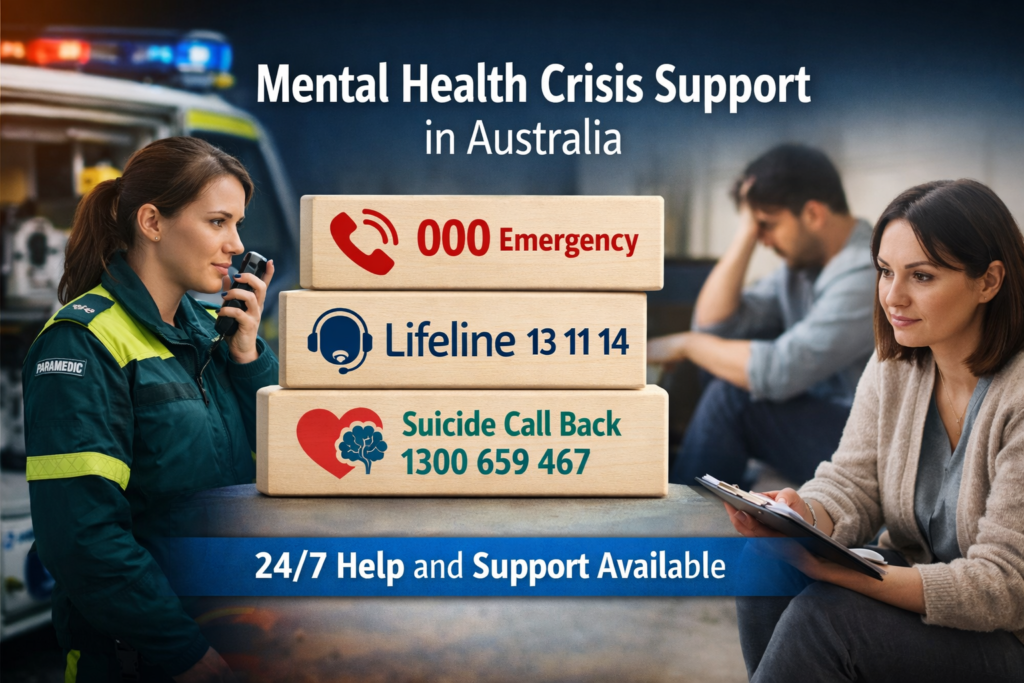
Crisis safety: Apps are not emergency services. If you’re at risk, contact local emergency services or a crisis line immediately.
How to use apps so they actually help
- Set one goal (e.g., “sleep 7 h ≥4 nights/week”) and pick the app that fits that goal. Track weekly. (NICE Sleepio guidance emphasises CBT-I targets).
- Schedule 10–15 minutes daily—consistency beats intensity (Calm/Headspace trials use short daily practices).
- Layer app + care: combine with therapy/GP where symptoms are moderate–severe; apps can serve as homework and ROM tools. (JAMA Netw Open, 2023).
- Review after 4–6 weeks: if no change on validated scales (e.g., PHQ-9/GAD-7), switch or escalate care. (Meta-analytic guidance on app dose/effects).
FAQ
Are mental health apps effective?
Yes—on average they yield small-to-moderate symptom improvements for common conditions, with best evidence for mindfulness, CBT for depression/anxiety, and CBT-I for insomnia. Quality varies widely. (Linardon et al., 2023; JAMA Netw Open, 2023; NICE MTG70).
Which mindfulness app is most evidence-based?
Both Headspace and Calm have RCTs; recent work particularly supports Headspace for everyday stress and Calm for student/workplace stress and sleep. (Kueh et al., 2025; Huberty et al., 2019; Jayawardene et al., 2022).
What’s the best insomnia app?
Sleepio (digital CBT-I) is recommended by NICE; CBT-i Coach is a free companion tool if you’re in CBT-I with a clinician.
Are chatbots like Wysa/Woebot real therapy?
They can deliver CBT-style skills and help with self-reflection, but should be seen as supplements; evidence bases are smaller and privacy/regulatory oversight is evolving. (Fitzpatrick et al., 2017; Fulmer et al., 2022; NIHR Wysa trial info).
References
- Meta-analyses & overviewsLinardon, J., Messer, M., Goldberg, S., & Fuller-Tyszkiewicz, M. (2023) ‘The efficacy of mindfulness apps on symptoms of depression and anxiety: An updated meta-analysis of RCTs’, Preprint/Report. Nunez, N. et al. (2023) ‘App-based interventions for moderate to severe depression: A systematic review and meta-analysis’, JAMA Network Open, 6(…): e… .
- Mindfulness appsKueh, C. et al. (2025) ‘App-based mindfulness meditation reduces stress in novice meditators: a randomized controlled trial of Headspace’, Annals of Behavioral Medicine, 59(1). Huberty, J. et al. (2019) ‘Efficacy of the Calm app to reduce stress among college students: RCT’, JMIR mHealth and uHealth, 7(6): e14273. Jayawardene, W. et al. (2022) ‘Pragmatic cluster-RCT of Calm in a US workforce’, JMIR mHealth and uHealth, 10(9): e38903. Headspace (2025) ‘Research library’.
- InsomniaNICE (2022) MTG70: Sleepio to treat insomnia and insomnia symptoms—evidence-based recommendations. NICE (2022) ‘App-based treatment for insomnia is an effective alternative to sleeping pills’. Kuhn, E. et al. (2016–2024) ‘CBT-i Coach: features, feasibility and effectiveness as CBT-I adjunct’.
- Anxiety & CBT self-helpSapkota, R. et al. (2023) ‘North American open-label 16-week trial of MindShift’, Journal of Mood & Anxiety Disorders, 1(…). Moberg, C., Niles, A. & Beermann, D. (2019) ‘Guided self-help works: RCT of Pacifica (Sanvello)’, Journal of Medical Internet Research, 21(6): e12556.
- ChatbotsFitzpatrick, K.K., Darcy, A. & Vierhile, M. (2017) ‘Woebot RCT in college students’, JMIR Mental Health, 4(2): e19. Fulmer, R. et al. (2022) ‘Evaluating therapeutic alliance with a free-text CBT conversational agent (Wysa)’, Frontiers in Digital Health, 4: 847991. NIHR (2024–25) ‘Clinical investigation of Wysa (IAPT waiting list)’.
- PTSD supportBröcker, M. et al. (2023) ‘Meta-analysis of PTSD Coach app: non-significant pooled between-group effects’, Global Mental Health commentary.
- Australian context / quality & privacyMozilla Foundation (2023) ‘Are mental health apps better or worse at privacy in 2023?’ Privacy Not Included. FTC (2024) ‘BetterHelp refund notices following 2023 settlement’. Australian Digital Health Agency (2024–25) ‘Assessment Framework for mHealth Apps’; ‘Digital Health Standards’. AIDH/ORCHA (2024) ‘Understanding & improving health apps in Australia’. ORCHA (2024) ‘Health App Library & assessment criteria (privacy, clinical assurance, usability)’. Smiling Mind (2024) ‘Research & impact overview’.
Final word
Apps can meaningfully help—especially for mindfulness, CBT for anxiety/depression, and insomnia—but they’re not created equal. Pick tools with published evidence or credible guidance, lock down your privacy, and use apps as part of a broader care plan when symptoms are moderate–severe. (Linardon et al., 2023; NICE, 2022; FTC, 2024).
General information only; not medical advice. If you’re in crisis, call local emergency services or a crisis line immediately.