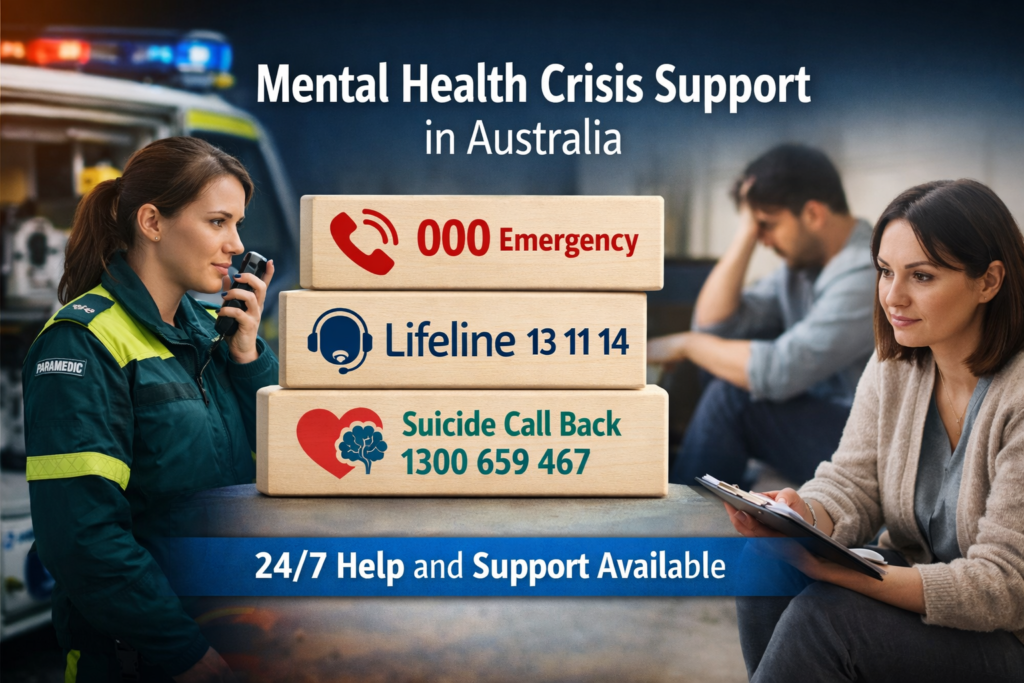

If you are in crisis or at risk of harm, call 000. For 24/7 support contact Lifeline 13 11 14, Suicide Call Back Service 1300 659 467, or 13YARN (for Aboriginal and Torres Strait Islander peoples).
Counselling helps when problems persist, function drops, or coping strategies stop working. Strong evidence shows structured therapies—CBT, ACT, exposure‑based treatments, interpersonal therapies, and DBT‑informed skills—reduce symptoms and improve role functioning across anxiety, depression, PTSD, OCD, insomnia and more (Hofmann et al., 2012; Cuijpers et al., 2021; Cusack et al., 2016; Olatunji et al., 2013; Trauer et al., 2015). If privacy or travel are barriers, Telehealth can be just as effective for many conditions (Backhaus et al., 2012; Berryhill et al., 2019; Batastini et al., 2021). In Australia, rebates may be available through Medicare (Better Access) and therapy is commonly funded under the NDIS where clinically appropriate (Department of Health and Aged Care, 2025; NDIA, 2025).
60‑second self‑screen: would counselling likely help?
Rate each item: 0 = Not at all, 1 = Several days, 2 = More than half the days, 3 = Nearly every day (past 2 weeks):
- Persistent worry, fear or panic (Norton & Price, 2007).
- Feeling down, low in energy or losing interest in usual activities (Hofmann et al., 2012).
- Sleep trouble (falling or staying asleep, or early waking) (Trauer et al., 2015).
- Irritability or difficulty controlling emotions (Kliem et al., 2010).
- Intrusive memories or avoidance after a stressful/traumatic event (Cusack et al., 2016).
- Obsessive thoughts or rituals that take time and cause distress (Olatunji et al., 2013).
- Relationship/work problems you can’t resolve alone (Weissman et al., 2018; Shadish & Baldwin, 2003).
- Problems affecting study, parenting, finances or social life (WHO/ILO, 2022).
Score ≥6 (or any safety concerns) → counselling is very likely to help; consider booking an assessment.
Quick formal options you can discuss with a clinician: PHQ‑9 for depression, GAD‑7 for anxiety, K10 for distress (Kroenke et al., 2001; Spitzer et al., 2006; Kessler et al., 2002).
How counselling works (and why it helps)
- Goal‑focused: You and your therapist map the problem → drivers → skills needed.
- Skills‑based: You learn and practise new habits (thought, emotion and action) between sessions.
- Measurable: You track change with brief measures and real‑life goals (Hofmann et al., 2012; Cuijpers et al., 2021).
Common evidence‑based approaches
- CBT / Behavioural Activation — challenges unhelpful thinking and builds activity (Hofmann et al., 2012; Ekers et al., 2014).
- ACT — increases psychological flexibility and values‑guided action (A‑Tjak et al., 2015).
- Exposure‑based therapies — for anxiety/OCD/PTSD (Norton & Price, 2007; Olatunji et al., 2013; Cusack et al., 2016).
- IPT / EFT / IBCT — when relationship patterns are central (Weissman et al., 2018; Shadish & Baldwin, 2003; Wiebe & Johnson, 2016).
- DBT‑informed skills — for emotion regulation and distress tolerance (Kliem et al., 2010; Panos et al., 2014).
- MBCT / CBT‑I — for relapse prevention and insomnia (Kuyken et al., 2016; Trauer et al., 2015).
Should I choose counselling, psychology, psychotherapy or psychiatry?
- Counselling/psychology (often overlapping in Australia): structured talking therapies for mild‑to‑moderate to complex concerns; psychologists can provide formal assessments and evidence‑based treatments.
- Psychotherapy: longer‑term work on patterns/relationships; can also be structured and evidence‑based.
- Psychiatry: medical doctors who assess, diagnose and manage mental disorders; can prescribe medication and offer psychotherapy.
- If symptoms are severe, include suicidality, psychosis, mania, or complex medical issues, include a GP/psychiatrist in your care.
Telehealth vs in‑person: which is better for me?
Both work for many presentations when sessions are structured; alliance is comparable online vs in‑room (Norwood et al., 2018; Backhaus et al., 2012; Berryhill et al., 2019). Choose in‑person if you lack privacy, have high immediate risk, or need assessments requiring equipment. Hybrid care is common (AHPRA, 2020; Monash University, 2024).
What to expect in the first 3 sessions
- Assessment & goals: story, strengths, risks; agree priorities and initial measures.
- Formulation & plan: choose the therapy, frequency, and homework; set review points.
- Early skills: activity scheduling, exposure mapping, sleep routine, or communication skills—tailored to your goals.
How long will it take?
Some problems improve in 4–8 sessions; others (e.g., complex trauma) need longer. Expect weekly or fortnightlysessions at first, with regular reviews and a step‑down plan as you improve (Weissman et al., 2018; Hofmann et al., 2012).
Access and costs in Australia (Medicare, NDIS, private)
- Medicare (Better Access): With a GP Mental Health Treatment Plan, you may claim rebates for up to 10 individual and up to 10 group sessions per calendar year; Telehealth eligible when clinically appropriate (Department of Health and Aged Care, 2025).
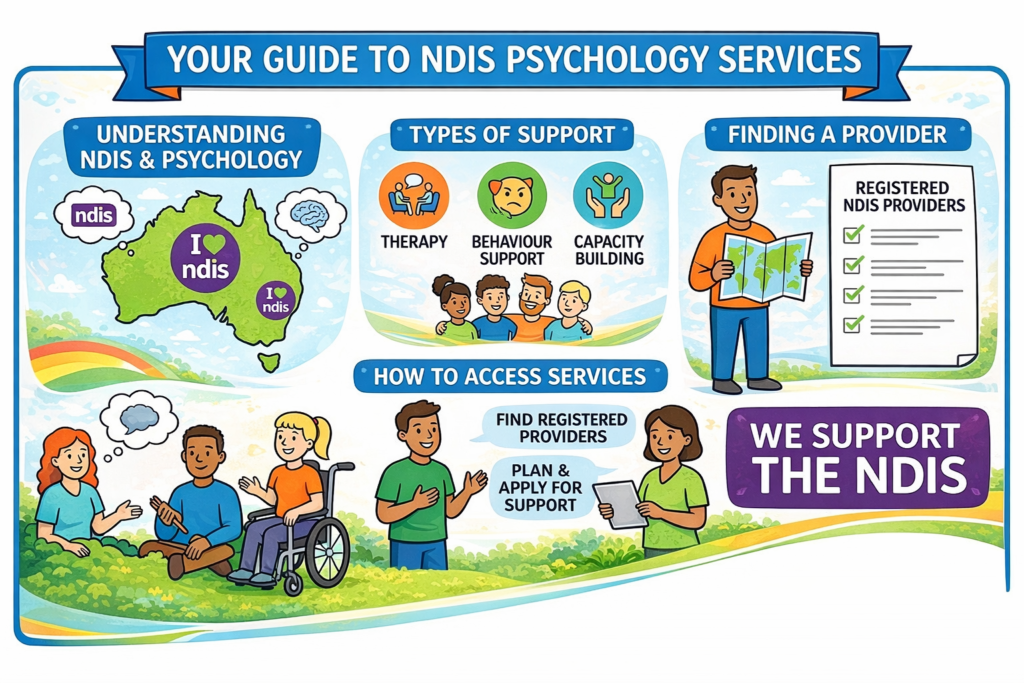
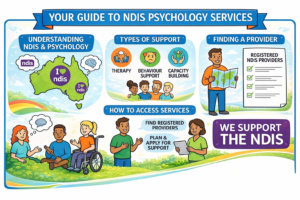
- NDIS: Therapy is funded under Capacity Building (e.g., Improved Daily Living; Improved Relationships) where goals and functional needs support it; Telehealth can reduce travel costs (NDIA, 2025).
- Private/insurance: Check inclusions, Telehealth policies, and gap fees.
See our detailed guide: How to claim Mental Health Care Plan rebates (2025) on TherapyNearMe.com.au.
Barriers that stop people starting (and how to beat them)
- “I should cope alone.” Seeking help is a problem‑solving step, not a failure; therapy teaches skills (Hofmann et al., 2012).
- “Online won’t feel real.” Alliance and outcomes are typically non‑inferior online (Norwood et al., 2018; Batastini et al., 2021).
- “I can’t afford it.” Ask about rebates, reduced‑fee options, or NDIS. Many clinics do on‑the‑spot Medicareclaiming.
- “What if it’s not a fit?” You can change clinicians or methods; fit is a predictor of outcomes.
Choosing a therapist: quick checklist
- Credentials & scope: AHPRA‑registered psychologist/clinical psychologist; relevant training (e.g., CBT, ACT, DBT, EMDR).
- Method clarity: Can they explain why this approach fits your goals?
- Plan & measures: frequency, homework, and how progress is tracked.
- Accessibility: Telehealth vs clinic vs home; fees, rebates; for NDIS—travel rules and itemisation (NDIA, 2025).
- Values fit: you feel respected; ruptures are discussed and repaired.
Frequently asked questions
Do I need a diagnosis first?
No. Counselling can help with life stress, grief, burnout and relationship issues without a formal diagnosis. Your GP can advise on rebates.
Will I have to talk about my past?
Only if it helps your goals. Many therapies focus on present‑focused skills.
Can I try counselling if I’m already on medication?
Yes. Combined care is common and can be synergistic—ask your GP/psychiatrist (NICE, 2018).
What if I start and it feels uncomfortable?
Change takes practice. Share concerns with your therapist; adjust pace, goals or method.
How TherapyNearMe.com.au can help
- Telehealth psychology (Australia‑wide) and home visits in select areas.
- Evidence‑based CBT, ACT, exposure‑based therapies, IPT/EFT for couples, DBT‑informed skills and CBT‑I.
- NDIS participants welcome.
Book online or call 1800 NEAR ME.
References
AHPRA (2020) Telehealth guidance for practitioners. Melbourne: Australian Health Practitioner Regulation Agency. Available at: https://www.ahpra.gov.au/
A‑Tjak, J.G.L., Davis, M.L., Morina, N., Powers, M.B., Smits, J.A.J. & Emmelkamp, P.M.G. (2015) ‘A meta‑analysis of the efficacy of Acceptance and Commitment Therapy (ACT) for anxiety and depression’, Journal of Affective Disorders, 185, pp. 13–22.
Backhaus, A., Agha, Z., Maglione, M.L., Repp, A., Ross, B., Zuest, D., Rice‑Thorp, N.M., Lohr, J. & Thorp, S.R. (2012) ‘Videoconferencing psychotherapy: A systematic review’, Psychological Services, 9(2), pp. 111–131.
Batastini, A.B., Paprzycki, P., Jones, A.C. & MacLean, N. (2021) ‘Are videoconferenced mental and behavioral health services just as good as in‑person? A meta‑analysis of a fast‑growing practice’, Clinical Psychology Review, 83, 101944.
Berryhill, M.B., Culmer, N., Williams, N., Halli‑Tierney, A., Betancourt, A., King, M., et al. (2019) ‘Videoconferencing psychotherapy and depression: a systematic review’, Telemedicine and e‑Health, 25(6), pp. 435–446.
Cuijpers, P., Karyotaki, E., Reijnders, M. & Purgato, M. (2021) ‘Psychological treatments for depression in adults: a network meta‑analysis’, World Psychiatry, 20(2), pp. 283–293.
Cusack, K., Jonas, D.E., Forneris, C.A., Wines, C., Sonis, J., Middleton, J.C. et al. (2016) ‘Psychological treatments for adults with posttraumatic stress disorder: a systematic review and meta‑analysis’, Annals of Internal Medicine, 165(12), pp. 757–767.
Ekers, D., Webster, L., Van Straten, A., Cuijpers, P., Richards, D. & Gilbody, S. (2014) ‘Behavioural activation for depression: an updated meta‑analysis of effectiveness’, PLoS ONE, 9(6), e100100.
Hofmann, S.G., Asnaani, A., Vonk, I.J.J., Sawyer, A.T. & Fang, A. (2012) ‘The efficacy of cognitive behavioral therapy: a review of meta‑analyses’, Cognitive Therapy and Research, 36(5), pp. 427–440.
Kessler, R.C., Andrews, G., Colpe, L.J., Hiripi, E., Mroczek, D.K., Normand, S.L. et al. (2002) ‘Short screening scales to monitor population prevalences and trends in non‑specific psychological distress’, Psychological Medicine, 32(6), pp. 959–976.
Kliem, S., Kröger, C. & Kosfelder, J. (2010) ‘Dialectical behavior therapy for borderline personality disorder: a meta‑analysis using mixed‑effects modeling’, Journal of Consulting and Clinical Psychology, 78(6), pp. 936–951.
Kroenke, K., Spitzer, R.L. & Williams, J.B.W. (2001) ‘The PHQ‑9: validity of a brief depression severity measure’, Journal of General Internal Medicine, 16(9), pp. 606–613.
Kuyken, W., Warren, F., Taylor, R.S., Whalley, B., Crane, C., Bondolfi, G. et al. (2016) ‘Efficacy of mindfulness‑based cognitive therapy in prevention of depressive relapse: an individual patient data meta‑analysis’, JAMA Psychiatry, 73(6), pp. 565–574.
Monash University (2024) ‘Delivery of allied‑health interventions using Telehealth modalities: a rapid systematic review’, Healthcare, 12(12), 1217.
NICE (2018) Post‑traumatic stress disorder: NICE guideline [NG116]. London: National Institute for Health and Care Excellence.
NDIA (2025) ‘Therapy supports’, NDIS – Supports funded by the NDIS. Canberra: National Disability Insurance Agency. Available at: https://www.ndis.gov.au/
Norton, P.J. & Price, E.C. (2007) ‘A meta‑analytic review of adult CBT outcomes across the anxiety disorders’, Journal of Nervous and Mental Disease, 195(6), pp. 521–531.
Norwood, C., Moghaddam, N.G., Malins, S. & Sabin‑Farrell, R. (2018) ‘Working alliance and outcome effectiveness in videoconferencing psychotherapy: a systematic review and meta‑analysis’, Clinical Psychology & Psychotherapy, 25(6), pp. 797–816.
Olatunji, B.O., Davis, M.L., Powers, M.B. & Smits, J.A.J. (2013) ‘Cognitive behavioral therapy for obsessive‑compulsive disorder: a meta‑analysis of treatment outcome and moderators’, Journal of Psychiatric Research, 47(1), pp. 33–41.
Panos, P.T., Jackson, J.W., Hasan, O., Panos, A., Eyer, S. & White, M.L. (2014) ‘Meta‑analysis and systematic review assessing the efficacy of dialectical behavior therapy (DBT)’, Research on Social Work Practice, 24(2), pp. 213–223.
Shadish, W.R. & Baldwin, S.A. (2003) ‘Meta‑analysis of marital and family therapy: an updated review’, Journal of Marital and Family Therapy, 29(4), pp. 547–570.
Spitzer, R.L., Kroenke, K., Williams, J.B.W. & Löwe, B. (2006) ‘A brief measure for assessing generalized anxiety disorder: the GAD‑7’, Archives of Internal Medicine, 166(10), pp. 1092–1097.
Trauer, J.M., Qian, M.Y., Doyle, J.S., Rajaratnam, S.M.W. & Cunnington, D. (2015) ‘Cognitive behavioral therapy for chronic insomnia: a systematic review and meta‑analysis’, Annals of Internal Medicine, 163(3), pp. 191–204.
Weissman, M.M., Markowitz, J.C. & Klerman, G.L. (2018) The Guide to Interpersonal Psychotherapy (Updated ed.). New York: Oxford University Press.
Wiebe, S.A. & Johnson, S.M. (2016) ‘A review of the research in emotionally focused therapy for couples’, Family Process, 55(3), pp. 390–407.
WHO/ILO (2022) Mental Health at Work: Policy Brief. Geneva: World Health Organization/International Labour Organization.
Educational only; not a substitute for personalised medical advice. For Telehealth bookings with a registered psychologist, visit TherapyNearMe.com.au or call 1800 NEAR ME.