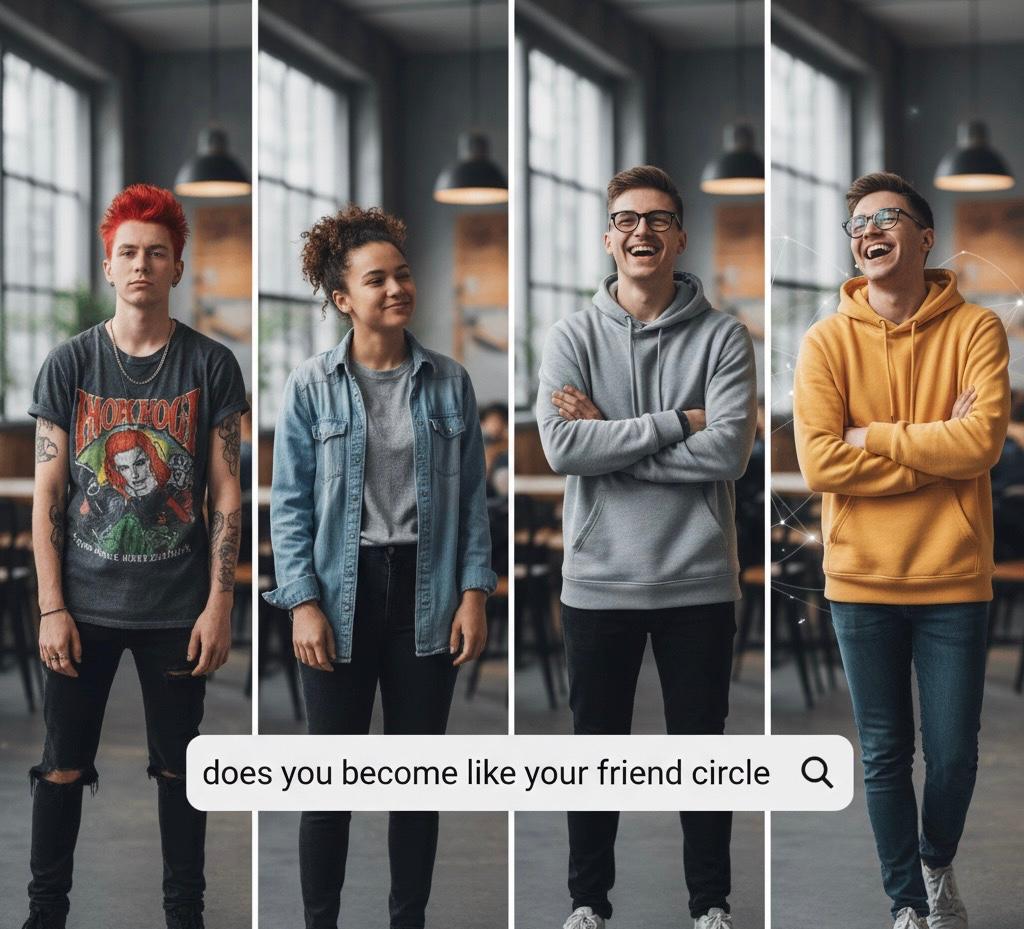
Friends do shape us—but not in a simple, deterministic way. Two forces operate together: selection (homophily)—we choose friends with similar traits—and influence (socialisation)—we become more alike over time (McPherson, Smith‑Lovin & Cook, 2001; Brechwald & Prinstein, 2011). High‑quality evidence shows peer effects for health behaviours (e.g., smoking cessation), political mobilisation, study effort and some aspects of mood, especially in adolescence (Fowler & Christakis, 2008; Bond et al., 2012; Sacerdote, 2001; Haeffel & Hames, 2014). Effect sizes are usually small‑to‑moderate, stronger for close ties and in dense groups, and they cut both ways—toward better or worse wellbeing (Aral, Muchnik & Sundararajan, 2009; Brechwald & Prinstein, 2011). The upshot: curate your social environment, protect sleep and mood, and use the strategies below to tilt influence in your favour.
First principles: why friends seem to “make” us
Homophily (selection). We gravitate toward people like us in age, values, interests and risk profiles. That alone produces similarity without any influence (McPherson, Smith‑Lovin & Cook, 2001).
Influence (socialisation). We also adapt to peers via social learning, norms, mimicry and shared routines. In many studies, both processes operate simultaneously (Brechwald & Prinstein, 2011; Aral, Muchnik & Sundararajan, 2009).
Beware of confounding. Observational network studies can misattribute selection as influence; careful designs (experiments, random roommate assignments, longitudinal network models) address this (Shalizi & Thomas, 2011; Sacerdote, 2001).
What the evidence says (by domain)
1) Health behaviours (smoking, drinking, activity)
- Smoking cessation spreads through networks. In a 32‑year cohort, quitting clustered in social ties, especially among close friends and family (Fowler & Christakis, 2008).
- Adolescent smoking/alcohol use: Longitudinal network models find both selection and influence drive convergence (Mercken et al., 2010; Brechwald & Prinstein, 2011).
- Norm feedback works. Correcting misperceived drinking norms reduces heavy drinking in young adults (Neighbors et al., 2004).
2) Mood and cognition (co‑rumination, depressive symptoms)
- Co‑rumination—excessive problem talk—deepens friendship bonds but predicts higher anxiety and depression over time, particularly for girls (Rose, 2002; Stone, Hankin & Gibb, 2011).
- Depression “contagion” via cognition. Among new roommates, those exposed to peers with high negative cognitive style later showed increased cognitive risk and depressive symptoms (Haeffel & Hames, 2014).
- Emotional contagion online and offline. Laboratory and large‑scale field studies suggest emotions can spread through subtle cues and feeds, though effects are small and context‑dependent (Hatfield, Cacioppo & Rapson, 1993; Kramer, Guillory & Hancock, 2014).
3) Effort, achievement and habits
- Peer study effort. Random roommate assignment studies show peers influence academic effort and outcomes—implying genuine socialisation (Sacerdote, 2001).
- Exercise and routine. Friends’ activity patterns predict our own, via shared schedules and accountability (Aral, Muchnik & Sundararajan, 2009; Yakusheva, Kapinos & Weiss, 2014).
4) Body weight and diet (a cautionary tale)
- A famous analysis reported obesity clustering across networks (Christakis & Fowler, 2007), but critics argued alternative explanations (shared environments; model assumptions) could account for the pattern (Cohen‑Cole & Fletcher, 2008; Shalizi & Thomas, 2011). Takeaway: not every cluster implies contagion.
What makes influence stronger (or weaker)?
- Tie strength & centrality: Close, high‑trust ties and popular peers exert larger effects (Brechwald & Prinstein, 2011).
- Developmental stage: Adolescents are more susceptible to peer influence than adults, though sensitivity varies widely (Steinberg & Monahan, 2007).
- Group norms & clarity: Clear, shared norms (e.g., “we don’t drink on weeknights”) amplify alignment (Cialdini, Reno & Kallgren, 1990).
- Network structure: Dense, closed networks promote conformity; diverse networks expose you to new ideas (Granovetter, 1973).
- Algorithmic feeds: Online curation intensifies exposure; muting and following choices change your “ambient peer group” (Kramer, Guillory & Hancock, 2014).
Practical playbook: use peer effects to protect your mental health
- Audit your circle (and feeds). List the five people and five accounts you interact with most. Do they nudge you toward sleep, activity, moderation and kindness, or away from them? Keep the lifters; limit the drainers.
- Design visible norms. Make the healthy default obvious: group messages about evening walks, “phones out of bedrooms”, or alcohol‑free weekdays (Cialdini, Reno & Kallgren, 1990).
- Swap co‑rumination for co‑problem‑solving. Use 10 minutes to vent, then shift to plans and experiments; check‑back next week (Rose, 2002; Stone, Hankin & Gibb, 2011).
- Find accountability partners. Pair up for exposure tasks (social anxiety), sleep routines, or screen‑time limits.
- Diversify weak ties. Join a club, class or volunteering group to broaden inputs (Granovetter, 1973).
- Protect sleep. Late‑night group chats and doomscrolling erode mood; set bedtime mode and move chargers out of bedrooms.
- If your circle is struggling too, bring in pros. When collective stress is high, a psychologist‑guided group or individual therapy adds skills and perspective.
FAQs
Do adults still copy friends, or is this just a teen issue?
Adults are less susceptible on average but still adapt to close peers—especially for routines (sleep, exercise), alcohol use and mood habits (Brechwald & Prinstein, 2011; Aral, Muchnik & Sundararajan, 2009).
Can friends change my personality?
Core traits are relatively stable, but day‑to‑day behaviours and explanatory styles do shift with context and company. Small, repeated shifts matter for wellbeing (Haeffel & Hames, 2014).
Is social media worse than “real life”?
It magnifies exposure and speed. Curating feeds and setting night‑time boundaries reduces risk (Kramer, Guillory & Hancock, 2014).
Australian pathways to help
- Telehealth psychology (Australia‑wide): Evidence‑based help for social anxiety, depression, sleep problems and habit change.
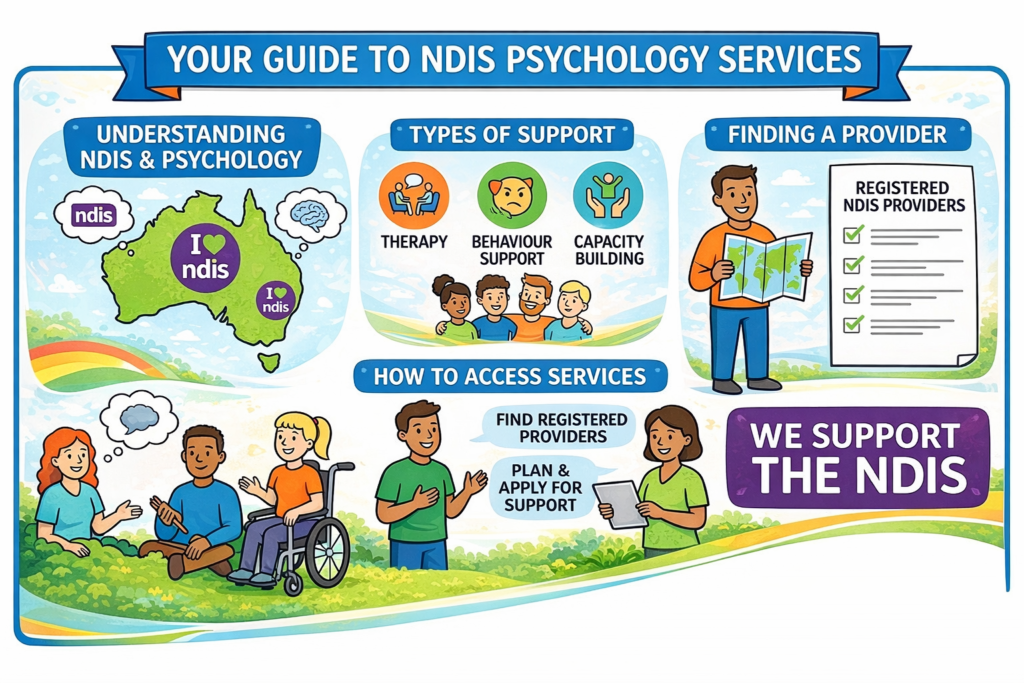
- NDIS psychology & behaviour support: For eligible participants where disability impacts daily functioning.
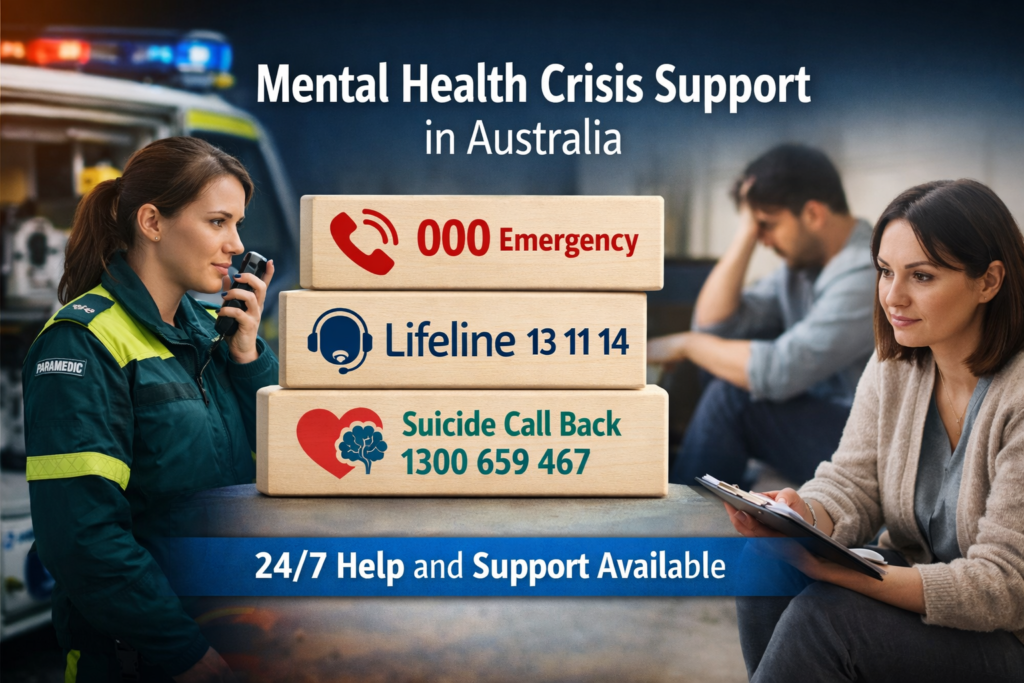
- Crisis: If you’re at risk or in an emergency, call 000. For 24/7 support: Lifeline 13 11 14.
How TherapyNearMe.com.au can help
We can help you design a people‑and‑habits plan that fits your goals—shifting conversations from co‑rumination to action, building healthy norms, and tackling anxiety or depression with structured, evidence‑based therapy. Book online for same‑week Telehealth across Australia.
References
Aral, S., Muchnik, L. & Sundararajan, A. (2009) ‘Distinguishing influence‑based contagion from homophily‑driven diffusion in dynamic networks’, Proceedings of the National Academy of Sciences, 106(51), pp. 21544–21549.
Bond, R.M., Fariss, C.J., Jones, J.J., Kramer, A.D.I., Marlow, C., Settle, J.E. & Fowler, J.H. (2012) ‘A 61‑million‑person experiment in social influence and political mobilization’, Nature, 489, pp. 295–298.
Brechwald, W.A. & Prinstein, M.J. (2011) ‘Beyond homophily: A decade of advances in understanding peer influence processes’, Journal of Research on Adolescence, 21(1), pp. 166–179.
Christakis, N.A. & Fowler, J.H. (2007) ‘The spread of obesity in a large social network over 32 years’, New England Journal of Medicine, 357(4), pp. 370–379.
Cialdini, R.B., Reno, R.R. & Kallgren, C.A. (1990) ‘A focus theory of normative conduct: Recycling the concept of norms’, Journal of Personality and Social Psychology, 58(6), pp. 1015–1026.
Cohen‑Cole, E. & Fletcher, J.M. (2008) ‘Is obesity contagious? Social networks vs. environment’, Journal of Health Economics, 27(5), pp. 1382–1387.
Fowler, J.H. & Christakis, N.A. (2008) ‘The collective dynamics of smoking in a large social network’, New England Journal of Medicine, 358(21), pp. 2249–2258.
Granovetter, M.S. (1973) ‘The strength of weak ties’, American Journal of Sociology, 78(6), pp. 1360–1380.
Hatfield, E., Cacioppo, J.T. & Rapson, R.L. (1993) Emotional contagion. New York: Cambridge University Press.
Haeffel, G.J. & Hames, J.L. (2014) ‘Cognitive vulnerability to depression can be contagious’, Clinical Psychological Science, 2(3), pp. 326–332.
Kramer, A.D.I., Guillory, J.E. & Hancock, J.T. (2014) ‘Experimental evidence of massive‑scale emotional contagion through social networks’, Proceedings of the National Academy of Sciences, 111(24), pp. 8788–8790.
McPherson, M., Smith‑Lovin, L. & Cook, J.M. (2001) ‘Birds of a feather: Homophily in social networks’, Annual Review of Sociology, 27, pp. 415–444.
Mercken, L., Snijders, T.A.B., Steglich, C., Vartiainen, E. & de Vries, H. (2010) ‘Dynamics of adolescent friendship networks and smoking behavior’, Journal of Applied Social Psychology, 40(3), pp. 611–628.
Neighbors, C., Larimer, M.E. & Lewis, M.A. (2004) ‘Targeting misperceptions of descriptive drinking norms’, Journal of Studies on Alcohol, 65(4), pp. 556–566.
Rose, A.J. (2002) ‘Co‑rumination in the friendships of girls and boys’, Child Development, 73(6), pp. 1830–1843.
Sacerdote, B. (2001) ‘Peer effects with random assignment: Results for Dartmouth roommates’, Quarterly Journal of Economics, 116(2), pp. 681–704.
Shalizi, C.R. & Thomas, A.C. (2011) ‘Homophily and contagion are generically confounded in observational social network studies’, Sociological Methods & Research, 40(2), pp. 211–239.
Steinberg, L. & Monahan, K.C. (2007) ‘Age differences in resistance to peer influence’, Developmental Psychology, 43(6), pp. 1531–1543.
Stone, L.B., Hankin, B.L. & Gibb, B.E. (2011) ‘Co‑rumination predicts the onset of depressive disorders during adolescence’, Journal of Clinical Child & Adolescent Psychology, 40(5), pp. 1–9.
Yakusheva, O., Kapinos, K. & Weiss, M. (2014) ‘Peer effects and the freshman 15’, Economics & Human Biology, 13, pp. 139–149.
General information only. For personalised guidance, book a Telehealth session with a registered psychologist via TherapyNearMe.com.au. If you are in danger or need urgent help, call 000; for 24/7 support, call Lifeline 13 11 14.