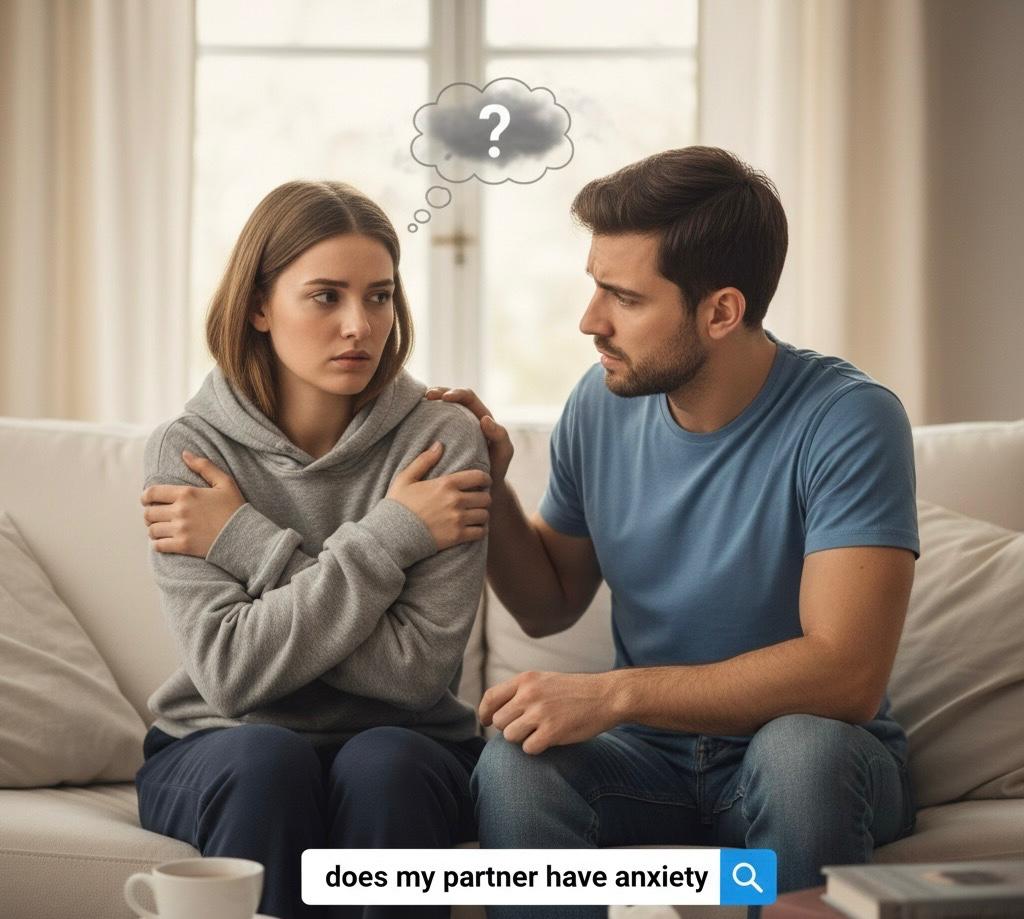
Anxiety shows up in relationships through worry loops, avoidance, irritability, reassurance‑seeking, sleep problems and physical tension. A clinical diagnosis depends on persistence, impairment and context (APA, 2022). Most anxiety disorders respond well to cognitive behavioural therapy (CBT) and, where indicated, SSRIs/SNRIs(Hofmann et al., 2012; Baldwin et al., 2014; Bandelow et al., 2017; NICE, 2020). If anxiety leads to controlling or abusive behaviour, prioritise safety and seek specialist support (NICE, 2014; 2021).
What “anxiety” means in clinical terms
Clinicians distinguish between everyday stress and anxiety disorders—conditions where anxiety is excessive, hard to control, and impairs work, study or relationships (APA, 2022). Main categories include generalised anxiety disorder (GAD), panic disorder, social anxiety disorder, specific phobias, obsessive–compulsive disorder (OCD) and post‑traumatic stress disorder (PTSD). Each has distinct patterns and evidence‑based treatments (NICE, 2020; Baldwin et al., 2014; Bandelow et al., 2017).
Common signs your partner may be struggling with anxiety
Note: None of these proves a diagnosis. Look for clusters that persist ≥ several weeks and interfere with life (APA, 2022).
Cognitive & emotional
- Constant “what if?” thinking; difficulty switching off
- Feeling on edge, keyed up; irritability or low frustration tolerance
- Catastrophic predictions about health, finances or the relationship
- Strong fear of negative judgement (social anxiety) (APA, 2022; NICE, 2020)
Physical
- Restlessness; muscle tension; headaches; jaw clenching
- Stomach upsets, nausea, diarrhoea; IBS flares
- Heart racing, chest tightness, breathlessness (panic) (APA, 2022)
Behavioural & relational
- Avoidance: cancelling plans, reluctance to travel, avoiding calls
- Reassurance‑seeking: repeated checking if you’re angry/okay; checking messages
- Safety behaviours: always driving “just in case”, carrying water, sitting near exits
- Sleep disruption: late‑night worry, doomscrolling, early waking (Scott & Woods, 2019)
Patterns by specific anxiety presentations
Generalised anxiety disorder (GAD): Worry across multiple domains for most days over ≥6 months; restlessness; fatigue; concentration problems; irritability; muscle tension; sleep disturbance (APA, 2022).
Panic disorder: Recurrent unexpected panic attacks + persistent concern/behaviour change; interoceptive fear (APA, 2022; NICE, 2020).
Social anxiety disorder: Marked fear of scrutiny in social/performance settings; avoidance; safety behaviours (APA, 2022; NICE, 2020).
OCD: Intrusive thoughts/urges + compulsions; time‑consuming and distressing (NICE, 2005; 2022).
PTSD: Intrusion, avoidance, negative mood/cognition shifts and hyperarousal after trauma (NICE, 2018; 2023).
Look‑alikes and contributing factors (don’t overlook these)
- Medical: Thyroid dysfunction, anaemia, asthma, cardiac arrhythmia, perimenopause, chronic pain; medication side‑effects (e.g., stimulants) (NICE, 2020).
- Substances: Caffeine, alcohol, cannabis, nicotine and withdrawal states can amplify anxiety (Baldwin et al., 2014).
- Neurodiversity: ADHD/autism may present with social overwhelm or sensory anxiety; assessment clarifies needs (NICE, 2018; 2021).
- Sleep: Poor sleep both predicts and worsens anxiety (Scott & Woods, 2019).
- Stressors: Financial, caregiving and workplace demands maintain worry cycles (Hofmann et al., 2012).
A practical, compassionate game‑plan for partners
1) Start with validation, not fixes
Try: “I can see this is hard. I’m on your side. Want to talk or prefer quiet company?” Validation reduces physiological arousal and opens the door to problem‑solving (NICE, 2020).
2) Shift from reassurance to collaboration
Reassurance can accidentally reinforce worry; swap to curious questions: “What’s the story your anxiety is telling you? What evidence supports/contradicts it?” (Hofmann et al., 2012).
3) Protect sleep and routines
Agree on a device cut‑off, wind‑down routine, regular wake time, and light morning activity (Scott & Woods, 2019).
4) Plan graded exposure (not avoidance)
Avoidance shrinks life. With a clinician, build a step ladder from easiest to harder tasks (e.g., brief café visit → small talk → presentation) (NICE, 2020).
5) Share the load—fairly
Anxiety can reduce bandwidth. Re‑balance chores temporarily without removing growth opportunities. Review weekly.
6) Know when not to engage the worry
If loops run long, take a compassionate pause: “Let’s park this for 10 minutes and come back with a plan.”
7) Support seeking evidence‑based care
CBT (with or without medication) has strong evidence. Encourage a GP review for physical causes and a referral to a psychologist; Telehealth is effective for many (Hofmann et al., 2012; NICE, 2020; Bandelow et al., 2017).
Green–amber–red flags (when to act)
Green: Occasional worry; minimal avoidance; normal functioning. Offer empathy; share sleep/wind‑down routines.
Amber: Persistent worry ≥2–4 weeks; notable avoidance; frequent reassurance; sleep issues. Encourage assessment; consider CBT/skills training.
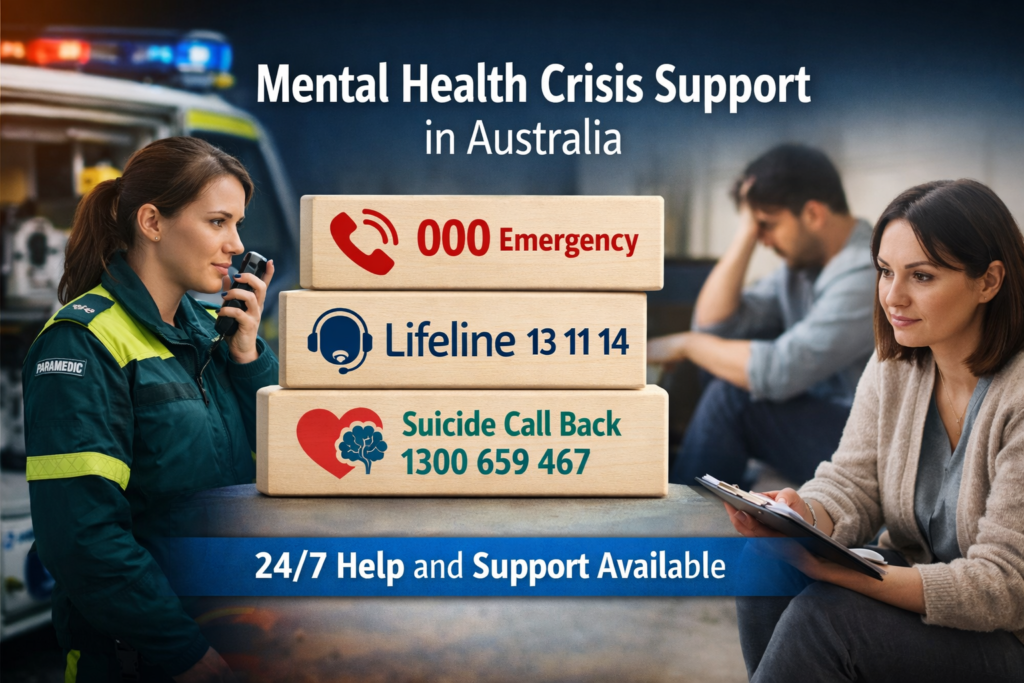
Red: Panic attacks; self‑medication (alcohol/cannabis); work/school drop‑off; controlling or aggressive behaviour; thoughts of self‑harm. Prioritise safety and seek urgent help (NICE, 2014; 2021). Call Lifeline 13 11 14 or 000 in an emergency. For family and domestic violence, contact 1800RESPECT (1800 737 732).
What treatment looks like (brief overview)
- Psychological therapies: CBT (psychoeducation, cognitive restructuring, behavioural experiments, exposure), ACT and metacognitive therapy show benefits (Hofmann et al., 2012; Normann & Morina, 2018; NICE, 2020).
- Medications: SSRIs/SNRIs are first‑line for several anxiety disorders; benzodiazepines are not first‑line for long‑term use due to dependence risks (Baldwin et al., 2014; Bandelow et al., 2017; NICE, 2020).
- Adjuncts: Sleep interventions, exercise, problem‑solving therapy; limit caffeine/alcohol (Scott & Woods, 2019; NICE, 2020).
- Comorbidity: If OCD/PTSD features are present, use disorder‑specific protocols (NICE, 2018; 2023).
Australian pathways to help
- Telehealth psychology (Australia‑wide): Book with TherapyNearMe.com.au (Medicare/NDIS/private).
- GP mental‑health plan: Ask your GP about Medicare‑subsidised sessions.
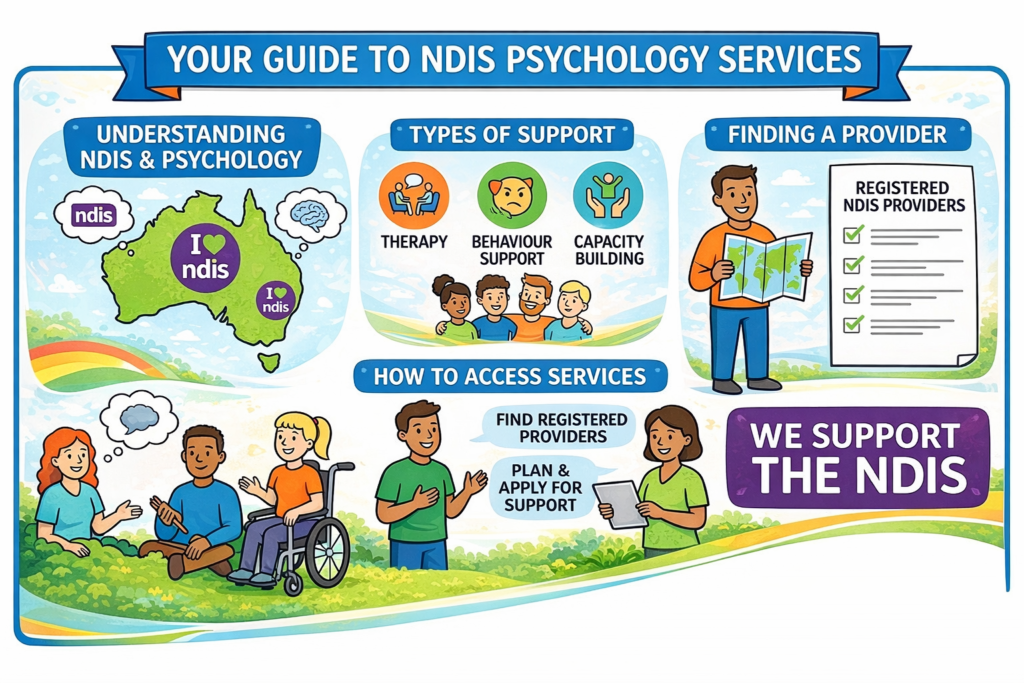
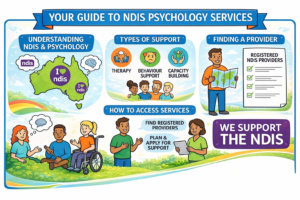
- NDIS psychology & behaviour support: For eligible participants where disability impacts daily functioning.
- If risk is acute: 000 in an emergency; Lifeline 13 11 14; 1800RESPECT for family/domestic violence.
Frequently asked questions
Can anxiety look like anger?
Yes—especially when someone feels trapped or over‑aroused. The target is the physiology, not the partner (APA, 2022).
Should I avoid triggers to keep the peace?
Short‑term accommodation can be kind; long‑term avoidance maintains anxiety. Work with a clinician on graded exposure (NICE, 2020).
Does Telehealth therapy work for anxiety?
For many, yes—CBT skills transfer well to video if sessions are structured (Hofmann et al., 2012; NICE, 2020).
How TherapyNearMe.com.au can help
- Evidence‑based Telehealth psychology: CBT for worry, panic, social anxiety, OCD and PTSD.
- Behaviour support (NDIS): Practical strategies where disability intersects with anxiety‑driven behaviours.
- Resources: Articles on sleep, anxiety skills, and digital wellbeing.
Start here: Online referrals via TherapyNearMe.com.au • Same‑week Telehealth availability.
References
American Psychiatric Association (APA) (2022) Diagnostic and Statistical Manual of Mental Disorders (DSM‑5‑TR).5th ed., text rev. Washington, DC: American Psychiatric Publishing.
Baldwin, D.S. et al. (2014) ‘Evidence‑based pharmacological treatment of anxiety disorders, post‑traumatic stress disorder and obsessive‑compulsive disorder: A revision of the 2005 guidelines from the British Association for Psychopharmacology’, Journal of Psychopharmacology, 28(5), pp. 403–439. https://doi.org/10.1177/0269881114525674
Bandelow, B., Michaelis, S. & Wedekind, D. (2017) ‘Treatment of anxiety disorders’, Dialogues in Clinical Neuroscience, 19(2), pp. 93–107. (Includes WFSBP guidance overview.)
Hofmann, S.G., Asnaani, A., Vonk, I.J., Sawyer, A.T. & Fang, A. (2012) ‘The efficacy of cognitive behavioral therapy: A review of meta‑analyses’, Cognitive Therapy and Research, 36(5), pp. 427–440. https://doi.org/10.1007/s10608-012-9476-1
NICE (2005; updated 2022) Obsessive‑compulsive disorder and body dysmorphic disorder: treatment. London: National Institute for Health and Care Excellence.
NICE (2014; updated 2021) Domestic violence and abuse: multi‑agency working. London: National Institute for Health and Care Excellence.
NICE (2018; updated 2023) Post‑traumatic stress disorder. London: National Institute for Health and Care Excellence.
NICE (2020) Generalised anxiety disorder and panic disorder in adults: management (CG113). London: National Institute for Health and Care Excellence.
Normann, N. & Morina, N. (2018) ‘The efficacy of metacognitive therapy in improving anxiety and depression: A meta‑analysis of RCTs’, Frontiers in Psychology, 9, 2211. https://doi.org/10.3389/fpsyg.2018.02211
Scott, H. & Woods, H.C. (2019) ‘Understanding links between social media use, sleep and mental health’, Current Sleep Medicine Reports, 5, pp. 141–149. https://doi.org/10.1007/s40675-019-00148-9
General information only. For personalised assessment and support, consider booking a Telehealth session with a registered psychologist via TherapyNearMe.com.au.