
“Difficult” is not a diagnosis—it’s a pattern of behaviours (e.g., criticism, control, boundary violations, triangulation, stonewalling) that repeatedly harms wellbeing or blocks healthy problem‑solving. Evidence‑based tools include clear boundaries, assertive scripts, emotion‑regulation skills (e.g., reappraisal, DBT skills), and structured problem‑solving (Gross & John, 2003; Kliem, Kröger & Kosfelder, 2010; D’Zurilla & Goldfried, 1971; Aldao, Nolen‑Hoeksema & Schweizer, 2010). When substance use or serious mental illness is involved, family interventions(e.g., CRAFT, family psychoeducation) improve outcomes and reduce relapse (Roozen et al., 2010; Pharoah et al., 2010). If patterns involve coercive control or violence, prioritise safety and specialised support.
What counts as “difficult”? Behaviour, not labels
Common patterns:
- Criticism and contempt: global put‑downs; sarcasm; public shaming.
- Control and boundary violations: uninvited advice; accessing private info; “drop‑ins” without consent.
- Gaslighting & denial: denying facts/feelings; reframing concerns as “crazy” or “too sensitive”.
- Stonewalling/withdrawal: refusing discussion, silent treatment.
- Triangulation: pulling a third person into conflict; splitting alliances.
- Emotional volatility: explosive anger, guilt‑tripping.
Focus on specific behaviours and impacts, not armchair diagnoses. This keeps conversations fair—and actionable.
Why family conflict hits so hard (the science in brief)
- Risky families: chronic conflict, coldness and chaos increase long‑term mental and physical health risks (Repetti, Taylor & Seeman, 2002).
- Expressed emotion (EE): high criticism/hostility/intrusiveness predicts relapse in several conditions; reducing EE via family interventions improves outcomes (Butzlaff & Hooley, 1998; Pharoah et al., 2010).
- Emotion regulation: cognitive reappraisal relates to better wellbeing; suppression to worse interpersonal functioning (Gross & John, 2003).
- Avoidance & rumination: common but unhelpful strategies that maintain distress (Aldao, Nolen‑Hoeksema & Schweizer, 2010; Nolen‑Hoeksema, Wisco & Lyubomirsky, 2008).
60‑second self‑check
In the past month, how often (Never / Sometimes / Often / Most days)…
- I felt tense or on guard before family contact.
- Reasonable requests were met with anger, guilt or threats.
- My sleep/mood worsened after interactions.
- Boundaries were ignored after I stated them.
- Conflicts recycle without resolution.
If you marked Often/Most days on ≥3 items, consider a structured plan below and seek professional support.
Safety first: red flags that need a different response
- Physical or sexual violence; threats; stalking; coercive control.
- Financial abuse or sabotage (e.g., restricting access to money).
- Isolation from supports; monitoring devices; threats of self‑harm to control you.
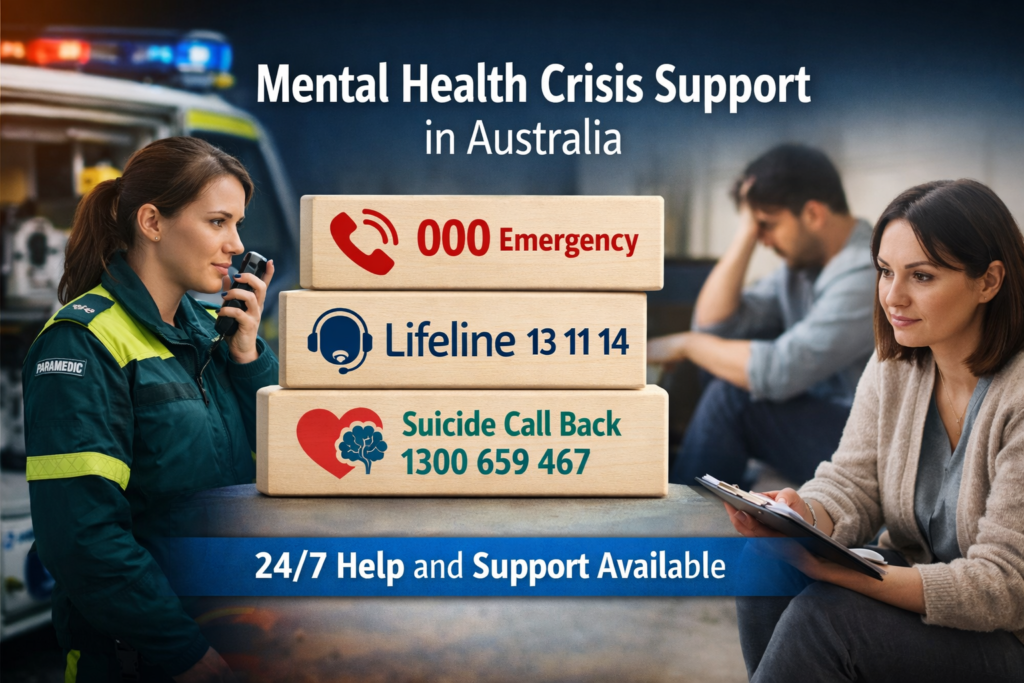
When these patterns are present, prioritise a safety plan with a specialist service (e.g., 1800RESPECT), consider legal advice, and limit disclosure that could escalate risk. Therapy can still help—but timing and privacy matter.
The playbook: tools that work (with scripts)
1) Boundaries that hold
A boundary is what you will do to protect your limits—not a demand that others change. Use the IF—THEN—BECAUSE frame:
“If the conversation becomes insulting, then I’ll end the call and we can try again tomorrow, because I want respectful discussions even when we disagree.”
Tips: write your top 3 non‑negotiables; communicate once, calmly; follow through every time (Linehan‑informed skills; Kliem, Kröger & Kosfelder, 2010).
2) Assertive communication (DBT + NVC blend)
Try DEAR MAN (Describe, Express, Assert, Reinforce; Mindful, Appear confident, Negotiate) with nonviolent communication tone (Rosenberg, 2003; Linehan model):
- Describe: “On Sunday, you arrived an hour early without checking.”
- Express: “I felt stressed and unprepared.”
- Assert: “Please text first and wait for a yes.”
- Reinforce: “It helps us have calmer visits.”
3) Regulate in the moment
- STOP skill: Stop; Take a breath; Observe; Proceed mindfully (Linehan; Kliem, Kröger & Kosfelder, 2010).
- Paced breathing (slow exhale), grounding, brief time‑outs (2–10 minutes).
- Reappraisal: name the story you’re telling yourself; test alternative explanations (Gross & John, 2003).
4) Problem‑solving therapy (PST)
Five steps: Define one problem → Brainstorm options → Weigh pros/cons → Choose & plan → Review (D’Zurilla & Goldfried, 1971; Nezu, Nezu & D’Zurilla, 2013).
Use PST for practical issues (holidays, childcare, money); don’t use it to change personalities.
5) Motivational conversations for change‑resistant relatives
Avoid persuasion. Use open questions, affirmations, reflections, summaries to evoke their reasons for change (Miller & Rollnick, 2013). MI shows small‑to‑moderate effects across behaviours (Lundahl et al., 2010).
“On a scale of 0–10, how important is cutting back your drinking?” … “Why a 4 and not a 2?”
6) When substance use is involved: CRAFT
Community Reinforcement Approach & Family Training teaches carers to reinforce sobriety‑compatible behaviours, improve communication and reduce enabling; it increases treatment entry and reduces use (Meyers & Wolfe, 2003; Roozen et al., 2010).
7) For serious mental illness: family psychoeducation
Multi‑family or single‑family psychoeducation reduces relapse and rehospitalisation (Pharoah et al., 2010). NICE recommends family intervention for psychosis/schizophrenia (NICE, 2014).
Special situations (with quick plays)
- Holidays & events: pre‑agree arrival/exit times; have a signal with your partner; plan a safe person to sit with.
- Group chats: move complex topics off‑thread; mute at night; use short I‑statements; refuse triangulation.
- Money & favours: write terms (amount, timeline, what happens if missed); say “I’m not able to lend—here’s what I can offer.”
- Co‑parenting with an intense parent: keep messages brief, informative, neutral, firm; log agreements; use parallel parenting when cooperation fails.
- Caring for a parent: map tasks, rotate duties, and validate different coping styles; connect with Carer Gateway.
Fix, contain or exit? A decision map
- Fix (if there’s goodwill): try skills + structure; review monthly.
- Contain (limited goodwill): reduce contact frequency/length; meet on neutral ground; stick to safe topics.
- Exit (harm persists/safety risks): shift to low contact or no contact. Expect mixed emotions—this is normal. The concept of ambiguous loss can help make sense of grief without closure (Boss, 2006).
If you choose no contact, write a one‑time, respectful note describing your limit; then stop explaining.
A 30‑day plan you can start this week
- Week 1: List top stressors and non‑negotiable boundaries; draft 3 scripts; identify allies.
- Week 2: Practise STOP, breathing, and DEAR MAN in low‑stakes chats; schedule self‑care.
- Week 3: Run PST on one practical issue; trial a containment plan (shorter visits, neutral locations).
- Week 4: Review what changed; decide fix/contain/exit; book professional support if stuck.
Getting professional help (Australia)
- Family therapy/couple therapy: EFT/IBCT, behaviourally oriented family work, and psychoeducation have strong support.
- Telehealth psychology: comparable outcomes for many goals when sessions are structured and private..
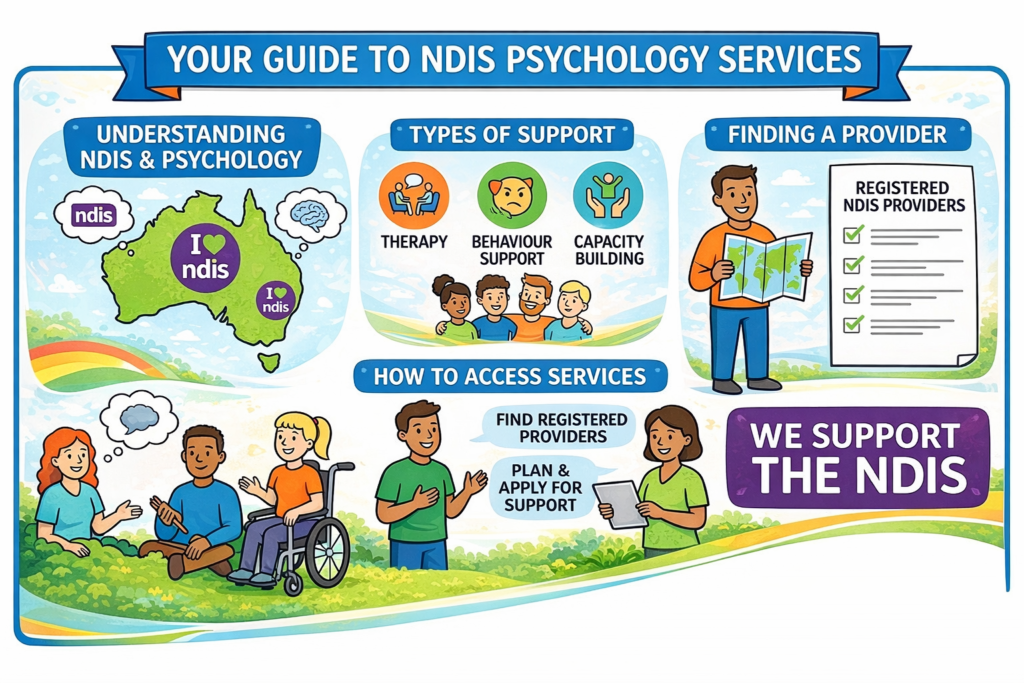
- Funding: Medicare rebates via a GP Mental Health Treatment Plan (Better Access) and NDIS therapy where clinically appropriate.
TherapyNearMe.com.au offers therapy Australia‑wide. Call 1800 NEAR ME.
References
Aldao, A., Nolen‑Hoeksema, S. & Schweizer, S. (2010) ‘Emotion‑regulation strategies across psychopathology: A meta‑analytic review’, Clinical Psychology Review, 30(2), pp. 217–237.
Backhaus, A., Agha, Z., Maglione, M.L., Repp, A., Ross, B., Zuest, D., Rice‑Thorp, N.M., Lohr, J. & Thorp, S.R. (2012) ‘Videoconferencing psychotherapy: A systematic review’, Psychological Services, 9(2), pp. 111–131.
Batastini, A.B., Paprzycki, P., Jones, A.C. & MacLean, N. (2021) ‘Are videoconferenced mental and behavioral health services just as good as in‑person? A meta‑analysis of a fast‑growing practice’, Clinical Psychology Review, 83, 101944.
Boss, P. (2006) Loss, Trauma, and Resilience: Therapeutic Work with Ambiguous Loss. New York: W.W. Norton.
Butzlaff, R.L. & Hooley, J.M. (1998) ‘Expressed emotion and psychiatric relapse: A meta‑analysis’, Archives of General Psychiatry, 55(6), pp. 547–552.
D’Zurilla, T.J. & Goldfried, M.R. (1971) ‘Problem solving and behavior modification’, Journal of Abnormal Psychology, 78(1), pp. 107–126.
Gross, J.J. & John, O.P. (2003) ‘Individual differences in two emotion regulation processes: Implications for affect, relationships, and well‑being’, Journal of Personality and Social Psychology, 85(2), pp. 348–362.
Kliem, S., Kröger, C. & Kosfelder, J. (2010) ‘Dialectical behavior therapy for borderline personality disorder: a meta‑analysis using mixed‑effects modeling’, Journal of Consulting and Clinical Psychology, 78(6), pp. 936–951.
Lundahl, B., Kunz, C., Brownell, C., Tollefson, D. & Burke, B.L. (2010) ‘A meta‑analysis of motivational interviewing: Twenty‑five years of empirical studies’, Research on Social Work Practice, 20(2), pp. 137–160.
Meyers, R.J. & Wolfe, B.L. (2003) Get Your Loved One Sober: Alternatives to Nagging, Pleading, and Threatening (The CRAFT Program). Center City, MN: Hazelden.
Miller, W.R. & Rollnick, S. (2013) Motivational Interviewing: Helping People Change (3rd ed.). New York: Guilford Press.
Nezu, A.M., Nezu, C.M. & D’Zurilla, T.J. (2013) Problem‑Solving Therapy: A Positive Approach to Clinical Intervention (3rd ed.). New York: Springer.
NICE (2014) Psychosis and schizophrenia in adults: prevention and management (CG178). London: National Institute for Health and Care Excellence.
Nolen‑Hoeksema, S., Wisco, B.E. & Lyubomirsky, S. (2008) ‘Rethinking rumination’, Perspectives on Psychological Science, 3(5), pp. 400–424.
Pharoah, F., Mari, J., Rathbone, J. & Wong, W. (2010) ‘Family intervention for schizophrenia’, Cochrane Database of Systematic Reviews, (12), CD000088.
Repetti, R.L., Taylor, S.E. & Seeman, T.E. (2002) ‘Risky families: Family social environments and the mental and physical health of offspring’, Psychological Bulletin, 128(2), pp. 330–366.
Roozen, H.G., de Waart, R. & van der Kroft, P. (2010) ‘Community reinforcement approach and family training (CRAFT): A meta‑analysis of randomized controlled trials’, Addiction, 105(10), pp. 1729–1738.
Rosenberg, M.B. (2003) Nonviolent Communication: A Language of Life. Encinitas, CA: PuddleDancer Press.
Shadish, W.R. & Baldwin, S.A. (2003) ‘Meta‑analysis of marital and family therapy: an updated review’, Journal of Marital and Family Therapy, 29(4), pp. 547–570.
Wiebe, S.A. & Johnson, S.M. (2016) ‘A review of the research in emotionally focused therapy for couples’, Family Process, 55(3), pp. 390–407.
For bookings with a registered psychologist, visit TherapyNearMe.com.au or call 1800 NEAR ME. We provide confidential support, including family work, couples therapy, and behaviour support (NDIS).