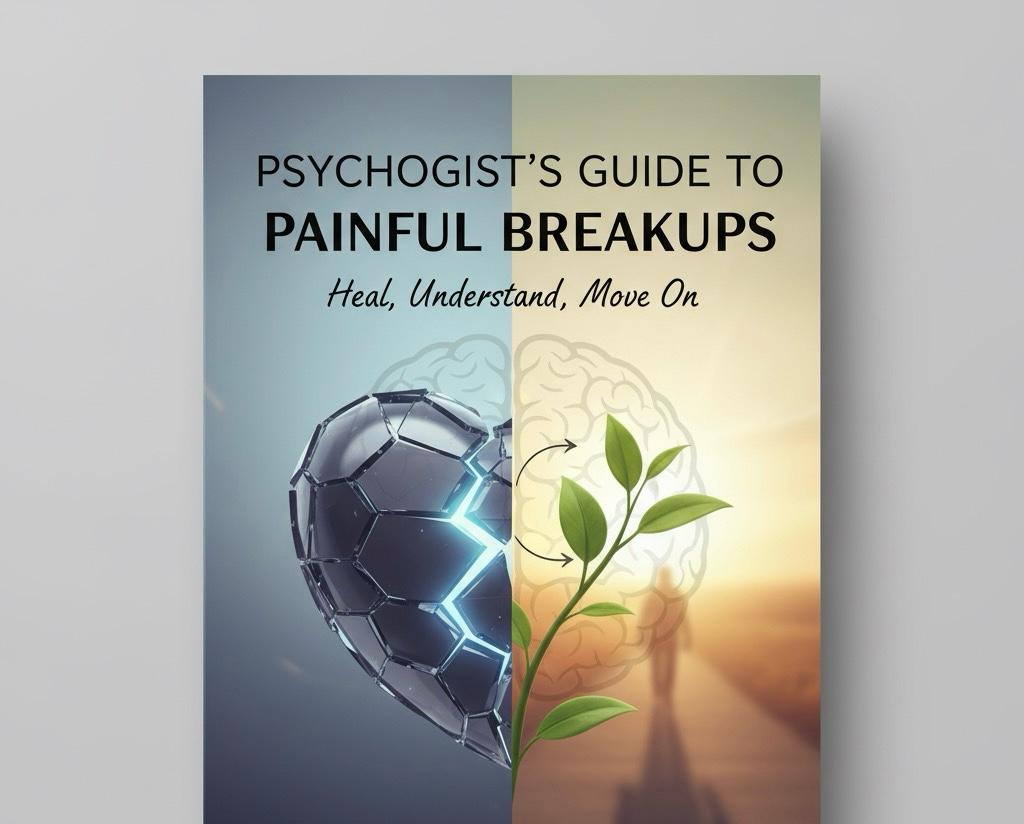
Breakups are stressful biopsychosocial events. In the short term, expect surges of grief, anxiety, rumination, sleep disruption and physical pain‑like distress as attachment bonds deactivate (Eisenberger, Lieberman & Williams, 2003; Kross et al., 2011). Distress usually eases over weeks to months, faster when you protect sleep, reduce rumination, lean on support, and engage in structured routines. Evidence‑based approaches include CBT/behavioural activation, exercise, self‑compassion practice, and expressive writing (Hofmann et al., 2012; Dimidjian et al., 2006; Schuch et al., 2016; Neff, 2003; Frattaroli, 2006). See the red‑flag section for when to seek urgent help.
Why it hurts so much: the brain–body story
- Attachment deactivation: Romantic bonds wire into our threat/calming systems. Separation triggers heightened arousal and protest behaviours—tears, texts, checking (Sbarra, Law & Portley, 2011).
- Social pain overlaps with physical pain: Functional imaging shows anterior cingulate and insula activation during social rejection, overlapping with physical pain networks (Eisenberger, Lieberman & Williams, 2003). Later work shows somatosensory overlap too (Kross et al., 2011).
- Rumination + sleep loss = mood spiral: Repetitive negative thinking predicts slower recovery; poor sleep amplifies threat sensitivity (Nolen‑Hoeksema, Wisco & Lyubomirsky, 2008).
What’s a typical recovery timeline?
No single clock fits everyone, but many people move from acute distress (days–weeks) to reorganisation (weeks–months) and, eventually, growth (months+). Recovery is slower with co‑parenting conflicts, financial stress, isolation, or pre‑existing anxiety/depression (Sbarra, Law & Portley, 2011). Expect non‑linear progress; “bad days” don’t mean you’re back at zero.
Common psychological patterns after a breakup
1) Attachment activation
Protest (reach‑outs, bargaining), despair, and preoccupation; sometimes checking or “surveillance” on social media that sustains distress (Marshall, Bejanyan, Di Castro & Lee, 2012).
2) Rumination
Endless “why” and “what if” loops that feel productive but prolong low mood (Nolen‑Hoeksema, Wisco & Lyubomirsky, 2008).
3) Safety behaviours
Avoiding places/people, carrying safety items, or excessive reassurance‑seeking—these reduce short‑term distress but maintain anxiety patterns (Hofmann et al., 2012).
4) Somatic symptoms
Chest tightness, nausea, sleep fragmentation and early waking are common in the first weeks (Kross et al., 2011).
What actually helps: an evidence‑based toolkit
A) Stabilise the foundations
- Sleep first: Fixed wake time, device cut‑off 60–90 minutes before bed, low‑light wind‑down, and reserve the bed for sleep only (Scott & Woods, 2019).
- Fuel and move: Regular meals; 3×/week moderate exercise reduces depressive symptoms (Schuch et al., 2016).
- Reduce substances: Caffeine, alcohol and cannabis can intensify anxiety/low mood (Baldwin et al., 2014).
B) Tame rumination and anxiety (CBT‑informed)
- Catch–check–choose: Write the worry, list evidence for/against, and choose an action (or scheduled worry time).
- Behavioural activation: Book small, valued activities daily (walk + call a friend + task you’ve avoided). BA rivals full CBT for depression in RCTs (Dimidjian et al., 2006).
- Cognitive reappraisal: Practise alternative explanations and growth‑oriented narratives (Gross & John, 2003).
- Mindfulness skills: Brief breath‑anchoring or body scans to disengage from loops (Gu et al., 2015).
C) Build kinder self‑talk
Self‑compassion (treating yourself like a good friend) correlates with lower anxiety/depression and faster emotional recovery (Neff, 2003; MacBeth & Gumley, 2012). Try a daily compassion letter to yourself about the breakup.
D) Express, but with structure
Expressive writing—15–20 minutes on your deepest thoughts/feelings for 3–4 days—can deliver small‑to‑moderate benefits for health and mood (Frattaroli, 2006). If writing raises distress >24–48 hours, pause and seek support.
E) Digital hygiene (protect your bandwidth)
- Mute/block your ex in feeds and messaging for a while; research links online surveillance of ex‑partners with slower recovery (Marshall et al., 2012).
- No‑contact vs. low‑contact: If you share children/pets/business, use structured low‑contact via written channels with clear boundaries; otherwise a time‑limited no‑contact window often helps you reset.
F) People matter
Seek instrumental support (meals, childcare, money admin) and emotional support (friends, family, therapist). Social buffering reduces physiological stress reactivity.
Special situations
Co‑parenting
Keep child contact child‑centred; move logistics to email or parenting apps; avoid processing your feelings with children. Consider parenting support if conflict is high.
Shared housing/finances
Create a task list (utilities, bonds, debts). Ask a neutral third‑party to witness agreements.
Family & domestic violence (FDV)
If the relationship involved coercion, threats or violence, prioritise safety. Contact 1800RESPECT (1800 737 732); in an emergency call 000. Follow specialist guidance; normal breakup advice does not apply (NICE, 2014; 2021).
Red flags: act now if you notice…
- Persistent depression (>2 weeks), hopelessness or thoughts of self‑harm
- Escalating substance use
- Panic attacks impairing daily life
- Stalking/harassment (online or offline)
- FDV risk
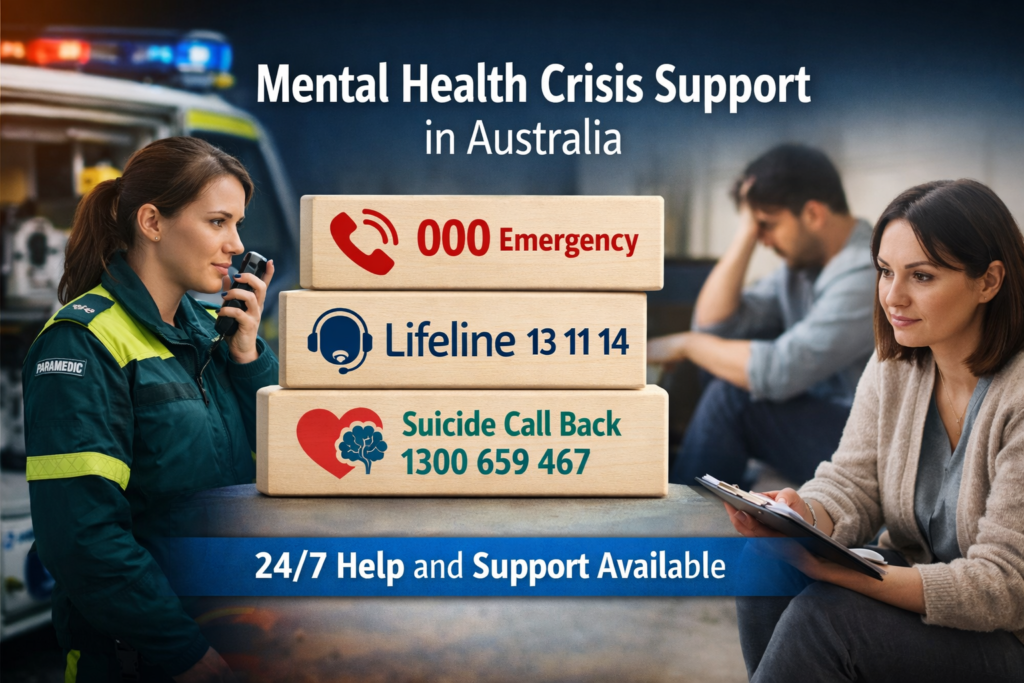
Call Lifeline 13 11 14 or 000 in an emergency. For men seeking support, contact MensLine 1300 78 99 78.
Frequently asked questions
How long should “no contact” last?
There’s no magic number. Many people benefit from 2–6 weeks to stabilise sleep and routines. If you co‑parent, use low‑contact with clear boundaries instead.
Why do I feel worse at night?
Cognitive capacity dips and cues for the ex surge (music, photos, socials). Protect sleep; schedule contact with friends in the evening; write a “worry list” then close the notebook (Scott & Woods, 2019).
Is it okay to date quickly (“rebound”)?
There’s little high‑quality evidence either way; focus on whether dating aligns with your values, not avoidance. If you’re using new partners to escape feelings, pause and revisit skills above.
Does therapy help with breakups?
Yes—CBT/BA, grief‑informed work, and skills for co‑parenting and boundary‑setting are effective (Hofmann et al., 2012; Dimidjian et al., 2006).
How TherapyNearMe.com.au can help
- Telehealth psychology (Australia‑wide): Structured CBT/BA and sleep skills for breakup‑related anxiety and low mood.
- NDIS psychology & behaviour support: Where disability intersects with relationship loss and daily functioning.
- Resources: Articles on anxiety, sleep, self‑compassion, and digital wellbeing.
Start here: Online referrals via TherapyNearMe.com.au • Medicare/NDIS/private • Same‑week availability.
References
Baldwin, D.S. et al. (2014) ‘Evidence‑based pharmacological treatment of anxiety disorders, post‑traumatic stress disorder and obsessive‑compulsive disorder: A revision of the 2005 guidelines from the British Association for Psychopharmacology’, Journal of Psychopharmacology, 28(5), pp. 403–439. https://doi.org/10.1177/0269881114525674
Dimidjian, S., Hollon, S.D., Dobson, K.S. et al. (2006) ‘Randomized trial of behavioural activation, cognitive therapy, and antidepressant medication in the acute treatment of adults with major depression’, Journal of Consulting and Clinical Psychology, 74(4), pp. 658–670. https://doi.org/10.1037/0022-006X.74.4.658
Eisenberger, N.I., Lieberman, M.D. & Williams, K.D. (2003) ‘Does rejection hurt? An fMRI study of social exclusion’, Science, 302(5643), pp. 290–292. https://doi.org/10.1126/science.1089134
Frattaroli, J. (2006) ‘Experimental disclosure and its moderators: A meta‑analysis’, Psychological Bulletin, 132(6), pp. 823–865. https://doi.org/10.1037/0033-2909.132.6.823
Gross, J.J. & John, O.P. (2003) ‘Individual differences in two emotion regulation processes: Implications for affect, relationships, and well‑being’, Journal of Personality and Social Psychology, 85(2), pp. 348–362. https://doi.org/10.1037/0022-3514.85.2.348
Gu, J., Strauss, C., Bond, R. & Cavanagh, K. (2015) ‘How do mindfulness‑based cognitive therapy and mindfulness‑based stress reduction improve mental health and wellbeing? A systematic review and meta‑analysis of mediation studies’, Clinical Psychology Review, 37, pp. 1–12. https://doi.org/10.1016/j.cpr.2015.01.006
Hofmann, S.G., Asnaani, A., Vonk, I.J., Sawyer, A.T. & Fang, A. (2012) ‘The efficacy of cognitive behavioral therapy: A review of meta‑analyses’, Cognitive Therapy and Research, 36(5), pp. 427–440. https://doi.org/10.1007/s10608-012-9476-1
Kross, E., Berman, M.G., Mischel, W., Smith, E.E. & Wager, T.D. (2011) ‘Social rejection shares somatosensory representations with physical pain’, Proceedings of the National Academy of Sciences, 108(15), pp. 6270–6275. https://doi.org/10.1073/pnas.1102693108
MacBeth, A. & Gumley, A. (2012) ‘Exploring compassion: A meta‑analysis of the association between self‑compassion and psychopathology’, Clinical Psychology Review, 32(6), pp. 545–552. https://doi.org/10.1016/j.cpr.2012.06.003
Marshall, T.C., Bejanyan, K., Di Castro, G. & Lee, R.A. (2012) ‘Facebook surveillance of former romantic partners: Associations with postbreakup recovery’, Cyberpsychology, Behavior, and Social Networking, 15(10), pp. 521–526. https://doi.org/10.1089/cyber.2012.0125
Neff, K.D. (2003) ‘Self‑compassion: An alternative conceptualization of a healthy attitude toward oneself’, Self and Identity, 2(2), pp. 85–101. https://doi.org/10.1080/15298860309032
Nolen‑Hoeksema, S., Wisco, B.E. & Lyubomirsky, S. (2008) ‘Rethinking rumination’, Perspectives on Psychological Science, 3(5), pp. 400–424. https://doi.org/10.1111/j.1745-6924.2008.00088.x
Sbarra, D.A., Law, R.W. & Portley, R.M. (2011) ‘Divorce and death: A meta‑analysis and research agenda for clinical, social, and health psychology’, Perspectives on Psychological Science, 6(5), pp. 454–474. https://doi.org/10.1177/1745691611414724
Scott, H. & Woods, H.C. (2019) ‘Understanding links between social media use, sleep and mental health’, Current Sleep Medicine Reports, 5, pp. 141–149. https://doi.org/10.1007/s40675-019-00148-9
NICE (2014; updated 2021) Domestic violence and abuse: multi‑agency working. London: National Institute for Health and Care Excellence.
General information only. For personalised care, consider booking a Telehealth session with a registered psychologist via TherapyNearMe.com.au. If you are in danger, call 000; for 24/7 support call Lifeline on 13 11 14 or 1800RESPECT (1800 737 732).