Introduction
Many children and adults experience sensory processing differences, where everyday sensations—sound, touch, movement, light, or smell—are perceived more intensely or weakly than usual. These challenges are common in autism spectrum disorder (ASD), attention-deficit/hyperactivity disorder (ADHD), and sensory processing disorder (SPD) (Miller et al., 2007). Unmanaged sensory sensitivities can contribute to stress, anxiety, and functional difficulties.
The good news is that a range of evidence-informed products and tools can help regulate sensory input, promote calm, and improve focus. This article reviews the science, practical considerations, and top categories of products that support individuals with sensory needs.
1. Understanding sensory issues
Sensory processing involves receiving, organising, and responding to sensory information. Differences can appear as:
- Hypersensitivity (over-responsivity): ordinary stimuli feel overwhelming (e.g., loud sounds, rough fabrics).
- Hyposensitivity (under-responsivity): diminished awareness leading to a need for intense stimulation.
- Sensory seeking: craving movement, pressure, or vibration.
Research shows that tailored sensory modulation strategies help reduce anxiety and behavioural outbursts (Baranek et al., 2014).
2. Evidence-based product categories
a) Deep-pressure and proprioceptive tools
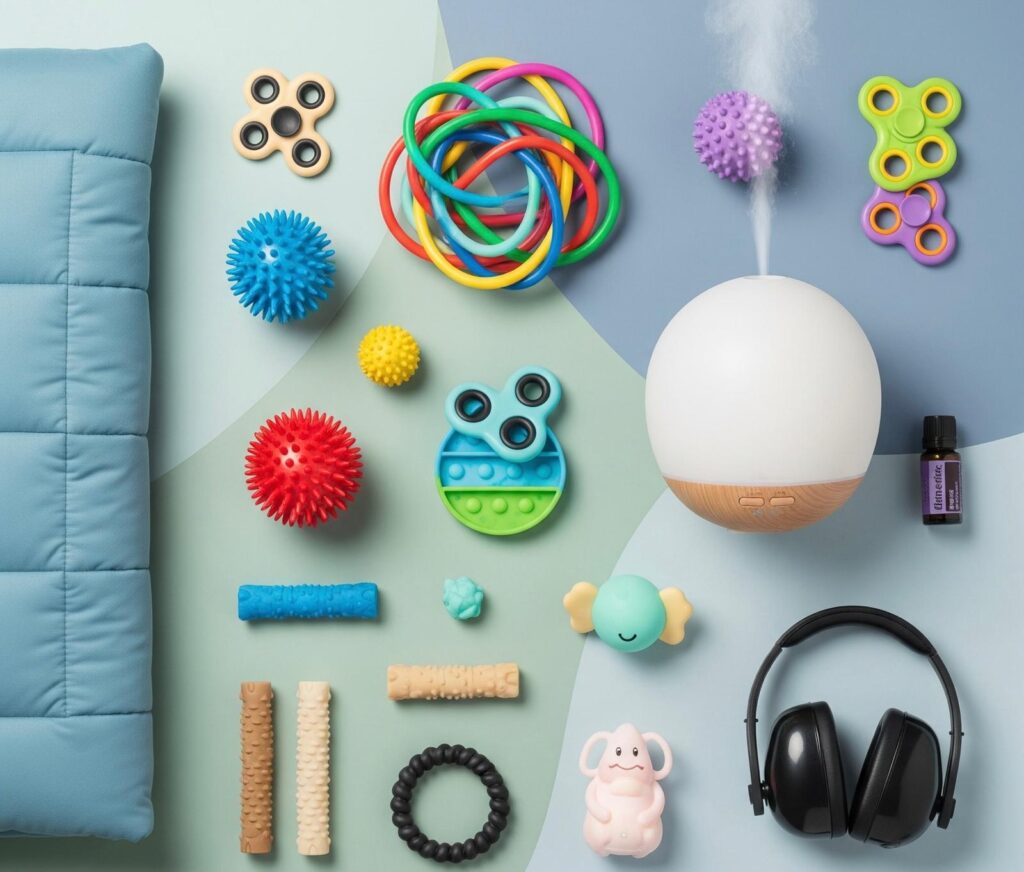
- Weighted blankets and lap pads: Provide gentle, even pressure, which may lower heart rate and improve sleep (Gee et al., 2016).
- Compression clothing or vests: Offer continuous deep pressure to enhance body awareness and reduce anxiety (Mullen et al., 2008).
b) Movement and vestibular aids
- Sensory swings and hammocks: Rhythmic swinging can calm the nervous system and improve balance (Blanche et al., 2012).
- Rocking chairs or wobble cushions: Support focus and self-regulation during seated activities.
c) Tactile and fidget tools
- Fidget spinners, stress balls, or putty: Help manage restlessness and sustain attention (Kinnealey et al., 2012).
- Textured blankets and chewable jewellery: Provide safe oral and tactile stimulation.
d) Auditory supports
- Noise-cancelling headphones or ear defenders: Reduce distress from loud environments and aid concentration (Ashburner et al., 2014).
- White-noise machines or soft music players: Offer soothing, predictable soundscapes.
e) Visual and light-based products
- Adjustable lighting (warm LEDs, dimmers): Minimise harsh glare and overstimulation.
- Calming visual aids: Lava lamps or fibre-optic lights encourage visual focus and relaxation.
f) Aromatherapy and olfactory aids
- Essential oil diffusers (e.g., lavender for calm): Gentle scents can support relaxation, but should be used with awareness of allergies or sensitivities (Herz, 2009).
3. Selecting and using sensory products safely
When choosing products:
- Individual assessment: Consult occupational therapists to identify specific sensory profiles.
- Safety first: Ensure weighted items are appropriate for the user’s size and health (e.g., avoid heavy blankets for infants).
- Observe and adapt: Introduce new items gradually and monitor comfort levels.
- Integration with therapy: Combine with sensory diets or structured occupational therapy programs for best outcomes.
4. Integrating products into daily life
- Home environment: Create sensory-friendly corners with swings, weighted items, and calming lights.
- School and workplace: Provide discreet fidgets, headphones, and adjustable seating to support focus.
- Travel and community: Portable tools like noise-cancelling headphones and chewable jewellery can prevent sensory overload in public settings.
5. Evidence and limitations
While many products show positive anecdotal and preliminary research support, response varies. Effectiveness depends on individual sensory profiles, product quality, and consistent, supervised use (Baranek et al., 2014). Ongoing clinical guidance and structured follow-up are recommended.
FAQs
Q: What are the best products for sensory overload?
Weighted blankets, noise-cancelling headphones, and fidget tools often provide effective calming input.
Q: Are sensory products scientifically proven?
Research supports certain tools, such as weighted blankets and swings, especially when integrated with occupational therapy.
Q: Who can benefit from sensory products?
Children and adults with autism, ADHD, anxiety, or sensory processing differences.
Q: How do I choose the right sensory aid?
Consult an occupational therapist for a personalised sensory assessment.
References
- Ashburner, J., Ziviani, J. & Rodger, S. (2014) ‘Sensory processing and classroom emotional, behavioural, and educational outcomes in children with autism spectrum disorder’, American Journal of Occupational Therapy, 68(2), pp. 193–202.
- Baranek, G.T., Watson, L.R., Boyd, B.A. et al. (2014) ‘Hyporesponsiveness to social and nonsocial sensory stimuli in children with autism, children with developmental delays, and typically developing children’, Development and Psychopathology, 25(2), pp. 307–320.
- Blanche, E.I., Reinoso, G., Chang, M.C. & Bodison, S. (2012) ‘Proprioceptive processing difficulties in children with autism: Clinical implications for intervention’, American Journal of Occupational Therapy, 66(5), pp. 621–628.
- Gee, B.M., Peterson, T.G. & Buck, A. (2016) ‘Weighted blanket use: An intervention for children with autism spectrum disorders’, Journal of Occupational Therapy, Schools, & Early Intervention, 9(2), pp. 134–143.
- Herz, R.S. (2009) ‘Aromatherapy facts and fictions: A scientific analysis of olfactory effects on mood, physiology and behavior’, International Journal of Neuroscience, 119(2), pp. 263–290.
- Kinnealey, M., Pfeiffer, B., Miller, J., Roan, C., Shoener, R. & Ellner, M. (2012) ‘Effectiveness of sensory integration interventions in children with autism spectrum disorders: A pilot study’, American Journal of Occupational Therapy, 66(2), pp. 207–214.
- Miller, L.J., Anzalone, M.E., Lane, S.J., Cermak, S.A. & Osten, E.T. (2007) ‘Concept evolution in sensory integration: A proposed nosology for diagnosis’, American Journal of Occupational Therapy, 61(2), pp. 135–140.
- Mullen, B., Champagne, T. & Krishnamurty, S. (2008) ‘Sensory processing disorders and weighted blankets’, Occupational Therapy in Mental Health, 24(1), pp. 65–89.