Introduction
Sandplay therapy is a psychotherapeutic approach that combines symbolic play, creative expression, and depth psychology. Developed by Dora Kalff in the mid-20th century and rooted in Carl Jung’s analytical psychology, sandplay provides a safe and protected space for clients to express unconscious feelings and resolve psychological conflicts (Kalff, 2003).
This article explores the psychological principles, mental health benefits, and research supporting sandplay therapy, with practical guidance for therapists and clients.
1. What is Sandplay Therapy?
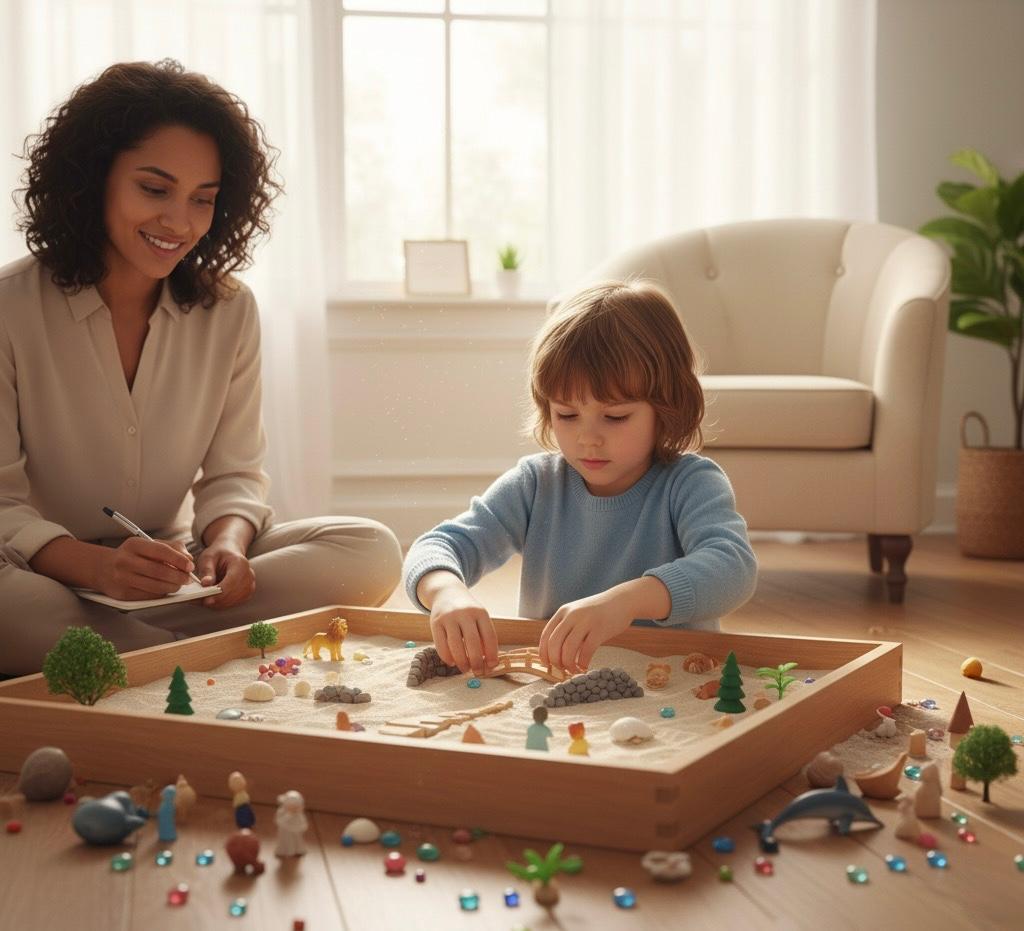
Sandplay therapy involves a tray of sand and miniature figurines—representing people, animals, objects, and archetypal symbols. Clients create three-dimensional scenes that symbolise inner experiences. Therapists observe and facilitate reflection, but the process is largely nonverbal, allowing unconscious material to emerge naturally (Allan & Berry, 1987).
Sandplay is suitable for children, adolescents, and adults, making it a versatile tool for addressing diverse emotional and psychological needs.
2. Theoretical foundations
Sandplay draws on several key psychological frameworks:
- Jungian depth psychology: The sand tray becomes a symbolic “free and protected space” where the psyche can achieve self-healing through archetypal imagery (Kalff, 2003).
- Play therapy principles: Play is viewed as a natural language for children and a medium for emotional processing (Landreth, 2012).
- Expressive arts therapy: Creative, sensory experiences help integrate traumatic memories and foster resilience (Malchiodi, 2012).
3. Mechanisms of action
a) Symbolic expression of the unconscious
By representing inner conflicts symbolically, clients bypass the limits of verbal reasoning, enabling profound psychological insight (Jung, 1964).
b) Trauma processing
Sandplay provides a safe, nonverbal method to access and reorganise traumatic memories. This is particularly beneficial for clients with post-traumatic stress who struggle with traditional talk therapy (Carey et al., 2014).
c) Neurobiological regulation
The tactile and visual engagement of sand and figurines can reduce hyperarousal and activate the parasympathetic nervous system, lowering anxiety and stress responses (Perry et al., 1995).
4. Evidence-based mental health benefits
Research supports sandplay therapy as an effective intervention for:
- Anxiety and depression: Studies show reductions in symptoms among children and adults following structured sandplay programs (Shen & Armstrong, 2008).
- Trauma and PTSD: Sandplay promotes emotional regulation and narrative reconstruction in survivors of abuse, violence, and disaster (Homeyer & Sweeney, 2017).
- Grief and loss: The symbolic process helps individuals process complex grief and restore meaning (Carey et al., 2014).
- Developmental and behavioural disorders: Sandplay enhances communication and self-expression for children with autism spectrum disorders or speech delays (Shen & Armstrong, 2008).
5. A typical sandplay therapy session
- Introduction and grounding: The therapist invites the client to choose figures freely.
- Scene creation: The client arranges sand and miniatures intuitively, expressing feelings and stories.
- Observation and reflection: The therapist may discuss the process, focusing on symbols and patterns if the client is comfortable.
- Integration: Over multiple sessions, emerging themes are linked to personal growth and healing.
The therapist’s role is non-directive, creating a safe, accepting environment that supports self-discovery.
6. Clinical applications
Sandplay therapy is used in:
- Child and adolescent mental health to address behavioural issues, anxiety, and family conflict.
- Adult psychotherapy for trauma, grief, and relational difficulties.
- Cross-cultural therapy, as symbolic imagery transcends language and cultural barriers.
It can also complement cognitive behavioural therapy (CBT) or psychodynamic psychotherapy, integrating verbal and nonverbal healing processes.
7. Training and professional practice
Certified sandplay therapists undergo specialist training in Jungian psychology, symbolism, and play therapy methods. In Australia, therapists can access advanced training through the Australian and New Zealand Society for Sandplay Therapy.
8. Limitations and considerations
- Sandplay therapy requires trained practitioners to interpret symbols ethically and avoid over-interpretation.
- It is not a substitute for medical treatment in severe psychiatric disorders, but can be a valuable adjunct.
- Progress may be gradual, requiring multiple sessions.
FAQs
Q: What is sandplay therapy used for?
To help children and adults process trauma, anxiety, depression, grief, and developmental challenges.
Q: How does sandplay therapy work?
By allowing unconscious thoughts and feelings to emerge symbolically through play and creative expression.
Q: Is sandplay therapy evidence-based?
Yes. Studies show positive outcomes for anxiety, PTSD, and emotional regulation.
Q: Who can benefit from sandplay therapy?
Children, adolescents, and adults seeking a nonverbal, creative approach to mental health care.
References
- Allan, J. & Berry, P. (1987) Sandplay: A Psychotherapeutic Approach to the Psyche. Boston: Routledge.
- Carey, L.J., Meiers, D. & Korol, J. (2014) ‘Healing the inner child through sandplay: Clinical applications’, Journal of Sandplay Therapy, 23(1), pp. 15–28.
- Homeyer, L.E. & Sweeney, D.S. (2017) Sandtray Therapy: A Practical Manual. 3rd edn. New York: Routledge.
- Jung, C.G. (1964) Man and His Symbols. London: Aldus Books.
- Kalff, D.M. (2003) Sandplay: A Psychotherapeutic Approach to the Psyche. Cloverdale, CA: Temenos Press.
- Landreth, G.L. (2012) Play Therapy: The Art of the Relationship. 3rd edn. New York: Routledge.
- Malchiodi, C.A. (2012) Handbook of Art Therapy. 2nd edn. New York: Guilford Press.
- Perry, B.D., Pollard, R., Blakley, T., Baker, W. & Vigilante, D. (1995) ‘Childhood trauma, the neurobiology of adaptation, and use-dependent development of the brain’, Infant Mental Health Journal, 16(4), pp. 271–291.
- Shen, Y.P. & Armstrong, S.A. (2008) ‘Impact of group sandtray therapy on the self-esteem of children with low self-esteem’, Journal of Creativity in Mental Health, 3(2), pp. 118–133.