
Kids learn coping when adults model, coach and reinforce a small set of repeatable skills across everyday situations. The strongest evidence supports:
- Emotion regulation strategies (e.g., breathing, grounding, cognitive reappraisal) (Gross & John, 2003; Aldao, Nolen‑Hoeksema & Schweizer, 2010).
- Problem‑solving steps (define → brainstorm → choose → plan → review) (D’Zurilla & Goldfried, 1971; Nezu, Nezu & D’Zurilla, 2013).
- Exposure‑based bravery ladders for anxiety (Kendall, 2013; Rapee et al., 2006).
- Parent‑led behaviour coaching (praise, rewards, calm limits) (Kazdin, 2008; Sanders, 2012).
- School/clinic programmes like Coping Cat, Cool Kids, Triple P, and mindfulness‑in‑schools show benefits for many children (Kendall, 2013; Rapee et al., 2006; Sanders, 2012; Zenner, Herrnleben‑Kurz & Walach, 2014; Compas et al., 2017).
Telehealth delivery is often as effective as in‑person when sessions are structured and private (Backhaus et al., 2012; Batastini et al., 2021).
What do we mean by “coping”?
Coping is how children manage stressors—internally (feelings, thoughts) and outwardly (actions). Classic theory distinguishes problem‑focused (change the situation) and emotion‑focused (change the response) strategies (Lazarus & Folkman, 1984). Over‑reliance on avoidance and rumination is linked to poorer outcomes; reappraisal, problem‑solving and acceptance relate to better wellbeing (Aldao, Nolen‑Hoeksema & Schweizer, 2010).
Goal for parents: help kids build a balanced toolkit and practise matching the strategy to the situation.
The developmental lens (what’s realistic by age)
- Ages 3–5: emotion words; “turtle” breathing; simple choices; labelled praise.
- Ages 6–9: 5‑step problem‑solving; worry thermometer; basic reappraisal (“What else might be true?”); reward charts.
- Ages 10–12: bravery ladders; sleep routine; planning tools; mindful attention; values in action (helping/effort).
- Teens: advanced reappraisal; distress‑tolerance (ice‑cold water, paced breathing); assertiveness scripts; study planning; digital hygiene.
Children develop at different speeds—adapt to language, attention span, and sensory needs.
Core coping skills to teach (and how to coach them)
1) Calm‑body basics (for all ages)
What: slow exhale‑focused breathing (4–6 breaths/min), muscle relaxation, 5‑senses grounding.
Why: direct down‑shift of arousal; supports attention and learning (Gross & John, 2003).
Coach: practise out of crisis for 60–90 seconds, 2–3×/day; pair with a cue (hand on belly).
2) Name it to tame it (emotions & thoughts)
What: expand feeling words; connect body ↔ feeling ↔ thought; introduce cognitive reappraisal (“Could there be another way to see this?”).
Why: better emotion knowledge predicts regulation and social outcomes (Eisenberg, Spinrad & Eggum, 2010).
Coach: use books, faces charts; model your own reappraisal aloud.
3) The 5‑step problem‑solver
- Define one small problem; 2) Brainstorm options; 3) Pick the best; 4) Plan the first step; 5) Review (D’Zurilla & Goldfried, 1971; Nezu, Nezu & D’Zurilla, 2013).
Coach: draw a box‑and‑arrow card; celebrate effort, not just outcome (Dweck, 2006).
4) Bravery ladders for anxiety
What: graded exposures from easy → hard (e.g., saying hello to a classmate → giving a short talk).
Why: avoidance keeps fear alive; approach + repetition rewires learning (Kendall, 2013; Rapee et al., 2006).
Coach: build a 8–10‑step ladder; rate fear (0–10); practise 3–5 times before moving up; pair with specific praise.
5) Mindful attention (short & often)
What: 1–5 minute practices: noticing breath, sounds, or one object.
Why: school‑based mindfulness shows small‑to‑moderate benefits for attention and stress (Zenner, Herrnleben‑Kurz & Walach, 2014).
Coach: after school, before bed, or pre‑homework; keep it playful.
6) Sleep, movement and fuel
Why: physical activity and good sleep buffer stress and improve mood and attention (Rodríguez‑Ayllón et al., 2019; Mindell & Owens, 2015).
Coach: consistent bed/wake times; screens off 60 min before bed; daily outdoor play; water + balanced snacks.
7) Ask‑for‑help & friend skills
What: identify safe adults; practise I‑statements and specific requests.
Why: social support predicts resilience; assertiveness reduces conflict cycles (Masten, 2014).
Coach: role‑play 1‑minute scripts; build a support map.
8) Gratitude & values in action
What: brief gratitude journalling and kind acts.
Why: linked to improved mood and peer relationships in youth (Froh, Sefick & Emmons, 2008).
Coach: 3‑good‑things at dinner; weekly help‑someone plan.
Parent moves that make coping stick
- Modelling: narrate your own coping (“I’m disappointed; I’ll take three breaths and then email the teacher.”).
- Labelled praise: “You kept trying even when it was tricky—that’s persistence.” (Kazdin, 2008).
- Shaping & scaffolding: help with the first inch, not the whole mile (Vygotsky, 1978).
- Consistent limits: calm, clear rules; predictable follow‑through (Sanders, 2012).
- Reduce accommodation: don’t remove every stressor; coach approach steps (Lebowitz et al., 2019).
- Repair fast: brief apology, restate the plan; model getting back on track.
When emotions run hot: quick de‑escalation
- STOP skill: Stop → Take a breath → Observe → Proceed mindfully (Linehan‑informed; Kliem, Kröger & Kosfelder, 2010).
- Two‑choice validation: “This is hard. Do you want a hug or space?”
- Time‑in for little kids: stay nearby; co‑regulate with quiet voice and rhythm (Eisenberg, Spinrad & Eggum, 2010).
- Crisis scripts for teens: “We can talk or take a 10‑minute break—your call. I’m not going anywhere.”
Tackling common scenarios (step‑by‑step)
Morning meltdowns (ages 6–9)
- Prep the night before; 2) visual checklist; 3) one‑step prompts; 4) praise each step; 5) debrief after school.
Homework avoidance (ages 10–12)
- 15‑minute starter timer; 2) remove phone; 3) pick the first inch; 4) 5‑minute movement breaks; 5) reward completion.
Social worry (teens)
- Map feared situations; 2) build a ladder; 3) practise with coach; 4) debrief wins + misses; 5) repeat.
Sleep struggles
- Same bed/wake time; 2) wind‑down routine; 3) no caffeine/energy drinks; 4) cool, dark room; 5) address worry with a “thought‑parking” notebook.
What schools can do (and how to ask)
- Request evidence‑based supports (e.g., Cool Kids, classroom mindfulness, social‑emotional learning with practice).
- Ask for reasonable adjustments (visual schedules, quiet spaces, movement breaks).
- Share your child’s bravery ladder and coping plan so skills generalise.
When to get extra help (and where to start)
Seek professional input if distress persists > 4–6 weeks, school refusal emerges, social withdrawal intensifies, or there are safety concerns.
- Psychologists can provide CBT/ACT, exposure programmes (Coping Cat, Cool Kids), and parent coaching.
- Telehealth can work as well as in‑person when privacy is adequate (Backhaus et al., 2012; Batastini et al., 2021).
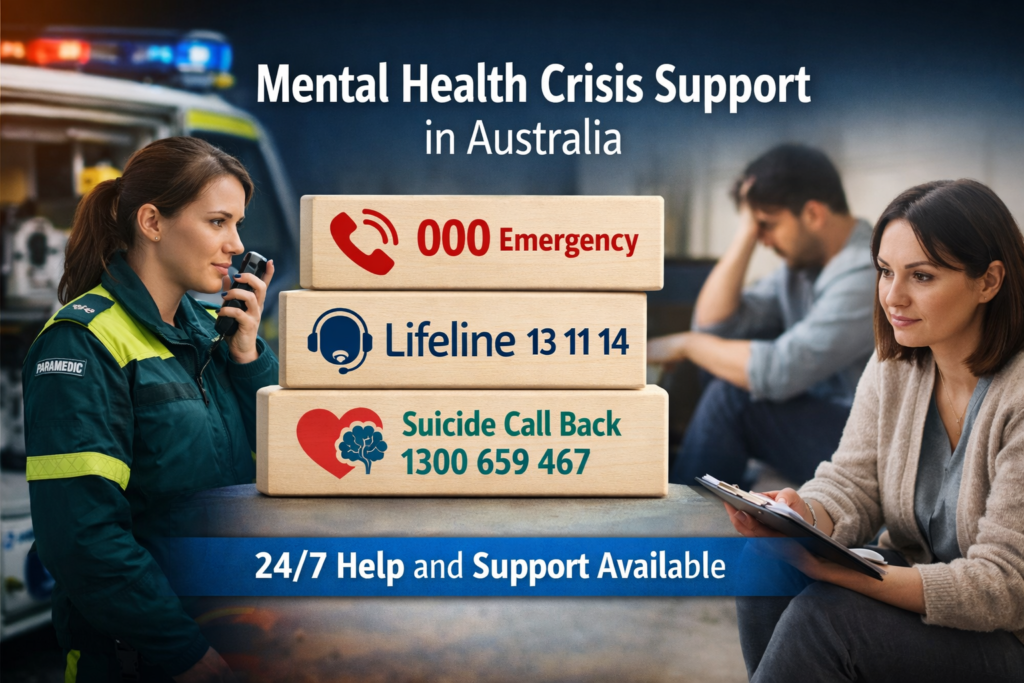
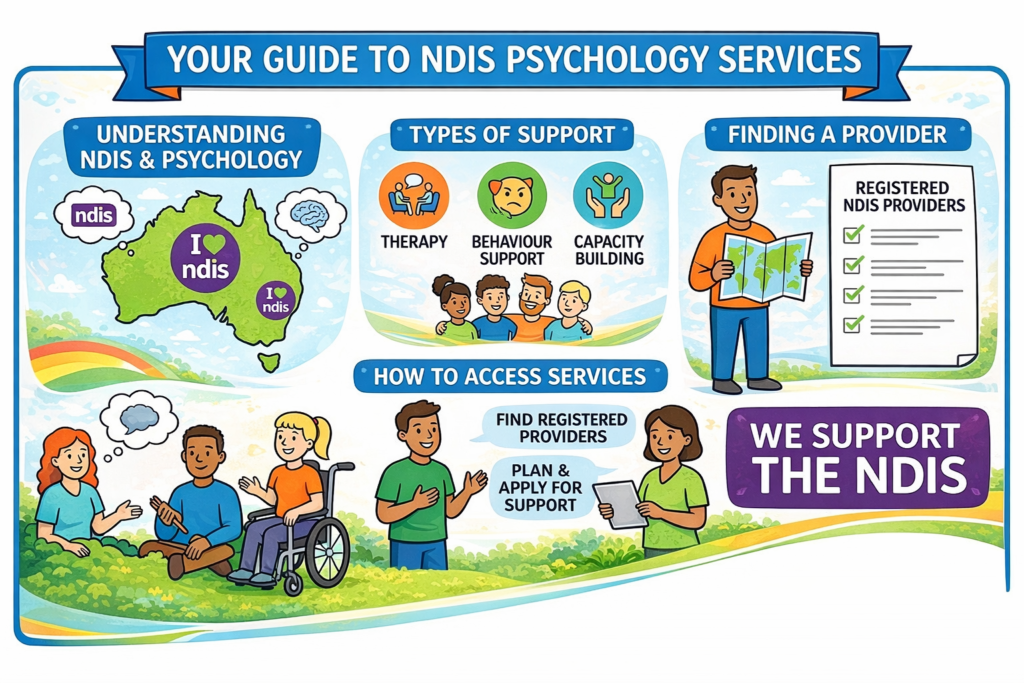
- In Australia, ask your GP about a Mental Health Treatment Plan for Medicare rebates, or discuss NDIS for disability‑related supports.
TherapyNearMe.com.au offers child‑focussed psychology nationwide and home visits in select areas. Call 1800 NEAR ME.
A 30‑day starter plan
- Week 1: pick two skills (breathing + problem‑solving); make cards; practise daily out of crisis.
- Week 2: build a bravery ladder for a small fear; climb two rungs.
- Week 3: add labelled praise and a simple rewards system; start sleep routine.
- Week 4: share the plan with school; review wins; choose one new skill.
Frequently asked questions
Is distraction bad?
Short‑term distraction can reduce overwhelm; it becomes unhelpful when it blocks approach and problem‑solving.
What if my child refuses coping practice?
Shrink the task to the first inch, use choice, and reinforce effort. Consider parent coaching (Triple P, PMT) (Sanders, 2012; Kazdin, 2008).
Do coping apps help?
Apps are supplements, not replacements. Look for therapist‑guided plans and keep practice brief and regular.
References
Aldao, A., Nolen‑Hoeksema, S. & Schweizer, S. (2010) ‘Emotion‑regulation strategies across psychopathology: A meta‑analytic review’, Clinical Psychology Review, 30(2), pp. 217–237.
Backhaus, A., Agha, Z., Maglione, M.L., Repp, A., Ross, B., Zuest, D., Rice‑Thorp, N.M., Lohr, J. & Thorp, S.R. (2012) ‘Videoconferencing psychotherapy: A systematic review’, Psychological Services, 9(2), pp. 111–131.
Batastini, A.B., Paprzycki, P., Jones, A.C. & MacLean, N. (2021) ‘Are videoconferenced mental and behavioral health services just as good as in‑person? A meta‑analysis of a fast‑growing practice’, Clinical Psychology Review, 83, 101944.
Compas, B.E., Jaser, S.S., Bettis, A.H., Watson, K.H., Gruhn, M.A., Dunbar, J.P., Williams, E.K. & Thigpen, J.C. (2017) ‘Coping, emotion regulation, and psychopathology in childhood and adolescence: A meta‑analysis and narrative review’, Psychological Bulletin, 143(9), pp. 939–991.
Dweck, C.S. (2006) Mindset: The New Psychology of Success. New York: Random House.
D’Zurilla, T.J. & Goldfried, M.R. (1971) ‘Problem solving and behavior modification’, Journal of Abnormal Psychology, 78(1), pp. 107–126.
Eisenberg, N., Spinrad, T.L. & Eggum, N.D. (2010) ‘Emotion‑related self‑regulation and its relation to children’s maladjustment’, Annual Review of Clinical Psychology, 6, pp. 495–525.
Froh, J.J., Sefick, W.J. & Emmons, R.A. (2008) ‘Counting blessings in early adolescents: An experimental study of gratitude and subjective well‑being’, Journal of School Psychology, 46(2), pp. 213–233.
Kazdin, A.E. (2008) Parent Management Training: Treatment for Oppositional, Aggressive, and Antisocial Behavior in Children and Adolescents. New York: Oxford University Press.
Kendall, P.C. (2013) Coping Cat Parent and Therapist Manuals (latest ed.). Ardmore, PA: Workbook Publishing.
Kliem, S., Kröger, C. & Kosfelder, J. (2010) ‘Dialectical behavior therapy for borderline personality disorder: A meta‑analysis using mixed‑effects modeling’, Journal of Consulting and Clinical Psychology, 78(6), pp. 936–951.
Lazarus, R.S. & Folkman, S. (1984) Stress, Appraisal, and Coping. New York: Springer.
Lebowitz, E.R., Marin, C., Martino, A., Shimshoni, Y., Fisher, P.H., Sanchez, A., Silverman, W.K. & Carpenter, A.L. (2019) ‘Parent-based treatment as efficacious as cognitive-behavioral therapy for childhood anxiety: A randomized noninferiority trial of Supportive Parenting for Anxious Childhood Emotions (SPACE)’, Journal of the American Academy of Child & Adolescent Psychiatry, 59(3), pp. 362–372.
Mindell, J.A. & Owens, J.A. (2015) A Clinical Guide to Pediatric Sleep: Diagnosis and Management of Sleep Problems (3rd ed.). Philadelphia: Lippincott Williams & Wilkins.
Masten, A.S. (2014) Ordinary Magic: Resilience in Development. New York: Guilford Press.
Nezu, A.M., Nezu, C.M. & D’Zurilla, T.J. (2013) Problem‑Solving Therapy: A Positive Approach to Clinical Intervention (3rd ed.). New York: Springer.
Rapee, R.M., Wignall, A., Spence, S.H., Cobham, V. & Lyneham, H.J. (2006) Helping Your Anxious Child: A Step-by-Step Guide (2nd ed.). Oakland, CA: New Harbinger.
Rodríguez‑Ayllón, M., Cadenas‑Sanchez, C., Estévez‑López, F., Muñoz, N.E., Mora‑González, J., Michels, N., … & Esteban‑Cornejo, I. (2019) ‘Physical activity and mental health in children and adolescents: An updated review of reviews and an analysis of causality’, International Journal of Environmental Research and Public Health, 16(21), 4159.
Sanders, M.R. (2012) ‘Development, evaluation, and multinational dissemination of the Triple P‐Positive Parenting Program’, Annual Review of Clinical Psychology, 8, pp. 345–379.
Vygotsky, L.S. (1978) Mind in Society: The Development of Higher Psychological Processes. Cambridge, MA: Harvard University Press.
Zenner, C., Herrnleben‑Kurz, S. & Walach, H. (2014) ‘Mindfulness‑based interventions in schools—a systematic review and meta‑analysis’, Frontiers in Psychology, 5, 603.
For appointments with a child‑focussed psychologist, visit TherapyNearMe.com.au or call 1800 NEAR ME. We also support behaviour therapy and parent coaching under the NDIS where appropriate.