
A WorkCover (workers’ compensation) psychology claim supports treatment and safe return‑to‑work (RTW) after a work‑related psychological injury such as adjustment disorder, PTSD, depression or anxiety. The usual pathway is: report the injury → see your GP for assessment and a certificate of capacity → lodge a claim with your employer/insurer → get referred to a registered psychologist (Telehealth or in‑person) → agree on functional goals, a treatment plan (e.g., CBT/trauma‑focused therapy), and measurement‑based care → coordinate with your employeron a graded RTW plan → review progress at set intervals (WorkSafe Victoria, 2012; Horvath & Greenberg, 1989; de Jong et al., 2014). Early, work‑focused therapy improves symptoms and speeds RTW (Lagerveld et al., 2012; Joyce et al., 2016).
What counts as a psychological injury?
Australian schemes recognise mental injuries arising out of or in the course of employment (jurisdictional wording varies). Common diagnoses include acute stress reaction, PTSD, adjustment disorder, depression, generalised anxiety, and panic (APA, 2013). Many laws exclude “reasonable management action carried out in a reasonable way” from compensable causes—seek jurisdiction‑specific advice (Safe Work Australia, 2023).
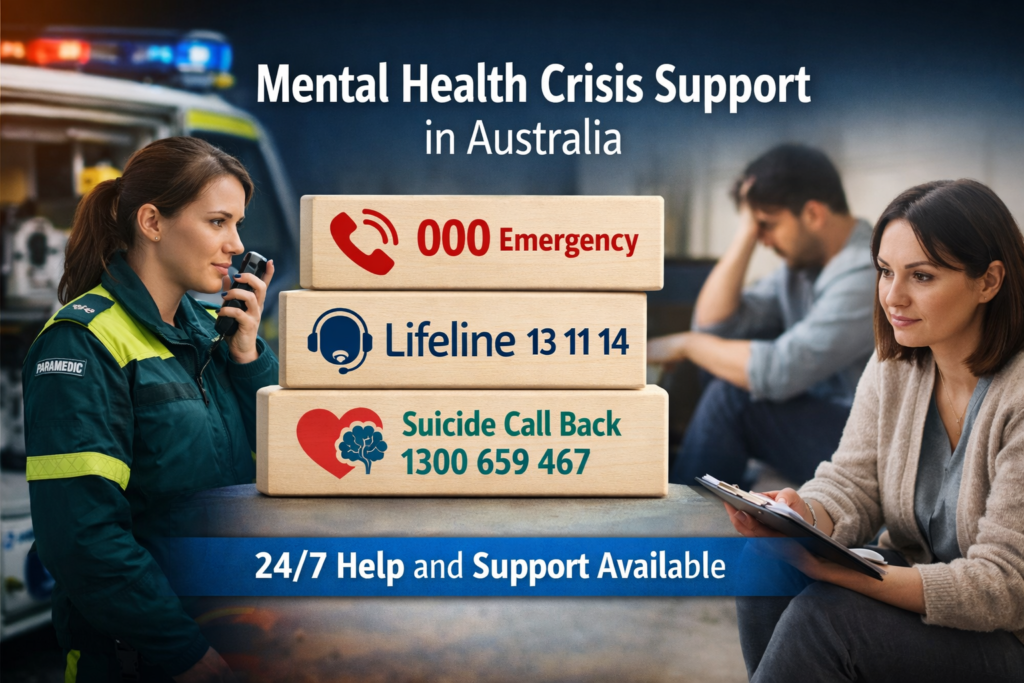
Red flags requiring urgent help: escalating suicidal ideation, violence, severe substance use, or acute trauma reactions. Call 000 in emergencies.
How the WorkCover psychology pathway usually unfolds
1) Report and document
Tell your employer as soon as practicable and complete an incident report. Keep your own notes (dates, people involved, impacts on sleep/work). Early reporting helps with claim decisions (Safe Work Australia, 2023).
2) See your GP and obtain a certificate of capacity
Your GP assesses symptoms, rules out medical contributors (e.g., thyroid, sleep apnoea, medications) and records capacity for work (full, modified, or none). The certificate accompanies your claim and guides RTW planning. Brief outcome tools such as K10, PHQ‑9 and GAD‑7 are often used at baseline (Kessler et al., 2002; Kroenke, Spitzer & Williams, 2001; Spitzer et al., 2006).
3) Lodge your claim
Claims are made to the employer’s insurer (state/territory schemes differ: WorkSafe Victoria, icare/SIRA NSW, WorkCover Queensland, ReturnToWorkSA, WorkCover WA, Comcare for some Commonwealth workplaces, NT WorkSafe, WorkSafe ACT). An insurer case manager will contact you for details and may request information from your GP.
4) Triage and referral to a psychologist
With claim acceptance (or pending approval if pre‑authorised), your GP or the insurer can refer you to a registered psychologist. Choose a provider with occupational mental health experience and evidence‑based methods (CBT, exposure, trauma‑focused CBT/EMDR, ACT, problem‑solving), and who practises measurement‑based care(Hofmann et al., 2012; Cusack et al., 2016; de Jong et al., 2014).
5) First 3–6 sessions: assessment, goals and treatment plan
A strong start includes:
- A biopsychosocial assessment (symptoms, sleep, pain, substance use, workplace factors, supports).
- Functional goals (e.g., tolerate 2‑hour shifts; attend team meetings).
- A written treatment plan linked to the Clinical Framework for the Delivery of Health Services principles: active self‑management, measurable outcomes, evidence‑based practice, functional focus and cost‑effective care (WorkSafe Victoria, 2012).
- Outcome monitoring every 1–2 sessions (PHQ‑9/GAD‑7/K10/CORE‑10) (Barkham et al., 2013).
6) Coordination and case conferencing
Your psychologist (with your consent) can case‑conference with your GP, employer and the insurer to align duties, hours and supports. A graded RTW plan uses principles of activity pacing, graded exposure to feared tasks/locations, and problem‑solving for barriers (Lagerveld et al., 2012; D’Zurilla & Goldfried, 1971).
7) Reviews and independent opinions
Insurers may request progress reports or an Independent Medical Examination (IME) for an external opinion. Keep your treatment goals and measures up to date—clear evidence of change helps decision‑making (de Jong et al., 2014).
What does therapy involve? (evidence in brief)
- CBT for depression/anxiety: behavioural activation, cognitive restructuring and exposure reduce symptoms and improve work functioning (Hofmann et al., 2012; Ekers et al., 2014; Norton & Price, 2007).
- Trauma‑focused treatments: prolonged exposure, CPT, or EMDR improve PTSD and aid RTW when work triggers are integrated into exposure hierarchies (Cusack et al., 2016).
- Work‑focused CBT: adding workplace‑relevant goals, supervisor liaison and graded task exposure improves time to RTW versus standard care alone (Lagerveld et al., 2012; Joyce et al., 2016).
- Alliance matters: agreement on goals and tasks with a strong bond predicts outcome (Horvath & Greenberg, 1989; Flückiger et al., 2018).
Your rights and responsibilities (plain English)
- Choice of provider: You can usually choose your psychologist; ask your insurer about approved providers in your area.
- Privacy and consent: Your health information is confidential; your clinician shares only relevant functional information with the workplace/insurer and only with your informed consent, except where law requires disclosure for safety.
- Safe duties: You should only perform work within your current capacity and agreed restrictions.
- Attendance and participation: Attend sessions, practise skills between sessions, and keep your GP and insurer updated—this supports approvals and outcomes.
- Dispute options: If a claim is declined or treatment is not approved, you may have review/appeal options (jurisdiction‑specific). Seek independent advice.
Funding, fees and practicalities
- Approval: Insurers typically pre‑authorise an initial block of sessions; further sessions require progress evidence and a brief report.
- Billing: Providers invoice the insurer directly; no gap is usually payable for approved services. Clarify any report or no‑show fees.
- Travel & Telehealth: Reasonable travel or Telehealth may be covered; check scheme rules. Telehealth outcomes are generally comparable to in‑person care when private and structured (Backhaus et al., 2012; Norwood et al., 2018; Batastini et al., 2021).
- Other supports: Occupational therapy, psychiatry, physiotherapy, and EAP may be included as needed.
A 6‑point checklist for a strong WorkCover psychology plan
- Clear diagnosis and functional goals linked to duties.
- Evidence‑based treatment (CBT/trauma‑focused), with graded exposure for work triggers.
- Routine measures (PHQ‑9/GAD‑7/K10/CORE‑10) and a simple progress graph.
- RTW plan with hours, duties, location, supports, and review dates.
- Case conferences scheduled at key milestones.
- Relapse‑prevention plan for aftercare (warning signs, who to call, booster sessions).
Frequently asked questions
Do I need a GP referral?
Yes—your GP certificate of capacity and referral typically initiate psychological treatment under WorkCover.
Can I change psychologists?
Usually yes. Ask your insurer to re‑address the approval if needed.
What if work is the trigger—do I have to go back?
The goal is safe, suitable duties aligned with your capacity. Graded exposure to the least triggering tasks/site may be used while protecting safety. Decisions are individual and clinician‑guided.
Will Telehealth be approved?
Often yes when clinically appropriate and in line with scheme rules. Outcomes are generally non‑inferior to in‑person care (Backhaus et al., 2012; Norwood et al., 2018).
What if my claim is denied?
You may access care privately (e.g., Medicare/Better Access) while you seek a review. Get advice on your jurisdiction’s dispute process.
How Therapy Near Me can help
- WorkCover‑experienced psychologists providing Telehealth Australia‑wide and home visits in select areas.
- We practise measurement‑based care and provide concise progress letters aligned with the Clinical Framework.
- Support across depression, anxiety, PTSD, adjustment, sleep/insomnia (CBT‑I), pain, and return‑to‑workproblem‑solving.
- Coordination with GPs, employers, insurers and (where appropriate) NDIS.
Book online or call 1800 NEAR ME.
References
American Psychiatric Association (2013) Diagnostic and Statistical Manual of Mental Disorders (5th ed.). Arlington, VA: APA.
Backhaus, A., Agha, Z., Maglione, M.L., Repp, A., Ross, B., Zuest, D., Rice‑Thorp, N.M., Lohr, J. & Thorp, S.R. (2012) ‘Videoconferencing psychotherapy: A systematic review’, Psychological Services, 9(2), pp. 111–131.
Barkham, M., Bewick, B.M., Mullin, T., Gilbody, S., Connell, J., Cahill, J., Mellor‑Clark, J., Richards, D. & Evans, C. (2013) ‘The CORE‑10: A short measure of psychological distress for routine use’, Psychological Assessment, 25(4), pp. 1243–1254.
Batastini, A.B., Paprzycki, P., Jones, A.C. & MacLean, N. (2021) ‘Are videoconferenced mental and behavioral health services just as good as in‑person? A meta‑analysis of a fast‑growing practice’, Clinical Psychology Review, 83, 101944.
Cusack, K., Jonas, D.E., Forneris, C.A., Wines, C., Sonis, J., Middleton, J.C. et al. (2016) ‘Psychological treatments for adults with PTSD: a systematic review and meta‑analysis’, Annals of Internal Medicine, 165(12), pp. 757–767.
de Jong, K., Conijn, J.M., Gallagher‑Thompson, D., Mackin, R.S. & Aartjan Beekman, A.T.F. (2014) ‘The effectiveness of routine outcome monitoring: A meta‑analysis of individual participant data’, Psychotherapy, 51(4), pp. 501–515.
Ekers, D., Webster, L., Van Straten, A., Cuijpers, P., Richards, D. & Gilbody, S. (2014) ‘Behavioural activation for depression: an updated meta‑analysis of effectiveness’, PLoS ONE, 9(6), e100100.
Flückiger, C., Del Re, A.C., Wampold, B.E. & Horvath, A.O. (2018) ‘The alliance in adult psychotherapy: A meta‑analytic synthesis’, Psychotherapy, 55(4), pp. 316–340.
Hofmann, S.G., Asnaani, A., Vonk, I.J.J., Sawyer, A.T. & Fang, A. (2012) ‘The efficacy of cognitive behavioral therapy: a review of meta‑analyses’, Cognitive Therapy and Research, 36(5), pp. 427–440.
Horvath, A.O. & Greenberg, L.S. (1989) ‘Development and validation of the Working Alliance Inventory’, Journal of Counseling Psychology, 36(2), pp. 223–233.
Joyce, S., Modini, M., Christensen, H., Mykletun, A., Bryant, R., Mitchell, P.B. & Harvey, S.B. (2016) ‘Work‑focused interventions for common mental disorders: A systematic review and meta‑analysis’, Journal of Occupational and Environmental Medicine, 58(2), pp. 115–126.
Kessler, R.C., Andrews, G., Colpe, L.J., Hiripi, E., Mroczek, D.K., Normand, S.L. et al. (2002) ‘Short screening scales to monitor population prevalences and trends in non‑specific psychological distress’, Psychological Medicine, 32(6), pp. 959–976.
Lagerveld, S.E., Blonk, R.W.B., Brenninkmeijer, V., Wijngaards‑de Meij, L.D.N. & Schaufeli, W.B. (2012) ‘Work‑focused cognitive‑behavioural therapy and return to work in common mental disorders: A randomised clinical trial’, Occupational and Environmental Medicine, 69(12), pp. 857–863.
Norton, P.J. & Price, E.C. (2007) ‘A meta‑analytic review of adult CBT outcomes across the anxiety disorders’, Journal of Nervous and Mental Disease, 195(6), pp. 521–531.
Norwood, C., Moghaddam, N.G., Malins, S. & Sabin‑Farrell, R. (2018) ‘Working alliance and outcome effectiveness in videoconferencing psychotherapy: A systematic review and meta‑analysis’, Clinical Psychology & Psychotherapy, 25(6), pp. 797–816.
Safe Work Australia (2023) Psychological health and safety in the workplace—national guidance. Canberra: Safe Work Australia.
WorkSafe Victoria (2012) Clinical Framework for the Delivery of Health Services. Melbourne: WorkSafe.
Spitzer, R.L., Kroenke, K., Williams, J.B.W. & Löwe, B. (2006) ‘A brief measure for assessing generalized anxiety disorder: the GAD‑7’, Archives of Internal Medicine, 166(10), pp. 1092–1097.
World Health Organization (2021) Guidance on mental health services. Geneva: WHO.
For WorkCover‑aligned Telehealth psychology, visit TherapyNearMe.com.au or call 1800 NEAR ME. We provide evidence‑based care, progress letters, and coordinated RTW planning aligned with the Clinical Framework.