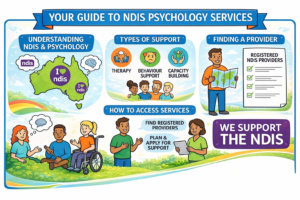

The National Disability Insurance Scheme (NDIS) has revolutionised the way Australians with disabilities access support services, including psychological care. Finding the right psychologist under the NDIS can be a daunting task, given the multitude of options and the complexities of the scheme itself. This guide aims to simplify the process, providing you with the necessary information to navigate the NDIS effectively and find a psychologist who meets your specific needs.
Keywords: NDIS, Psychologist, Psychological services, Mental health support, Finding a psychologist under NDIS, NDIS registered psychologist, NDIS funding, Mental health services Australia, Disability support, NDIS participant portal, Choosing a psychologist, Plan management, Therapy goals, Mental wellbeing, Support coordination
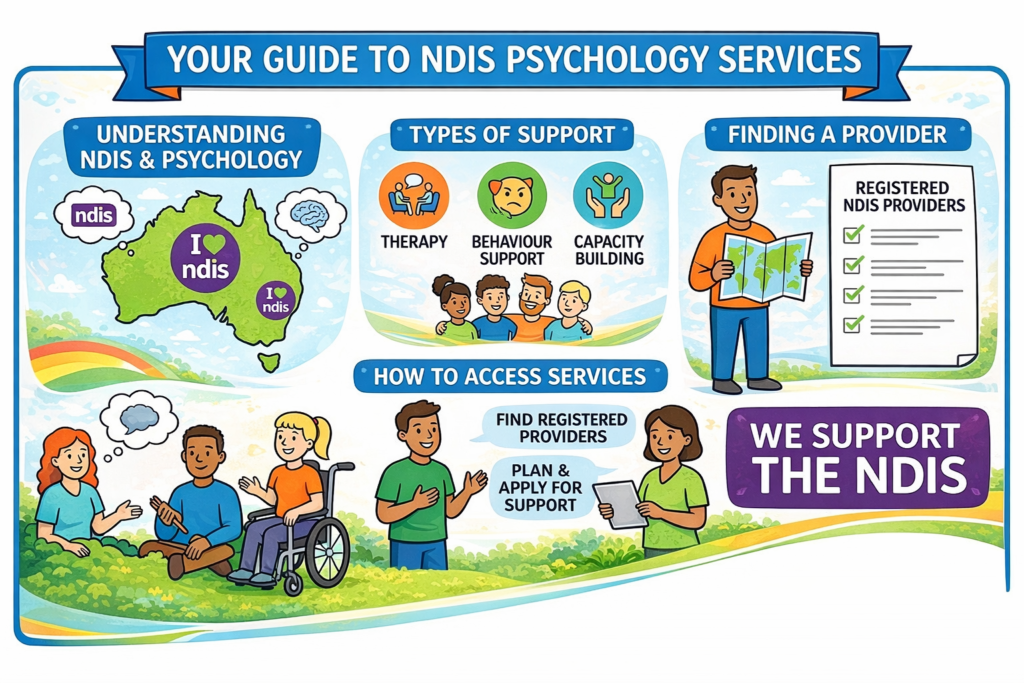
Understanding the NDIS
What is the NDIS?
The NDIS is a national initiative that provides funding support to Australians under 65 who have permanent and significant disabilities (NDIS 2020a). It empowers participants by offering choice and control over the services and supports they receive, including access to mental health professionals.
Eligibility Criteria
To access the NDIS, individuals must meet residency requirements, be under 65 years of age, and have a disability that significantly affects their daily functioning (NDIS 2020b). Psychological conditions, such as severe and persistent mental health issues, can qualify if they result in substantial impairment.
Psychological Services under the NDIS
The NDIS recognises the importance of mental health and funds a range of psychological services aimed at improving participants’ wellbeing and independence (Productivity Commission 2017). These services can include assessments, therapy sessions, and support for developing coping strategies.
Assessing Your Needs
Identifying the Type of Psychological Support Required
Understanding your specific mental health needs is the first step. Are you seeking support for anxiety, depression, behavioural issues, or cognitive impairments? Different psychologists work in various areas, so clarity on your needs will guide your search (Australian Psychological Society [APS] 2021a).
Types of Psychologists and Specialisations
- Clinical Psychologists: Focus on diagnosing and treating mental health disorders.
- Educational and Developmental Psychologists: Learning and developmental issues.
- Neuropsychologists: Assess and treat cognitive and neurological conditions.
- Counselling Psychologists: Help with emotional, social, and physical issues (APS 2021b).
Importance of a Personalised Approach
Each individual’s experience with disability is unique. A personalised approach ensures that the psychological support aligns with your goals and circumstances (Davidson et al. 2016).
The Role of Psychologists in the NDIS
Services Provided
Psychologists under the NDIS offer a variety of services, including:
- Assessments: Evaluating cognitive, emotional, and behavioural functioning.
- Therapy: Individual or group sessions focusing on specific issues.
- Behaviour Support: Developing strategies to manage challenging behaviours.
- Skill Development: Enhancing social skills, communication, and independence (NDIS 2020c).
Goals and Expected Outcomes
Working with a psychologist can lead to improved mental health, greater independence, and enhanced quality of life. Clear goal-setting is crucial for measuring progress (Rosenbaum et al. 2018).
Navigating the NDIS Participant Portal
Using the Portal
The NDIS participant portal, known as myplace, allows you to manage your plan, find registered providers, and monitor funding (NDIS 2020d).
Finding ndis Psychologists
- Provider Finder Tool: Use the search function to locate psychologists in your area.
- Filter Options: Narrow down results based on services offered, location, and accessibility.
- Profile Reviews: Read provider profiles to assess suitability (NDIS 2020d).
Tips for Effective Use
- Regularly Update Information: Ensure your personal details and plan information are current.
- Utilise Support Coordinators: They can assist in navigating the portal and connecting with providers.
- Keep Records: Document communications and service agreements for future reference (Joint Standing Committee on the NDIS 2018).
Choosing the Right Psychologist
Factors to Consider
- Qualifications and Experience: Verify that the psychologist is registered and has experience relevant to your needs (Australian Health Practitioner Regulation Agency [AHPRA] 2021).
- Specialisation: Look for expertise in areas that align with your goals.
- Location and Accessibility: Consider proximity and whether they offer telehealth services.
- Compatibility and Rapport: A good therapeutic relationship enhances outcomes (Norcross & Wampold 2019).
- Cultural Considerations: If relevant, seek a psychologist who understands your cultural background (Dudgeon et al. 2016).
Questions to Ask
- What is your experience with NDIS participants?
- How do you tailor your approach to individual needs?
- What are your areas of specialisation?
- Do you offer flexible scheduling or telehealth options?
Understanding NDIS Funding and Plan Management
Funding for Psychological Services
The NDIS provides funding under various support categories:
- Improved Daily Living: Covers assessments and therapy aimed at enhancing skills.
- Improved Relationships: Funds interventions to develop positive behaviours and interactions (NDIS 2020e).
Plan Management Options
- Self-Managed: You control the funds and pay providers directly.
- Plan-Managed: A plan manager handles financial transactions on your behalf.
- NDIA-Managed: The National Disability Insurance Agency (NDIA) pays providers directly (NDIS 2020f).
Budgeting for Services
Ensure your plan allocates sufficient funds for psychological services. Discuss with your planner or support coordinator to adjust allocations if necessary (NDIS 2020g).
Making the Most of Your Sessions
Setting Goals with Your Psychologist
Collaboratively establish clear, achievable goals to guide therapy and measure progress (Cooper & Law 2018).
Regular Reviews and Progress Tracking
- Ongoing Assessment: Regular check-ins to evaluate the effectiveness of interventions.
- Adjustments: Be open to modifying strategies as needed (Lambert 2013).
Communication and Feedback
- Open Dialogue: Share your thoughts and concerns with your psychologist.
- Feedback-Informed Treatment: Participating actively enhances outcomes (Miller et al. 2015).
Rights and Advocacy
Understanding Your Rights
You have the right to:
- Quality Services: Receive evidence-based care from qualified professionals.
- Informed Consent: Be informed about treatments and give consent.
- Privacy and Confidentiality: Your personal information must be protected (AHPRA 2021).
Addressing Issues
- Raise Concerns: Discuss any issues directly with your psychologist.
- Formal Complaints: If unresolved, contact the NDIS Quality and Safeguards Commission (NDIS Commission 2020).
Support Networks and Advocacy Groups
- Disability Advocacy Organisations: Provide assistance and representation.
- Support Groups: Connect with others who have similar experiences (People with Disability Australia 2021).
Conclusion
Navigating the NDIS to find the right psychologist may seem complex, but with the right information and support, it becomes manageable. Understanding your needs, utilising available resources, and being proactive in your search will lead you to a psychologist who can make a significant positive impact on your life. Remember, the goal is to enhance your wellbeing and empower you to achieve your personal objectives.
References
- Australian Health Practitioner Regulation Agency (AHPRA) 2021, Check the Register, AHPRA, viewed 10 November 2021, https://www.ahpra.gov.au/Registration/Registers-of-Practitioners.aspx.
- Australian Psychological Society (APS) 2021a, Understanding Psychological Assessment, APS, viewed 10 November 2021, https://www.psychology.org.au/for-the-public/Psychology-topics/Psychological-assessment.
- Australian Psychological Society (APS) 2021b, Types of Psychologists, APS, viewed 10 November 2021, https://www.psychology.org.au/Training-and-careers/Careers-and-study/Types-of-psychologists.
- Cooper, M & Law, D 2018, Working with Goals in Psychotherapy and Counselling, Oxford University Press, Oxford.
- Davidson, G, McGill, P & Baker, P 2016, ‘Understanding personalised support: A review of psychological literature on self-determination’, Journal of Intellectual Disabilities, vol. 20, no. 4, pp. 386-401.
- Dudgeon, P, Milroy, H & Walker, R (eds) 2016, Working Together: Aboriginal and Torres Strait Islander Mental Health and Wellbeing Principles and Practice, 2nd edn, Commonwealth of Australia, Canberra.
- Joint Standing Committee on the NDIS 2018, Transitional Arrangements for the NDIS, Commonwealth of Australia, Canberra.
- Lambert, MJ 2013, Bergin and Garfield’s Handbook of Psychotherapy and Behavior Change, 6th edn, Wiley, Hoboken.
- Miller, SD, Hubble, MA & Chow, D 2015, The Science of the Art of Psychotherapy, Norton, New York.
- National Disability Insurance Agency (NDIS) 2020a, About Us, NDIS, viewed 10 November 2021, https://www.ndis.gov.au/about-us
- National Disability Insurance Agency (NDIS) 2020b, Access Requirements, NDIS, viewed 10 November 2021, https://www.ndis.gov.au/applying-access-ndis/am-i-eligible.
- National Disability Insurance Agency (NDIS) 2020c, Psychosocial Disability Supports, NDIS, viewed 10 November 2021, https://www.ndis.gov.au/understanding/how-ndis-works/mental-health-and-ndis.
- National Disability Insurance Agency (NDIS) 2020d, Using the NDIS Participant Portal (myplace), NDIS, viewed 10 November 2021, https://www.ndis.gov.au/participants/using-your-plan/myplace-portal.
- National Disability Insurance Agency (NDIS) 2020e, Support Budgets in Your Plan, NDIS, viewed 10 November 2021, https://www.ndis.gov.au/participants/using-your-plan/managing-your-plan/support-budgets-your-plan.
- National Disability Insurance Agency (NDIS) 2020f, Ways to Manage Your Funding, NDIS, viewed 10 November 2021, https://www.ndis.gov.au/participants/using-your-plan/who-can-manage-your-funding.
- National Disability Insurance Agency (NDIS) 2020g, Changing Your Plan, NDIS, viewed 10 November 2021, https://www.ndis.gov.au/participants/using-your-plan/changing-your-plan.
- National Disability Insurance Scheme Quality and Safeguards Commission (NDIS Commission) 2020, Making a Complaint, NDIS Commission, viewed 10 November 2021, https://www.ndiscommission.gov.au/about/complaints.
- Norcross, JC & Wampold, BE 2019, ‘Evidence-based therapy relationships: Research conclusions and clinical practices’, Psychotherapy, vol. 56, no. 4, pp. 423-430.
- People with Disability Australia 2021, Advocacy, PWDA, viewed 10 November 2021, https://pwd.org.au/what-we-do/individual-advocacy/.
- Productivity Commission 2017, National Disability Insurance Scheme (NDIS) Costs, Productivity Commission Study Report, Commonwealth of Australia, Canberra.
- Rosenbaum, P, McNamara, E & Rosenbloom, L 2018, ‘The future of children’s rehabilitation: Optimising the “fit” between the person and the environment’, International Journal of Environmental Research and Public Health, vol. 15, no. 5, pp. 1-11.
How to get in touch
If you or your NDIS participant need immediate mental healthcare assistance, feel free to get in contact with us on 1800 NEAR ME – admin@therapynearme.com.au.