
Therapy Near Me

Author name: Therapy Near Me Editorial Team

Bad Psychologists Red Flags, Risks, and How to Protect Your Mental Health

Bad Psychologists: Red Flags, Risks, and How to Protect Your Mental Health

 Written by: Therapy Near Me Editorial Team Clinically reviewed by: qualified members of the Therapy Near Me clinical team Last updated: 07/09/2025 This article is intended as general information only and does not replace personalised medical or mental health advice. Learn more about our Editorial Policy. Introduction When people seek therapy, they are often in vulnerable situations—struggling with anxiety, depression, trauma, or life stressors. The right psychologist can be life-changing. But what happens if the psychologist is ineffective, unethical, or even harmful? Research shows that not all therapy is beneficial: between 5–10% of clients deteriorate during psychological treatment, often due to poor therapeutic relationships or inappropriate methods (Lambert, 2013; Lilienfeld, 2007). These cases are sometimes attributed to what clients call “bad psychologists.” This article explores what makes a psychologist “bad,” the consequences for mental health, and how to choose a qualified, ethical professional. 1. What do we mean by “bad psychologists”? A “bad psychologist” does not necessarily mean someone who is malicious. Instead, it can refer to: 2. Common red flags of a bad psychologist a) Lack of professionalism b) Breaches of ethics c) Pseudoscience and harmful techniques Some psychologists use interventions unsupported—or even contradicted—by research. Examples include rebirthing therapies (linked to child deaths; Lilienfeld, 2007) which is associated with long-term harm (APA, 2009). d) Poor therapeutic alliance The therapeutic relationship is one of the strongest predictors of success (Wampold, 2015). If the psychologist is dismissive, judgmental, or invalidating, progress is unlikely. e) Ignoring evidence-based practice Modern psychology emphasises evidence-based treatment (EBT), such as CBT, ACT, or EMDR for trauma. If a psychologist rejects proven approaches without rationale, it may be a red flag. 3. Risks of working with a bad psychologist Psychological risks Ethical and legal risks 4. How to protect yourself from bad psychologists a) Check qualifications In Australia, psychologists must be registered with AHPRA (Australian Health Practitioner Regulation Agency). Similar boards exist in other countries. Clients can search registries to confirm credentials. b) Look for evidence-based practice Ask: “What treatment do you use, and what evidence supports it?” Psychologists should be able to reference clinical guidelines (e.g., NICE, APA). c) Monitor progress Research supports using routine outcome monitoring to track symptom change. If progress stalls for several months, consider raising concerns (Lambert, 2013). d) Trust your instincts If you feel consistently invalidated, judged, or unsafe, it’s appropriate to seek another therapist. Therapy should be collaborative, not coercive. e) Report misconduct Professional bodies (e.g., AHPRA, APA) have complaint mechanisms for breaches of ethics. 5. Why good psychologists matter FAQs Q: What makes a psychologist “bad”?Unethical behaviour, poor professionalism, ineffective methods, or a mismatch in communication style. Q: Can therapy make you worse?Yes. Research suggests up to 10% of clients deteriorate in therapy, often due to poor therapeutic relationships or harmful methods. Q: How do I avoid a bad psychologist?Check registration, look for evidence-based treatments, and pay attention to whether you feel respected and supported. Q: Can I change psychologists if I’m unhappy?Absolutely. You have the right to change therapists if you feel the relationship isn’t working. References

Bad Psychologists: Red Flags, Risks, and How to Protect Your Mental Health Read More »

Average IQ of Different Professions Highest to Lowest

Average IQ of Different Professions: Highest to Lowest

 Written by: Therapy Near Me Editorial Team Clinically reviewed by: qualified members of the Therapy Near Me clinical team Last updated: 06?09/2025 This article is intended as general information only and does not replace personalised medical or mental health advice. Learn more about our Editorial Policy. Introduction IQ (intelligence quotient) is often linked in the public imagination to job success, career pathways, and the professions people enter. While intelligence is not the only factor that determines occupational success—personality, social skills, emotional intelligence, and opportunity are also critical—decades of research show that average IQ scores do differ by profession (Deary et al., 2007; Gottfredson, 1997). This article explores the average IQ of different professions from highest to lowest, what this means for career outcomes, and the implications for mental health and wellbeing. 1. Understanding IQ and professions IQ tests measure general cognitive ability (g), including reasoning, problem-solving, working memory, and verbal ability. IQ correlates strongly with: Importantly, IQ is an average measure. There is wide variation within any profession, and being “smart” does not guarantee success, happiness, or resilience. 2. Professions with the highest average IQ Research from occupational psychology and large-scale datasets (Hauser, 2010; Wai, 2013; Deary et al., 2007) suggests that professions requiring advanced education, abstract reasoning, and complex decision-making tend to score highest. Highest average IQ professions (approx. ranges): Why? These professions demand extensive formal education, high levels of reasoning, and problem-solving under uncertainty. IQ predicts entry and performance, though other traits like grit and conscientiousness also matter (Duckworth et al., 2007). 3. Middle-range professions Jobs requiring post-secondary education or advanced training but less abstract reasoning typically sit around the 100–115 range. Examples: These jobs require both cognitive skill and strong practical, social, and organisational abilities. 4. Professions with below-average IQ Occupations requiring fewer formal qualifications and relying more on physical labour or routine tasks tend to show average IQs in the 90–100 range. Examples: These averages should not be misunderstood as indicators of individual worth. Many people in these jobs excel in practical intelligence, creativity, and interpersonal skills that are not well measured by IQ (Sternberg, 2003). 5. Why IQ differences across professions exist a) Educational filtering Professions that require long university pathways (medicine, law, academia) inherently select for individuals with higher IQs, as IQ strongly predicts educational success (Deary et al., 2007). b) Job complexity Jobs with high complexity demand more cognitive ability to manage information, solve problems, and adapt to new situations (Gottfredson, 1997). c) Socioeconomic factors Access to education and cultural capital also influence who enters high-IQ professions (Hauser, 2010). 6. The mental health angle Crucially, job quality and workplace support matter more for wellbeing than IQ alone (OECD, 2014). 7. Limitations and cautions FAQs Q: Which profession has the highest average IQ?Academics, doctors, engineers, and lawyers typically show the highest average IQs (around 120–130). Q: Do teachers have high IQs?Yes. Teachers generally fall in the 105–115 range, above the population average. Q: Which jobs have average IQ below 100?Jobs involving routine manual labour, retail, and some clerical roles show averages closer to 90–100. Q: Is IQ the only thing that matters for jobs?No. Emotional intelligence, resilience, creativity, and communication skills are equally important for success and mental health References

Average IQ of Different Professions: Highest to Lowest Read More »

Phone Durations Between Sexes What Psychology and Communication Research Really Say

Phone Durations Between Sexes: What Psychology and Communication Research Really Say

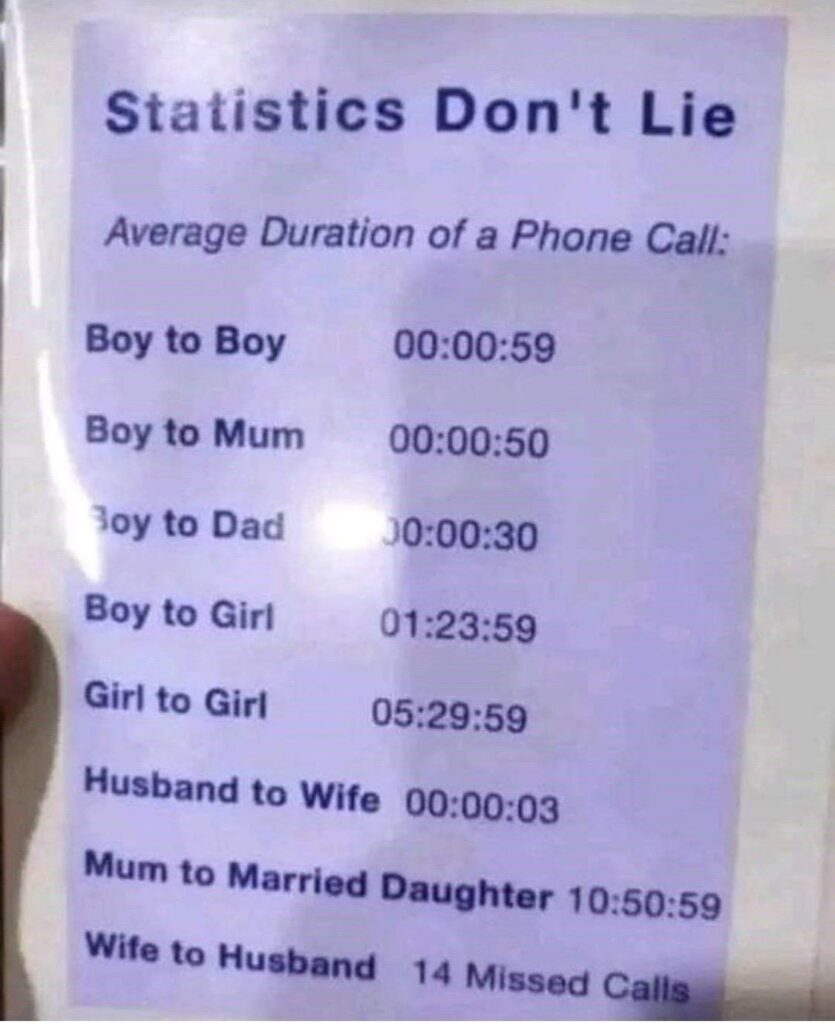
Written by: Therapy Near Me Editorial Team Clinically reviewed by: qualified members of the Therapy Near Me clinical team Last updated: 05/09/2025 This article is intended as general information only and does not replace personalised medical or mental health advice. Learn more about our Editorial Policy. Introduction The viral image showing different phone call durations between sexes—“Boy to Boy: 59 seconds, Girl to Girl: 5 hours”—is intended as humour. But behind the joke lies a body of scientific research on gender, communication, and relational maintenance. Studies in psychology, linguistics, and communication science reveal that men and women often use phone conversations differently, shaped by social roles, intimacy needs, and emotional expression styles. This article reviews the science of phone durations between sexes, why these patterns exist, and what they reveal about mental health, relationships, and wellbeing. 1. Gendered communication styles Research consistently shows that women tend to prioritise expressive communication, whereas men are more likely to engage in instrumental communication (Tannen, 1990; Leaper & Ayres, 2007). Example: In a study of adolescent friendships, girls reported more frequent and longer phone calls, while boys preferred face-to-face group activities (Raffaelli & Duckett, 1989). 2. Phone calls as relational maintenance Phone communication is not just about information—it’s also about maintaining relationships. This supports the stereotype in the image: “Girl to Girl” calls being longest. 3. The psychology of “short male calls” The image jokes that “Boy to Dad” lasts 30 seconds and “Husband to Wife” just 3 seconds. This exaggeration aligns with research showing that men communicate differently with family versus peers. However, it is not simply disinterest—it often reflects a preference for efficiency and avoidance of emotional over-disclosure. 4. Technology and gendered communication Modern research also shows how smartphones and messaging apps have shifted patterns: This continues to explain why average call length differs by sex, but total communication time (including texting) may balance out more. 5. Implications for mental health a) Social support and wellbeing Longer calls are often linked to greater perceived emotional support, especially for women (Taylor et al., 2000). Emotional disclosure predicts lower stress and better coping outcomes. b) Loneliness and isolation Short, functional conversations—common in male communication—may limit opportunities for emotional support, contributing to loneliness if not balanced with deeper interaction. c) Relationship satisfaction Couples who balance communication preferences—short updates for efficiency, longer calls for emotional connection—tend to report greater satisfaction (Stafford & Canary, 1991). Checklist of key findings References

Phone Durations Between Sexes: What Psychology and Communication Research Really Say Read More »

Picking the Right Career: A Psychologist’s Evidence-Based Guide

Picking the Right Career: A Psychologist’s Evidence-Based Guide

Written by: Therapy Near Me Editorial Team Clinically reviewed by: qualified members of the Therapy Near Me clinical team Last updated: 04/09/2025 This article is intended as general information only and does not replace personalised medical or mental health advice. Learn more about our Editorial Policy. Read this first “Follow your passion” is catchy—but incomplete. Decades of research show that career decisions are strongest when they blend: Below is a step-by-step, evidence-based roadmap you can use now. Step 1 — Map your interests and values (not just skills) Why it matters:Day-to-day tasks aligned with your interests and values predict persistence, performance, and satisfaction (Nye et al., 2017; Allan et al., 2019). Meta-analyses show interest–job congruence predicts outcomes beyond personality traits (Nye et al., 2012; 2017). How to do it: Australian tip (SEO: “career test Australia”): Use myfuture, Australia’s national career information service. Step 2 — Check person–environment fit (job + organisation) Why it matters:Meta-analysis shows person–job and person–organisation fit correlate with satisfaction, commitment, and lower turnover (Kristof-Brown et al., 2005). How to do it: Step 3 — Build career adaptability (because paths change) Why it matters:Non-linear careers require adaptability. Career adaptability—Concern, Control, Curiosity, Confidence (CAAS)—predicts coping and better outcomes (Savickas & Porfeli, 2012). How to apply the CAAS 4C: Step 4 — Use SCCT to steer choices Social Cognitive Career Theory (SCCT): Career choice is shaped by self-efficacy, outcome expectations, goals, and contextual supports (Lent, Brown & Hackett, 1994/2000/2006). How to apply:For each shortlisted role, list:a. Skills you already haveb. 1–2 skill gapsc. Supports you’ll line up (mentor, course, scholarship) Step 5 — Evaluate job quality (not just pay) Why it matters:Good jobs protect mental health; bad jobs harm it. OECD’s Job Quality Framework: earnings quality, labour-market security, and work environment (OECD, 2014/2015+). Job Demand–Control model shows highest strain when demands are high and control is low (Karasek, 1979). WHO (2022) recommends mental-health-friendly workplaces. Checklist (SEO: “job quality checklist”): Step 6 — Let the labour market inform (not dictate) your choice Australian resources: Use these to answer: Is demand rising? Which credentials pay off? Which regions are hiring? Combine with fit evidence. Step 7 — Prototype the role and craft the job Why it matters:Job crafting—shaping tasks, relationships, and meaning—improves fit and motivation (Wrzesniewski & Dutton, 2001; Zhang & Parker, 2019). Prototype playbook: Step 8 — Manage career indecision like a scientist Why it matters:Feeling “stuck” is normal. Career Decision-Making Difficulties Questionnaire (CDDQ) identifies barriers (Gati, Krausz & Osipow, 1996; Osipow & Gati, 1998). Interventions: Step 9 — Build the meta-skills that compound Key constructs: A 10-Point Plan You Can Start Today FAQs Q: Is there one “best” career for me?Probably not. Multiple careers could match your interests and values; interest–job congruence and person–environment fit drive satisfaction (Nye et al., 2012/2017; Kristof-Brown et al., 2005). Q: How does mental health factor into career choice?Choose roles with healthy design (demands, autonomy, support) and WHO-compliant workplace policies (WHO, 2022). Q: Where can I find reliable Australian job data?Australian Jobs 2025, Occupation & Industry Profiles, ABS Labour Account, and myfuture. References Allan, B.A., Batz-Barbarich, C., Sterling, H.M. & Tay, L. (2019) ‘Outcomes of meaningful work: A meta-analysis’, Journal of Management Studies (preprint PDF). Australian Bureau of Statistics (2025) ‘Insights into the Australian labour market’, ABS Labour Account Australia, 6 June. Department of Employment and Workplace Relations / Jobs & Skills Australia (2025) Australian Jobs 2025. Gati, I., Krausz, M. & Osipow, S.H. (1996) ‘A taxonomy of career decision-making difficulties’, Journal of Counseling Psychology, 43(4), pp.510–526. Karasek, R.A. (1979) ‘Job demands, decision latitude, and mental strain’, Administrative Science Quarterly, 24(2), pp.285–308. Kristof-Brown, A.L., Zimmerman, R.D. & Johnson, E.C. (2005) ‘Consequences of individuals’ fit at work: A meta-analysis’, Personnel Psychology, 58(2), pp.281–342. Lent, R.W., Brown, S.D. & Hackett, G. (1994; 2000; 2006) ‘Social Cognitive Career Theory’, Journal of Vocational Behavior and related publications. myfuture (2025) ‘Australia’s National Career Information Service’. Nye, C.D., Su, R., Rounds, J. & Drasgow, F. (2012; 2017) ‘Vocational interests and performance: Interest congruence and performance’, Journal of Vocational Behavior. OECD (2014–2024) ‘Measuring and assessing job quality: earnings quality, labour-market security, working environment’, OECD Job Quality Framework. Savickas, M.L. & Porfeli, E.J. (2012) ‘Career Adapt-Abilities Scale (CAAS): Construction, reliability and measurement equivalence’, Journal of Vocational Behavior, 80(3), pp.661–673. WHO & ILO (2022) Guidelines on mental health at work and Mental health at work: Policy brief. Wrzesniewski, A. & Dutton, J.E. (2001) ‘Crafting a job: Revisioning employees as active crafters’, Academy of Management Review, 26(2), pp.179–201. Jobs and Skills Australia (2025) ‘Occupation and Industry Profiles’. Disclaimer: General information only; not a substitute for personalised career or medical advice. Consult a registered psychologist or career practitioner if career indecision affects mental health.

Picking the Right Career: A Psychologist’s Evidence-Based Guide Read More »

Psychoanalysis of Dezi Freeman Understanding Behaviour Through a Psychoanalytic Lens

Psychoanalysis of Dezi Freeman: Understanding Behaviour Through a Psychoanalytic Lens

 Written by: Therapy Near Me Editorial Team Clinically reviewed by: qualified members of the Therapy Near Me clinical team Last updated: 03/09/2025 This article is intended as general information only and does not replace personalised medical or mental health advice. Learn more about our Editorial Policy. Introduction Psychoanalysis, pioneered by Sigmund Freud, remains one of the most influential approaches in psychology. It seeks to explain behaviour by examining unconscious motivations, unresolved conflicts, and defence mechanisms (Freud, 1923). While contemporary psychology integrates many other frameworks, psychoanalysis still provides useful insights into personality, aggression, authority conflicts, and identity formation. This article applies psychoanalytic principles to a case study representation of Dezi Freeman for educational purposes. It highlights how unconscious dynamics, attachment patterns, and psychological defences might explain antisocial or aggressive behaviours. 1. The psychoanalytic framework Key psychoanalytic concepts include: These concepts provide a foundation for understanding Dezi Freeman’s psychological functioning. 2. Personality structure and conflict In psychoanalysis, aggressive or antisocial behaviour is often explained by overactive id impulses (drives for aggression or dominance) combined with a weak ego unable to regulate them. The superego may be underdeveloped, leading to limited guilt or remorse (Freud, 1923). If applied to Dezi Freeman, a psychoanalytic view might suggest unresolved inner conflict between instinctual drives and social expectations, expressed through aggression and defiance of authority. 3. Defence mechanisms in behaviour Psychoanalytic theory would highlight the role of defence mechanisms in Freeman’s behaviour: Research shows that overreliance on immature defences is linked with poorer psychological adjustment and higher aggression (Cramer, 2006). 4. Childhood and attachment influences Freud’s psychosexual theory suggests early childhood experiences shape adult personality, while Bowlby’s attachment theory shows insecure or disorganised attachments predict later problems with aggression, empathy, and authority (Bowlby, 1988). If Dezi Freeman experienced neglect, inconsistent caregiving, or exposure to violence, psychoanalysis would predict difficulties with trust, regulation of aggression, and relational stability. 5. Authority, aggression, and the superego Psychoanalytic perspectives often link aggression toward authority with unresolved Oedipal conflicts or rebellion against internalised parental figures. Modern psychodynamic theorists argue that fragile self-esteem and feelings of humiliation can trigger defensive aggression when authority is perceived as threatening (Kernberg, 2004). In Freeman’s case, resistance to external authority may symbolically reflect deeper intrapsychic struggles with control and autonomy. 6. Psychoanalysis and antisocial tendencies Research on antisocial and narcissistic traits shows that individuals often employ primitive defence mechanisms and have difficulty integrating positive and negative aspects of self and others (Kernberg, 2004). Psychoanalysis interprets such behaviour as attempts to manage deep-seated feelings of vulnerability or inadequacy. This lens suggests Freeman’s hostility could represent a defence against inner anxiety or fragmented identity. 7. Limitations of psychoanalysis While psychoanalysis provides useful insights, it has limitations: 8. Relevance to modern psychology Contemporary psychodynamic theory integrates psychoanalysis with attachment theory, neuroscience, and trauma research, offering a more holistic framework (Fonagy & Target, 2007). Applied to cases like Freeman’s, psychoanalysis remains relevant for understanding unconscious conflict, aggression, and identity struggles. FAQs Q: What does psychoanalysis say about aggressive behaviour? It suggests aggression stems from unresolved unconscious conflict, immature defence mechanisms, and insecure attachment patterns (Kernberg, 2004). Q: How do defence mechanisms explain antisocial acts? Defences such as projection, denial, and rationalisation protect the ego but distort reality, often fuelling harmful behaviour (Cramer, 2006). Q: Can psychoanalysis still help today? Yes. Modern psychodynamic therapy has evidence for treating depression, personality disorders, and trauma-related conditions (Shedler, 2010). Q: How does childhood affect later aggression? Early insecure attachments increase the likelihood of difficulties with trust, authority, and self-regulation in adulthood (Bowlby, 1988).   References

Psychoanalysis of Dezi Freeman: Understanding Behaviour Through a Psychoanalytic Lens Read More »

Should You Trust Someone Who Tells You They’re Trustworthy

Should You Trust Someone Who Tells You They’re Trustworthy?

Written by: Therapy Near Me Editorial Team Clinically reviewed by: qualified members of the Therapy Near Me clinical team Last updated: 03/09/2025 This article is intended as general information only and does not replace personalised medical or mental health advice. Learn more about our Editorial Policy. A psychologist’s evidence-based guide to credibility, signals, and protecting your mental health (2025) TL;DR Why “trust me” is a weak (or even dodgy) signal From the perspective of signalling theory, a statement like “I’m honest” is cheap: anyone can say it; there’s no cost to lying and no mechanism that punishes false claims (Spence, 1973). By contrast, costly signals (e.g., professional licensure that can be revoked; escrow that forfeits your money if you break a promise) are harder to fake and therefore more informative. Self-enhancing claims also collide with classic personality findings on impression management and self-deception (Paulhus, 1998): the more someone insists on their virtue, the more likely you’re hearing a presentation strategy, not proof. That’s consistent with evidence that humblebragging (“I’m just so honest it gets me in trouble…”) reduces likeability and credibility compared with straightforward modesty (Sezer, Gino & Norton, 2018). Bottom line: Treat “trust me” as noise until it is backed by costly, verifiable commitments and past behaviour. How good are humans at spotting liars? (Spoiler: not very) Meta-analytic work shows humans hover only slightly above chance at detecting deception in lab and field paradigms (Bond & DePaulo, 2006). Many alleged cues—averted gaze, fidgeting—are weak or inconsistent predictors (DePaulo et al., 2003). Confidence, fluency and warmth often sway observers (halo effects), but they do not guarantee honesty. In digital contexts, linguistic analyses suggest liars may tweak function words (e.g., fewer first-person pronouns), but effects are small and not diagnostic at the individual level (Newman et al., 2003). In practice, procedural protections (e.g., paper trails, escrow, two-factor verification) usually outperform gut-feel “lie detection.” What actually predicts trustworthiness? 1) Track record and reputation (repeated-game evidence) Markets and communities reliably use reputation systems—ratings, reviews, public histories—to filter for honest partners. On platforms like eBay, feedback histories increase probability of successful transactions and reduce opportunism (Resnick & Zeckhauser, 2002; Tadelis, 2016). In classic Trust Games, people invest more when there’s social history and opportunities for reciprocity (Berg, Dickhaut & McCabe, 1995). 2) Costly commitments (“skin in the game”) Warranties, escrow, performance bonds, and money-back guarantees impose real costs for defection, converting “I’m trustworthy” into hard incentives (Spence, 1973). 3) Third-party verification Licensure, background checks, accreditation, audited financials, and professional supervision are harder to counterfeit and are backed by sanctions. 4) Personality & moral behavior in the wild The Honesty–Humility factor of the HEXACO model negatively predicts cheating and exploitation (Ashton & Lee, 2007; Hilbig & Zettler, 2015). Conversely, Machiavellianism (a Dark Triad trait) correlates with strategic deception (Jones & Paulhus, 2014). You can’t run a personality inventory on everyone—but you can observe patterns: do they keep promises when it’s inconvenient? Do they act fairly when no one is watching? When the claim “I’m trustworthy” is a red flag Special note for mental-health contexts Because clients are often vulnerable, claims of exceptional care or “unique” methods should be treated with caution. Instead, look for: If a therapist asks you to “just trust me” while discouraging questions, second opinions, or data-informed review, that’s a yellow (or red) flag. A practical trust checklist (personal, business, and care settings) Tier 1: Words (weak evidence) Tier 2: Transparent information (moderate evidence) Tier 3: Costly, verifiable commitments (strong evidence) Tier 4: Behavior under stress (strongest evidence) Smart defaults Common myths (and what evidence says) FAQs Is someone more trustworthy if they say “trust me”?Not by itself. Self-claims are cheap signals. Look for costly, verifiable commitments and a track record (Spence, 1973; Resnick & Zeckhauser, 2002). How can I quickly check credibility online?Scan independent reviews, verify identity/licensure, and prefer platforms with escrow or buyer protection (Tadelis, 2016). Are there personality clues?High Honesty–Humility predicts fair play; Machiavellianism predicts manipulation—but judge by observable behavior, not labels (Ashton & Lee, 2007; Jones & Paulhus, 2014). What about therapy or coaching?Prioritise registration, evidence-based practice, outcome monitoring, and supervision over charisma or big promises (Lambert, 2013). References Final word You don’t have to become cynical—just raise the bar on evidence. When someone tells you they’re trustworthy, thank them—and verify. Prioritise costly, checkable signals and repeated behavior over charisma. Your mental health (and your wallet) will be safer for it.

Should You Trust Someone Who Tells You They’re Trustworthy? Read More »

New ADHD Prescription Laws from GPs September 2025 Update

New ADHD Prescription Laws from GPs: September 2025 Update

 Written by: Therapy Near Me Editorial Team Clinically reviewed by: qualified members of the Therapy Near Me clinical team Last updated: 03/09/2025 This article is intended as general information only and does not replace personalised medical or mental health advice. Learn more about our Editorial Policy. Introduction From September 2025, significant changes are being introduced in how general practitioners (GPs) can prescribe medication for Attention-Deficit/Hyperactivity Disorder (ADHD). This reform reflects ongoing debates about access to ADHD treatment, rising diagnosis rates, and the demand for better support in primary care. The new laws aim to balance improved accessibility with patient safety, ensuring consistent standards across Australia. This article explains what the new laws mean, why they were introduced, and how patients can navigate ADHD treatment under the updated framework. 1. Why the new ADHD prescribing laws? Over the past decade, Australia has seen a sharp rise in ADHD diagnoses, particularly among adults (Faraone et al., 2021). Historically, prescribing ADHD medications—especially stimulants like methylphenidate and dexamfetamine—was restricted to psychiatrists, paediatricians, and select specialists due to safety and misuse concerns (Australian Government Department of Health, 2019). However, long waiting times to see specialists created barriers to care. Many patients reported delays of 6–12 months, leaving them untreated and struggling with education, work, and daily functioning (Coghill & Seth, 2015). The new laws are designed to streamline access and reduce inequities. 2. What changes in September 2025? Expanded prescribing rights for GPs Stricter monitoring and reporting Uniform national framework 3. Benefits of the new laws a) Improved access More patients can receive timely prescriptions without waiting months for a specialist appointment (Maneeton et al., 2015). b) Reduced health inequities Regional and rural Australians, who often lack local psychiatrists, will gain greater access through trained GPs (Australian Institute of Health and Welfare, 2020). c) Continuity of care Patients will benefit from consistent management with their GP, who already understands their broader health context. d) Normalisation of ADHD treatment By embedding ADHD prescribing into primary care, the reform helps reduce stigma and acknowledges ADHD as a common, manageable condition. 4. Risks and challenges a) Patient safety ADHD medications are controlled substances with risks of dependence and misuse. Critics worry that wider prescribing may increase diversion or overprescribing (Wilens et al., 2008). b) GP workload and training GPs must undertake additional training, and some may feel underprepared to manage complex ADHD presentations (Bolea-Alamanac et al., 2014). c) Monitoring adherence Ensuring consistent use of RTPM systems and specialist reviews will be critical to maintaining safety. d) Mental health system integration The new system requires effective collaboration between GPs, psychiatrists, and allied health professionals to avoid gaps in care. 5. What this means for patients 6. Preparing for the change For patients: For GPs: FAQs Q: Can GPs prescribe ADHD medication in Australia in 2025? Yes. From September 2025, trained GPs will be able to initiate and continue ADHD prescriptions under a national framework. Q: Why were the laws changed? To improve access, reduce waiting times, and standardise prescribing rules across Australia. Q: Will I still need to see a psychiatrist? For complex cases or annual reviews, yes. However, many patients will now be able to receive prescriptions directly from their GP. Q: Is ADHD medication safe? Yes, when prescribed and monitored properly. Risks include dependence and misuse, which are addressed through prescription monitoring and specialist oversight. References

New ADHD Prescription Laws from GPs: September 2025 Update Read More »

Best Mental Health Apps (2025) Evidence-Based Picks, How to Choose, and What to Avoid

Best Mental Health Apps (2025): Evidence-Based Picks, How to Choose, and What to Avoid

Written by: Therapy Near Me Editorial Team Clinically reviewed by: qualified members of the Therapy Near Me clinical team Last updated: 02/09/2025 This article is intended as general information only and does not replace personalised medical or mental health advice. Learn more about our Editorial Policy. Top picks by goal Privacy heads-up: Many mental health apps still fail basic privacy tests; the FTC fined BetterHelp in 2023 for sharing sensitive data (refund notices began May 2024). Always check the privacy policy and permissions before you start. (FTC, 2024; Mozilla, 2023).  What does the science say about mental health apps? Large meta-analyses show small-to-moderate symptom improvements for app-based interventions, especially for depression, anxiety and insomnia—with big variability by app quality, dose, support and design. Recent syntheses suggest stronger effects when programs include CBT modules, rewards/notifications, and shorter (<8 week) programs; effects can be larger in younger users and when not combined with simultaneous psychotherapy (Linardon et al., 2023; JAMA Netw Open, 2023).  At the single-app level, evidence is uneven. For example, Headspace has multiple RCTs (including a 2025 RCT showing everyday stress reductions), Calm has student and workplace trials; Sleepio achieved NICE guidance (a high bar); CBT-i Coach helps as an adjunct; MindShift, Sanvello, Woebot and Wysa have smaller trials or open-label evidence (some company-linked). Quality varies—so choose apps with peer-reviewed trials or reputable endorsements (e.g., NICE).  How to pick a safe, effective app (checklist) The best mental health apps of 2025 (by need) A) Mindfulness & stress Headspace — Best overall for beginners Calm — Strong evidence for stress/sleep with short daily practice Smiling Mind (AU, free) — Schools & families B) Insomnia Sleepio (digital CBT-I) — Best for chronic insomnia; clinically endorsed CBT-i Coach (VA/DoD; free) — Best adjunct if you’re doing CBT-I C) Anxiety self-help (CBT skills) MindShift CBT (Anxiety Canada; free) Sanvello (formerly Pacifica) D) Mood & coping chatbots (use as supplements) Woebot Wysa E) Trauma support PTSD Coach (VA/DoD; free) F) Mood tracking & journalling Daylio MoodMission (AU) Privacy, safety and regulation (don’t skip) Crisis safety: Apps are not emergency services. If you’re at risk, contact local emergency services or a crisis line immediately. How to use apps so they actually help FAQ Are mental health apps effective? Yes—on average they yield small-to-moderate symptom improvements for common conditions, with best evidence for mindfulness, CBT for depression/anxiety, and CBT-I for insomnia. Quality varies widely. (Linardon et al., 2023; JAMA Netw Open, 2023; NICE MTG70).  Which mindfulness app is most evidence-based? Both Headspace and Calm have RCTs; recent work particularly supports Headspace for everyday stress and Calm for student/workplace stress and sleep. (Kueh et al., 2025; Huberty et al., 2019; Jayawardene et al., 2022).  What’s the best insomnia app? Sleepio (digital CBT-I) is recommended by NICE; CBT-i Coach is a free companion tool if you’re in CBT-I with a clinician.  Are chatbots like Wysa/Woebot real therapy? They can deliver CBT-style skills and help with self-reflection, but should be seen as supplements; evidence bases are smaller and privacy/regulatory oversight is evolving. (Fitzpatrick et al., 2017; Fulmer et al., 2022; NIHR Wysa trial info).  References Final word Apps can meaningfully help—especially for mindfulness, CBT for anxiety/depression, and insomnia—but they’re not created equal. Pick tools with published evidence or credible guidance, lock down your privacy, and use apps as part of a broader care plan when symptoms are moderate–severe. (Linardon et al., 2023; NICE, 2022; FTC, 2024).  General information only; not medical advice. If you’re in crisis, call local emergency services or a crisis line immediately.

Best Mental Health Apps (2025): Evidence-Based Picks, How to Choose, and What to Avoid Read More »

Deceptive Products That Are Actually Bad for Your Mental Health

Deceptive Products That Are Actually Bad for Your Mental Health

Written by: Therapy Near Me Editorial Team Clinically reviewed by: qualified members of the Therapy Near Me clinical team Last updated: 01/09/2025 This article is intended as general information only and does not replace personalised medical or mental health advice. Learn more about our Editorial Policy. Introduction In 2025, consumers face an overwhelming number of products marketed as “wellness boosters,” “stress relievers,” or “mood enhancers.” But many of these products—despite slick advertising—can actually undermine mental health, leading to anxiety, poor sleep, depression, and addiction. Research in psychiatry and public health shows that energy stimulants, unregulated supplements, digital platforms, and addictive consumer goods can worsen psychological well-being when misused. This article explores the top deceptive products that appear helpful but can be harmful, and what evidence-based alternatives may serve you better. 1. Energy drinks marketed as “performance boosters” Energy drinks are aggressively marketed as tools for focus, productivity, and alertness. While they contain caffeine and sugar that temporarily increase energy, studies show regular or high consumption is linked to anxiety, insomnia, and mood dysregulation (Richards & Smith, 2016; Shah et al., 2019). Better alternative: Moderate caffeine from tea or coffee, paired with regular sleep and hydration. 2. Social media apps marketed as “connection tools” Social media platforms claim to connect people and support mental health awareness, but high usage has been consistently associated with increased depression, anxiety, and body image concerns, especially among young adults (Twenge & Campbell, 2018; Keles et al., 2020). Better alternative: Controlled, intentional use with screen-time boundaries and face-to-face socialisation. 3. “Wellness” supplements with unproven claims The wellness industry markets supplements, powders, and nootropics as “stress relievers” or “mood enhancers.” Many are unregulated, untested, and may interact negatively with prescribed medication (Sarris et al., 2016). Better alternative: Seek professional advice; stick to evidence-based interventions such as cognitive-behavioural therapy or doctor-prescribed treatments. 4. Alcohol marketed as “relaxation in a glass” Alcohol advertising often portrays drinking as a stress reliever, social lubricant, or reward. While alcohol produces short-term relaxation, it is a central nervous system depressant and is strongly linked to worsened depression, anxiety, and suicide risk (Rehm et al., 2010). Better alternative: Mindfulness, exercise, or non-alcoholic alternatives (e.g., herbal teas, alcohol-free social drinks). 5. Vaping products marketed as “healthier than smoking” Vaping is heavily promoted as a safer alternative to cigarettes, even being positioned as a stress reliever. While vaping may reduce harm for smokers transitioning away from tobacco, it carries unique mental health risks. Better alternative: Evidence-based cessation programs and behavioural therapy. 6. Gambling apps marketed as “fun entertainment” Online gambling platforms promote themselves as fun, skill-based entertainment and even as “stress-relief games.” In reality, gambling addiction is strongly linked to depression, anxiety, substance use, and suicidal behaviour (Dowling et al., 2015). Better alternative: Non-addictive hobbies (sports, board games, volunteering) for stimulation and social connection. 7. Ultra-processed “comfort foods” Food companies advertise sugary, ultra-processed snacks as comfort or mood boosters. While they produce short bursts of dopamine, high intake is linked to greater risk of depression and poor emotional regulation (Firth et al., 2020). Better alternative: Nutrient-rich diets (Mediterranean-style) show protective effects against depression (Lassale et al., 2019). Checklist: Products that harm your mental health FAQs Q: What products are secretly bad for mental health? Energy drinks, unregulated supplements, excessive social media use, alcohol, vaping, gambling apps, and junk food are all linked to anxiety, depression, and poor sleep. Q: How do I spot deceptive wellness products? Check whether claims are supported by peer-reviewed research. If promises sound too good to be true (“natural cure for anxiety”), they probably are. Q: Are “natural” supplements safe? Not always. Some can interact with medication or cause toxicity. Always check with a doctor or psychologist. References

Deceptive Products That Are Actually Bad for Your Mental Health Read More »

The Most Attractive Male Personality Traits A Psychology-Based Guide

The Most Attractive Male Personality Traits: A Psychology-Based Guide

Written by: Therapy Near Me Editorial Team Clinically reviewed by: qualified members of the Therapy Near Me clinical team Last updated: 31/08/2025 This article is intended as general information only and does not replace personalised medical or mental health advice. Learn more about our Editorial Policy. Why personality matters more than looks While physical appearance influences initial attraction, long-term studies consistently show that personality traits predict lasting attraction, relationship satisfaction, and mate choice more strongly than looks (Li et al., 2002; Fletcher et al., 2004). In 2025, with dating apps and global social networks, traits like confidence, humour, kindness, and emotional intelligence stand out as universal predictors of male attractiveness. 1) Confidence (without arrogance) Confidence is one of the most frequently cited attractive male traits. Research shows that self-assured behaviour signals competence and status, which women across cultures find appealing (Buss, 2003). Practical tip: Confidence is best expressed through open posture, clear speech, and calm decision-making. 2) Sense of humour Humour is a robust predictor of male attractiveness in both short-term and long-term contexts (Li et al., 2009; Wilbur & Campbell, 2011). Pro tip: Use humour to connect, not to put others down—affiliative humour is most strongly linked to attractiveness. 3) Kindness and prosocial behaviour Cross-cultural research finds that kindness and altruism are consistently ranked among the most desirable traits in a partner (Buss, 1989; Sprecher & Regan, 2002). Everyday hack: Small prosocial actions—helping a stranger, showing gratitude—make a man instantly more likeable and attractive. 4) Emotional intelligence (EQ) Emotional intelligence—the ability to perceive, regulate, and respond to emotions—has been linked to greater relationship satisfaction and perceived partner attractiveness (Brackett et al., 2006). How to improve EQ: Practice active listening, reflect before reacting, and show empathy. 5) Ambition and drive Ambition and goal orientation are rated as attractive because they signal competence and resource acquisition potential (Buss & Barnes, 1986; Li et al., 2002). Balance tip: Overwork or obsession with success can reduce attractiveness if it undermines availability and warmth. 6) Reliability and dependability Stability and reliability are critical traits for long-term attractiveness. Research shows that trustworthiness and dependability outrank physical appearance in mate choice for women seeking committed relationships (Eastwick et al., 2014). How to show it: Follow through on commitments, keep promises, and communicate consistently. 7) Authenticity and self-awareness Authenticity—the alignment between values and actions—is strongly tied to perceived attractiveness. People who present themselves authentically are judged as more trustworthy and likeable (Kernis & Goldman, 2006). Everyday step: Share your genuine thoughts and values, and avoid over-curating your image. Checklist: Top attractive male traits FAQs Q: What makes a man most attractive in 2025?A combination of confidence, kindness, humour, and emotional intelligence—not just looks—makes men attractive to women across cultures. Q: Is physical appearance more important than personality?Studies show that while looks matter initially, personality traits like kindness, humour, and reliability are stronger predictors of long-term attraction (Li et al., 2002). Q: Can you train yourself to be more attractive?Yes—social skills, emotional intelligence, and warmth can be learned and improved with therapy, coaching, and practice. References Barclay, P. (2010) ‘Altruism as a courtship display: Some effects of third-party generosity on audience perceptions’, British Journal of Psychology, 101(1), pp.123–135.Brackett, M.A., Warner, R.M. & Bosco, J.S. (2006) ‘Emotional intelligence and relationship quality among couples’, Personal Relationships, 12(2), pp.197–212.Buss, D.M. (1989) ‘Sex differences in human mate preferences: Evolutionary hypotheses tested in 37 cultures’, Behavioral and Brain Sciences, 12(1), pp.1–49.Buss, D.M. (2003) The Evolution of Desire: Strategies of Human Mating. Basic Books.Buss, D.M. & Barnes, M. (1986) ‘Preferences in human mate selection’, Journal of Personality and Social Psychology, 50(3), pp.559–570.Collins, N.L. & Miller, L.C. (1994) ‘Self-disclosure and liking: a meta-analytic review’, Psychological Bulletin, 116(3), pp.457–475.Eastwick, P.W., Finkel, E.J. & Simpson, J.A. (2014) ‘Relationship longevity: The role of mutual dependence’, Journal of Personality and Social Psychology, 106(5), pp.821–841.Farrelly, D. (2013) ‘Altruism is sexy: Evidence from speed dating’, Journal of Evolutionary Psychology, 11(1), pp.35–45.Fiske, S.T., Cuddy, A.J.C. & Glick, P. (2007) ‘Universal dimensions of social cognition: Warmth and competence’, Trends in Cognitive Sciences, 11(2), pp.77–83.Fletcher, G.J.O., Simpson, J.A., Thomas, G. & Giles, L. (1999) ‘Ideals in intimate relationships’, Journal of Personality and Social Psychology, 76(1), pp.72–89.Geary, D.C. (2000) ‘Evolution and proximate expression of human paternal investment’, Psychological Bulletin, 126(1), pp.55–77.Greengross, G. & Miller, G. (2011) ‘Humor ability reveals intelligence, predicts mating success, and is higher in males’, Intelligence, 39(4), pp.188–192.Holtzman, N.S. & Strube, M.J. (2013) ‘Narcissism and attractiveness’, Journal of Research in Personality, 47(6), pp.785–788.Kernis, M.H. & Goldman, B.M. (2006) ‘A multicomponent conceptualization of authenticity: Theory and research’, Advances in Experimental Social Psychology, 38, pp.283–357.Kurtz, L.E. & Algoe, S.B. (2015) ‘Putting laughter in context: Shared laughter as an indicator of relationship well-being’, Personal Relationships, 22(4), pp.573–590.Li, N.P., Bailey, J.M., Kenrick, D.T. & Linsenmeier, J.A. (2002) ‘The necessities and luxuries of mate preferences: Testing tradeoffs’, Journal of Personality and Social Psychology, 82(6), pp.947–955.Montoya, R.M. & Horton, R.S. (2013) ‘A meta-analytic investigation of similarity-attraction’, Journal of Social and Personal Relationships, 30(1), pp.64–94.Puts, D.A. (2010) ‘Beauty and the beast: Mechanisms of sexual selection in humans’, Evolution and Human Behavior, 31(3), pp.157–175.Sezer, O., Gino, F. & Norton, M.I. (2018) ‘Humblebragging: A distinct—and ineffective—self-presentation strategy’, Journal of Personality and Social Psychology, 114(1), pp.52–74.Sprecher, S. & Regan, P.C. (2002) ‘Liking some things (in some people) more than others’, Journal of Social and Personal Relationships, 19(4), pp.463–481.Wilbur, C.J. & Campbell, L. (2011) ‘Humor in romantic attraction: Gender differences and associations with relationship satisfaction’, Evolution and Human Behavior, 32(1), pp.29–36.Wood, A.M., Linley, P.A., Maltby, M., Baliousis, M. & Joseph, S. (2008) ‘The authentic personality’, Journal of Positive Psychology, 3(1), pp.61–72.

The Most Attractive Male Personality Traits: A Psychology-Based Guide Read More »

wpChatIcon

Book An Appointment