
Grief vs Prolonged Grief Disorder: What’s Normal, When to Get Help, and What Evidence-Based Support Looks Like (Australia, 2026)
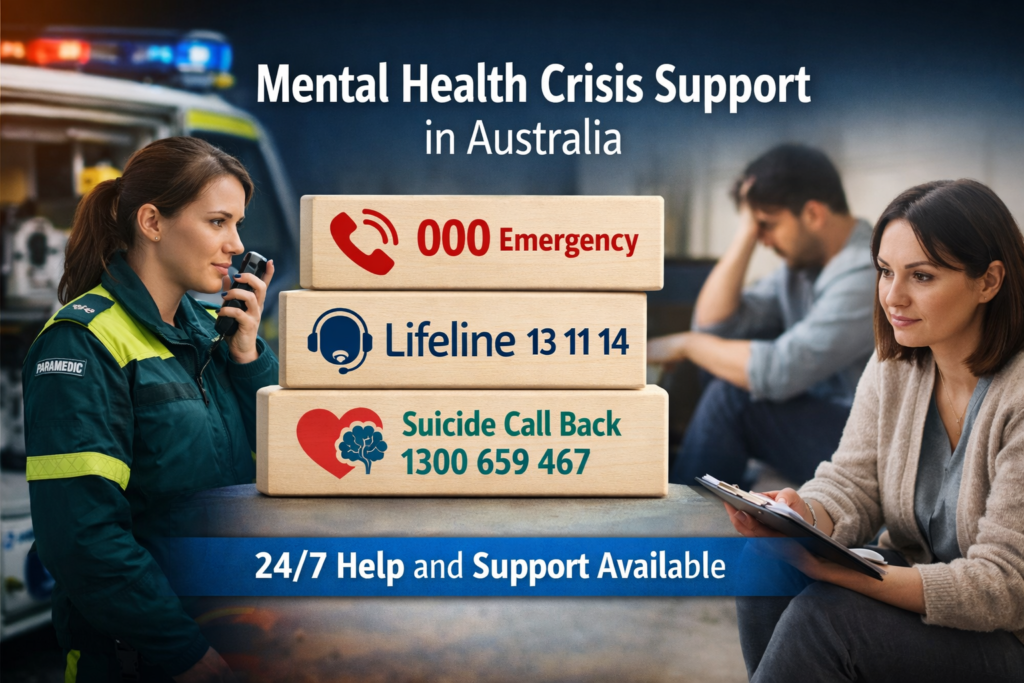
Grief vs Prolonged Grief Disorder: What’s Normal, When to Get Help, and What Evidence-Based Support Looks Like (Australia, 2026) Written by: Rona Castañeda Clinically reviewed by: Qualified members of the Therapy Near Me clinical team Last updated: 06/10/2026 This clinical information has been written by Rona Castañeda to support accuracy, clarity, and alignment with contemporary psychological practice. Content is reviewed in accordance with our Editorial Policy and is intended as general information only. It does not replace individual assessment, diagnosis, or treatment. Content type: Health education (Australia) Grief can be intense, messy, and unpredictable. Some people cry daily for weeks. Others feel numb. Some function at work but fall apart at night. None of that automatically means something is “wrong”. But for a minority of people, grief doesn’t gradually soften or integrate with time. Instead it stays stuck—dominating daily life, relationships, sleep, and the ability to plan a future. That pattern is often described clinically as prolonged grief disorder (PGD) (Eisma 2023; Prigerson et al. 2022). This article explains the difference between common grief reactions and prolonged grief, what to look for, and how Australians can access safe, evidence-based support. Safety: This is general information, not medical advice. If you’re in immediate danger call 000. For 24/7 crisis support, contact Lifeline 13 11 14 (Healthdirect Australia 2026). 1) What “normal” grief can look like Grief isn’t linear. People often move back and forth between: This “oscillation” is commonly referenced in modern grief models and is echoed in professional commentary for clinicians supporting grief (Australian Psychological Society 2024). You can have strong grief and still be within a normal range, especially after: 2) When grief may be becoming “prolonged” or clinically significant Prolonged grief disorder (PGD) is now recognised in major diagnostic systems (ICD-11 and DSM-5-TR). A common benchmark is that the death occurred at least 12 months ago for adults (and at least 6 months ago for children/adolescents), alongside persistent, impairing symptoms (Eisma 2023; American Psychiatric Association 2022). Signs that justify a clinical conversation If many of these are present most days and are disrupting life, it’s worth getting assessed: Griefline summarises PGD as grief that does not ease with time and interferes with day-to-day functioning and wellbeing (Griefline 2025). 3) Grief can look like anxiety or depression (and sometimes it is) Grief commonly includes: Those can overlap with depression and anxiety, but PGD is not simply “depression in disguise.” That’s why quality assessment matters—so treatment targets the correct problem (Eisma 2023). 4) What evidence-based grief therapy looks like There isn’t a single “grief script,” but there are evidence-based approaches for complicated/prolonged grief presentations. The Australian Psychological Society notes that complicated grief treatment focuses on reducing loss-related symptoms while helping people rebuild relationships and personal life goals (Australian Psychological Society 2026). In practice, evidence-based treatment often includes: What it should not look like: being pushed to “move on”, being told your grief is “too much”, or being rushed into intense memory work without stabilisation and consent. 5) When to get help sooner (even before 12 months) Even if it’s early, seek support sooner if you notice: Healthdirect’s grief resources encourage getting professional support when distress is severe or functioning is significantly affected (Healthdirect Australia 2026). 6) Practical next steps in Australia Step 1: Choose the right kind of support Step 2: Use targeted grief services if you want low-barrier support Griefline offers grief counselling resources and support services (Australian Government listing; Griefline). If you prefer groups, Griefline also runs peer-supported bereavement support groups (Griefline). Step 3: Bring a short “symptom and function” note to your appointment Write down: 7) FAQ “Is it normal to still grieve years later?” Yes. Many people carry grief long-term. The question isn’t “Do you still miss them?” but “Is grief still dominating your life and blocking functioning most days?” (Australian Psychological Society 2026; Griefline 2025). “What if people are telling me I should be over it?” That’s a common secondary wound. A good clinician focuses on your reality and functioning, not timelines or social expectations (Australian Psychological Society 2024). References American Psychiatric Association 2022, Prolonged grief disorder, American Psychiatric Association, viewed 5 March 2026, https://www.psychiatry.org/patients-families/prolonged-grief-disorder. Australian Government Department of Health and Aged Care 2024, Griefline (service listing), viewed 5 March 2026, https://www.health.gov.au/contacts/griefline?language=en. Australian Psychological Society 2026, Grief, APS, viewed 5 March 2026, https://psychology.org.au/for-the-public/psychology-topics/grief. Australian Psychological Society 2024, Helping clients ride the waves of grief, APS Insights, viewed 5 March 2026, https://psychology.org.au/insights/helping-clients-ride-the-waves-of-grief. Eisma, MC 2023, ‘Prolonged grief disorder in ICD-11 and DSM-5-TR’, Current Opinion in Psychology (via PubMed Central), viewed 5 March 2026, https://pmc.ncbi.nlm.nih.gov/articles/PMC10291380/. Griefline 2025, Understanding prolonged grief: when grief doesn’t ease with time, Griefline, viewed 5 March 2026, https://griefline.org.au/resources/understanding-prolonged-grief-when-grief-doesnt-ease-with-time/. Griefline n.d., Grief support – You’re not alone, Griefline, viewed 5 March 2026, https://griefline.org.au/. Griefline n.d., Bereavement support groups, Griefline, viewed 5 March 2026, https://griefline.org.au/get-help/bereavement-support-groups/. Healthdirect Australia 2026, Grief and loss, Healthdirect, viewed 5 March 2026, https://www.healthdirect.gov.au/grief-loss. Healthdirect Australia 2026, Understanding anticipatory grief, Healthdirect, viewed 5 March 2026, https://www.healthdirect.gov.au/understanding-anticipatory-grief. Prigerson, HG et al. 2022, ‘Prolonged grief disorder diagnostic criteria—helping clinicians identify bereaved persons with maladaptive grief responses’, JAMA Psychiatry, viewed 5 March 2026, https://jamanetwork.com/journals/jamapsychiatry/fullarticle/2788766.