Therapy Near Me

Uncategorized

Bad vs good behaviour support plans what separates them

Bad vs good behaviour support plans: what separates them

Bad vs good behaviour support plans: what separates them Written by: Therapy Near Me Editorial Team Clinically reviewed by: qualified members of the Therapy Near Me clinical team Last updated: 30/12/2025 This article is intended as general information only and does not replace personalised medical or mental health advice. Learn more about our Editorial Policy. By TherapyNearMe.com.au. Australian context with NDIS terminology. General information only; not a substitute for personalised clinical or legal advice. In emergencies call 000. If restrictive practices are being used, follow your state/territory authorisation requirements and NDIS reporting obligations. Why this comparison matters A behaviour support plan (BSP) is meant to deliver better quality of life and safer participation, not just fewer incidents. In Australia, best‑practice BSPs align with Positive Behaviour Support (PBS)—a rights‑based, function‑informed approach that prioritises teaching new skills and redesigning environments while actively reducing and eliminating restrictive practices (Carr et al., 1999; Gore et al., 2013; NDIS Commission, 2019; NICE, 2015). Poor plans can entrench crisis‑driven responses, over‑rely on punishment, and miss the person’s goals. Quick definitions (so we are comparing like with like) Side‑by‑side: bad vs good behaviour support plans Domain Bad BSP Good BSP (PBS‑aligned) Purpose “Stop the behaviour” is the only goal. Quality‑of‑life focus plus safety (participation, communication, choice), with behaviour change as one route to those ends (Gore et al., 2013; NICE, 2015). Assessment Little/no FBA; relies on labels (e.g., “non‑compliant”). Clear FBA with hypothesised functions and setting events; data to support the analysis (Iwata et al., 1994; Beavers, Iwata and Lerman, 2013). Person‑centredness Written about the person, not withthem; goals are service‑centred. Co‑designed with the person/family; goals reflect what matters to them; accessible language/visuals (NICE, 2015). Antecedent design Generic rules; demands unchanged; noisy/overwhelming environments ignored. Environmental fit: predictable routines, visual supports, graded demands, sensory accommodations (Gore et al., 2013). Skills teaching Missing; assumes “knowing better” equals doing better. Replacement skills matched to function (e.g., Functional Communication Training to request a break/help/access) with practice plans (Tiger, Hanley and Bruzek, 2008). Reinforcement Token charts tacked on; rewards withheld for long periods; accidental reinforcement of problem behaviour. Differential reinforcement (DRA/DRI/DRO) tied to function; dense, immediate reinforcement early, faded to natural contingencies (Fisher, Piazza and Roane, 1992). Responses Punitive, vague (“use consequences”); escalates control; reinforces behaviour by mistake. Least‑intrusive, function‑informed responses; rehearsed de‑escalation; clear crisis steps; post‑incident review. Restrictive practices Used by default; not authorised; no plan to fade. Only as last resort with authorisation, reporting, and a documented reduction pathway (NDIS Commission, 2021; NICE, 2015). Fidelity & training Plan emailed; no coaching; drift common. Behavioural Skills Training (BST) for all implementers: instruction, modelling, rehearsal, and feedback in‑situ (Sarokoff and Sturmey, 2004; Parsons, Rollyson and Reid, 2012). Measurement No baseline; no graphs; decisions by anecdote. Simple, feasible data plan(frequency/duration/latency/intensity + ABC notes; occasional IOA); review every 2–4 weeks (Beavers, Iwata and Lerman, 2013). Generalisation Skills collapse outside clinic/classroom. Plan for generalisation and maintenance across people/places from day one (Stokes and Baer, 1977). How good plans are built (and why they work) NDIS essentials (Australia) Red flags that a plan needs urgent overhaul What “good” looks like in practice (a mini‑case) Context: 10‑year‑old with loud vocalisations and task refusal at school.FBA: Behaviour occurs during writing tasks, especially after transitions; function = escape from high‑effort writing.Plan: (a) Antecedents—visual schedule; “first‑then”; short writing bursts with choices; keyboard option; noise‑reducing headphones. (b) Skills—Functional Communication Training to request a 2‑minute break or help; tolerance training to wait 30–60 seconds. (c) Reinforcement—stickers → points → 5‑minute preferred activity for each completed block. (d) Response—prompt FCR; if escalation, reduce demands; debrief after. (e) Data—frequency of loud vocalisations; duration on‑task; weekly graph review.Outcome (8 weeks): 65% reduction in vocalisations; doubled on‑task duration; plan faded to natural praise and class privileges.Why it worked: Replacement skills were easier and faster than the problem behaviour to achieve escape/help, and the environment demanded less at once while skills grew (Tiger, Hanley and Bruzek, 2008; Stokes and Baer, 1977). Building a feasible measurement plan Training that actually sticks Use BST with brief, repeated sessions where the behaviour occurs: Ethical guardrails A printable 12‑point quality checklist References Beavers, G.A., Iwata, B.A. and Lerman, D.C. (2013) ‘Thirty years of research on the functional analysis of problem behavior’, Journal of Applied Behavior Analysis, 46(1), pp. 1–21. Carr, E.G., Horner, R.H., Turnbull, A.P., Marquis, J., Magito‑McLaughlin, D., McAtee, M., Smith, C.E., Ryan, K.A., Ruef, M. and Doolabh, A. (1999) Positive Behavior Support: Evolution of an applied science. Baltimore, MD: Paul H. Brookes Publishing. Fisher, W.W., Piazza, C.C. and Roane, H.S. (1992) ‘A comparison of two approaches for identifying reinforcers in the natural environment’, Journal of Applied Behavior Analysis, 25(2), pp. 491–498. Gore, N.J., McGill, P., Toogood, S., Allen, D., Hughes, J.C., Baker, P., Hastings, R.P., Noone, S.J. and Denne, L.D. (2013) ‘Definition and scope for positive behavioural support’, International Journal of Positive Behavioural Support, 3(2), pp. 14–23. Hanley, G.P., Jin, C.S., Vanselow, N.R. and Hanratty, L.A. (2014) ‘Producing meaningful improvements in problem behavior of children with autism via synthesized analyses and treatments’, Journal of Applied Behavior Analysis, 47(1), pp. 16–36. Iwata, B.A., Dorsey, M.F., Slifer, K.J., Bauman, K.E. and Richman, G.S. (1994) ‘Toward a functional analysis of self‑injury’, Journal of Applied Behavior Analysis, 27(2), pp. 197–209. (Reprinted from Analysis and Intervention in Developmental Disabilities, 1982, 2, 3–20.) LaVigna, G.W. and Willis, T.J. (2012) ‘The efficacy of positive behavioral support: A literature review’, Research in Developmental Disabilities, 33(5), pp. 1504–1514. NDIS Commission (2019) Positive Behaviour Support Capability Framework. Canberra: NDIS Quality and Safeguards Commission. NDIS Commission (2021) NDIS (Restrictive Practices and Behaviour Support) Rules 2018 — Guidance and Practice Advice (updated). Canberra: NDIS Quality and Safeguards Commission. NICE (National Institute for Health and Care Excellence) (2015) Challenging behaviour and learning disabilities: prevention and interventions for people with learning disabilities whose behaviour challenges (NG11). London: NICE. Parsons, M.B., Rollyson, J.H. and Reid, D.H. (2012) ‘Evidence‑based staff training: A guide for practitioners’, Behavior Analysis in Practice, 5(2), pp. 2–11. Sarokoff, R.A. and Sturmey, P. (2004) ‘The effects of behavioral skills training on staff implementation of discrete‑trial teaching’, Journal of Applied Behavior Analysis, 37(4), pp. 535–538. Stokes, T.F. and Baer, D.M. (1977) ‘An implicit technology of generalization’, Journal of Applied Behavior Analysis, 10(2), pp. 349–367. Tiger, J.H., Hanley, G.P. and Bruzek, J. (2008) ‘Functional communication training: A review and practical guide’, Behavior Analysis in Practice, 1(1), pp. 16–23. How to cite this article Therapy Near Me (2025) ‘Bad vs good behaviour support plans: what separates them’. Available at: https://TherapyNearMe.com.au

Bad vs good behaviour support plans: what separates them Read More »

Why do politicians lie so much—a psychologist’s guide to incentives, cognition, and institutions

Why do politicians lie so much?—a psychologist’s guide to incentives, cognition, and institutions

Why do politicians lie so much?—a psychologist’s guide to incentives, cognition, and institutions Written by: Therapy Near Me Editorial Team Clinically reviewed by: qualified members of the Therapy Near Me clinical team Last updated: 29/12/2025 This article is intended as general information only and does not replace personalised medical or mental health advice. Learn more about our Editorial Policy. Overview If it sometimes feels as though political life is saturated with half‑truths and strategic vagueness, you are not imagining it. But the full story is more nuanced than “politicians lie more than everyone else.” Human beings commonly shade the truth in everyday life (DePaulo et al., 1996), most people are poor lie‑detectors (Bond and DePaulo, 2006), and modern information environments reward novelty and speed over correction (Vosoughi, Roy and Aral, 2018). On top of that, electoral incentives, strategic communication, and voter psychology interact in ways that can make deception or ambiguity seem instrumentally rational even to otherwise conscientious leaders (Mayhew, 1974; Crawford and Sobel, 1982; Downs, 1957; Kunda, 1990). This article synthesises evidence from political science, psychology, behavioural economics, and communication research to explain why deception occurs in politics, how it differs from adjacent phenomena like “spin” and “strategic ambiguity,” and what practically reduces it. Throughout, we use in‑text Harvard‑style citations and finish with a full reference list for further reading. First principles: what counts as a “lie” in politics? A lie is a knowingly false statement intended to mislead. Political communication also includes other grey‑zone practices: These strategies are not equivalent in ethics or effect, but they share the same outcome for citizens: reduced clarity when evaluating policy and performance. Do politicians lie more than other people? The empirical answer is mixed. Diary and survey research shows that deception is common in everyday life for non‑politicians (DePaulo et al., 1996). Meta‑analysis suggests that ordinary people detect lies at barely‑above‑chance levels (Bond and DePaulo, 2006). Meanwhile, large comparative studies of election pledge fulfilment report that governing parties actually deliver a substantial share of their promises, especially in single‑party executives (Thomson et al., 2017). In other words, politicians operate in a system that both incentivises obfuscation and constrains itthrough institutions, media scrutiny, and later accountability. Incentives that reward deception or ambiguity 1) The electoral connection Politicians are “single‑minded seekers of re‑election” who invest in advertising, credit‑claiming, and position‑taking to maximise electoral returns (Mayhew, 1974). When the true distributional effects of policies are complex or unpopular, leaders may resort to framing, selective disclosure, or ambiguity to hold together fragile coalitions. 2) Cheap talk in multi‑audience settings Cheap‑talk models show that when communicators and audiences have misaligned preferences, truthful, fully‑revealing communication is hard to sustain; equilibrium often involves partial revelation, coded language, or vagueness (Crawford and Sobel, 1982). Campaigns face multiple audiences—donors, base voters, swing voters—so incentives for strategic ambiguity multiply. 3) Rational ignorance and limited attention From the citizen side, rational ignorance predicts that most people won’t invest heavily in political information because a single vote rarely changes outcomes (Downs, 1957). That creates space for over‑simplification, slogans, and sometimes deception to flourish in the gaps. The psychology of believing (and sharing) falsehoods Motivated reasoning People tend to process information in ways that protect identity and prior commitments (Kunda, 1990). Misperceptions can be stubborn when facts threaten group loyalties (Nyhan and Reifler, 2010). Corrections help—but not always as we expect Large‑sample replications suggest that dramatic “backfire effects” are uncommon; corrections usually move beliefs toward the facts (Wood and Porter, 2019; Nyhan, 2021). Still, corrections can be fragile, especially where identity is at stake. Repetition and the illusory truth effect Repeated headlines feel truer, even when we know they’re false (Fazio et al., 2019; Fazio, 2020). That is a design challenge for the modern attention economy. Platform dynamics On social media, false news spreads faster and further than true news, particularly in politics, largely because humans preferentially share novel, surprising content (Vosoughi, Roy and Aral, 2018). “Spin,” paltering, and ambiguity: how the truth gets bent without outright lying Why voters rarely punish deception decisively What actually reduces political deception? 1) Strong transparency and oversight institutions Randomised field evidence shows that audits can reduce corrupt behaviour (a cousin of political deception) by meaningful margins (Olken, 2007). At a system level, freedom of information regimes and proactive disclosure are associated with higher transparency and lower perceived corruption (Vadlamannati, Madsen and de Soysa, 2017). 2) Independent, high‑quality fact‑checking Comparative studies report high agreement rates across reputable fact‑checkers on the same claims (Lee, 2023). While corrections do not reach everyone, neutral, well‑sourced fact‑checks reliably improve accuracy on average (Wood and Porter, 2019; Nyhan, 2021). 3) Better design of information environments Light‑touch “accuracy prompts” and friction that slows impulsive sharing can reduce the spread of misleading content (Pennycook and Rand, 2019). Platform architectures that down‑rank repeat offenders and reward source credibility are promising public‑health measures for the information ecosystem (Vosoughi, Roy and Aral, 2018). 4) Smarter citizen habits The Debunking Handbook 2020 recommends: lead with the fact, warn before the myth, explain the fallacy, and avoid accidentally reinforcing the myth through repetition (Lewandowsky et al., 2020). Individually, adopting slow‑thinking checks—What is the source? Is there independent corroboration?—reduces our own contribution to the problem (Pennycook and Rand, 2019). Practical checklist for readers during campaigns and policy debates Bottom line Politics does not have a monopoly on dishonesty; the human propensity to spin, omit, and rationalise is widespread. What is distinctive about politics is the structure of incentives and the information environment: misaligned preferences, multi‑audience signalling, identity‑laden issues, and platforms that reward novelty all tilt the field toward distortion. Yet deception is not destiny. Robust transparency mechanisms, independent fact‑checking, smarter platform design, and evidence‑based media habits can meaningfully improve truthfulness in public life (Olken, 2007; Lewandowsky et al., 2020; Pennycook and Rand, 2019; Thomson et al., 2017). References Achen, C.H. and Bartels, L.M. (2016) Democracy for Realists: Why Elections Do Not Produce Responsive Government. Princeton: Princeton University Press. Bach, P. (2025) ‘Let me be perfectly unclear: strategic ambiguity in political rhetoric’, Communication Theory, 35(2), pp. 96–118. Bond, C.F. and DePaulo, B.M. (2006) ‘Accuracy of deception judgements’, Personality and Social Psychology Review, 10(3), pp. 214–234. Crawford, V.P. and Sobel, J. (1982) ‘Strategic information transmission’, Econometrica, 50(6), pp. 1431–1451. DePaulo,

Why do politicians lie so much?—a psychologist’s guide to incentives, cognition, and institutions Read More »

Changing careers psychologist’s advice — an evidence‑based guide

Changing careers: psychologist’s advice — an evidence‑based guide

Changing careers: psychologist’s advice — an evidence‑based guide Written by: Therapy Near Me Editorial Team Clinically reviewed by: qualified members of the Therapy Near Me clinical team Last updated: 28/12/2025 This article is intended as general information only and does not replace personalised medical or mental health advice. Learn more about our Editorial Policy. By TherapyNearMe.com.au. General information only; not a substitute for personalised medical, psychological, financial or legal advice. If you are in crisis, call 000. For 24/7 support: Lifeline 13 11 14; Beyond Blue 1300 22 4636. Key points at a glance Why people change careers Common drivers include chronic misfit with the work (values, tasks, culture), burnout (emotional exhaustion, cynicism), lack of progression, caregiving needs, health changes, or the pull of a long‑standing interest (Maslach and Leiter, 2016; Kristof‑Brown et al., 2005). Contemporary “boundaryless” and “protean” careers make non‑linear moves normal, not exceptional (Arthur and Rousseau, 1996; Hall, 2004). The clinical lens: sustained misfit is linked with lower wellbeing; improving fit—by changing the job orthe way you do the job—often improves mood, energy and engagement (Maslach and Leiter, 2016; Wrzesniewski and Dutton, 2001). A psychologically informed decision framework Use the 5‑D pathway. Each step has evidence‑based tools and prompts. 1) Diagnose your current fit Prompt: Which parts of your day give energy? Which drain it? What would a 15% better week look like? 2) Design your possible selves and paths 3) De‑risk with low‑stakes experiments 4) Develop skills and a credible story 5) Decide and execute a graded transition Mental health in career change: what the evidence says Should you change careers—or craft the one you have? Sometimes the best move is within your current job. Job crafting can increase meaning, engagement and performance by adjusting tasks, relationships, and framing (Wrzesniewski and Dutton, 2001; Berg et al., 2013). Try crafting for 8–12 weeks before a full leap. If core misfits remain (values clash, chronic toxicity, ethical conflict), a pivot may be healthier. A realistic 90‑day plan (template) Weeks 1–2: Diagnose Weeks 3–6: Design & De‑risk Weeks 7–10: Develop Weeks 11–13: Decide & Execute Common pitfalls and how to avoid them Special considerations (Australia) Quick worksheets (summaries) Fit Map: List top 5 energising tasks and top 5 draining tasks. What patterns emerge?Transfer Grid: Old role skills → New role problems they solve.Network Sprint: 10 names; 5 emails; 3 coffees; 1 mentor. References Arthur, M.B. and Rousseau, D.M. (1996) The Boundaryless Career. New York: Oxford University Press. Berg, J.M., Dutton, J.E. and Wrzesniewski, A. (2013) ‘Job crafting and meaningful work’, in Dik, B.J., Byrne, Z.S. and Steger, M.F. (eds) Purpose and Meaning in the Workplace. Washington, DC: American Psychological Association, pp. 81–104. Butterworth, P., Leach, L.S., Strazdins, L., Olesen, S.C., Rodgers, B. and Broom, D.H. (2011) ‘The psychosocial quality of work determines whether employment has benefits for mental health: results from a longitudinal national household panel survey’, Occupational and Environmental Medicine, 68(11), pp. 806–812. Deci, E.L. and Ryan, R.M. (2000) ‘The “what” and “why” of goal pursuits: Human needs and the self‑determination of behaviour’, Psychological Inquiry, 11(4), pp. 227–268. Gollwitzer, P.M. (1999) ‘Implementation intentions: Strong effects of simple plans’, American Psychologist, 54(7), pp. 493–503. Granovetter, M.S. (1973) ‘The strength of weak ties’, American Journal of Sociology, 78(6), pp. 1360–1380. Hall, D.T. (2004) ‘The protean career: A quarter‑century journey’, Journal of Vocational Behavior, 65(1), pp. 1–13. Haslam, C., Jetten, J., Cruwys, T., Dingle, G. and Haslam, S.A. (2018) The New Psychology of Health: Unlocking the social cure. London: Routledge. Holland, J.L. (1997) Making Vocational Choices: A theory of vocational personalities and work environments. 3rd edn. Odessa, FL: Psychological Assessment Resources. Ibarra, H. (2003) Working Identity: Unconventional strategies for reinventing your career. Boston, MA: Harvard Business School Press. Knowles, M.S., Holton, E.F. and Swanson, R.A. (2015) The Adult Learner: The definitive classic in adult education and human resource development. 8th edn. New York: Routledge. Kristof‑Brown, A.L., Zimmerman, R.D. and Johnson, E.C. (2005) ‘Consequences of individuals’ fit at work: A meta‑analysis of person–job, person–organization, person–group, and person–supervisor fit’, Personnel Psychology, 58(2), pp. 281–342. Lent, R.W. and Brown, S.D. (2013) ‘Social cognitive model of career self‑management: Toward a unifying view of adaptive career behavior across the life span’, Journal of Counseling Psychology, 60(4), pp. 557–568. Luthans, F., Youssef, C.M. and Avolio, B.J. (2007) Psychological Capital: Developing the human competitive edge. Oxford: Oxford University Press. Markus, H. and Nurius, P. (1986) ‘Possible selves’, American Psychologist, 41(9), pp. 954–969. Maslach, C. and Leiter, M.P. (2016) Burnout. 3rd edn. New York: Routledge. Paul, K.I. and Moser, K. (2009) ‘Unemployment impairs mental health: Meta‑analyses’, Journal of Vocational Behavior, 74(3), pp. 264–282. Roehrs, T. and Roth, T. (2001) ‘Sleep, sleepiness, and alcohol use’, Alcohol Research & Health, 25(2), pp. 101–109. Savickas, M.L. and Porfeli, E.J. (2012) ‘Career Adapt‑Abilities Scale: Construction, reliability, and measurement equivalence across 13 countries’, Journal of Vocational Behavior, 80(3), pp. 661–673. Spitzer, R.L., Kroenke, K., Williams, J.B.W. and Löwe, B. (2006) ‘A brief measure for assessing generalized anxiety disorder: The GAD‑7’, Archives of Internal Medicine, 166(10), pp. 1092–1097. Wrzesniewski, A. and Dutton, J.E. (2001) ‘Crafting a job: Revisioning employees as active crafters of their work’, Academy of Management Review, 26(2), pp. 179–201. Kroenke, K., Spitzer, R.L. and Williams, J.B.W. (2001) ‘The PHQ‑9: Validity of a brief depression severity measure’, Journal of General Internal Medicine, 16(9), pp. 606–613. Arthur, M.B., Khapova, S.N. and Wilderom, C.P.M. (2005) ‘Career success in a boundaryless career world’, Journal of Organizational Behavior, 26(2), pp. 177–202. How to cite this article Therapy Near Me (2025) ‘Changing careers: psychologist’s advice — an evidence‑based guide’. Available at: https://TherapyNearMe.com.au 

Changing careers: psychologist’s advice — an evidence‑based guide Read More »

What is love A psychologist’s evidence‑based guide

What is love? A psychologist’s evidence‑based guide

What is love? A psychologist’s evidence‑based guide Written by: Therapy Near Me Editorial Team Clinically reviewed by: qualified members of the Therapy Near Me clinical team Last updated: 27/12/2025 This article is intended as general information only and does not replace personalised medical or mental health advice. Learn more about our Editorial Policy. By TherapyNearMe.com.au. Reader‑first, research‑led article. General information only; not a substitute for personalised medical or psychological advice. If you are in crisis, call 000. For 24/7 support: Lifeline 13 11 14; Beyond Blue 1300 22 4636. Why this question is harder than it sounds Love is not a single feeling. It is a pattern of motivation, emotion and behaviour that shows up in different forms—romantic and sexual passion, deep companionship, parental love, friendship, even love for community and humanity. Psychology, neuroscience and anthropology converge on three ideas: Rather than hunt for a single definition, this guide maps the major frameworks, the brain and body mechanisms, and the habits that make love flourish or fail. The big theories (and what they add) 1) Sternberg’s triangular theory: intimacy, passion, commitment Sternberg proposed that most love stories combine three ingredients: 2) Attachment theory: love as a bond that regulates threat Attachment research shows that close partners serve as safe havens under stress and secure bases for exploration (Bowlby, 1982). Adult attachment styles—secure, anxious, avoidant—reflect expectations about self and others formed in early relationships but still malleable in adulthood (Hazan and Shaver, 1987; Mikulincer and Shaver, 2007). Secure attachment predicts better relationship quality, mental health and stress recovery (Mikulincer and Shaver, 2007; Holt‑Lunstad, Smith and Layton, 2010). 3) Passionate vs companionate love Psychologists distinguish early‑stage, high‑arousal passionate love from steadier, friendship‑rich companionate love(Hatfield and Walster, 1978). Both matter; long‑term pairs who cultivate friendship, responsiveness and shared meaning tend to thrive (Gottman and Levenson, 1992; Robles et al., 2013). 4) The investment/commitment model Commitment grows from three routes: satisfaction, quality of alternatives, and investments (time, mutual friends, shared goals). High commitment predicts staying together and engaging in pro‑relationship behaviours (Rusbult, 1980; Le and Agnew, 2003). 5) Self‑expansion and growth We fall in love partly because partners help us expand our sense of self—new skills, perspectives and identities (Aron and Aron, 1986; Aron et al., 1997). Shared novelty can rekindle passion by reigniting this growth process. What the brain and body contribute (without reducing love to “just chemicals”) Biology provides the scaffolding; culture, personality and skills determine the architecture of any given love story. Is love universal? What varies across cultures Anthropologists have found evidence of romantic love in the majority of societies studied, suggesting a human universal with cultural variations in expression and norms (Jankowiak and Fischer, 1992). Cross‑cultural surveys show wide differences in whether people say they would marry without love (e.g., higher acceptance in some collectivist contexts), and in how much weight is placed on family approval, religion and economic security (Levine et al., 1995; Buss, 1989). The core experiences—longing, proximity seeking, distress at separation—appear widely shared, while scripts for courtship, sexuality and commitment differ. Measuring love (imperfect but useful tools) Researchers use psychometric scales to capture facets of love and bonding: What makes love last? Five evidence‑based habits Love’s “shadow side”: when it hurts If you are unsure whether what you are experiencing is love or harm, seek a registered psychologist or GP for a confidential assessment. Love beyond the romantic dyad A practical reflection: three conversations to have (or journal about) Bottom line Love is not just a feeling you either have or don’t. It is a dynamic system of bonding, attraction and choice, scaffolded by biology and shaped by culture, skills and context. Love flourishes where partners feel safe, seen and supported, pursue growth together, and repeatedly choose the relationship when it would be easier not to. References Aron, A. and Aron, E.N. (1986) Love and the Expansion of Self: Understanding attraction and satisfaction. New York: Hemisphere. Aron, A., Melinat, E., Aron, E.N., Vallone, R.D. and Bator, R.J. (1997) ‘The experimental generation of interpersonal closeness: A procedure and some preliminary findings’, Personality and Social Psychology Bulletin, 23(4), pp. 363–377. Bartels, A. and Zeki, S. (2000) ‘The neural basis of romantic love’, NeuroReport, 11(17), pp. 3829–3834. Bowlby, J. (1982) Attachment and Loss: Vol. 1. Attachment. 2nd edn. New York: Basic Books. Brown, S.L., Nesse, R.M., Vinokur, A.D. and Smith, D.M. (2003) ‘Providing social support may be more beneficial than receiving it: Results from a prospective study of mortality’, Journal of Personality and Social Psychology, 84(2), pp. 123–131. Buss, D.M. (1989) ‘Sex differences in human mate preferences: Evolutionary hypotheses tested in 37 cultures’, Behavioral and Brain Sciences, 12(1), pp. 1–49. Coan, J.A., Schaefer, H.S. and Davidson, R.J. (2006) ‘Lending a hand: Social regulation of the neural response to threat’, Psychological Science, 17(12), pp. 1032–1039. Conley, T.D., Moors, A.C., Ziegler, A. and Rubin, J.D. (2013) ‘The fewer the merrier? Assessing stigma surrounding consensually non‑monogamous romantic relationships’, Analyses of Social Issues and Public Policy, 13(1), pp. 1–30. Gable, S.L., Reis, H.T., Impett, E.A. and Asher, E.R. (2004) ‘What do you do when things go right? The intrapersonal and interpersonal benefits of sharing positive events’, Journal of Personality and Social Psychology, 87(2), pp. 228–245. Gottman, J.M. and Levenson, R.W. (1992) ‘Marital processes predictive of later dissolution: Behavior, physiology, and health’, Journal of Personality and Social Psychology, 63(2), pp. 221–233. Hatfield, E. and Sprecher, S. (1986) ‘Measuring passionate love in intimate relationships’, Journal of Adolescence, 9(4), pp. 383–410. (See also Hatfield and Walster, 1978.) Hatfield, E. and Walster, G.W. (1978) A New Look at Love. Reading, MA: Addison‑Wesley. Hazan, C. and Shaver, P.R. (1987) ‘Romantic love conceptualized as an attachment process’, Journal of Personality and Social Psychology, 52(3), pp. 511–524. Hendrick, C. and Hendrick, S. (1986) ‘A theory and method of love’, Journal of Personality and Social Psychology, 50(2), pp. 392–402. (See also Love Attitudes Scale research.) Holt‑Lunstad, J., Smith, T.B. and Layton, J.B. (2010) ‘Social relationships and mortality risk: A meta‑analytic review’, PLoS Medicine, 7(7), e1000316. Jankowiak, W. and Fischer, E. (1992) ‘A cross‑cultural perspective on romantic love’, Ethnology, 31(1), pp. 23–48. Johnson, S.M., Hunsley, J., Greenberg, L. and Schindler, D. (1999) ‘Emotionally focused couples therapy: Status and challenges’, Clinical Psychology: Science and Practice, 6(1), pp. 67–79. Le, B. and Agnew, C.R. (2003) ‘Commitment and its theorized determinants: A meta‑analysis of the Investment Model’, Personal Relationships, 10(1), pp. 37–57. Levine, R.V., Sato, S., Hashimoto, T. and Verma, J. (1995) ‘Love and marriage in eleven cultures’, Journal of Cross‑Cultural Psychology, 26(5),

What is love? A psychologist’s evidence‑based guide Read More »

Best hobbies for mental health an evidence‑based guide

Best hobbies for mental health: an evidence‑based guide

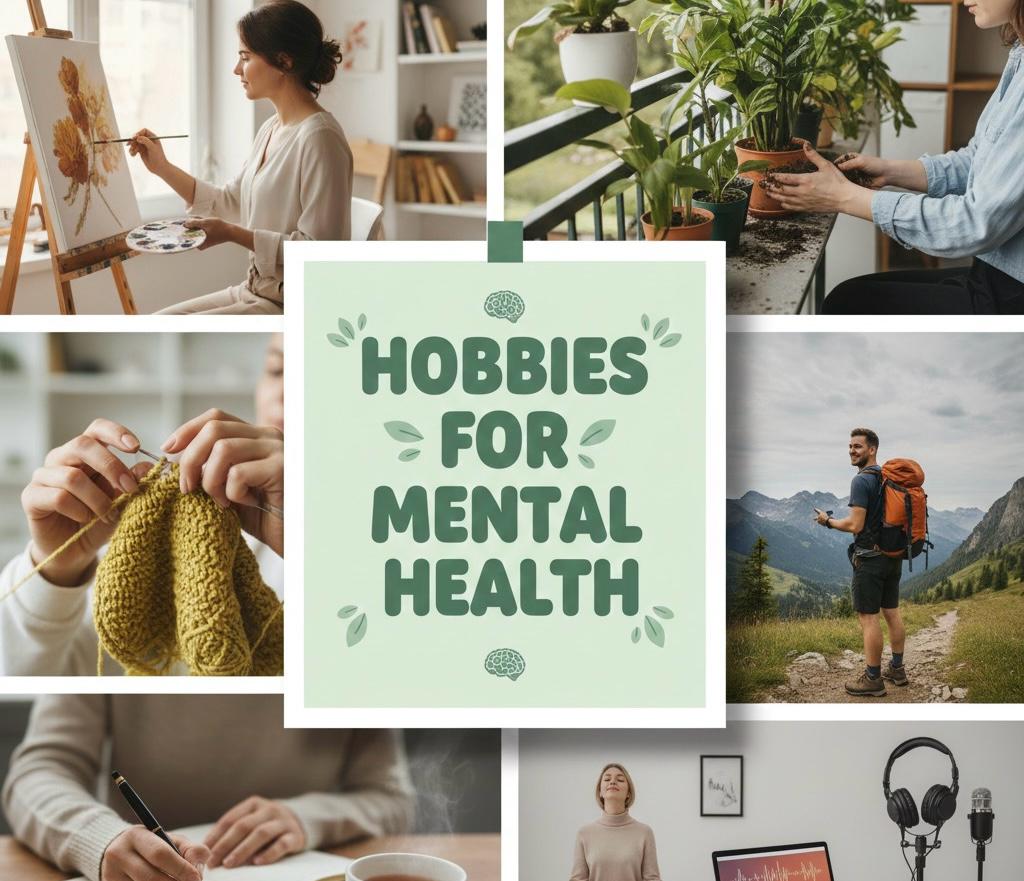
Best hobbies for mental health: an evidence‑based guide Written by: Therapy Near Me Editorial Team Clinically reviewed by: qualified members of the Therapy Near Me clinical team Last updated: 26/12/2025 This article is intended as general information only and does not replace personalised medical or mental health advice. Learn more about our Editorial Policy. By TherapyNearMe.com.au. General information only; not a substitute for individual medical or psychological advice. If you are in crisis, call 000. For 24/7 support: Lifeline 13 11 14; Beyond Blue 1300 22 4636. Key points at a glance How hobbies improve mental health (the mechanisms) Evidence‑based hobby categories (with “why it helps”, starter doses, and cautions) 1) Movement‑based hobbies Examples: Brisk walking, running, cycling, swimming, parkrun, resistance training, dance, yoga, tai chi. 2) Nature‑based hobbies Examples: Gardening, bushwalking, birdwatching, urban green‑space picnics, beach/river blue‑space walks, nature photography. 3) Creative arts and crafts Examples: Singing in a choir, learning an instrument, painting/drawing, pottery, photography, knitting/crochet, creative writing. 4) Social & prosocial hobbies Examples: Team sports, board‑game clubs, language or book clubs, community choirs, volunteering (animal shelters, community gardens, mutual‑aid groups). 5) Contemplative and reflective hobbies Examples: Mindfulness meditation, tai chi/qigong, yoga nidra, expressive writing/journaling, mindful colouring. “Best hobby” by common goals How to choose a hobby you’ll actually keep (practical playbook) Safety, access and inclusion A simple 8‑week starter plan References Aylett, E., Small, N. and Bower, P. (2018) ‘Exercise in the treatment of clinical anxiety in general practice—a systematic review and meta‑analysis’, BJPsych Open, 4(4), pp. 316–326. Bratman, G.N., Hamilton, J.P., Hahn, K.S., Daily, G.C. and Gross, J.J. (2015) ‘Nature experience reduces rumination and subgenual prefrontal cortex activation’, Proceedings of the National Academy of Sciences, 112(28), pp. 8567–8572. Cooney, G.M., Dwan, K., Greig, C.A., Lawlor, D.A., Rimer, J., Waugh, F.R. and Mead, G.E. (2013) ‘Exercise for depression’, Cochrane Database of Systematic Reviews, 9, CD004366. Corkhill, B., Hemmings, J., Maddock, A. and Riley, J. (2014) ‘Knitting and well‑being’, The British Journal of Occupational Therapy, 77(11), pp. 614–622. Cramer, H., Lauche, R., Langhorst, J. and Dobos, G. (2013) ‘Yoga for depression: A systematic review and meta‑analysis’, Depression and Anxiety, 30(11), pp. 1068–1083. Csikszentmihalyi, M. (1990) Flow: The psychology of optimal experience. New York: Harper & Row. Cuijpers, P., van Straten, A., Warmerdam, L. and van Rooy, M.J. (2007) ‘Behavioral activation treatments of depression: A meta‑analysis’, Clinical Psychology Review, 27(3), pp. 318–326. Fancourt, D. and Finn, S. (2019) What is the evidence on the role of the arts in improving health and well‑being? A scoping review. Copenhagen: WHO Regional Office for Europe. Fortney, J.C., Unützer, J., Wrenn, G., Pyne, J.M., Smith, G.R., Schoenbaum, M. and Harbin, H.T. (2017) ‘A tipping point for measurement‑based care’, Psychiatric Services, 68(2), pp. 179–188. Gascon, M., Zijlema, W., Vert, C., White, M.P. and Nieuwenhuijsen, M.J. (2017) ‘Outdoor blue spaces, human health and well‑being: A systematic review of quantitative studies’, International Journal of Hygiene and Environmental Health, 220(8), pp. 1207–1221. Goyal, M., Singh, S., Sibinga, E.M.S., Gould, N.F., Rowland‑Seymour, A., Sharma, R., et al. (2014) ‘Meditation programs for psychological stress and well‑being: A systematic review and meta‑analysis’, JAMA Internal Medicine, 174(3), pp. 357–368. Haslam, C., Jetten, J., Cruwys, T., Dingle, G. and Haslam, S.A. (2018) The New Psychology of Health: Unlocking the social cure. London: Routledge. Jenkinson, C.E., Dickens, A.P., Jones, K., Thompson‑Coon, J., Taylor, R.S., Rogers, M., et al. (2013) ‘Is volunteering a public health intervention? A systematic review and meta‑analysis of the health and survival of volunteers’, BMC Public Health, 13, 773. Karoly, P., Ruehlman, L.S. and Okun, M.A. (2005) ‘Goal cognition and its clinical implications: Development and preliminary validation of four motivational assessment instruments’, Assessment, 12(3), pp. 301–318. Koch, S.C., Kunz, T., Lykou, S. and Cruz, R. (2014) ‘Effects of dance movement therapy and dance on health‑related psychological outcomes: A meta‑analysis’, The Arts in Psychotherapy, 41(1), pp. 46–64. Kroenke, K., Spitzer, R.L. and Williams, J.B.W. (2001) ‘The PHQ‑9: Validity of a brief depression severity measure’, Journal of General Internal Medicine, 16(9), pp. 606–613. Roehrs, T. and Roth, T. (2001) ‘Sleep, sleepiness, and alcohol use’, Alcohol Research & Health, 25(2), pp. 101–109. Schuch, F.B., Vancampfort, D., Richards, J., Rosenbaum, S., Ward, P.B. and Stubbs, R. (2016) ‘Exercise as a treatment for depression: A meta‑analysis adjusting for publication bias’, Journal of Psychiatric Research, 77, pp. 42–51. Spitzer, R.L., Kroenke, K., Williams, J.B.W. and Löwe, B. (2006) ‘A brief measure for assessing generalized anxiety disorder: The GAD‑7’, Archives of Internal Medicine, 166(10), pp. 1092–1097. Stuckey, H.L. and Nobel, J. (2010) ‘The connection between art, healing, and public health: A review of current literature’, American Journal of Public Health, 100(2), pp. 254–263. Twohig‑Bennett, C. and Jones, A. (2018) ‘The health benefits of the great outdoors: A systematic review and meta‑analysis of greenspace exposure and health outcomes’, Environmental Research, 166, pp. 628–637. Wang, C., Bannuru, R., Ramel, J., Kupelnick, B., Scott, T. and Schmid, C.H. (2010) ‘Tai chi on psychological well‑being: Systematic review and meta‑analysis’, BMC Complementary and Alternative Medicine, 10, 23. Tennant, R., Hiller, L., Fishwick, R., Platt, S., Joseph, S., Weich, S., et al. (2007) ‘The Warwick‑Edinburgh Mental Well‑being Scale (WEMWBS): Development and UK validation’, Health and Quality of Life Outcomes, 5, 63. How to cite this article Therapy Near Me (2025) ‘Best hobbies for mental health: an evidence‑based guide’. Available at: https://therapynearme.com.au 

Best hobbies for mental health: an evidence‑based guide Read More »

How to get the most out of behaviour support an evidence‑based guide for Australian families, schools and support teams

How to get the most out of behaviour support: an evidence‑based guide for Australian families, schools and support teams

How to get the most out of behaviour support: an evidence‑based guide for Australian families, schools and support teams Written by: Therapy Near Me Editorial Team Clinically reviewed by: qualified members of the Therapy Near Me clinical team Last updated: 25/12/2025 This article is intended as general information only and does not replace personalised medical or mental health advice. Learn more about our Editorial Policy. By TherapyNearMe.com.au. This guide explains how to turn Positive Behaviour Support (PBS) plans into real‑world gains, with a focus on Australian NDIS practice. It is general information only and not a substitute for personalised clinical or legal advice. In emergencies call 000. What “success” looks like Effective behaviour support is not just fewer incidents. It is better life quality: more choice and communication, safer participation, skill growth, and reduced carer stress—with any restrictive practices reduced and eliminated over time(Gore et al., 2013; NDIS Commission, 2019; NICE, 2015). The essentials (Australian context) Make the first 30 days count Build a right‑sized data plan (and stick to it) Co‑design a plan that fits everyday life High‑impact ingredients, grounded in function: 1) Proactive environment supports (antecedents) 2) Teach replacement and independence skills 3) Reinforce what you want to see 4) Response and crisis plans 5) Generalisation and maintenance Plan from day one to transfer skills across people, places and activities and to fade prompts/rewards (Stokes and Baer, 1977). Train for fidelity: make it work with real teams Great plans fail without consistent implementation. Use Behavioural Skills Training (BST): brief instruction, modelling, rehearsal, and performance feedback in the actual setting (Sarokoff and Sturmey, 2004; Parsons, Rollyson and Reid, 2012). Keep training short, practical, and repeated for new staff. Post cue cards where strategies are used. Troubleshoot non‑response (weeks 4–8) If data do not improve: Working across home, school and community Reducing and eliminating restrictive practices Cultural safety, communication access and trauma‑informed practice A 12‑point checklist you can print References Beavers, G.A., Iwata, B.A. and Lerman, D.C. (2013) ‘Thirty years of research on the functional analysis of problem behavior’, Journal of Applied Behavior Analysis, 46(1), pp. 1–21. Carr, E.G., Horner, R.H., Turnbull, A.P., Marquis, J., Magito‑McLaughlin, D., McAtee, M., Smith, C.E., Ryan, K.A., Ruef, M. and Doolabh, A. (1999) Positive Behavior Support: Evolution of an applied science. Baltimore, MD: Paul H. Bro okes. Fisher, W.W., Piazza, C.C. and Roane, H.S. (1992) ‘A comparison of two approaches for identifying reinforcers in the natural environment’, Journal of Applied Behavior Analysis, 25(2), pp. 491–498. Fortney, J.C., Unützer, J., Wrenn, G., Pyne, J.M., Smith, G.R., Schoenbaum, M. and Harbin, H.T. (2017) ‘A tipping point for measurement‑based care’, Psychiatric Services, 68(2), pp. 179–188. Gore, N.J., McGill, P., Toogood, S., Allen, D., Hughes, J.C., Baker, P., Hastings, R.P., Noone, S.J. and Denne, L.D. (2013) ‘Definition and scope for positive behavioural support’, International Journal of Positive Behavioural Support, 3(2), pp. 14–23. Hanley, G.P., Jin, C.S., Vanselow, N.R. and Hanratty, L.A. (2014) ‘Producing meaningful improvements in problem behavior of children with autism via synthesized analyses and treatments’, Journal of Applied Behavior Analysis, 47(1), pp. 16–36. Kiresuk, T.J. and Sherman, R.E. (1968) ‘Goal Attainment Scaling: A general method for evaluating comprehensive community mental health programs’, Community Mental Health Journal, 4(6), pp. 443–453. LaVigna, G.W. and Willis, T.J. (2012) ‘The efficacy of positive behavioral support: A literature review’, Research in Developmental Disabilities, 33(5), pp. 1504–1514. NDIS Commission (2019) Positive Behaviour Support Capability Framework. Canberra: NDIS Quality and Safeguards Commission. NDIS Commission (2021) NDIS (Restrictive Practices and Behaviour Support) Rules 2018 — Guidance and Practice Advice (updated). Canberra: NDIS Quality and Safeguards Commission. NICE (National Institute for Health and Care Excellence) (2015) Challenging behaviour and learning disabilities: prevention and interventions for people with learning disabilities whose behaviour challenges (NG11). London: NICE. Parsons, M.B., Rollyson, J.H. and Reid, D.H. (2012) ‘Evidence‑based staff training: A guide for practitioners’, Behavior Analysis in Practice, 5(2), pp. 2–11. Sarokoff, R.A. and Sturmey, P. (2004) ‘The effects of behavioral skills training on staff implementation of discrete‑trial teaching’, Journal of Applied Behavior Analysis, 37(4), pp. 535–538. Stokes, T.F. and Baer, D.M. (1977) ‘An implicit technology of generalization’, Journal of Applied Behavior Analysis, 10(2), pp. 349–367. Tiger, J.H., Hanley, G.P. and Bruzek, J. (2008) ‘Functional communication training: A review and practical guide’, Behavior Analysis in Practice, 1(1), pp. 16–23. How to cite this article Therapy Near Me (2025) ‘How to get the most out of behaviour support: an evidence‑based guide for Australian families, schools and support teams’. Available at: https://TherapyNearMe.com.au 

How to get the most out of behaviour support: an evidence‑based guide for Australian families, schools and support teams Read More »

Am I putting too much pressure on my kids A psychologist’s evidence‑based guide

Am I putting too much pressure on my kids? A psychologist’s evidence‑based guide

Am I putting too much pressure on my kids? A psychologist’s evidence‑based guide Written by: Therapy Near Me Editorial Team Clinically reviewed by: qualified members of the Therapy Near Me clinical team Last updated: 24/12/2025 This article is intended as general information only and does not replace personalised medical or mental health advice. Learn more about our Editorial Policy. By TherapyNearMe.com.au. General information only; not a substitute for personalised medical or psychological advice. If you are worried about a child’s safety or mental health, contact your GP, a registered psychologist, or emergency services (000) if there is immediate risk. Why this question matters Parents want children to strive, persist and grow. But pressure that outstrips a child’s developmental stage or resources can backfire—raising risks for anxiety, depressive symptoms, perfectionism, sleep problems and burnout(Barber, 1996; Luthar and Barkin, 2012; Curran and Hill, 2019). The goal is not to remove challenge; it is to apply high expectations with high warmth and autonomy support—the combination most consistently linked to positive outcomes (Baumrind, 1991; Steinberg et al., 1994; Soenens and Vansteenkiste, 2010). What “pressure” actually means Psychologists distinguish three ingredients that feel like pressure to children and teens: Healthy stretch = warmth + structure + autonomy support. Harmful pressure = control + fear + chronic overload. What the research says Authoritative vs authoritarian styles Psychological control and mental health Meta‑analytic and longitudinal work links parental psychological control to anxiety, depressive symptoms, and maladaptive perfectionism (Barber, 1996; Soenens and Vansteenkiste, 2010). Perfectionism and achievement cultures Across cohorts, youth perfectionism has increased over recent decades and is associated with depression, anxiety and suicidal ideation (Curran and Hill, 2019). In high‑achievement contexts, chronic emphasis on status and external markers (ranks, awards) correlates with elevated substance use and internalising symptoms (Luthar and Barkin, 2012; Luthar and Kumar, 2018). Sleep and recovery Sleep curtails under pressure. Insufficient or irregular sleep in adolescents predicts worse mood, lower cognitive performance and higher accident risk; school‑night delays/early starts compound problems (Owens, 2014; Wheaton, Ferro and Croft, 2016). Sport and performing arts In youth sport, parental pressure and over‑involvement are associated with burnout, dropout and reduced enjoyment, whereas a mastery climate (effort, learning, teamwork) supports persistence and wellbeing (Gould, Lauer, Rolo, Jannes and Pennisi, 2006; Harwood and Knight, 2015). Autonomy support Across domains, autonomy‑supportive parenting—providing rationales, acknowledging feelings, offering choices within limits—promotes intrinsic motivation, persistence and wellbeing (Deci and Ryan, 2000; Grolnick and Pomerantz, 2009). Red‑flags checklist (last 4–6 weeks) Tick anything you recognise. If several items apply most days, consider adjustments and, if needed, professional advice. Age‑by‑age signals How to keep expectations high without tipping into pressure Use the MAP framework: Meaning, Autonomy, Process Calibrate the load Shift the language Protect the relationship Add small rituals that are not contingent on performance: shared walks, game night, 10‑minute daily check‑ins; apologize quickly when you slip into controlling tactics. Working with schools, coaches and music teachers Special considerations When to seek help A two‑week reset plan (try this) References Barber, B.K. (1996) ‘Parental psychological control: Revisiting a neglected construct’, Child Development, 67(6), pp. 3296–3319. Baumrind, D. (1991) ‘The influence of parenting style on adolescent competence and substance use’, Journal of Early Adolescence, 11(1), pp. 56–95. Curran, T. and Hill, A.P. (2019) ‘Perfectionism is increasing over time: A meta‑analysis of birth cohort differences from 1989 to 2016’, Psychological Bulletin, 145(4), pp. 410–429. Deci, E.L. and Ryan, R.M. (2000) ‘The “what” and “why” of goal pursuits: Human needs and the self‑determination of behaviour’, Psychological Inquiry, 11(4), pp. 227–268. Gould, D., Lauer, L., Rolo, C., Jannes, C. and Pennisi, N. (2006) ‘The role of parents in tennis success: Focus group interviews with junior coaches’, The Sport Psychologist, 20(2), pp. 183–210. Grolnick, W.S. and Pomerantz, E.M. (2009) ‘Issues and challenges in studying parental control: Toward a new conceptualization’, Child Development Perspectives, 3(3), pp. 165–170. Harwood, C.G. and Knight, C.J. (2015) ‘Parenting in youth sport: A position paper on key issues and recommendations’, Psychology of Sport and Exercise, 16(1), pp. 24–35. Luthar, S.S. and Barkin, S.H. (2012) ‘Are affluent youth truly “at risk”? Vulnerability and resilience across three diverse samples’, Development and Psychopathology, 24(2), pp. 429–449. Luthar, S.S. and Kumar, N.L. (2018) ‘Youth in high‑achieving schools: Challenges to mental health and directions for evidence‑based interventions’, Harvard Review of Psychiatry, 26(3), pp. 159–174. Owens, J. (2014) ‘Insufficient sleep in adolescents: Causes and consequences’, Pediatrics, 134(3), pp. e921–e932. Soenens, B. and Vansteenkiste, M. (2010) ‘A theoretical upgrade of the concept of parental psychological control: Proposing new insights on the basis of self‑determination theory’, Developmental Review, 30(1), pp. 74–99. Steinberg, L., Lamborn, S.D., Darling, N., Mounts, N.S. and Dornbusch, S.M. (1994) ‘Over‑time changes in adjustment and competence among adolescents from authoritative, authoritarian, indulgent and neglectful families’, Child Development, 65(3), pp. 754–770. Wheaton, A.G., Ferro, G.A. and Croft, J.B. (2016) ‘School start times for middle school and high school students — United States, 2011–12 school year’, MMWR, 64(30), pp. 809–813. How to cite this article Therapy Near Me (2025) ‘Am I putting too much pressure on my kids? A psychologist’s evidence‑based guide’. Available at: https://TherapyNearMe.com.au

Am I putting too much pressure on my kids? A psychologist’s evidence‑based guide Read More »

What’s the best age to get married psychologist’s advice

What’s the best age to get married: psychologist’s advice

What’s the best age to get married: psychologist’s advice Written by: Therapy Near Me Editorial Team Clinically reviewed by: qualified members of the Therapy Near Me clinical team Last updated: 23/12/2025 This article is intended as general information only and does not replace personalised medical or mental health advice. Learn more about our Editorial Policy. Overview Is there a “right” age to get married? Short answer: there is no single magic number. Large population studies show that marrying very young is linked to a higher chance of separation, while marrying in the late‑20s to early‑30s is generally associated with more stable unions on average. Beyond the early‑30s, findings are mixed: some analyses suggest a shallow U‑shaped curve in divorce risk, while others indicate that delays into the mid‑to‑late 30s continue to be protective once education, cohabitation history, and selection effects are accounted for (Lehrer, 2006; Wolfinger, 2015; Rotz, 2016; Kuperberg, 2014). What consistently matters most for long‑term outcomes is relationship quality, skill in navigating stress, and realistic alignment on life goals (Karney & Bradbury, 1995; Robles et al., 2013). This guide synthesises what high‑quality research says, outlines how age interacts with other factors (education, cohabitation, fertility planning, mental health), and offers a practical decision checklist you can use with your partner. What the research says about age and marital stability 1) Early marriage is consistently riskier Across cohorts and countries, marrying in the teens or very early 20s predicts higher dissolution rates, even after accounting for background factors (Teachman, 2002; Lehrer, 2006; Garcia‑Hombrados & Özcan, 2022). Explanations include incomplete identity development, fewer financial buffers, and smaller partner pools early on. 2) Late‑20s to early‑30s often show the lowest average risk Analyses of U.S. data popularised the “Goldilocks window” of roughly 28–32 years (Wolfinger, 2015). The logic is intuitive: you benefit from greater maturity and financial footing without yet encountering some late‑life selection dynamics (for example, partners who strongly prefer independence or have complex family obligations). 3) But the “U‑shape” is contested Other work finds the apparent post‑32 uptick weakens or disappears when you account for cohabitation timing and selection effects. Kuperberg (2014) showed that age at first co‑residence with a romantic partner—not simply age at the wedding—helps explain stability; couples who moved in very young had elevated risks, even if the wedding happened later. Rotz (2016) also finds that the rising age at marriage is a major driver of declining divorce since 1980, implying that, on balance, later marriage has been protective in modern cohorts. 4) Relationship quality dwarfs calendar age Meta‑analyses show that marital quality—communication, conflict behaviour, responsiveness—predicts mental and physical health as strongly as many health behaviours (Robles et al., 2013; Robles, 2014). The Vulnerability‑Stress‑Adaptation (VSA) model explains why: enduring vulnerabilities (e.g., attachment insecurities), external stress (e.g., money pressure), and adaptive processes (e.g., repair after conflict) interact to shape trajectories (Karney & Bradbury, 1995; Ross et al., 2022). Australian context: when do people actually marry? The median age at marriage in Australia continues to rise. In 2024, the median was 32.8 years for men and 31.2 years for women (Australian Bureau of Statistics [ABS], 2025). In 2023, it was 32.9 and 31.2, respectively (ABS, 2024). First‑marriage ages are lower than overall medians but have also risen (Australian Institute of Family Studies [AIFS], 2025). Australia’s divorce rate has fallen to near‑record lows, with people generally marrying and divorcing later than in previous decades (ABS, 2025). Legal note: In Australia, the general minimum age for marriage is 18. A court may approve a marriage where one person is 16–17 and the other is 18 or over, only in exceptional circumstances, with specific safeguards (Attorney‑General’s Department, 2021; Marriage Act 1961 (Cth) ss 10–21). How age interacts with key factors Psychological maturity Neuroscience indicates that cognitive control, future orientation, and impulse regulation continue to consolidate through the early‑to‑mid 20s (Casey et al., 2008; Shulman et al., 2016). This does not dictate your timeline, but it helps explain why couples who marry after this developmental window tend to do better on average. Education and financial footing Later marriage is correlated with more years of education and higher household income. Both are associated with lower divorce risk and better buffering against life stressors (Lehrer, 2006; Killewald, 2016). Financial transparency and shared plans matter more than absolute income. Cohabitation timing Moving in together very young is associated with higher dissolution risk, regardless of the wedding age (Kuperberg, 2014). Cohabitation can still be a constructive test‑run when entered with clear commitments and shared expectations. Fertility planning If you hope to have children, remember that female fertility declines gradually from around 30 and faster after the mid‑30s (AIHW, 2025; ABS, 2025; VARTA, n.d.). Many Australians are having children later; the median maternal age in 2023 was about 31, and fertility rates are at historic lows (ABS, 2024; AIHW, 2025). None of this mandates an early wedding, but it argues for informed planning. Mental health and relationship quality Marriage can be linked with better average mental health, but the quality of the relationship is the active ingredient (Proulx, Helms & Buehler, 2007; Jace, 2021). High conflict and low support are associated with poorer psychological outcomes for both partners. A practical decision framework (use together) 1) Personal readiness 2) Relationship skills 3) Alignment checkDiscuss and document your positions on: 4) Timing sense‑check 5) Premarital preparation (8–12 weeks) Frequently asked questions Is earlier always worse and later always better?No. Age captures many correlated differences (education, income, partner pools, selection). Once those are considered, the edge from simply being older is smaller. There are strong, enduring marriages at 22 and fragile ones at 38. The common denominator in stable couples is adaptive processes under stress (Karney & Bradbury, 1995). Does living together first help?It depends. Cohabitation that begins very young or without clear commitment can add risk. Entered later and deliberately, it can provide useful information about compatibility (Kuperberg, 2014; Rosenfeld & Roesler, 2019). What if we don’t want children?Then fertility constraints are less pressing; you can prioritise career development, financial buffers, and relationship education without biological timelines. What about second marriages or marrying later in life?Later‑life marriages can be highly satisfying. Consider the added

What’s the best age to get married: psychologist’s advice Read More »

Should you break up after infidelity An evidence‑based guide

Should you break up after infidelity? An evidence‑based guide

Should you break up after infidelity? An evidence‑based guide Written by: Therapy Near Me Editorial Team Clinically reviewed by: qualified members of the Therapy Near Me clinical team Last updated: 22/12/2025 This article is intended as general information only and does not replace personalised medical or mental health advice. Learn more about our Editorial Policy. By TherapyNearMe.com.au. Reader‑first, research‑led article. General information only; not a substitute for personalised medical, legal, or psychological advice. If you are in immediate danger, call 000. For 24/7 support in Australia: Lifeline 13 11 14; 1800RESPECT 1800 737 732. The short answer There is no single right answer. Many couples end after an affair; many others stay and rebuild a different, sometimes stronger relationship. The better question is: under what conditions is staying likely to heal, and when is leaving the healthiest choice? Evidence from couple‑therapy trials and observational studies points to a handful of decisive predictors: the type and duration of the infidelity, whether there is remorse and full transparency, the absence of coercion or abuse, both partners’ motivation to work, and access to structured help (Snyder, Baucom and Gordon, 2008; Gordon, Baucom and Snyder, 2004; Johnson et al., 1999; Christensen et al., 2004). What counts as “infidelity”? Infidelity is boundary‑breaking relative to a relationship’s agreements—sexual, emotional, romantic, or digital (sexting, secret apps). In consensual non‑monogamy, there may be sexual contact outside the dyad without betrayal because boundaries are explicit; the betrayal occurs when agreed rules are violated (Conley et al., 2012). Common distinctions used in research: What happens psychologically after discovery? For the betrayed partner, reactions often resemble post‑traumatic stress—intrusive thoughts, hypervigilance, sleep disturbance, and intense mood swings (Gordon, Baucom and Snyder, 2004). The involved partner may feel shame, guilt, fear of loss, or ambivalence. Without support, couples can become stuck in attack–defend spirals, worsening distress and decision clarity (Gottman and Gottman, 2011). You do not have to decide immediately. Early stabilisation, safety planning, and structured dialogues reduce harm and give you better data for a long‑term decision (Snyder et al., 2008). Factors that predict better outcomes if you stay When leaving is often the healthier option Leaving can still be traumatic; individual therapy and practical supports ease the transition (Amato, 2010). A practical decision framework Use these steps to guide a deliberate choice over 8–12 weeks. Adjust pace for safety. 1) Stabilise 2) Information and boundaries 3) Meaning‑making 4) Skill‑building and experiments 5) Decide and implement What therapy can (and cannot) do Individual differences that matter Coping strategies for the next month (both partners) Sexual health and consent Arrange STI screening and contraception review; abstain or use barrier protection until results return. Consent requires capacity, voluntariness, and ongoing agreement; intoxication and coercion invalidate consent (Australian Government DoHAC, 2023). Bottom line Stay when there is remorse, transparency, safety, and shared willingness to work a structured plan. Leave when there is ongoing deception, coercion, or repeated boundary‑breaking. Most importantly, slow down, stabilise, and make the decision on the basis of behaviour over several weeks, not promises on day one. References Allen, E.S., Atkins, D.C., Baucom, D.H., Snyder, D.K., Gordon, K.C. and Glass, S.P. (2005) ‘Intrapersonal, interpersonal, and contextual predictors of extradyadic involvement in dating relationships’, Journal of Social and Clinical Psychology, 24(2), pp. 225–251. Amato, P.R. (2010) ‘Research on divorce: Continuing trends and new developments’, Journal of Marriage and Family, 72(3), pp. 650–666. Australian Government Department of Health and Aged Care (DoHAC) (2023) Sexual health and STI testing—consumer guidance. Canberra: DoHAC. Buss, D.M., Larsen, R.J. and Westen, D. (1996) ‘Sex differences in jealousy: Evolution, physiology, and psychology’, Psychological Science, 7(2), pp. 120–125. Christensen, A., Atkins, D.C., Yi, J., Baucom, D.H. and George, W.H. (2006) ‘Couple and individual adjustment for 2 years following a randomized clinical trial comparing Traditional Versus Integrative Behavioral Couple Therapy’, Journal of Consulting and Clinical Psychology, 74(6), pp. 1180–1191. Christensen, A., Jacobson, N.S. and Babcock, J.C. (2004) Integrative Behavioral Couple Therapy: A therapist’s guide to creating acceptance and change. New York: W.W. Norton. Conley, T.D., Moors, A.C., Ziegler, A. and Karathanasis, C. (2012) ‘Unfaithful individuals are less likely to practice safe sex’, Personality and Individual Differences, 53(7), pp. 944–949. (Also see CNM research reviews by Conley’s group.) Gordon, K.C., Baucom, D.H. and Snyder, D.K. (2004) ‘An integrative intervention for promoting recovery from extramarital affairs’, Journal of Marital and Family Therapy, 30(2), pp. 213–231. Gottman, J.M. and Gottman, J.S. (2011) The Science of Trust: Emotional attunement for couples. New York: W.W. Norton. Johnson, S.M., Hunsley, J., Greenberg, L. and Schindler, D. (1999) ‘Emotionally focused couples therapy: Status and challenges’, Clinical Psychology: Science and Practice, 6(1), pp. 67–79. Mikulincer, M. and Shaver, P.R. (2007) Attachment in adulthood: Structure, dynamics, and change. New York: Guilford Press. Roehrs, T. and Roth, T. (2001) ‘Sleep, sleepiness, and alcohol use’, Alcohol Research & Health, 25(2), pp. 101–109. Snyder, D.K., Baucom, D.H. and Gordon, K.C. (2008) Getting Past the Affair: A program to help you cope, heal, and move on—together or apart. New York: Guilford Press. WHO (World Health Organization) (2013) Responding to intimate partner violence and sexual violence against women: WHO clinical and policy guidelines. Geneva: WHO. White, R.L., et al. (2024) ‘A systematic observation of moderate‑to‑vigorous physical activity in blue spaces’, Health Promotion International, 39(4), daae101. How to cite this article Therapy Near Me (2025) ‘Should you break up after infidelity? An evidence‑based guide’. Available at: https://TherapyNearMe.com.au

Should you break up after infidelity? An evidence‑based guide Read More »

How do I know if I’m working too much and what does it do to my mental health

How do I know if I’m working too much and what does it do to my mental health?

How do I know if I’m working too much and what does it do to my mental health? Written by: Therapy Near Me Editorial Team Clinically reviewed by: qualified members of the Therapy Near Me clinical team Last updated: 21/12/2025 This article is intended as general information only and does not replace personalised medical or mental health advice. Learn more about our Editorial Policy. By TherapyNearMe.com.au. General information only; not a substitute for personal medical, psychological, legal or HR advice. If you are in crisis, call 000. 24/7 support: Lifeline 13 11 14; Beyond Blue 1300 22 4636. Key points at a glance What counts as “working too much”? There are three levers: If any two are problematic, the chance of harm increases. Quick self‑check (not a diagnosis) Tick all that applied on 10+ days in the last 14 days: What the science says about mental‑health effects Depression and anxiety Burnout Sleep and cognitive performance Physical health links Workaholism vs working hard Why long hours harm mental health (mechanisms) Australia: hours, rights and duties Practical steps that actually help Change the time variable Improve work design Strengthen recovery If symptoms are established For managers and teams When to seek urgent help References Allen, T.D., Herst, D.E.L., Bruck, C.S. and Sutton, M. (2000) ‘Consequences associated with work‑to‑family conflict: a review and agenda for future research’, Journal of Occupational Health Psychology, 5(2), pp. 278–308. Andreassen, C.S., Griffiths, M.D., Sinha, R., Hetland, J. and Pallesen, S. (2016) ‘The relationships between workaholism and symptoms of psychiatric disorders: a large‑scale cross‑sectional study’, PLOS ONE, 11(5), e0152978. Bakker, A.B. and Demerouti, E. (2007) ‘The Job Demands–Resources model: state of the art’, Journal of Managerial Psychology, 22(3), pp. 309–328. FWO (Fair Work Ombudsman) (2025) ‘Hours of work, breaks and rosters’. Canberra: Australian Government Fair Work Ombudsman. Available at: https://www.fairwork.gov.au (Accessed 9 December 2025). Greenhaus, J.H. and Beutell, N.J. (1985) ‘Sources of conflict between work and family roles’, Academy of Management Review, 10(1), pp. 76–88. Karasek, R.A. (1979) ‘Job demands, job decision latitude, and mental strain: Implications for job redesign’, Administrative Science Quarterly, 24(2), pp. 285–308. Maslach, C. and Leiter, M.P. (2016) Burnout. 3rd edn. New York: Routledge. NICE (National Institute for Health and Care Excellence) (2011) Common mental health disorders: identification and pathways to care (CG123). London: NICE. Roehrs, T. and Roth, T. (2001) ‘Sleep, sleepiness, and alcohol use’, Alcohol Research & Health, 25(2), pp. 101–109. Safe Work Australia (2022) Model Code of Practice: Managing psychosocial hazards at work. Canberra: Safe Work Australia. Siegrist, J. (1996) ‘Adverse health effects of high‑effort/low‑reward conditions’, Journal of Occupational Health Psychology, 1(1), pp. 27–41. Sonnentag, S. and Fritz, C. (2007) ‘The recovery experience questionnaire: development and validation of a measure for assessing recuperation and unwinding from work’, Journal of Occupational Health Psychology, 12(3), pp. 204–221. Stansfeld, S. and Candy, B. (2006) ‘Psychosocial work environment and mental health—a meta‑analytic review’, Scandinavian Journal of Work, Environment & Health, 32(6), pp. 443–462. Virtanen, M., Stansfeld, S.A., Fuhrer, R., Ferrie, J.E., Shipley, M.J. and Kivimäki, M. (2012) ‘Overtime work as a predictor of major depressive episode: The Whitehall II prospective cohort study’, PLOS ONE, 7(1), e30719. WHO (World Health Organization) (2019) ‘Burn‑out an occupational phenomenon: International Classification of Diseases 11th Revision (ICD‑11)’. Geneva: WHO. WHO (World Health Organization) (2022) Guidelines on mental health at work. Geneva: WHO. WHO/ILO (World Health Organization/International Labour Organization) (2021) Joint estimates of the work‑related burden of disease and injury: Long working hours and ischemic heart disease and stroke. Geneva: WHO/ILO. How to cite this article Therapy Near Me (2025) ‘How do I know if I’m working too much — and what does it do to my mental health?’ Available at: https://TherapyNearMe.com.au

How do I know if I’m working too much and what does it do to my mental health? Read More »

wpChatIcon

Book An Appointment