
Therapy Near Me

Uncategorized

Vitamin D and mental health what the evidence really says

Vitamin D and mental health: what the evidence really says

Vitamin D and mental health: what the evidence really says Written by: Therapy Near Me Editorial Team Clinically reviewed by: qualified members of the Therapy Near Me clinical team Last updated: 20/12/2025 This article is intended as general information only and does not replace personalised medical or mental health advice. Learn more about our Editorial Policy. By TherapyNearMe.com.au. General information only; not a substitute for personal medical advice. If you have concerning mood symptoms, speak with your GP or a registered psychologist. For urgent help, call 000; 24/7 support: Lifeline 13 11 14; Beyond Blue 1300 22 4636. Key points at a glance What vitamin D is (and why the brain cares) Vitamin D is a secosteroid hormone. After skin UV‑B exposure or intake from diet/supplements, it is hydroxylated in the liver to 25‑hydroxyvitamin D [25(OH)D], then in kidneys and other tissues (including brain and immune cells) to 1,25‑dihydroxyvitamin D, the active form. Vitamin D receptors (VDR) and 1‑alpha‑hydroxylase are expressed in neurons, glia and endothelial cells, suggesting roles in neurodevelopment, neuroimmune modulation, calcium signalling, and neurotransmission (Eyles et al., 2013). Depression: what do the best studies show? Observational links Large cohorts show that lower 25(OH)D correlates with higher depressive symptoms scores and incident depression, particularly in older adults and those with chronic illness (Anglin et al., 2013). Correlation, however, is not causation: low vitamin D may be a marker of ill‑health, low outdoor activity, or poor diet. Randomised trials and meta‑analyses Bottom line: For most people, vitamin D alone is unlikely to prevent or treat depression. If you are deficient, correcting deficiency may support overall health and could augment standard treatments. Anxiety, psychosis, and cognition: what we know Seasonal mood and light: is vitamin D the lever? Winter low mood in higher latitudes is more strongly improved by bright‑light therapy than by vitamin D supplements; evidence that vitamin D alone treats seasonal affective patterns is weak (Lam et al., 2016). Light affects circadian systems directly; vitamin D may be a parallel marker of reduced outdoor exposure rather than the primary driver. Testing, targets and who is at risk (Australia) Sunlight vs supplements in Australia: finding the balance Safety note: High vitamin D can cause hypercalcaemia (nausea, confusion, arrhythmias). Extra caution is needed in conditions like sarcoidosis or with thiazide diuretics—seek medical advice. Where vitamin D fits in a whole‑person mental‑health plan Common myths Practical Q&A Should I take vitamin D if I feel depressed?Talk to your GP first. If you are at risk of deficiency, testing and replacement may help your overall health while you start first‑line treatments for depression. Can sunlight alone fix low vitamin D?Sometimes, depending on your location, season, skin type and habits. In winter or for people who avoid sun for medical/cultural reasons, supplements are often needed (Cancer Council Australia/ACD, 2023). How long until levels improve?With daily dosing (e.g., 1,000 IU), 25(OH)D typically rises over 8–12 weeks; your clinician may re‑check levels and adjust. References Anglin, R.E.S., Samaan, Z., Walter, S.D. and McDonald, S.D. (2013) ‘Vitamin D deficiency and depression in adults: systematic review and meta‑analysis’, British Journal of Psychiatry, 202(2), pp. 100–107. Cancer Council Australia and Australasian College of Dermatologists (ACD) (2023) Position statement: Sun exposure and vitamin D. Sydney: Cancer Council Australia/ACD. Cuijpers, P., Karyotaki, E., Reijnders, M., Purgato, M. and Barth, J. (2017) ‘Psychotherapies for depression: A meta‑analysis’, CNS Spectrums, 22(4), pp. 324–332. DoHAC (Department of Health and Aged Care) (2024) ‘Vitamin D—consumer information’. Canberra: Australian Government. Available at: https://www.health.gov.au. Eyles, D.W., Burne, T.H.J. and McGrath, J.J. (2013) ‘Vitamin D in fetal brain development: evidence, mechanisms and implications’, Trends in Neurosciences, 36(5), pp. 295–302. FSANZ (Food Standards Australia New Zealand) (2022) ‘Nutrient tables and food composition: Vitamin D’. Canberra: FSANZ. Goodwill, A.M. and Szoeke, C. (2017) ‘A systematic review and meta‑analysis of the effect of low vitamin D on cognition’, Journal of the American Geriatrics Society, 65(10), pp. 2161–2168. IOM (Institute of Medicine) (2011) Dietary Reference Intakes for Calcium and Vitamin D. Washington, DC: National Academies Press. Lam, R.W., Levitt, A.J., Levitan, R.D., Michalak, E.E., Cheung, A.H., Morehouse, R. and Tam, E.M. (2016) ‘Efficacy of bright light treatment for seasonal affective disorder’, Canadian Journal of Psychiatry, 61(1), pp. 14–23. McGrath, J.J., Eyles, D.W., Pedersen, C.B., Anderson, C., Ko, P., Burne, T.H.J., Nørgaard‑Pedersen, B., Hougaard, D.M., Mortensen, P.B. and Nielssen, O. (2010) ‘Neonatal vitamin D status and risk of schizophrenia: a population‑based case‑control study’, Archives of General Psychiatry, 67(9), pp. 889–894. NICE (National Institute for Health and Care Excellence) (2011) Generalised anxiety disorder and panic disorder in adults (CG113). London: NICE. NICE (2018) Depression in adults: treatment and management (NG222). London: NICE. Okereke, O.I., Reynor, K., Chang, S.C., Cook, N.R., Manson, J.E. and Buring, J.E. (2020) ‘Effect of long‑term vitamin D3 supplementation vs placebo on risk of depression or clinically relevant depressive symptoms’, JAMA, 324(5), pp. 471–480. RACGP (Royal Australian College of General Practitioners) (2018) Guidelines for preventive activities in general practice — Vitamin D testing and deficiency. Melbourne: RACGP. Sanders, K.M., Stuart, A.L., Williamson, E.J., Simpson, J.A., Kotowicz, M.A., Young, D. and Nicholson, G.C. (2010) ‘Annual high‑dose oral vitamin D and falls and fractures in older women’, JAMA, 303(18), pp. 1815–1822. Sarris, J., et al. (2021) ‘Adjunctive nutraceuticals for anxiety disorders: systematic review and meta‑analysis’, World Journal of Biological Psychiatry, 22(7), pp. 493–507. Shaffer, J.A., Edmondson, D., Wasson, L.T., Falzon, L., Homma, K., Ezeokoli, N., Li, P. and Davidson, K.W. (2014) ‘Vitamin D supplementation for depressive symptoms’, Psychosomatic Medicine, 76(3), pp. 190–196. White, R.L., et al. (2024) ‘A systematic observation of moderate‑to‑vigorous physical activity in blue spaces’, Health Promotion International, 39(4), daae101. Vellekkatt, F.I. and Menon, V. (2019) ‘Efficacy of vitamin D supplementation in major depression’, Journal of Postgraduate Medicine, 65(2), pp. 74–80. How to cite this article Therapy Near Me (2025) ‘Vitamin D and mental health: what the evidence really says’. Available at: https://TherapyNearMe.com.au (Accessed 9 December 2025).

Vitamin D and mental health: what the evidence really says Read More »

Am I mentally fit for work an evidence‑based guide

Am I mentally fit for work?: an evidence‑based guide

Am I mentally fit for work?: an evidence‑based guide Written by: Therapy Near Me Editorial Team Clinically reviewed by: qualified members of the Therapy Near Me clinical team Last updated: 19/12/2025 This article is intended as general information only and does not replace personalised medical or mental health advice. Learn more about our Editorial Policy. By TherapyNearMe.com.au. General information only; not a substitute for personalised medical, psychological, legal or HR advice. If you are in crisis, call 000. For 24/7 support: Lifeline 13 11 14; Beyond Blue 1300 224 636. Why “mental fitness for work” matters Being “mentally fit for work” means you can meet the essential requirements of your role—safely and sustainably—given your current health, supports, and working conditions. Fitness is not an all‑or‑nothing label; it varies with job demands (cognitive, emotional, interpersonal), resources (support, autonomy, recovery time), and temporary adjustments (Karasek, 1979; Bakker and Demerouti, 2007; WHO, 2022). Well‑designed work can protect mental health; poorly designed work can harm it (Harvey et al., 2017; LaMontagne et al., 2014). What affects mental fitness at work? Work design factors Personal and clinical factors Mental fitness is the fit between person and job. Change either side—and the fit changes. How to tell if work is helping or harming Use both subjective and objective signals over a few weeks: If symptoms persist ≥2 weeks, escalate to a GP or psychologist. Early support shortens time to recovery (NICE, 2011; 2018). Self‑check: a quick “work fit” screen (not a diagnosis) Tick any that applied on 10+ days in the last 14 days: Reasonable adjustments that work Evidence‑based adjustments protect function while recovery proceeds (Joyce et al., 2016; WHO, 2022; ISO, 2021): Return‑to‑work (RTW) after a mental‑health episode A good RTW plan reduces relapse and presenteeism (Nieuwenhuijsen et al., 2014; Arends et al., 2012): For managers: building mentally healthy work For workers: change the parts you control When work is the harm If bullying, discrimination, or unsafe exposure is present, document incidents and escalate through policy channels. In Australia, organisations must manage psychosocial risks like any other safety risk (Safe Work Australia, 2022). External advice may be sought from GP/psychologist, unions, or relevant regulators. Common myths Evidence snapshot: what interventions help? Templates you can adapt Worker email to request adjustments “I’m committed to performing my role well. To support this, I’m requesting temporary adjustments for eight weeks: (1) one weekly priorities email by Monday; (2) two 90‑minute focus blocks/day with no meetings; (3) a graded caseload. Let’s review in four weeks.” Manager RTW checklist Shared role demands • Graded hours/duties • Weekly check‑in • Written priorities • Measures (PHQ‑9/GAD‑7 + SDS/WLQ) • Trigger plan • Review date References AIHW (Australian Institute of Health and Welfare) (2024) ‘Built environment and health’, in Australia’s Health. Canberra: AIHW. APA (American Psychiatric Association) (2022) Diagnostic and Statistical Manual of Mental Disorders (DSM‑5‑TR). 5th edn, text revision. Washington, DC: APA. Arends, I., Bruinvels, D.J., Rebergen, D.S., Nieuwenhuijsen, K., Madan, I., Neumeyer‑Gromen, A., Bültmann, U. and van der Klink, J.J.L. (2012) ‘Interventions to facilitate return to work in adults with adjustment disorders’, Cochrane Database of Systematic Reviews, 12, CD006389. Bakker, A.B. and Demerouti, E. (2007) ‘The Job Demands–Resources model: state of the art’, Journal of Managerial Psychology, 22(3), pp. 309–328. Harvey, S.B., Joyce, S., Modini, M., Christensen, H., Bryant, R., Mykletun, A. and Mitchell, P.B. (2017) ‘Can work make you mentally ill? A systematic meta‑review of work‑related risk factors for common mental health problems’, Occupational and Environmental Medicine, 74(4), pp. 301–310. ISO (International Organization for Standardization) (2021) ISO 45003: Occupational health and safety management — Psychological health and safety at work — Guidelines for managing psychosocial risks. Geneva: ISO. Joyce, S., Modini, M., Christensen, H., Mykletun, A., Bryant, R., Mitchell, P.B. and Harvey, S.B. (2016) ‘Workplace interventions for common mental disorders: a systematic meta‑review’, Psychological Medicine, 46(4), pp. 683–697. Karasek, R.A. (1979) ‘Job demands, job decision latitude, and mental strain: Implications for job redesign’, Administrative Science Quarterly, 24(2), pp. 285–308. Kivimäki, M., Elovainio, M. and Vahtera, J. (2003) ‘Workplace bullying and sickness absence in hospital staff’, Occupational and Environmental Medicine, 60(10), pp. 777–783. Kroenke, K., Spitzer, R.L. and Williams, J.B.W. (2001) ‘The PHQ‑9: validity of a brief depression severity measure’, Journal of General Internal Medicine, 16(9), pp. 606–613. LaMontagne, A.D., Keegel, T., Louie, A.M., Ostry, A. and Landsbergis, P.A. (2014) ‘A systematic review of the job‑stress intervention evaluation literature, 1990–2005’, International Journal of Occupational and Environmental Health, 13(3), pp. 268–280. Lerner, D., Amick, B.C., Rogers, W.H., Malspeis, S., Bungay, K. and Cynn, D. (2001) ‘The Work Limitations Questionnaire’, Medical Care, 39(1), pp. 72–85. NICE (National Institute for Health and Care Excellence) (2011) Generalised anxiety disorder and panic disorder in adults: management (CG113). London: NICE. NICE (2015) Workplace policy and management practices to improve health and wellbeing (NG13). London: NICE. NICE (2018) Depression in adults: treatment and management (NG222). London: NICE. Nieuwenhuijsen, K., Bültmann, U., Neumeyer‑Gromen, A., Verhoeven, A.C., Verbeek, J.H.A.M. and van der Wilt, G.J. (2014) ‘Interventions to improve return to work in depressed people’, Cochrane Database of Systematic Reviews, 12, CD006237. Roehrs, T. and Roth, T. (2001) ‘Sleep, sleepiness, and alcohol use’, Alcohol Research & Health, 25(2), pp. 101–109. Safe Work Australia (2022) Model Code of Practice: Managing psychosocial hazards at work. Canberra: Safe Work Australia. Sheehan, D.V. (1983) ‘The Sheehan Disability Scale (SDS)’, in The Anxiety Disease. New York: Scribner’s, pp. 151–157. Umberson, D., Liu, H. and Reczek, C. (2010) ‘Stress and mental health: A life‑course perspective on social support and social strains’, Annual Review of Sociology, 36, pp. 261–286. WHO (World Health Organization) (2022) Guidelines on mental health at work. Geneva: WHO. How to cite this article Therapy Near Me (2025) ‘Am I mentally fit for work?: an evidence‑based guide’. Available at: https://TherapyNearMe.com.au (Accessed 9 December 2025).

Am I mentally fit for work?: an evidence‑based guide Read More »

Psychology vs behaviour support which one do I need

Psychology vs behaviour support: which one do I need?

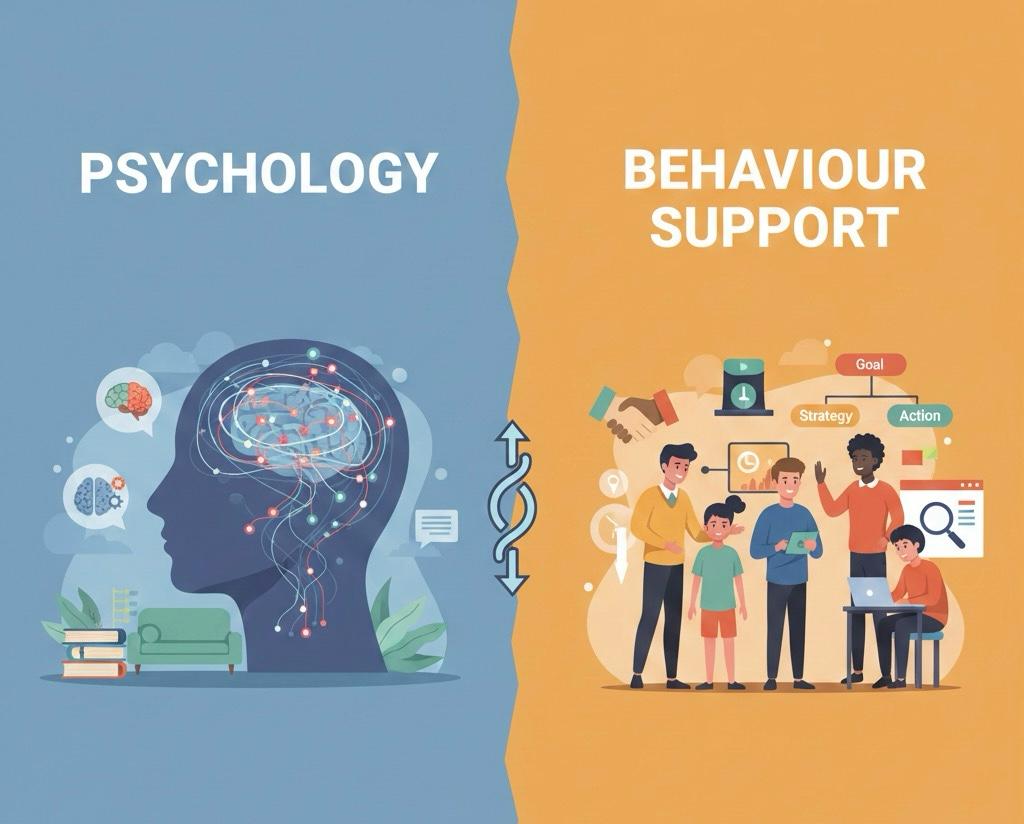
Psychology vs behaviour support: which one do I need? Written by: Therapy Near Me Editorial Team Clinically reviewed by: qualified members of the Therapy Near Me clinical team Last updated: 18/12/2025 This article is intended as general information only and does not replace personalised medical or mental health advice. Learn more about our Editorial Policy. An evidence‑based guide for Australian readers. This article explains the roles, methods, and evidence behind psychology and positive behaviour support (PBS), when to choose one or the other, and when a combined approach is best. General information only; not a substitute for individual clinical advice. The short answer Choose psychology when the primary problem is a mental‑health condition (for example, anxiety, depression, trauma, obsessive–compulsive symptoms), when you need diagnostic assessment, or when you want structured psychological therapy. Choose behaviour support when the main concern is challenging behaviour linked to disability or environmental triggers—such as aggression, self‑injury, absconding, severe tantrums, property damage, or behaviours of concern in autism or intellectual disability—and you need a Functional Behaviour Assessment (FBA) and a Positive Behaviour Support Plan (BSP) that modifies environments, builds skills, and sets safe responses (Carr et al., 1999; Gore et al., 2013; NDIS Commission, 2019). In many real‑world situations, both are required and work best together (Heyvaert, Saenen and Maes, 2014; NICE, 2015; Emerson and Einfeld, 2011). Definitions and scope Psychology (clinical, counselling, educational and developmental, etc.) Behaviour support (Positive Behaviour Support under the NDIS) How the methods differ Feature Psychology Behaviour Support (PBS) Primary targets Diagnosable mental disorders; emotional and cognitive processes; coping and quality of life Challenging behaviours and the function they serve (escape, attention, access to items, sensory) Core assessment Clinical interview; psychometric tests (e.g., mood scales, cognitive/adaptive tests); DSM‑5‑TR formulation Functional Behaviour Assessment (records review, interviews, ABC data, direct observation; hypothesis testing) Interventions CBT, exposure, behavioural activation, trauma‑focused therapies, PMT/PMTO, coping‑skills training Environmental redesign, antecedent strategies, skills teaching(communication, tolerance, choice, self‑management), reinforcement systems, safeguards; carer/staff coaching Measurement Symptom scales (e.g., PHQ‑9, GAD‑7), goals, functional outcomes Behaviour frequency, duration, severity; data sheets; goal attainment scaling Safeguards Risk assessment; safety plans; duty of care; therapy boundaries Authorisation and reporting of restrictive practices; reduction plans; incident review (NDIS Commission rules) (Sources: AHPRA, 2024; APS, 2018; Carr et al., 1999; Iwata et al., 1994; Gore et al., 2013; NDIS Commission, 2019; 2021.) Evidence base in brief Who is the best first contact? A practical decision guide Use the primary concern and context to choose a starting point. When in doubt, start where risk and impact are highest and coordinate from there. Start with behaviour support when: Start with psychology when: Start with both when: What the processes look like Behaviour support workflow (PBS) Psychological therapy workflow Safeguarding and legal considerations (NDIS) Funding pathways (high‑level) Working together: getting the best of both Examples (de‑identified composites) Pitfalls to avoid Frequently asked questions Can a psychologist also do behaviour support?Yes—if they meet the PBS capability expectations and provider registration requirements. Many BSPs are psychologists; others are OTs, special educators, or social workers (NDIS Commission, 2019). Does behaviour support treat trauma or anxiety directly?PBS can reduce exposure to triggers and teach coping skills, but therapy for trauma/anxiety is typically led by a psychologist or other trained clinician (NICE, 2011; 2015). What if medication (e.g., antipsychotic for behaviour) is used?That is a restrictive practice (chemical restraint) in many jurisdictions and must be addressed in the BSP with a reduction plan and appropriate clinical oversight (NDIS Commission, 2019; 2021). How quickly should we see change?For well‑targeted plans, early indicators (reduced severity or duration; improved recovery) should appear in 4–6 weeks. If not, revisit the FBA or therapy formulation (Fortney et al., 2017; Gore et al., 2013). References AHPRA (Australian Health Practitioner Regulation Agency) (2024) ‘Registration standards: Psychology’. Available at: https://www.ahpra.gov.au (Accessed 9 December 2025). APS (Australian Psychological Society) (2018) Evidence‑based psychological interventions in the treatment of mental disorders: A practical treatment guide. Melbourne: APS. Carr, E.G., Horner, R.H., Turnbull, A.P., Marquis, J., Magito‑McLaughlin, D., McAtee, M., Smith, C.E., Ryan, K.A., Ruef, M. and Doolabh, A. (1999) *Positive Behavior Support: Evolution of an field in applied behavior analysis to support individuals with challenging behavior and their families*. Baltimore, MD: Paul H. Brookes. Cuijpers, P., Karyotaki, E., Reijnders, M., Purgato, M. and Barth, J. (2017) ‘Psychotherapies for depression: A meta‑analysis’, CNS Spectrums, 22(4), pp. 324–332. DoHAC (Department of Health and Aged Care) (2024) ‘Medicare and mental health supports—consumer information’. Canberra: Australian Government. Available at: https://www.health.gov.au (Accessed 9 December 2025). Emerson, E. and Einfeld, S. (2011) Challenging behaviour. 3rd edn. Cambridge: Cambridge University Press. Fortney, J.C., Unützer, J., Wrenn, G., Pyne, J.M., Smith, G.R., Schoenbaum, M. and Harbin, H.T. (2017) ‘A tipping point for measurement‑based care’, Psychiatric Services, 68(2), pp. 179–188. Gore, N.J., McGill, P., Toogood, S., Allen, D., Hughes, J.C., Baker, P., Hastings, R.P., Noone, S.J. and Denne, L.D. (2013) ‘Definition and scope for positive behavioural support’, International Journal of Positive Behavioural Support, 3(2), pp. 14–23. Heyvaert, M., Saenen, L. and Maes, B. (2014) ‘Systematic review of behavioural interventions for reducing challenging behaviour in adults with intellectual disabilities’, Research in Developmental Disabilities, 35(9), pp. 2464–2476. Iwata, B.A., Dorsey, M.F., Slifer, K.J., Bauman, K.E. and Richman, G.S. (1994) ‘Towards a functional analysis of self‑injury’, Journal of Applied Behavior Analysis, 27(2), pp. 197–209. Kazdin, A.E. (2005) Parent Management Training: Treatment for oppositional, aggressive, and antisocial behavior in children and adolescents. New York: Oxford University Press. NDIA (National Disability Insurance Agency) (2025) ‘Participant pathways and support categories—overview for participants and providers’. Canberra: NDIA. Available at: https://www.ndis.gov.au (Accessed 9 December 2025). NDIS Commission (2019) Positive Behaviour Support Capability Framework. Canberra: NDIS Quality and Safeguards Commission. NDIS Commission (2021) NDIS (Restrictive Practices and Behaviour Support) Rules 2018—Guidance and Practice Advice (updated). Canberra: NDIS Quality and Safeguards Commission. NICE (National Institute for Health and Care Excellence) (2011) Generalised anxiety disorder and panic disorder in adults: management (CG113). London: NICE. NICE (2013) Antisocial behaviour and conduct disorders in children and young people (CG158). London: NICE. NICE (2015) Challenging behaviour and learning disabilities: prevention and interventions for people with learning disabilities whose behaviour challenges (NG11). London: NICE. NICE (2018) Depression in adults: treatment and management (NG222). London: NICE. How to cite this article Therapy Near Me (2025) ‘Psychology vs behaviour support: which one do I need?’. Available at: https://TherapyNearMe.com.au (Accessed 9 December 2025).

Psychology vs behaviour support: which one do I need? Read More »

Happiest city in Australia What the evidence actually shows

Happiest city in Australia? What the evidence actually shows

Happiest city in Australia? What the evidence actually shows Written by: Therapy Near Me Editorial Team Clinically reviewed by: qualified members of the Therapy Near Me clinical team Last updated: 17/12/2025 This article is intended as general information only and does not replace personalised medical or mental health advice. Learn more about our Editorial Policy. By TherapyNearMe.com.au. This article summarises research on happiness and subjective wellbeing in Australian cities. It is general information only and not a substitute for professional advice. Quick take There is no single, scientific list that declares one Australian city “the happiest.” Different datasets measure different things—life satisfaction, mental health symptoms, liveability, housing stress, social cohesion, green/blue space, and more. When you triangulate recent evidence, a defensible answer emerges: several cities perform strongly on wellbeing proxies for different reasons. Melbourne routinely leads on international liveability; parts of Sydney—notably the Northern Beaches—score highest on local wellbeing composites; Canberra (ACT) leads on life expectancy and short commutes; Adelaide, Perth and Hobart benefit from access to blue–green spaces and manageable scale. Any claim of a single “winner” depends on which outcomes you value most (EIU, 2025; SGS Economics & Planning, 2024; ABS, 2025; Australian Unity & Deakin University, 2024). What does “happiness” mean in cities? Researchers typically distinguish between: Cities rarely publish city‑level life‑satisfaction scores each year. Instead, we rely on high‑quality national surveys(ABS General Social Survey; HILDA), international estimates (World Happiness Report), and place‑based composites(SGS Cities & Regions Wellbeing Index, EIU Liveability). Each shines light on a different part of the story. What the latest data say 1) National happiness baseline 2) City‑level composites 3) Health and environment drivers So, which city is “happiest”? There is no single, peer‑reviewed ranking of Australian cities by happiness. But triangulating the best recent evidence suggests a short‑list depending on the lens: Bottom line: If forced to answer “which is happiest?” using contemporary proxies, Melbourne(nationally) and Sydney’s high‑scoring coastal LGAs (locally) are strong candidates, with Canberraclose behind on objective health and commute indicators. For an individual, the “happiest” choice is the best fit between your needs (affordability, community, green/blue access, commute, climate) and a neighbourhood that supports them. What to look for in a happy place (wherever you live) Evidence‑informed features that stack the odds in your favour: Caveats and why rankings disagree Practical steps to improve your odds of happiness—without moving References ABC News (2024) ‘New wellbeing data shows how regions across Australia score in health, income, housing and more’, ABC News, 7 May. Available at: https://www.abc.net.au (Accessed 9 December 2025). ABC RN (2025) ‘Noise pollution makes us anxious and stressed, and can even impact the health of our heart and brain’, ABC Radio National, 24 March. Available at: https://www.abc.net.au (Accessed 9 December 2025). ABS (Australian Bureau of Statistics) (2021) General Social Survey: Summary Results, Australia, 2020. Canberra: ABS. Available at: https://www.abs.gov.au (Accessed 9 December 2025). ABS (2023) Life expectancy, 2020–2022. Canberra: ABS. Available at: https://www.abs.gov.au (Accessed 9 December 2025). ABS (2025) ‘Overall life satisfaction’, Measuring What Matters: Themes and Indicators. Canberra: ABS. Available at: https://www.abs.gov.au (Accessed 9 December 2025). AHURI (2024) Measuring housing affordability: Scoping the real cost of housing (Final Report 427). Melbourne: Australian Housing and Urban Research Institute. AIHW (Australian Institute of Health and Welfare) (2024) ‘Built environment and health’, in Australia’s Health. Canberra: AIHW. Available at: https://www.aihw.gov.au (Accessed 9 December 2025). AIHW (2025) ‘Housing affordability’, in Australia’s Welfare. Canberra: AIHW. Available at: https://www.aihw.gov.au(Accessed 9 December 2025). Australian Unity & Deakin University (2024) Australians’ subjective wellbeing in 2024: The housing and cost‑of‑living squeeze. Melbourne: Deakin University Australian Centre on Quality of Life. Botha, F. et al. (2025) ‘The effects of commuting and working from home on mental health: Evidence from Australian panel data’, Social Science & Medicine (advance online). See also Melbourne Institute Working Paper 2023/15. Carver, A. et al. (2024) ‘Public greenspace and mental wellbeing among mid‑older aged adults: Findings from the HABITAT longitudinal study’, Health & Place, 87, 103270. EIU (Economist Intelligence Unit) (2024) Global Liveability Index 2024. London: EIU. Available at: https://www.eiu.com (Accessed 9 December 2025). EIU (2025) Global Liveability Index 2025. London: EIU. Available at: https://www.eiu.com (Accessed 9 December 2025). Geneshka, M. et al. (2021) ‘Relationship between green and blue spaces with mental health: A systematic review of longitudinal studies’, International Journal of Environmental Research and Public Health, 18(17), 9010. Roba, H.S. et al. (2025) ‘Green space, blue space and psychological distress in regional Australia: Longitudinal evidence’, Environmental Research, 247, 118218. SGS Economics & Planning (2024) Cities & Regions Wellbeing Index 2024. Melbourne: SGS. Available at: https://sgsep.com.au (Accessed 9 December 2025). The Guardian (2025) ‘Australia drops out of the world’s top 10 happiest countries’, The Guardian, 21 March. Available at: https://www.theguardian.com (Accessed 9 December 2025). The New Daily (2024) ‘The world’s happiest cities revealed: Here’s where Australia stands’, The New Daily, 18 June. Available at: https://www.thenewdaily.com.au (Accessed 9 December 2025). White, R. L. et al. (2024) ‘A systematic observation of moderate‑to‑vigorous physical activity in blue spaces’, Health Promotion International, 39(4), daae101. World Happiness Report (2024) World Happiness Report 2024. New York: Sustainable Development Solutions Network. How to cite this article Therapy Near Me (2025) ‘Happiest city in Australia? What the evidence actually shows’. Available at: https://TherapyNearMe.com.au (Accessed 9 December 2025).

Happiest city in Australia? What the evidence actually shows Read More »

Christmas parties a psychologist’s advice for enjoying the season without the fallout

Christmas parties: a psychologist’s advice for enjoying the season without the fallout

Christmas parties: a psychologist’s advice for enjoying the season without the fallout Written by: Therapy Near Me Editorial Team Clinically reviewed by: qualified members of the Therapy Near Me clinical team Last updated: 16/12/2025 This article is intended as general information only and does not replace personalised medical or mental health advice. Learn more about our Editorial Policy. By TherapyNearMe.com.au — evidence‑based guidance for end‑of‑year events. General information only; not a substitute for personalised medical or legal advice. Why this matters End‑of‑year celebrations bring connection, recognition, and recovery time. They also add pressure, alcohol availability, and blurred boundaries, which can elevate risks to mood, sleep, relationships, and careers. Psychological science helps you keep the good parts while avoiding the traps. Key themes: norms and pressure, alcohol myopia, consent and safety, sleep and next‑day functioning, and inclusive design. The psychology of party pressure Social norms and misperceptions People often overestimate how much others drink or how wild others expect events to be; this normative misperceptiondrives unnecessary risk‑taking and regret (Perkins, 2003). Visible outliers (the loudest table) skew our sense of “normal,” while authority and reciprocity (“have another, it’s on us”) nudge compliance (Cialdini, 2001). Alcohol myopia Alcohol narrows attention to immediate, salient cues and downplays longer‑term consequences and subtle social signals. This alcohol myopia increases impulsivity, misreads of flirtation, and conflict (Steele and Josephs, 1990). In mixed groups, alcohol‑myopic judgments intersect with power dynamics, raising harm. Spotlight effect and social anxiety If you feel awkward, you may assume everyone is scrutinising you. In reality, others notice you far less—a cognitive bias called the spotlight effect (Gilovich, Medvec and Savitsky, 2000). Knowing this can free you to use small, values‑consistent behaviours rather than over‑compensating. Alcohol, sleep, and next‑day performance Practical rule: If you need to be sharp the next day (driving, childcare, clinical work), plan for low‑risk intake or skip alcohol entirely. Consent, boundaries, and bystanders A reader‑first playbook (attendees) Before you go While you are there After A safer‑by‑design playbook (organisers and leaders) Scripts you can actually use Special considerations Quick checklist (tear‑out) Bottom line Great parties are about connection and recognition, not testing limits. Use psychology to design your night—and your event—so you can enjoy the season and feel good the next day. References Abbey, A. (2002) ‘Alcohol‑related sexual assault: A common problem among college students’, Journal of Studies on Alcohol, Supplement, (14), pp. 118–128. Banyard, V.L. (2011) ‘Who will help prevent sexual violence: Creating an ecological model of bystander intervention’, Psychology of Violence, 1(3), pp. 216–229. Cherpitel, C.J. (2007) ‘Alcohol and injuries: Emergency department studies in an international perspective’, Addiction, 102(11), pp. 1753–1763. Cialdini, R.B. (2001) Influence: Science and practice. 4th edn. Boston, MA: Allyn & Bacon. Dollard, M.F. and Bakker, A.B. (2010) ‘Psychosocial safety climate as a precursor to conducive work environments, psychological health problems, and employee engagement’, Journal of Occupational and Organizational Psychology, 83(3), pp. 579–599. Gilovich, T., Medvec, V.H. and Savitsky, K. (2000) ‘The spotlight effect in social judgment: An egocentric bias in estimates of the salience of one’s own actions and appearance’, Journal of Personality and Social Psychology, 78(2), pp. 211–222. Guéguen, N., Jacob, C., Le Guellec, H., Morineau, T. and Lourel, M. (2008) ‘Sound level of environmental music and drinking behavior: A field experiment with beer drinkers’, Alcoholism: Clinical and Experimental Research, 32(10), pp. 1795–1798. Marczinski, C.A. (2014) ‘Alcohol mixed with energy drinks: Consumption patterns and risks’, Nutrition Reviews, 72(S1), pp. 98–107. NHMRC (National Health and Medical Research Council) (2020) Australian guidelines to reduce health risks from drinking alcohol. Canberra: NHMRC. Perkins, H.W. (2003) The Social Norms Approach to Preventing School and College Age Substance Abuse. 1st edn. San Francisco, CA: Jossey‑Bass. Roehrs, T. and Roth, T. (2001) ‘Sleep, sleepiness, and alcohol use’, Alcohol Research & Health, 25(2), pp. 101–109. Rohsenow, D.J., Howland, J., Arnedt, J.T., Almeida, A.B., Greece, J., Minsky, S. and Sales, S. (2010) ‘Intoxication with and without alcohol hangover and its effects on simulated driving performance’, Addiction, 105(9), pp. 1589–1594. Steele, C.M. and Josephs, R.A. (1990) ‘Alcohol myopia: Its prized and dangerous effects’, American Psychologist, 45(8), pp. 921–933. Wiese, J.G., Shlipak, M.G. and Browner, W.S. (2000) ‘The alcohol hangover’, Annals of Internal Medicine, 132(11), pp. 897–902. How to cite this article Therapy Near Me (2025) ‘Christmas parties: a psychologist’s advice for enjoying the season without the fallout’. Available at: TherapyNearMe.com.au (Accessed 9 December 2025). Need help? For immediate danger call 000. Alcohol & Drug Information Service (ADIS) 1800 250 015. Lifeline 13 11 14 (24/7). Suicide Call Back Service 1300 659 467.

Christmas parties: a psychologist’s advice for enjoying the season without the fallout Read More »

Best (and worst) pets for mental health an evidence‑based guide

Best (and worst) pets for mental health an evidence‑based guide

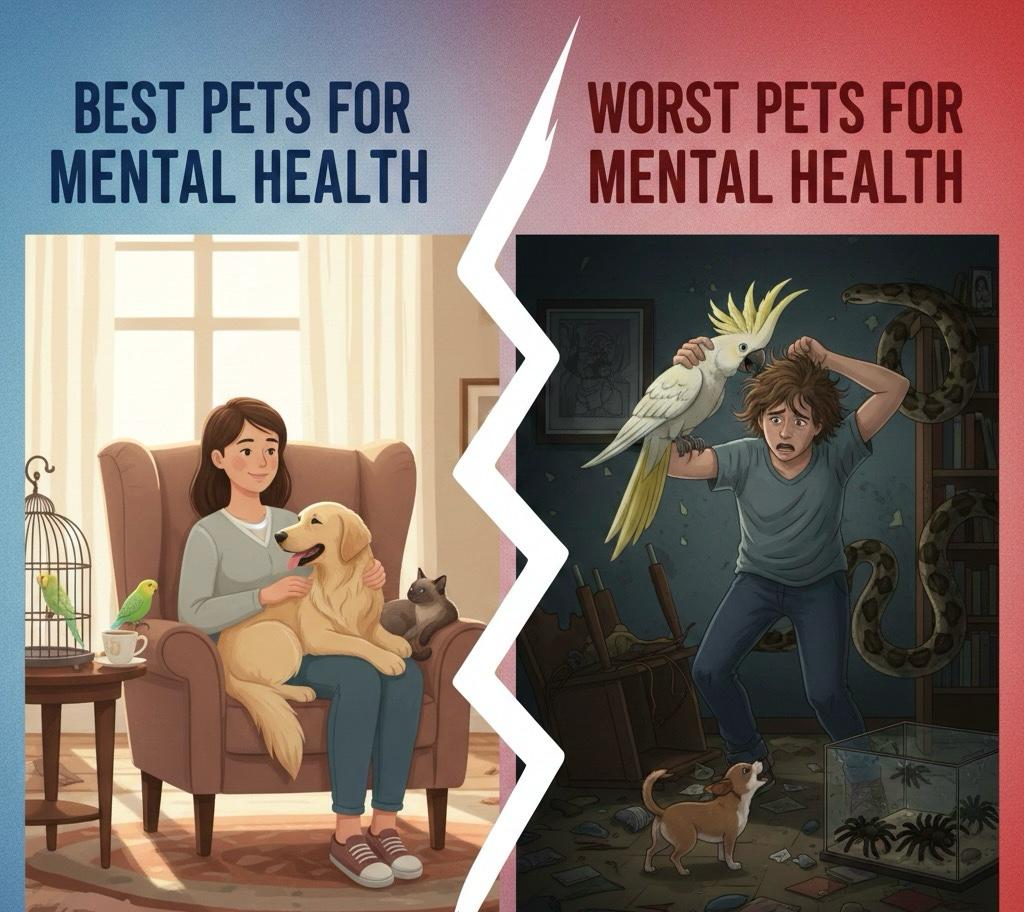
Best (and worst) pets for mental health an evidence‑based guide Written by: Therapy Near Me Editorial Team Clinically reviewed by: qualified members of the Therapy Near Me clinical team Last updated: 15/12/2025 This article is intended as general information only and does not replace personalised medical or mental health advice. Learn more about our Editorial Policy. By TherapyNearMe.com.au — reader‑first, research‑led article. General information only; not a substitute for personal medical or veterinary advice. Why pets matter for mental health Companion animals can provide social support, routine, and opportunities for activity and connection, all of which influence mood and stress physiology (McConnell et al., 2011; Brooks et al., 2018). At the same time, the evidence is heterogeneous: benefits vary by species, the person’s goals and circumstances, and the quality of human–animal interaction (HAI) (Gee and Mueller, 2019; Purewal et al., 2017). Poor fit or unmet animal‑welfare needs can backfire, increasing stress for both animal and human. The question isn’t “Do pets improve mental health?” but rather “Which pet, for whom, under what conditions?” What the research says (in brief) Best‑fit pets by common goals The right animal depends on lifestyle, health, housing, budget, sensory preferences, and time. Below are options aligned to typical goals with key caveats. 1) “I want more structure, movement and social contact” → Dogs (well‑matched temperament) 2) “I want calm companionship with lower daily demands” → Cats (adult, indoor‑adapted) 3) “I respond well to gentle visuals and routine” → Aquariums/fish 4) “I’d like nurturing and gentle interaction” → Rabbits/guinea pigs (handled kindly, housing enriched) 5) “I love outdoor activity and structured programs” → Horses (through equine‑assisted activities, not casual ownership) 6) “I need low allergens” → Reptiles/invertebrates (for observing, not cuddling) When a pet may be the wrong fit (mental‑health‑first considerations) Welfare matters: the Five Domains lens Mental‑health benefits depend on the animal’s own welfare. Use the Five Domains model (nutrition, environment, health, behaviour, mental state) to check you can meet species‑specific needs (Mellor et al., 2020). Poor welfare (e.g., chronic confinement, lack of enrichment) increases problem behaviours and owner guilt/stress. Decision checklist (before you adopt or buy) Evidence‑informed recommendations (summary) Limitations and nuance Most pet‑ownership evidence is observational; people who choose pets differ systematically (e.g., outdoorsy dog owners). Randomised trials are rare and often short. Focus less on universal “best pet” claims and more on fit, welfare, and supports. References Bachi, K., Parish‑Plass, N. and Thomson, J. (2012) ‘Animal‑assisted psychotherapy: A unique relational therapy for children and adolescents’, Clinical Child Psychology and Psychiatry, 17(1), pp. 121–130. Barker, S.B. and Wolen, A.R. (2008) ‘The benefits of human–companion animal interaction: a review’, Journal of Veterinary Medical Education, 35(4), pp. 487–495. Brent, L., Peiris‑Jones, T., Curry, O.S. and House, T. (2020) ‘Grief after pet loss: a systematic review’, Omega—Journal of Death and Dying, 82(2), pp. 294–322. CDC (Centers for Disease Control and Prevention) (2017) ‘Compendium of measures to prevent disease associated with animals in public settings’. Atlanta: CDC. Cracknell, D., White, M.P., Pahl, S., Nichols, W.J. and Depledge, M.H. (2016) ‘Marine biota and psychological well‑being: a longitudinal observational study of aquarium exposure’, Environment and Behavior, 48(10), pp. 1242–1269. Day, M.J. (2011) ‘One health: the importance of companion animal zoonoses’, Journal of Comparative Pathology, 144(2–3), pp. 97–99. Edwards, N.E. and Beck, A.M. (2002) ‘Animal‑assisted therapy and nutrition in Alzheimer’s disease’, Western Journal of Nursing Research, 24(6), pp. 697–712. Gee, N.R. and Mueller, M.K. (2019) ‘A systematic review of research on human–animal interaction and well‑being’, International Journal of Environmental Research and Public Health, 16(18), 3320. Jones, M.G., Rice, S.M. and Cotton, S.M. (2019) ‘Therapeutic use of companion animals in mental health: a review of the evidence’, Harvard Review of Psychiatry, 27(3), pp. 146–164. Kendall, E., Maujean, A., Pepping, C.A., Downes, M., Lakhani, A., Byrne, J. and Macfarlane, K. (2015) ‘A systematic review of the efficacy of equine‑assisted interventions on psychological outcomes’, European Journal of Psychotherapy & Counselling, 17(1), pp. 57–79. McConnell, A.R., Brown, C.M., Shoda, T.M., Stayton, L.E. and Martin, C.E. (2011) ‘Friends with benefits: On the positive consequences of pet ownership’, Journal of Personality and Social Psychology, 101(6), pp. 1239–1252. Mellor, D.J., Beausoleil, N.J., Littlewood, K.E., McLean, A.N., McGreevy, P.D., Jones, B. and Wilkins, C. (2020) ‘The 2020 Five Domains Model: A blueprint for animal welfare’, Animals, 10(10), 1870. O’Haire, M.E. (2013) ‘Animal‑assisted intervention for autism spectrum disorder: A systematic literature review’, Journal of Autism and Developmental Disorders, 43(7), pp. 1606–1622. Purewal, R., Christley, R., Kordas, K., Joinson, C., Meints, K., Gee, N.R. and Westgarth, C. (2017) ‘Companion animals and child/adolescent development: A systematic review’, International Journal of Environmental Research and Public Health, 14(3), 234. Serpell, J. (1991) ‘Beneficial effects of pet ownership: A longitudinal study of human health and behaviour’, Journal of the Royal Society of Medicine, 84(12), pp. 717–720. Westgarth, C., Christley, R.M., Jewell, C., German, A.J., Boddy, L.M. and Christian, H.E. (2019) ‘Dog ownership, dog walking, and physical activity: a systematic review and meta‑analysis’, American Journal of Health Promotion, 33(5), pp. 813–822. How to cite this article Therapy Near Me (2025) ‘Best (and worst) pets for mental health: an evidence‑based guide’. Available at: TherapyNearMe.com.au (Accessed 9 December 2025).

Best (and worst) pets for mental health an evidence‑based guide Read More »

Who’s more stressed single people or those in relationships

Who’s more stressed — single people or those in relationships?

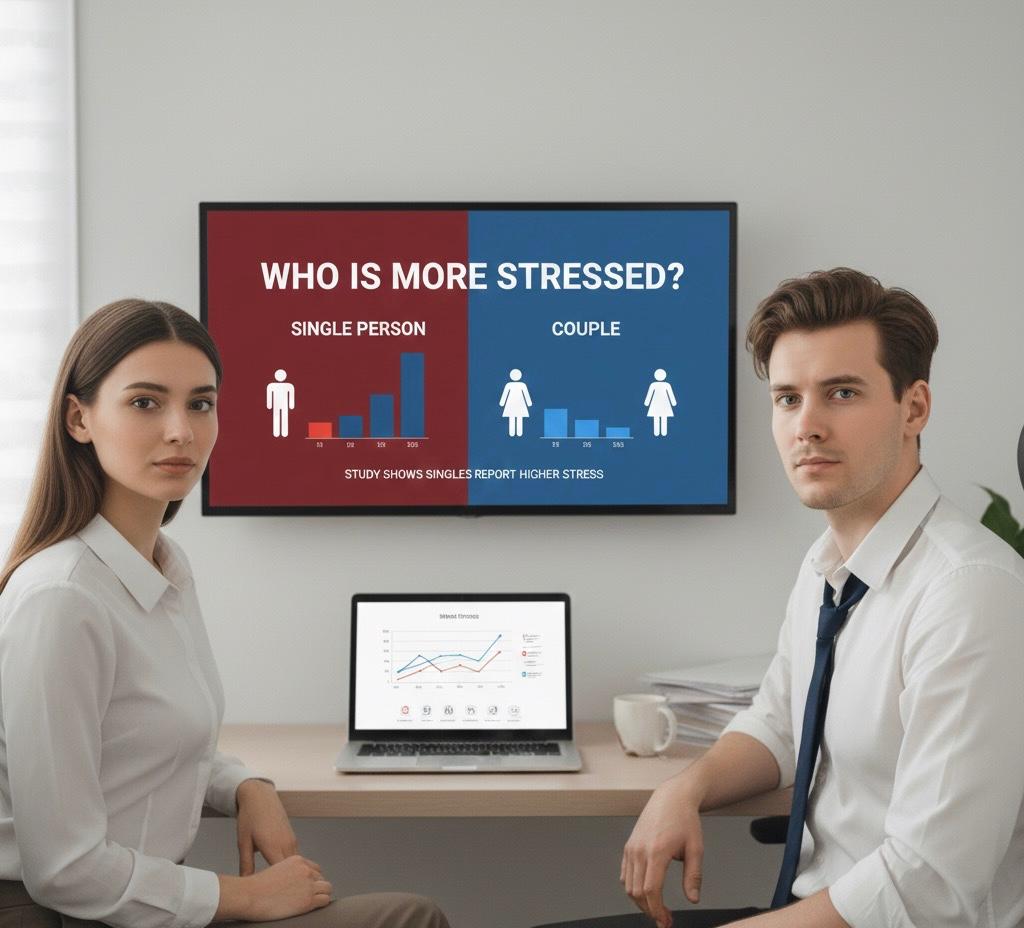
Who’s more stressed — single people or those in relationships? Written by: Therapy Near Me Editorial Team Clinically reviewed by: qualified members of the Therapy Near Me clinical team Last updated: 14/12/2025 This article is intended as general information only and does not replace personalised medical or mental health advice. Learn more about our Editorial Policy. A psychologist’s guide to what the data (and biology) actually say. Short answer It depends far more on relationship quality than on relationship status. On average, partnered people report slightly lower stress and show some markers of better stress physiology—but only when the relationship is supportive. Poor‑quality, conflictual, or violent relationships are associated with higher stress than being single (Robles et al., 2014; Kiecolt‑Glaser and Newton, 2001; Umberson and Thomeer, 2013). What do we mean by “stress”? Psychologists distinguish between: Relationship status and quality can shape all three. What large studies say about singles vs. partnered people Quality beats status: what happens inside relationships Takeaway: A good relationship helps you cope; a bad one burdens your system. Being single poses less risk than staying in a chronically hostile or unsafe partnership. Special cases and moderators What this means for your choices If you’re single: If you’re partnered: A simple decision tool Ask three questions about your current situation: Myths to retire Bottom line Who is “more stressed”—a single person or someone in a relationship? The best single‑sentence answer is: the person with poorer quality relationships and weaker daily recovery. You can tilt the odds in your favour by building supportive ties (romantic or not) and caring for the basics that settle the nervous system. References Adam, E.K. and Kumari, M. (2009) ‘Assessing salivary cortisol in large‑scale, epidemiological research’, Psychoneuroendocrinology, 34(10), pp. 1423–1436. Cacioppo, J.T. and Hawkley, L.C. (2010) ‘Perceived social isolation and cognition’, Trends in Cognitive Sciences, 13(10), pp. 447–454. Campbell, J.C. (2002) ‘Health consequences of intimate partner violence’, The Lancet, 359(9314), pp. 1331–1336. Coan, J.A., Schaefer, H.S. and Davidson, R.J. (2006) ‘Lending a hand: social regulation of the neural response to threat’, Psychological Science, 17(12), pp. 1032–1039. Cohen, S. and Wills, T.A. (1985) ‘Stress, social support, and the buffering hypothesis’, Psychological Bulletin, 98(2), pp. 310–357. Conger, R.D., Conger, K.J. and Martin, M.J. (2010) ‘Socioeconomic status, family processes, and individual development’, Journal of Marriage and Family, 72(3), pp. 685–704. DePaulo, B. and Morris, W.L. (2005) ‘Singles in society and in science’, Psychological Inquiry, 16(2), pp. 57–83. Heinrichs, M., Baumgartner, T., Kirschbaum, C. and Ehlert, U. (2003) ‘Social support and oxytocin interact to suppress cortisol and subjective responses to psychosocial stress’, Biological Psychiatry, 54(12), pp. 1389–1398. Kiecolt‑Glaser, J.K. and Newton, T.L. (2001) ‘Marriage and health: his and hers’, Psychological Bulletin, 127(4), pp. 472–503. Kiecolt‑Glaser, J.K., Loving, T.J., Stowell, J.R., Malarkey, W.B., Lemeshow, S., Dickinson, S.L. and Glaser, R. (2005) ‘Hostile marital interactions, proinflammatory cytokine production, and wound healing’, Archives of General Psychiatry, 62(12), pp. 1377–1384. Liu, H. and Waite, L.J. (2014) ‘Bad marriage, broken heart? Age and gender differences in the link between marital quality and cardiovascular risks among older adults’, Journal of Health and Social Behavior, 55(4), pp. 403–423. McEwen, B.S. and Seeman, T. (1999) ‘Protective and damaging effects of mediators of stress’, New England Journal of Medicine, 338(3), pp. 171–179. Meyer, I.H. (2003) ‘Prejudice, social stress, and mental health in lesbian, gay, and bisexual populations: conceptual issues and research evidence’, Psychological Bulletin, 129(5), pp. 674–697. Mikulincer, M. and Shaver, P.R. (2007) Attachment in adulthood: Structure, dynamics, and change. New York: Guilford. Nomaguchi, K. and Milkie, M.A. (2020) ‘Parenthood and well‑being: A decade in review’, Journal of Marriage and Family, 82(1), pp. 198–223. Robles, T.F., Slatcher, R.B., Trombello, J.M. and McGinn, M.M. (2014) ‘Marital quality and health: a meta‑analytic review’, Psychological Bulletin, 140(1), pp. 140–187. Saxbe, D.E., Repetti, R.L. and Nishina, A. (2008) ‘Marital satisfaction, recovery from work, and diurnal cortisol among men and women’, Health Psychology, 27(1), pp. 15–25. Sbarra, D.A. (2015) ‘Divorce and health: Current trends and future directions’, Psychosomatic Medicine, 77(3), pp. 227–236. Thoits, P.A. (2011) ‘Mechanisms linking social ties and support to physical and mental health’, Journal of Health and Social Behavior, 52(2), pp. 145–161. Umberson, D. and Thomeer, M.B. (2013) ‘Family status and mental health: Recent advances and future directions’, Handbook of the Sociology of Mental Health, pp. 405–431. Williams, K. and Umberson, D. (2004) ‘Marital status, marital transitions, and health: A gendered life course perspective’, Journal of Health and Social Behavior, 45(1), pp. 81–98. How to cite this article Therapy Near Me (2025) ‘Who’s more stressed — single people or those in relationships?’ Available at: https://TherapyNearMe.com.au (Accessed 9 December 2025). General information only. If you are in immediate danger, call 000. For 24/7 support: Lifeline 13 11 14; Suicide Call Back Service 1300 659 467.

Who’s more stressed — single people or those in relationships? Read More »

Professions with the “worst bosses” what the evidence really shows (and how to protect your mental health)

Professions with the “worst bosses”: what the evidence really shows (and how to protect your mental health)

Professions with the “worst bosses”: what the evidence really shows (and how to protect your mental health) Written by: Therapy Near Me Editorial Team Clinically reviewed by: qualified members of the Therapy Near Me clinical team Last updated: 13/12/2025 This article is intended as general information only and does not replace personalised medical or mental health advice. Learn more about our Editorial Policy. Why this topic matters Most of us have a story about a difficult manager. But which occupations actually carry higher risk of harmful leadership—and what does “worst” mean in scientific terms? Research typically examines constructs such as abusive supervision (sustained hostile verbal and non‑verbal behaviour), workplace bullying (persistent mistreatment with a power imbalance), incivility (low‑intensity disrespect), and broader destructive leadership patterns (Tepper, 2000; Einarsen, Hoel, Zapf and Cooper, 2011; Schyns and Schilling, 2013; Schilpzand, De Pater and Erez, 2016). These behaviours consistently predict anxiety, depression, sleep disturbance, and burnout (Kivimäki et al., 2003; Nielsen and Einarsen, 2012). Two cautions upfront: there is no single league table of “worst bosses by profession,” and study designs vary (samples, measures, timeframes). What follows summarises patterns and risk factors that cluster in certain sectors, so you can make informed choices and protect yourself at work. What counts as a “bad boss” in the literature What the evidence says overall Meta‑analyses show that destructive leadership and bullying are non‑trivial and harmful across many industries. Pooled estimates suggest single‑point bullying prevalence frequently in the 10–15% range (depending on definitions), with higher lifetime exposure (Nielsen, Matthiesen and Einarsen, 2010; Nielsen and Einarsen, 2012). Abusive supervision links robustly to lower job satisfaction and higher psychological strain (Mackey, Frieder, Brees and Martinko, 2017). Health impacts include increased sickness absence and depression (Kivimäki et al., 2003; Nielsen and Einarsen, 2012). Sectors where risk appears higher (and why) Below we describe risk‑raising conditions and examples of occupational groups where those conditions commonly occur. Leadership quality varies widely within each sector; these are population‑level patterns, not verdicts on every workplace. 1) Healthcare (nursing, medicine, ambulance) 2) Front‑line service work (hospitality, retail, call centres) 3) Education and academia 4) Policing, corrections and emergency services 5) Finance and high‑stakes sales 6) Construction and resource industries 7) Tech and start‑ups Bottom line: Sectors with high demands, low control, unstable security, and strong power asymmetries are more likely to incubate “bad boss” behaviours (Karasek, 1979; Bakker and Demerouti, 2007). How “bad bosses” affect mental health What you can do (worker playbook) What organisations can do (leader playbook) Limitations and nuance Key takeaways References Bakker, A.B. and Demerouti, E. (2007) ‘The Job Demands–Resources model: state of the art’, Journal of Managerial Psychology, 22(3), pp. 309–328. Cohn, A., Fehr, E. and Maréchal, M.A. (2014) ‘Business culture and dishonesty in the banking industry’, Nature, 516(7529), pp. 86–89. Dormann, C. and Zapf, D. (2004) ‘Customer‑related social stressors and burnout’, Journal of Occupational Health Psychology, 9(1), pp. 61–82. Einarsen, S., Hoel, H., Zapf, D. and Cooper, C.L. (2011) Bullying and harassment in the workplace: Developments in theory, research, and practice. 2nd edn. Boca Raton: CRC Press. Keashly, L. and Neuman, J.H. (2010) ‘Faculty experiences with bullying in higher education’, Administrative Theory & Praxis, 32(1), pp. 48–70. Karasek, R.A. (1979) ‘Job demands, job decision latitude, and mental strain: Implications for job redesign’, Administrative Science Quarterly, 24(2), pp. 285–308. Kivimäki, M., Elovainio, M. and Vahtera, J. (2003) ‘Workplace bullying and sickness absence in hospital staff’, Occupational and Environmental Medicine, 60(10), pp. 777–783. Leiter, M.P., Laschinger, H.K.S., Day, A. and Oore, D.G. (2011) ‘The impact of civility interventions on employee social behaviour, distress and attitudes’, Journal of Applied Psychology, 96(6), pp. 1258–1274. Liu, J., Gan, Y., Jiang, H., Li, L., Dwyer, R., Lu, K., Yan, S., Sampson, O., Xu, H., Wang, C. and Lu, Z. (2019) ‘Prevalence of workplace violence against healthcare workers: a systematic review and meta‑analysis’, Occupational and Environmental Medicine, 76(12), pp. 927–937. Mackey, J.D., Frieder, R.E., Brees, J.R. and Martinko, M.J. (2017) ‘Abusive supervision: a meta‑analysis and empirical review’, Journal of Management, 43(6), pp. 1940–1965. Nielsen, M.B., Matthiesen, S.B. and Einarsen, S. (2010) ‘The prevalence of workplace bullying: a meta‑analysis’, European Journal of Work and Organizational Psychology, 19(1), pp. 45–65. Nielsen, M.B. and Einarsen, S.V. (2012) ‘Outcomes of exposure to workplace bullying: A meta‑analytic review’, Work & Stress, 26(4), pp. 309–332. Ordóñez, L.D., Schweitzer, M.E., Galinsky, A.D. and Bazerman, M.H. (2009) ‘Goals gone wild: The systematic side effects of over‑prescribing goal setting’, Academy of Management Perspectives, 23(1), pp. 6–16. Schilpzand, P., De Pater, I.E. and Erez, A. (2016) ‘Workplace incivility: A review of the literature and agenda for future research’, Journal of Organizational Behavior, 37, pp. S57–S88. Schyns, B. and Schilling, J. (2013) ‘How bad are the effects of bad leaders? A meta‑analysis of destructive leadership and its outcomes’, The Leadership Quarterly, 24(1), pp. 138–158. Tepper, B.J. (2000) ‘Consequences of abusive supervision’, Academy of Management Journal, 43(2), pp. 178–190. How to cite this article Therapy Near Me (2025) ‘Professions with the “worst bosses”: what the evidence really shows (and how to protect your mental health)’. Available at: https://TherapyNearMe.com.au (Accessed 9 December 2025). General information only and not a substitute for personalised advice. If you are experiencing bullying or harassment, consult your HR policy and local employment regulator; if you feel unsafe, call 000.

Professions with the “worst bosses”: what the evidence really shows (and how to protect your mental health) Read More »

Average funding for NDIS participants statistically, how much do people usually get per year

Average funding for NDIS participants: statistically, how much do people usually get per year?

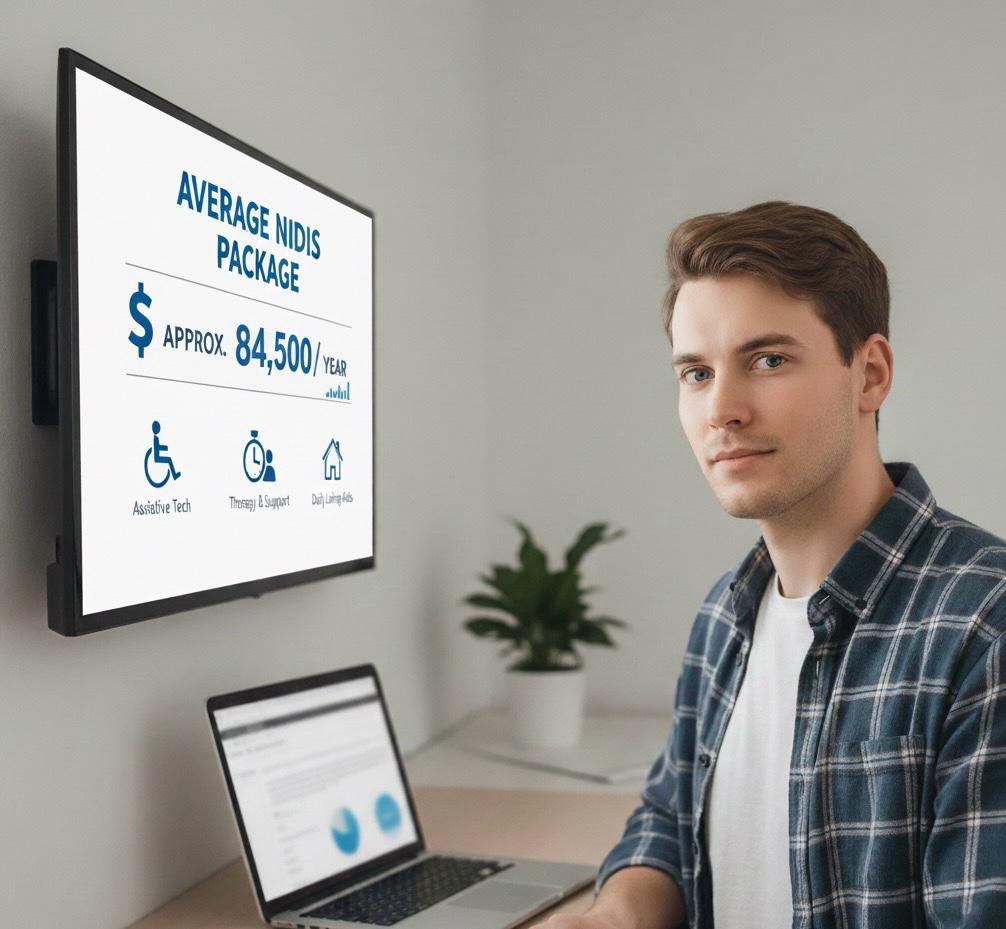
Average funding for NDIS participants: statistically, how much do people usually get per year? Written by: Therapy Near Me Editorial Team Clinically reviewed by: qualified members of the Therapy Near Me clinical team Last updated: 12/12/2025 This article is intended as general information only and does not replace personalised medical or mental health advice. Learn more about our Editorial Policy. Quick summary What the terms mean (so the numbers make sense) The latest national averages (September 2025) Using the NDIA’s National Quarterly Performance Dashboard and the official Quarterly Report appendices: Note: the mean is not the median. Because SIL packages are much larger, the overall mean is higher than what a typical non‑SIL participant experiences (PC, 2025). How this compares with earlier periods Why some people receive far more (or less) than the average 1) Supported Independent Living (SIL). Packages with SIL are an order of magnitude higher than non‑SIL packages due to 24/7 supports, shared living costs, and staffing ratios (PC, 2025).2) Primary disability and functional impact. High personal‑care needs, complex behaviours, or communication supports increase budgets in Core: Daily Activities and Capacity Building: Daily Activities (NDIA, 2025a).3) Age cohort. Children typically have lower average payments than adults because their supports are concentrated in therapy and capacity‑building rather than daily personal care (NDIA, 2023).4) Geography and market access. Remote and very remote districts show lower utilisation due to service availability and travel constraints (ANAO, 2024).5) Plan management and provider pricing. Price limits and the structure of support categories affect how much of a budget is practically usable (ANAO, 2024). Inside a typical plan (categories and proportions) At a national level (September 2025), the largest shares of plan budgets sit in Core – Daily Activities and Core – Social and Civic Participation, followed by Capacity Building – Daily Activities. Capital items (Assistive Technology, Home Modifications) appear less frequently but create large spikes when present (NDIA, 2025b). Interpreting your plan against the averages What might change next Planning settings are in flux. The government has signalled a move to more standardised, tool‑driven assessments to improve consistency across plans, alongside work on market stewardship and foundational supports outside the Scheme (NDIA, 2025e; NDIS Review, 2023). If implemented, cohort averages may shift, and budget dispersion (the spread between high and low packages) could change. Frequently asked questions Is “average” the amount most people get?No. Because of skew, the typical non‑SIL participant sits nearer the non‑SIL mean and likely below the overall mean. Why is my utilisation low?Common reasons: provider shortages, travel/time barriers, health interruptions, and supports budgeted but not yet set up (for example, AT). Using plan management efficiently and setting up regular bookings can increase utilisation. Does a higher budget guarantee better outcomes?Evidence suggests outcomes depend on the fit between funded supports and needs, and on whether supports are actually delivered—not just on budget size. References ANAO (Australian National Audit Office) (2024) Effectiveness of the NDIA’s management of Assistance with Daily Life supports. Canberra: ANAO. NDIA (National Disability Insurance Agency) (2023) Annual Financial Sustainability Report 2021–22 summary. Canberra: NDIA. NDIA (2025a) National Quarterly Performance Dashboard — 30 September 2025. Canberra: NDIA. NDIA (2025b) NDIS Quarterly Report to disability ministers — 30 September 2025, Appendices. Canberra: NDIA. NDIA (2025c) National Dashboard — 30 June 2025. Canberra: NDIA. NDIA (2025d) Annual Financial Sustainability Report (AFSR) 2023–24 summary and updates. Canberra: NDIA. NDIA (2025e) NDIS Quarterly Report published — March 2025 (media update). Canberra: NDIA. NDIS Review (2023) NDIS Review: Costs, benefits and frameworks (Taylor Fry & CIE report). Canberra: Department of the Prime Minister and Cabinet. PC (Productivity Commission) (2025) Report on Government Services 2025 — Services for people with disability. Canberra: PC. How to cite this article Therapy Near Me (2025) ‘Average funding for NDIS participants: statistically, how much do people usually get per year?’. Available at: TherapyNearMe.com.au (Accessed 9 December 2025).

Average funding for NDIS participants: statistically, how much do people usually get per year? Read More »

How to spot a scam a psychologist’s advice

How to spot a scam: a psychologist’s advice

How to spot a scam: a psychologist’s advice Written by: Therapy Near Me Editorial Team Clinically reviewed by: qualified members of the Therapy Near Me clinical team Last updated: 11/12/2025 This article is intended as general information only and does not replace personalised medical or mental health advice. Learn more about our Editorial Policy. General information only. If you or someone else is in life‑threatening danger, call 000. For non‑emergency cybercrime, report at ReportCyber (ACSC) and Scamwatch. Support for identity and scam harm: IDCARE. Why we fall for scams: the human factors Scams succeed not because victims are foolish, but because offenders exploit predictable features of human decision‑making. Under time pressure, uncertainty, and emotion, we rely on fast, intuitive shortcuts (“System 1”) rather than slow, analytic reasoning (“System 2”) (Tversky and Kahneman, 1974; Kahneman, 2011). Offenders pair this with persuasive levers—authority, scarcity, social proof, reciprocity, liking, and commitment/consistency—to nudge compliant responses (Cialdini, 2001). Threat‑based messages that heighten fear and urgency further narrow attention; unless accompanied by clear, doable actions, fear appeals tip people into maladaptive responses (Witte, 1992). Key cognitive traps include loss aversion (over‑weighting potential losses), anchoring (first numbers set a frame), and the sunk cost effect (continuing because of what we already invested) (Tversky and Kahneman, 1974; Arkes and Blumer, 1985). Scammers sequence these tactics—for instance: a small, harmless ask (foot‑in‑the‑door) that later escalates to a large transfer (Freedman and Fraser, 1966). The current landscape in Australia The National Anti‑Scam Centre reports that scam losses remain substantial despite falling report volumes, with sustained offender activity across investment, phishing, and remote‑access categories (ACCC/NASC, 2025). The Australian Signals Directorate’s ACSC notes high rates of cyber incidents impacting individuals and small organisations and urges prompt reporting to strengthen national threat intelligence (ASD/ACSC, 2025). Australia has introduced a Scams Prevention Framework and strengthened SMS sender ID controls to disrupt impersonation scams, but vigilance at the individual level remains critical (ACCC/NASC, 2025). The scammer’s playbook: signals to recognise early Below are cross‑channel red flags distilled from psychological research and cyber‑security evidence. 1) Artificial urgency and fear 2) Authority and legitimacy theatre 3) Scarcity, prizes and “exclusive” offers 4) Pre‑texting and social grooming 5) Romance‑style grooming 6) Deepfakes and synthetic identities 7) Phishing across email, SMS and social apps A five‑minute Scam Spot checklist Use this short, repeatable process before you click, pay, or share sensitive information: Psychological tools to resist manipulation If you think you have been scammed: what to do next in Australia Helping someone you care about Victims often experience shame, grief and isolation, which can inhibit reporting and help‑seeking (Whitty, 2016; Cross, 2016). Use non‑judgemental language, focus on safety and practical steps, and encourage specialist support (IDCARE; victim support services). Avoid blaming—offenders are skilled manipulators who exploit universal human tendencies. For clinicians: brief intervention pathway (one session to four sessions) Limitations and nuance Most evidence on scam susceptibility is observational or experimental in simulated settings. Real‑world behaviour varies with context, culture and offender adaptation. Nevertheless, converging findings across psychology and cyber‑security point to the same protective pattern: slow down, verify independently, and use social support. References ACCC/NASC (2025) Targeting scams: report of the National Anti‑Scam Centre on scams data and activity 2024. Canberra: Australian Competition and Consumer Commission. Available at: Scamwatch.gov.au (Accessed 9 December 2025). ASD/ACSC (2025) Annual Cyber Threat Report 2024–25. Canberra: Australian Signals Directorate, Australian Cyber Security Centre. Available at: cyber.gov.au (Accessed 9 December 2025). Arkes, H.R. and Blumer, C. (1985) ‘The psychology of sunk cost’, Organizational Behavior and Human Decision Processes, 35(1), pp. 124–140. Cialdini, R.B. (2001) Influence: Science and practice. 4th edn. Boston: Allyn & Bacon. Cross, C. (2016) Improving responses to online fraud victims: An examination of reporting and support. Canberra: Australian Institute of Criminology. Drew, J.M., Petnelis, R. and Birtchnell, T. (2024) ‘The victimology of online fraud: A focus on romance fraud’, Journal of Policy & Practice in Cybersecurity, 2(1), pp. 1–18. Freedman, J.L. and Fraser, S.C. (1966) ‘Compliance without pressure: the foot‑in‑the‑door technique’, Journal of Personality and Social Psychology, 4(2), pp. 195–202. IDCARE (2025) ‘Individual support services’. Available at: idcare.org (Accessed 9 December 2025). Kahneman, D. (2011) Thinking, fast and slow. London: Penguin. Lieberman, M.D., Eisenberger, N.I., Crockett, M.J., Tom, S.M., Pfeifer, J.H. and Way, B.M. (2007) ‘Putting feelings into words: affect labelling disrupts amygdala activity in response to affective stimuli’, Psychological Science, 18(5), pp. 421–428. McGuire, W.J. (1961) ‘The effectiveness of supportive and refutational defenses in immunizing defenses’, Sociometry, 24(2), pp. 184–197. Naqvi, B., Syed, W.S., Agrawal, A. and Rauf, S. (2023) ‘Mitigation strategies against phishing attacks: a systematic literature review’, Computers & Security, 128, 103123. Nightingale, S.J. and Farid, H. (2022) ‘AI‑synthesised faces are indistinguishable from real faces and more trustworthy’, Proceedings of the National Academy of Sciences, 119(8), e2120481119. Parsons, K., McCormac, A., Pattinson, M., Butavicius, M. and Jerram, C. (2017) ‘The Human Aspects of Information Security Questionnaire (HAIS‑Q): Two further validation studies’, Computers & Security, 66, pp. 40–51. Roozenbeek, J., van der Linden, S. and Nygren, T. (2020) ‘Prebunking interventions based on inoculation theory can reduce susceptibility to misinformation’, Harvard Kennedy School Misinformation Review, 1(1), pp. 1–12. Tversky, A. and Kahneman, D. (1974) ‘Judgment under uncertainty: heuristics and biases’, Science, 185(4157), pp. 1124–1131. Whitty, M.T. (2016) ‘The online dating romance scam: The psychological impact on victims – both financial and non‑financial’, Criminology & Criminal Justice, 16(2), pp. 176–194. Witte, K. (1992) ‘Putting the fear back into fear appeals: the Extended Parallel Process Model (EPPM)’, Communication Monographs, 59(4), pp. 329–349. Workman, M. (2008) ‘Wisecrackers: a theory‑grounded investigation of phishing and pretext social engineering threats to information security’, Journal of the American Society for Information Science and Technology, 59(4), pp. 662–674. Wright, R.T. and Marett, K. (2010) ‘The influence of experiential and dispositional factors in phishing: an empirical investigation of the deceived’, Journal of Management Information Systems, 27(1), pp. 273–303. How to cite this article Therapy Near Me (2025) ‘How to spot a scam: a psychologist’s advice’. Available at: TherapyNearMe.com.au (Accessed 9 December 2025). If you have been impacted by a scam, support is available: IDCARE 1800 595 160; Lifeline 13 11 14 (24/7). For urgent threats, call 000.

How to spot a scam: a psychologist’s advice Read More »

wpChatIcon

Book An Appointment