
Social Media Brain Rot
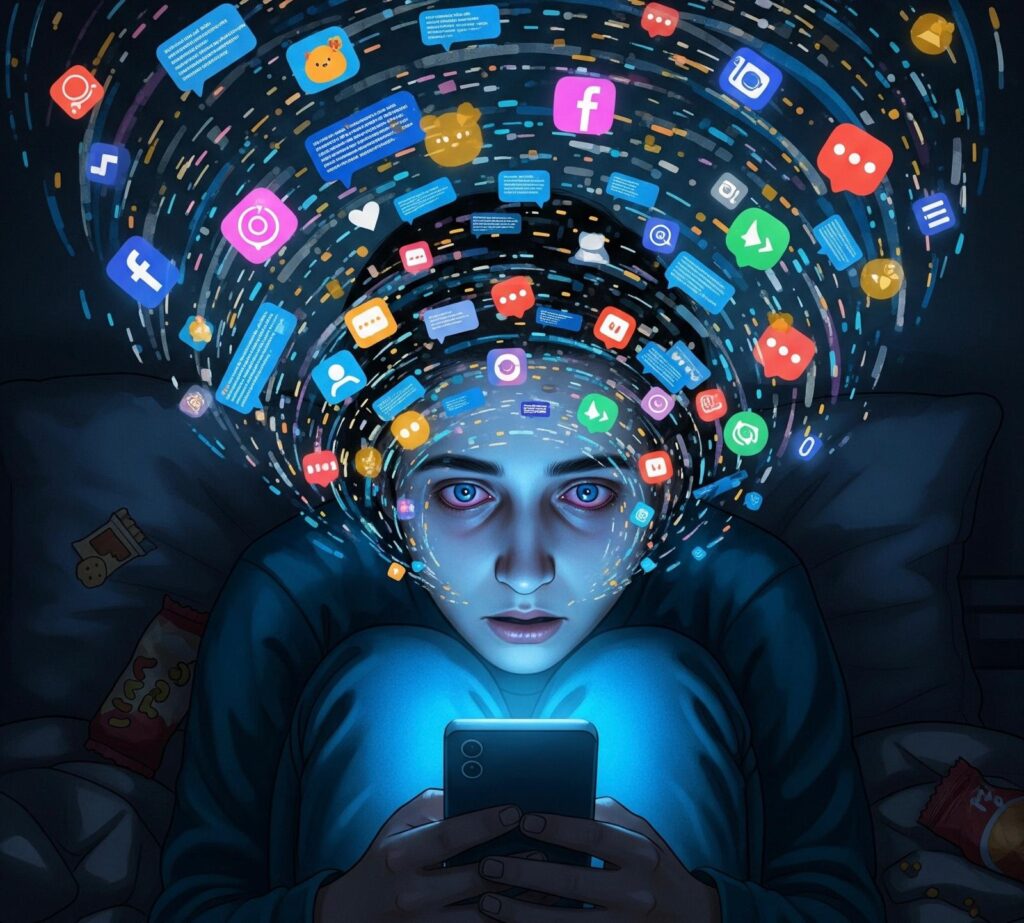
Written by: Therapy Near Me Editorial Team Clinically reviewed by: qualified members of the Therapy Near Me clinical team Last updated: 09/08/2025 This article is intended as general information only and does not replace personalised medical or mental health advice. Learn more about our Editorial Policy. The term brain rot—Oxford University Press’s Word of the Year for 2024—captures the growing concern that endless scrolling and passive media consumption may be eroding cognitive health and mental wellbeing. What Is Brain Rot? Brain rot refers to the perceived deterioration of mental acuity, attention, and emotional resilience from persistent engagement with trivial, low-stimulation content on social media (PsyPost, 2025) . Though not a clinical term, it’s widely used in public and clinical discourse to describe symptoms like mental fatigue, rumination, and loss of focus (CogniFit blog, 2025) . How Social Media Contributes to Cognitive Decline Who Is Most Affected? Why It Matters Brain health isn’t just an individual concern—it affects social engagement, educational success, and societal resilience (Al Husaini, 2025) . Strategies to Counteract Brain Rot Strategy Benefit Mindfulness & Focus Tasks Buffer against burnout and cognitive overload (Frontiers, 2025) Screen Time Boundaries Reduces compulsive use. Concept of digital detox has proven mental health benefits Engaging, Stimulating Media Creative or informative content maintains brain activation—unlike passive feeds Offline Activities Nature exposure, reading, hobbies support emotional refreshment and attention recalibration Keywords social media brain rot, effects of social media on cognition, reduce brain rot strategies, digital detox benefits, social media cognitive decline, attention loss social media, combating brain rot, smartphone overuse mental health, social media mental fatigue, cognitive health screen time References PsyPost (2025) Brain rot and the crisis of deep thought in the age of social media. CogniFit (2025) ‘Is “Brain Rot” Real? The Science Behind Mental Fatigue and Digital Health Trends’. Swinburne University Study (2025) ‘Here’s what happens to your brain after just 3 minutes of social media’. Scientific Reports. Oxford University Press (2024) Word of the Year: brain rot. Al Husaini, M. (2025) ‘Brain Rot and National Resilience: Digital Threats to Human Resource Quality’. JMRI. Schmitz, F. & Krämer, R.J. (2023) ‘Continuous Partial Attention: Effect on Working Memory and Creativity’. Journal of Intelligence. Chiossi, F. et al. (2023) ‘Short‑Form Videos Degrade Prospective Memory’. arXiv. BMC Psychiatry (2023) ‘Social media use and everyday cognitive failure’. BMC Psychiatry. BMC Public Health (2024) ‘Smartphone overuse and distraction’. BMC Public Health. Radtke, T. et al. (2022) ‘Digital Detox: An Effective Solution in the Smartphone Era?’. Mobile Media & Communication. UNSW (2024) ‘‘Brain rot’ more myth than menace’. UNSW Newsroom.
Social Media Brain Rot Read More »