Therapy Near Me

Author name: Therapy Near Me Editorial Team

Psychology-backed sensory-friendly diet for emotional regulation and mental health

Sensory Friendly Diet

Written by: Therapy Near Me Editorial Team Clinically reviewed by: qualified members of the Therapy Near Me clinical team Last updated: 19/12/2025 This article is intended as general information only and does not replace personalised medical or mental health advice. Learn more about our Editorial Policy. A sensory-friendly diet refers to a tailored approach to nutrition designed to accommodate individuals with sensory sensitivities, such as those seen in people with sensory processing disorder (SPD), autism spectrum disorder (ASD), or other sensory-related challenges. These individuals may experience heightened or reduced responses to sensory stimuli like taste, texture, smell, and the appearance of food. The goal of a sensory-friendly diet is to ensure balanced nutrition while taking these sensitivities into account, making mealtime a more positive experience for those who struggle with food aversions or cravings related to sensory processing issues. Keywords: sensory-friendly diet, sensory processing issues, autism food sensitivities, managing food aversions, sensory issues, nutrition Understanding Sensory Processing and Food Sensitivities For individuals with sensory issues, food-related challenges often revolve around texture, flavour, temperature, or appearance. These sensitivities can cause distress, limiting food choices and leading to restricted diets, which can increase the risk of nutritional deficiencies (Cermak et al., 2010). Common Sensory-Related Food Preferences: Texture Sensitivity: Some individuals may avoid certain textures like mushy, slimy, or crunchy foods. For example, a child might refuse mashed potatoes but accept crackers. Flavour Sensitivity: Strong flavours, such as spicy or sour foods, might be overwhelming, while others may crave intense flavours. Temperature Sensitivity: Individuals may prefer either extremely hot or cold foods, avoiding those that fall between these extremes. Visual Sensitivity: Food appearance can be a significant factor, with some individuals rejecting foods based on colour, size, or shape. Strategies for Creating a Sensory-Friendly Diet Offer a Variety of Textures A sensory-friendly diet should include a range of textures to accommodate preferences while ensuring balanced nutrition. For example, if an individual struggles with crunchy textures, try offering foods with a smoother consistency like purees or soft-cooked vegetables. Gradually introduce new textures in small amounts to help expand their palate (Bandini et al., 2010). Introduce New Foods Gradually Introducing new foods can be overwhelming for individuals with sensory sensitivities. To help with this, present new foods gradually and in familiar settings. Pair new foods with textures or flavours the individual already enjoys. This technique, known as food chaining, can encourage acceptance of new items by creating positive associations (Kuschner et al., 2015). Experiment with Flavours While many individuals with sensory issues avoid strong flavours, others may seek out intense tastes like sour, salty, or spicy. Catering to these flavour preferences can increase food acceptance. For example, offering mildly seasoned versions of commonly rejected foods can help expand variety. In addition, using flavour enhancers like herbs and spices may help make food more appealing for those who prefer stronger tastes (Nadon et al., 2011). Temperature Modifications Some individuals with sensory sensitivities prefer foods served at specific temperatures. For those who struggle with temperature, offering choices such as chilled fruits, warm soups, or room-temperature snacks can help ensure that meals remain appealing. Smooth and Consistent Presentation Visual sensitivity to food can also be an issue, particularly with children. Offering food in a visually appealing and consistent way can reduce anxiety around new meals. Cutting food into familiar shapes or arranging it on the plate in an organised manner can make a difference. Use Sensory Breaks During Meals Sensory overload during mealtime can increase aversion. Allowing sensory breaks—short intervals where the individual steps away from the table to engage in calming activities—can help reduce stress and improve overall food intake. Nutritional Considerations Restricted diets due to sensory issues can lead to nutritional deficiencies if certain food groups are consistently avoided. It’s essential to ensure the diet remains balanced. Some considerations include: Ensure Proper Macronutrient Intake: Sensory-sensitive individuals may reject protein-rich foods like meat or eggs due to texture or taste. In such cases, explore alternative protein sources such as smoothies with added protein powder or dairy products like yogurt. Incorporate Healthy Fats: Some textures associated with fat-rich foods may be challenging. However, nut butters, avocados, and smooth, creamy dairy products can provide essential healthy fats. Supplementation: In cases of extreme food aversion, supplementation with vitamins and minerals may be necessary to address deficiencies. Consulting with a dietitian can help create an optimal plan. Creating a Supportive Mealtime Environment In addition to modifying the diet, creating a sensory-friendly mealtime environment can reduce stress and increase acceptance of food: Minimise sensory distractions: Reduce background noise, bright lights, or other distractions that may overwhelm the individual. Introduce predictable routines: Having a consistent mealtime schedule can help reduce anxiety and foster a positive association with eating. Offer choices: Allowing the individual to choose from a limited selection of foods can give them a sense of control, which may reduce anxiety and increase their willingness to try new foods. Conclusion A sensory-friendly diet is designed to meet the unique needs of individuals with sensory processing issues, focusing on offering a variety of food choices that accommodate texture, flavour, and appearance sensitivities. By understanding the underlying causes of food aversions, introducing new foods gradually, and creating a supportive mealtime environment, parents, caregivers, and professionals can help ensure balanced nutrition while reducing mealtime stress. Sensory Friendly Recipes Here are some sensory-friendly recipe ideas that can help accommodate texture, flavour, and visual preferences, while providing balanced nutrition: 1. Smoothie Bowls Smoothie bowls are a great way to pack in fruits and vegetables in a texture-friendly form. They offer a smooth consistency and can be customised with different flavours and nutrient-dense ingredients. Base: Blend frozen bananas, berries, and spinach with almond milk or yogurt. Toppings: Add smooth toppings like nut butter or crunchy options like granola depending on the individual’s texture preferences. 2. Mashed Sweet Potatoes For individuals who prefer soft textures, mashed sweet potatoes are a nutritious and easy-to-prepare option. They can be sweetened slightly or seasoned with mild spices. Ingredients: Sweet potatoes, butter

Sensory Friendly Diet Read More »

Delve into Behavior Therapy: Strategies for Positive Change

Understanding Behaviour Therapy

Written by: Therapy Near Me Editorial Team Clinically reviewed by: qualified members of the Therapy Near Me clinical team Last updated: 07/08/2025 This article is intended as general information only and does not replace personalised medical or mental health advice. Learn more about our Editorial Policy. Behaviour therapy is a broad term used to describe a range of therapeutic techniques and interventions that focus on c hanging maladaptive behaviours. Rooted in the principles of behaviourism, which emphasises the role of learning in developing both normal and abnormal behaviours, behaviour therapy has been widely used to treat a variety of psychological conditions, including anxiety, depression, phobias, and more. This article provides an in-depth look at the principles, techniques, and effectiveness of behaviour therapy, supported by scientific research. The Principles of Behaviour Therapy Behaviour therapy is based on the idea that all behaviours, both adaptive and maladaptive, are learned through interactions with the environment. This perspective was first articulated by behaviourists like John B. Watson and B.F. Skinner, who argued that behaviours are shaped by reinforcement and punishment (Skinner, 1953). The goal of behaviour therapy is to replace maladaptive behaviours with more adaptive ones by applying the principles of classical and operant conditioning. Classical Conditioning: Classical conditioning involves learning through association. Ivan Pavlov’s experiments with dogs, where a neutral stimulus (e.g., a bell) became associated with a significant stimulus (e.g., food) to produce a conditioned response (e.g., salivation), laid the foundation for this approach. In behaviour therapy, classical conditioning techniques are used to help individuals unlearn harmful associations (Pavlov, 1927). Operant Conditioning: Operant conditioning, developed by B.F. Skinner, involves learning through the consequences of behaviour. Behaviours followed by positive outcomes (reinforcements) are likely to be repeated, while those followed by negative outcomes (punishments) are less likely to recur. Behaviour therapists use reinforcement strategies to encourage desirable behaviours and discourage maladaptive ones (Skinner, 1953). Techniques of Behaviour Therapy Behaviour therapy employs a variety of techniques to address different psychological issues. Some of the most commonly used techniques include: Exposure Therapy: Exposure therapy is a technique used to treat anxiety disorders, particularly phobias and PTSD. It involves gradually exposing the individual to the feared object or situation in a controlled environment, helping them to confront and reduce their fear over time. Research has shown that exposure therapy is highly effective in reducing symptoms of anxiety and phobias (Foa et al., 2007). Systematic Desensitisation: Systematic desensitisation combines relaxation techniques with gradual exposure to anxiety-provoking stimuli. It is often used to treat phobias by pairing relaxation with exposure, which helps reduce the anxiety response. This technique was developed by Joseph Wolpe and has been widely supported by empirical research (Wolpe, 1958). Behavioural Activation: Behavioural activation is commonly used to treat depression. It involves encouraging individuals to engage in activities that they find rewarding, helping to counteract the withdrawal and inactivity that often accompany depression. Studies have demonstrated the effectiveness of behavioural activation in improving mood and increasing engagement in meaningful activities (Martell, Dimidjian, & Herman-Dunn, 2010). Contingency Management: Contingency management involves modifying behaviour by changing the consequences associated with it. This technique is often used in substance abuse treatment, where positive reinforcement (e.g., rewards) is given for abstaining from drug use. Contingency management has been shown to be effective in promoting abstinence and reducing substance use (Higgins et al., 1994). Cognitive-Behavioural Techniques: While behaviour therapy originally focused solely on observable behaviours, it has since evolved to include cognitive techniques, leading to the development of Cognitive Behavioural Therapy (CBT). CBT combines behavioural strategies with cognitive restructuring to address both the thoughts and behaviours that contribute to psychological distress (Beck, 2011). Effectiveness of Behaviour Therapy Behaviour therapy is supported by a robust body of scientific evidence demonstrating its effectiveness in treating a wide range of psychological conditions. For example, exposure therapy is considered the gold standard treatment for PTSD and specific phobias, with numerous studies validating its efficacy (Powers et al., 2010). Similarly, behavioural activation has been shown to be as effective as antidepressant medication in treating depression (Dimidjian et al., 2006). Meta-analyses of behaviour therapy interventions have consistently shown large effect sizes, indicating that these techniques are highly effective in reducing symptoms and improving functioning (Hofmann et al., 2012). Behaviour therapy is also favoured for its structured, goal-oriented approach, which allows for clear measurement of progress and outcomes. Conclusion Behaviour therapy remains one of the most effective and widely used approaches in the treatment of psychological disorders. By focusing on changing maladaptive behaviours through evidence-based techniques, behaviour therapy offers a powerful tool for helping individuals achieve better mental health. As research continues to evolve, behaviour therapy will likely remain a cornerstone of psychological treatment, with ongoing adaptations and innovations enhancing its efficacy. References Beck, J. S. (2011). Cognitive Behavior Therapy: Basics and Beyond. Guilford Press. Dimidjian, S., Hollon, S. D., Dobson, K. S., Schmaling, K. B., Kohlenberg, R. J., Addis, M. E., … & Atkins, D. C. (2006). Randomized trial of behavioral activation, cognitive therapy, and antidepressant medication in the acute treatment of adults with major depression. Journal of Consulting and Clinical Psychology, 74(4), 658. Foa, E. B., Keane, T. M., Friedman, M. J., & Cohen, J. A. (Eds.). (2007). Effective Treatments for PTSD: Practice Guidelines from the International Society for Traumatic Stress Studies. Guilford Press. Higgins, S. T., Silverman, K., & Heil, S. H. (Eds.). (2008). Contingency Management in Substance Abuse Treatment. Guilford Press. Hofmann, S. G., Asnaani, A., Vonk, I. J., Sawyer, A. T., & Fang, A. (2012). The efficacy of cognitive behavioral therapy: A review of meta-analyses. Cognitive Therapy and Research, 36(5), 427-440. Martell, C. R., Dimidjian, S., & Herman-Dunn, R. (2010). Behavioral Activation for Depression: A Clinician’s Guide. Guilford Press. Pavlov, I. P. (1927). Conditioned Reflexes: An Investigation of the Physiological Activity of the Cerebral Cortex. Oxford University Press. Powers, M. B., Halpern, J. M., Ferenschak, M. P., Gillihan, S. J., & Foa, E. B. (2010). A meta-analytic review of prolonged exposure for posttraumatic stress disorder. Clinical Psychology Review, 30(6), 635-641. Skinner,

Understanding Behaviour Therapy Read More »

Psychology-driven path to self-worth and genuine connection by embracing inner beauty

Seeing Inner Beauty: A Path to True Connection and Self-Worth

Written by: Therapy Near Me Editorial Team Clinically reviewed by: qualified members of the Therapy Near Me clinical team Last updated: 15/10/2025 This article is intended as general information only and does not replace personalised medical or mental health advice. Learn more about our Editorial Policy. In a society that often prioritises physical appearance, the concept of inner beauty is a reminder of the deeper qualities that truly define a person. While outward appearance may capture attention, it is inner beauty—character, kindness, and integrity—that fosters genuine connections and a lasting sense of self-worth. This article explores the meaning of inner beauty, its psychological benefits, and how to cultivate it in both ourselves and others. Keywords: inner beauty, self-compassion, empathy, kindness, self-worth What Is Inner Beauty? Inner beauty refers to a person’s internal qualities—such as kindness, empathy, integrity, and a positive attitude—that make them attractive beyond their physical appearance. While physical beauty is often subjective and influenced by societal standards, inner beauty is universal and timeless, transcending age, appearance, or culture. Psychologists suggest that inner beauty is connected to emotional intelligence, which involves the ability to understand and manage one’s own emotions while empathising with others. Individuals with high emotional intelligence tend to have stronger relationships and greater overall well-being, as they prioritise authentic connections over superficial judgments (Goleman, 1995). The Psychological Benefits of Focusing on Inner Beauty Focusing on inner beauty, both in ourselves and others, offers a range of psychological and emotional benefits: 1. Self-Acceptance and Confidence By embracing inner beauty, individuals can cultivate a sense of self-worth that is independent of societal beauty standards. Research has shown that people who derive their self-esteem from internal qualities rather than external appearance tend to have higher levels of self-acceptance and confidence (Wood et al., 2008). This focus on inner qualities allows individuals to find value in their unique strengths, fostering a more resilient self-image. 2. Stronger Interpersonal Relationships Inner beauty is crucial for building deep, meaningful relationships. Studies show that traits such as kindness, empathy, and trustworthiness are highly valued in friendships and romantic relationships, often more so than physical attractiveness (Klohnen & Luo, 2003). When people prioritise inner beauty, they are better able to foster genuine connections based on mutual respect and emotional support. 3. Reduced Anxiety and Depression Focusing on physical appearance can lead to body image dissatisfaction, which is linked to increased rates of anxiety, depression, and low self-esteem (Grabe et al., 2008). In contrast, individuals who value inner beauty and self-compassion are more likely to experience positive mental health outcomes. They tend to focus on the things they can control, such as their character and actions, rather than the fluctuating standards of physical beauty. Cultivating Inner Beauty Inner beauty, like any quality, can be nurtured and developed through conscious effort and reflection. Here are some strategies to cultivate inner beauty: 1. Practice Self-Compassion Self-compassion involves treating yourself with the same kindness and understanding that you would offer to a close friend. It means recognising that mistakes and imperfections are part of the human experience. According to Dr. Kristin Neff, self-compassion enhances emotional resilience and reduces the negative effects of body image dissatisfaction (Neff, 2011). By being kind to yourself, you cultivate inner beauty and a sense of self-worth that is not dependent on external validation. 2. Develop Empathy Empathy is the ability to understand and share the feelings of others. Research shows that individuals who actively practice empathy not only foster deeper connections but also experience greater life satisfaction (Davis, 1996). By taking time to listen, validate others’ feelings, and support those around you, you enhance your inner beauty and contribute to a more compassionate world. 3. Focus on Personal Growth Inner beauty is not static; it can be developed through personal growth. Engaging in activities that challenge your intellect, values, and emotional capacity—such as reading, volunteering, or engaging in mindfulness practices—can help you grow as a person. Personal growth leads to increased self-awareness, which is a core component of inner beauty. 4. Acts of Kindness Kindness is one of the most universally recognised qualities of inner beauty. Research suggests that even small acts of kindness can enhance both the giver’s and the recipient’s well-being. A study by Lyubomirsky et al. (2005) found that individuals who engaged in regular acts of kindness experienced increased happiness and life satisfaction. By consciously practicing kindness, you can cultivate a beautiful character that positively impacts those around you. Inner Beauty in Others: Seeing Beyond the Surface In a world dominated by superficial judgments, learning to see inner beauty in others is a skill worth developing. Often, first impressions are based on physical appearance, but taking the time to get to know someone’s character can reveal the true essence of who they are. 1. Look for Actions, Not Appearances Instead of focusing on how someone looks, pay attention to their actions. Are they kind, considerate, and generous? Do they listen attentively or offer support when needed? These are the qualities that reveal a person’s inner beauty and contribute to meaningful relationships. 2. Challenge Stereotypes Societal standards of beauty can be limiting and exclusionary. Learning to challenge stereotypes about who is considered attractive can help you see the beauty in diversity. Celebrate the unique traits and personalities of those around you, and recognise that true beauty comes in many forms. 3. Value Depth in Relationships Seek relationships that are built on mutual respect, trust, and emotional connection. Valuing inner beauty in others means prioritising depth and substance over superficial attractions. These types of connections are more likely to be long-lasting and fulfilling. Conclusion Focusing on inner beauty allows individuals to cultivate a sense of self-worth that transcends physical appearance and societal standards. By developing traits such as empathy, kindness, and self-compassion, people can foster meaningful connections and build a life grounded in authentic relationships. Inner beauty not only benefits the individual but also contributes to a more compassionate and accepting society. References Davis, M. H. (1996). Empathy: A Social Psychological Approach.

Seeing Inner Beauty: A Path to True Connection and Self-Worth Read More »

The Psychology Behind Playing Victim: Unpacking the Implications

The Problem with People Wanting to Play Victim

Written by: Therapy Near Me Editorial Team Clinically reviewed by: qualified members of the Therapy Near Me clinical team Last updated: 08/08/2025 This article is intended as general information only and does not replace personalised medical or mental health advice. Learn more about our Editorial Policy. Playing the victim can be defined as adopting a mindset or behaviour where an individual positions themselves as consistently wronged or oppressed, even in situations where they hold some degree of agency or responsibility. This phenomenon can occur in personal, professional, or social contexts, and it can have detrimental effects on both the individual and the people around them. In psychological terms, it is often linked to maladaptive coping mechanisms and patterns of thinking that may perpetuate a cycle of blame, helplessness, and avoidance of accountability. Keywords: victim mentality, playing the victim, psychological impact of victimhood, breaking free from victim mindset Understanding Victim Mentality Victim mentality involves a pervasive sense of helplessness, constant blaming of others, and the belief that one’s life circumstances are a result of external forces beyond their control. This mindset may stem from past trauma or adverse experiences, but it becomes problematic when it interferes with personal growth and relationships. Individuals with a victim mentality often adopt cognitive distortions, such as “catastrophising” (expecting the worst outcomes) or “personalisation” (believing that negative events are targeted specifically at them) (Beck, 1976). The desire to “play the victim” can be a defence mechanism, shielding individuals from the discomfort of taking responsibility for their actions or addressing their problems directly. However, it can create a pattern of passive behaviour, fostering negative outcomes for both the individual and their relationships. Psychological Impacts of Victimhood Learned Helplessness: A critical psychological concept associated with victim mentality is learned helplessness, which occurs when individuals believe they have no control over their environment or the outcomes of their actions. This leads to a passive resignation, even when they do have the power to change their situation (Seligman, 1972). This mindset can exacerbate depression, anxiety, and other mental health conditions by reinforcing feelings of powerlessness. Impact on Relationships: Playing the victim can strain personal relationships, as it can lead to manipulative behaviours, such as guilt-tripping or emotional blackmail. The person may expect others to rescue them or cater to their needs, which can lead to frustration and resentment in those around them (McCullough et al., 2003). Cognitive Distortions: Cognitive distortions are faulty or irrational ways of thinking that contribute to a victim mentality. These distortions may include overgeneralisation (believing that one negative event reflects a universal pattern), emotional reasoning (equating emotions with reality), and all-or-nothing thinking (seeing situations in black-and-white terms). Such distortions can perpetuate feelings of injustice and increase feelings of isolation (Beck, 1976). Why Do People Play the Victim? Avoidance of Responsibility: One of the primary reasons people adopt a victim mentality is to avoid taking responsibility for their actions or circumstances. By attributing their problems to external factors, they can avoid confronting uncomfortable truths about themselves or their role in negative situations (Karpman, 1968). This avoidance can offer short-term relief from guilt or shame but can be detrimental to long-term personal growth. Attention and Sympathy: Victimhood can attract attention and sympathy from others, which may temporarily validate the individual’s feelings. However, this can create a dependency on external validation, reinforcing the need to remain in a victim role to receive care or concern. This can become manipulative, leading to emotional exhaustion for those around them. Past Trauma and Conditioning: People who have experienced trauma, particularly in childhood, may adopt a victim mentality as a way to cope with unresolved pain. Repeated experiences of being victimised may condition them to see themselves as powerless, even in situations where they have more control (Janoff-Bulman, 1992). While trauma is a valid and significant factor, it is essential to address it through therapy or self-reflection rather than allowing it to perpetuate a victim role. Societal Impacts of Victim Culture Victimhood is not just an individual problem; it can also be seen on a broader societal level, where certain groups or individuals position themselves as consistently wronged to garner sympathy, validation, or avoid accountability. This “victim culture” can lead to the erosion of personal responsibility and foster division between groups. Entitlement and Grievance Narratives: Some individuals or groups may use their perceived victimhood to justify feelings of entitlement or resentment toward others. This can manifest in the form of grievance narratives, where individuals focus on their perceived injustices to gain power or influence in social or political contexts (Campbell & Manning, 2014). Moral Licensing: Playing the victim can also create a phenomenon known as moral licensing, where individuals feel justified in behaving in negative ways because they believe they have been wronged (Merritt et al., 2010). For example, a person who sees themselves as a victim may feel entitled to act aggressively, manipulate others, or shirk responsibilities because they believe their suffering warrants special treatment. How to Break Free from Victim Mentality Breaking free from the victim mindset requires self-awareness, personal accountability, and a willingness to take action to change one’s circumstances. Here are some evidence-based approaches: Cognitive Behavioural Therapy (CBT): CBT is one of the most effective treatments for individuals with a victim mentality. It helps individuals identify and challenge cognitive distortions, replace negative thought patterns, and develop healthier coping mechanisms (Beck, 1976). Practicing Gratitude: Shifting focus from what’s wrong to what’s going well can help break the cycle of victimhood. Gratitude practices, such as journaling or mindfulness, have been shown to improve mental health and increase feelings of agency and positivity (Emmons & McCullough, 2003). Taking Responsibility: Recognising one’s role in situations and taking responsibility for actions is crucial. This doesn’t mean denying past trauma or experiences of being wronged, but rather reclaiming the power to affect one’s present and future. Personal empowerment stems from acknowledging what can be controlled and actively working towards solutions (Seligman, 1972). Seeking Professional Help: For individuals who have experienced significant trauma or difficulty

The Problem with People Wanting to Play Victim Read More »

Lucy Letby: Inside the Mind of Serial Killer Nurse

Written by: Therapy Near Me Editorial Team Clinically reviewed by: qualified members of the Therapy Near Me clinical team Last updated: 19/06/2025 This article is intended as general information only and does not replace personalised medical or mental health advice. Learn more about our Editorial Policy. Lucy Letby, a former neonatal nurse, was convicted of murdering seven infants and attempting to murder six others between 2015 and 2016. Her case has shocked the public, not just for the brutality of her actions, but for the contradictions in her character—someone seemingly compassionate working in a caregiving profession, who secretly caused immense harm. Understanding the psychology behind Letby’s actions raises important questions about motive, personality, and the psychological traits that allowed her to engage in such heinous crimes. Motive and Psychological Profile The precise motives behind Letby’s actions remain speculative, but several psychological theories and behaviours emerged during her trial that can offer insights. One theory presented was that Letby acted out of a desire for attention and control. Some psychologists suggest that her repeated searches for the families of her victims on social media and her efforts to maintain contact with them after their infants’ deaths may indicate a need for validation and power over the emotional lives of others (Independent, 2023). She was described as “playing God,” seemingly deriving satisfaction from controlling life and death in her work environment​. Moreover, prosecutors suggested that Letby may have been motivated by an infatuation with a doctor in her unit, seeking his sympathy and attention by causing these tragic events. This type of “hero complex,” where an individual harms others to create a situation where they are needed or can gain recognition, has been observed in other healthcare-related serial killers​. The Hospital’s Initial Response The hospital’s initial response to the concerns surrounding Lucy Letby’s behaviour was characterised by delays, inaction, and reluctance to escalate the issue. Several key actions (or lack thereof) are now viewed as contributing to the length of time Letby was able to continue harming infants without detection. 1. Dismissing Early Warnings The first signs of something unusual came in 2015, when a group of senior doctors noticed a spike in neonatal deaths and collapses at the Countess of Chester Hospital. Consultant Dr. Stephen Brearey and other colleagues raised concerns about Letby after noticing that she was present for each of these incidents. However, when the doctors reported their suspicions to hospital management, their concerns were dismissed as coincidence. The hospital’s leadership at the time was hesitant to act, possibly out of fear of reputational damage or legal implications (BBC News, 2023). Despite the increasing number of incidents, management viewed the deaths as medical anomalies and blamed issues such as staffing shortages and technical failures in the neonatal unit, rather than launching an in-depth investigation into Letby’s role (The Guardian, 2023). 2. Reassignment Instead of Investigation In 2016, as the incidents continued to occur, hospital leadership finally reassigned Letby from her direct duties in the neonatal unit to an administrative role. However, this action was framed as an effort to protect her from stress and the demands of the unit, not as an acknowledgment of her potential involvement in the deaths. Despite the reassignment, she remained part of the hospital’s staff and retained access to sensitive areas (The Independent, 2023). This internal decision delayed any meaningful investigation and allowed Letby to remain employed, despite serious concerns from her colleagues. 3. Refusal to Involve Police One of the most critical failures in the hospital’s initial response was its refusal to contact the police, even after multiple requests from senior medical staff. By 2016, several doctors, including Dr. Brearey, urged hospital executives to escalate the investigation to law enforcement. Despite these repeated requests, hospital management opted for internal reviews, citing insufficient evidence and suggesting that the deaths were due to systemic issues rather than intentional harm (BBC News, 2023). It wasn’t until 2017, when the concerns became too great to ignore, that the hospital involved the police. This delay allowed Letby to continue working for an extended period while avoiding formal scrutiny. 4. Apology to Letby A particularly controversial moment in the hospital’s response was their decision to apologise to Letby. After she was removed from her clinical duties, Letby filed a formal grievance against the hospital, claiming that the doctors who raised concerns were unjustly targeting her. The hospital’s leadership upheld her grievance, ordering the consultants to apologise to her. This decision is seen as a key moment when the hospital failed to act appropriately and protect patients from further harm (The Guardian, 2023). The Role of Personality Traits Letby displayed traits often associated with the “Dark Triad” of personality traits: Machiavellianism, narcissism, and psychopathy. These traits can combine to form a dangerous psychological profile that enables individuals to manipulate and harm others without remorse (Paulhus & Williams, 2002). Psychopathy is characterised by a lack of empathy and emotional detachment, both of which could explain her ability to carry out such acts while maintaining a seemingly normal external facade. Meanwhile, her narcissistic tendencies might explain her desire for attention and recognition, whether from colleagues or her infatuation with the doctor​. Psychologically, healthcare killers like Letby often display a sense of entitlement and superiority over life-and-death situations. Her case shares parallels with other medical serial killers, such as Harold Shipman and Beverley Allitt, both of whom killed under the guise of providing care (Wilson, 2023). Their ability to operate for extended periods without detection often results from trust placed in healthcare workers and a lack of early investigation The Need for Power and Control Another potential explanation for Letby’s actions is her desire to feel in control. In cases of healthcare-related serial killings, the perpetrators often feel a sense of empowerment by deciding who lives or dies, viewing themselves as possessing a god-like ability to manipulate outcomes (Vaughn & DeLisi, 2018). During her trial, it was revealed that Letby was “bored” with less critical cases and would seek out opportunities to

Lucy Letby: Inside the Mind of Serial Killer Nurse Read More »

Slut-Shaming: Understanding Its Impact and How to Combat It

Written by: Therapy Near Me Editorial Team Clinically reviewed by: qualified members of the Therapy Near Me clinical team Last updated: 28/07/2025 This article is intended as general information only and does not replace personalised medical or mental health advice. Learn more about our Editorial Policy. Slut-shaming is a form of social and sexual stigma in which individuals, particularly women, are denigrated or humiliated for their perceived or actual sexual behaviour, dress, or appearance. The term itself refers to the act of criticising someone for actions or attributes that are linked to their sexual expression, often implying that they have violated societal standards of sexual propriety. This article explores the origins, impacts, and ways to address slut-shaming, using scientific sources to highlight the widespread harm it causes, especially to women and marginalised groups. Keywords: slut-shaming, cyberbullying, sexual autonomy, feminism, gender norms What Is Slut-Shaming? Slut-shaming is rooted in patriarchal structures that regulate and control women’s sexuality, often applying double standards. Men are often praised or viewed positively for expressing their sexuality, while women who exhibit similar behaviour are labelled derogatorily. This concept has been discussed extensively in feminist literature and sociological studies (Ringrose & Renold, 2012). Slut-shaming can occur in various forms, such as: Criticising a woman’s choice of clothing (e.g., short skirts or revealing outfits). Shaming someone for having consensual sexual relationships. Judging individuals based on rumours or assumptions about their sexual activity. Degrading someone for sharing intimate content, often without their consent, through phenomena like revenge porn. The roots of slut-shaming are complex, drawing on traditional gender norms and moral standards about women’s bodies and sexualities. These cultural standards reinforce the idea that a woman’s value is tied to her sexual modesty (Armstrong, Hamilton, & Sweeney, 2006). The Psychological and Social Impact of Slut-Shaming Slut-shaming can have profound psychological and social impacts on individuals, especially young women. Studies have shown that experiences of slut-shaming can lead to: Anxiety and Depression: Research indicates that women who experience slut-shaming are at a higher risk for mental health issues such as anxiety and depression. The internalisation of negative societal judgments can damage self-esteem and body image (Parker et al., 2018). Shame and Guilt: Victims of slut-shaming often internalise the negative judgments, experiencing feelings of shame and guilt about their bodies or sexuality (Ringrose et al., 2013). This can result in long-term emotional distress. Social Isolation: Those who are publicly shamed for their sexual behaviour may experience social isolation, bullying, or exclusion from peer groups. This is particularly prevalent in adolescent settings such as high schools and universities (Armstrong et al., 2014). Reinforcement of Gender Inequality: Slut-shaming perpetuates harmful gender norms, where women are judged more harshly than men for engaging in sexual activity. This reinforces broader societal inequalities by controlling and restricting female sexual autonomy (Tolman, 2002). Slut-Shaming and Social Media The rise of social media has intensified the problem of slut-shaming. With platforms like Instagram, Twitter, and Facebook, the reach of harmful comments, judgments, and harassment has grown exponentially. Victims of slut-shaming on social media are often exposed to widespread public scrutiny and humiliation, which can escalate to cyberbullying. Research indicates that cyberbullying related to slut-shaming disproportionately targets women and LGBTQ+ individuals, leading to devastating mental health consequences (Boyle & Johnson, 2018). Addressing and Combating Slut-Shaming To combat slut-shaming, society needs to shift its cultural norms regarding sexuality, body autonomy, and respect. Here are several ways to address and reduce slut-shaming: 1. Education and Awareness Educating individuals about the harmful impacts of slut-shaming is key to shifting societal attitudes. Discussions on consent, sexual autonomy, and respect for personal choices should be part of school curriculums and community discussions. Promoting a better understanding of gender equality and dismantling the double standards around sexuality are critical steps. 2. Support Systems Victims of slut-shaming need accessible support systems, including mental health resources, supportive peers, and institutions that do not perpetuate victim-blaming. Empowering individuals to seek help and building environments that offer non-judgmental support are essential to preventing long-term psychological harm. 3. Challenging Double Standards Slut-shaming stems from the double standards society often places on men and women regarding sexual behaviour. Addressing these disparities involves promoting the idea that all individuals have the right to make decisions about their bodies and sexual behaviour without fear of judgment or social consequences. Feminist movements and campaigns, such as #MyBodyMyChoice, play a crucial role in challenging these ingrained norms (Valenti, 2007). 4. Social Media Regulation Social media platforms can take an active role in preventing online slut-shaming by enforcing stricter guidelines against harassment and shaming behaviours. Developing policies that protect users from cyberbullying and harmful content, including revenge porn, is crucial. Users should also be encouraged to report harmful behaviour and support those who are targeted. The Role of Feminism in Combating Slut-Shaming Feminist movements have long called for the rejection of slut-shaming and other forms of sexual policing. The “SlutWalk” movement, which began in 2011, is one example of feminist activism that directly challenges slut-shaming by reclaiming the word “slut” and advocating for the right of all individuals to express their sexuality without judgment. These movements help destigmatise women’s sexual autonomy and fight back against harmful societal norms (Germain, 2016). Conclusion Slut-shaming is a damaging societal behaviour that disproportionately affects women and LGBTQ+ individuals, reinforcing harmful gender norms and contributing to significant psychological harm. By understanding the impact of slut-shaming and taking steps to educate, support, and challenge harmful norms, society can move toward a more inclusive and respectful view of sexual autonomy. References Armstrong, E. A., Hamilton, L., & Sweeney, B. (2006). Sexual assault on campus: A multilevel, integrative approach to party rape. Social Problems, 53(4), 483-499. Boyle, K., & Johnson, H. (2018). Cyberbullying, slut-shaming, and victim-blaming: Sexual harassment in the digital age. Feminist Media Studies, 18(5), 890-906. Germain, T. (2016). SlutWalk and reclaiming the label: Empowerment or reinforcement of objectification? Sex Roles, 74(11), 528-537. Parker, R., Aggleton, P., & Jackson, H. (2018). Framing the sexual subject: The politics of identity, sexuality, and shame.

Slut-Shaming: Understanding Its Impact and How to Combat It Read More »

Exploring the Psychological Impact if Pokies Were Banned in Suburbs

Case Study: Banning Pokies in the Suburbs: Mental Health Outcomes

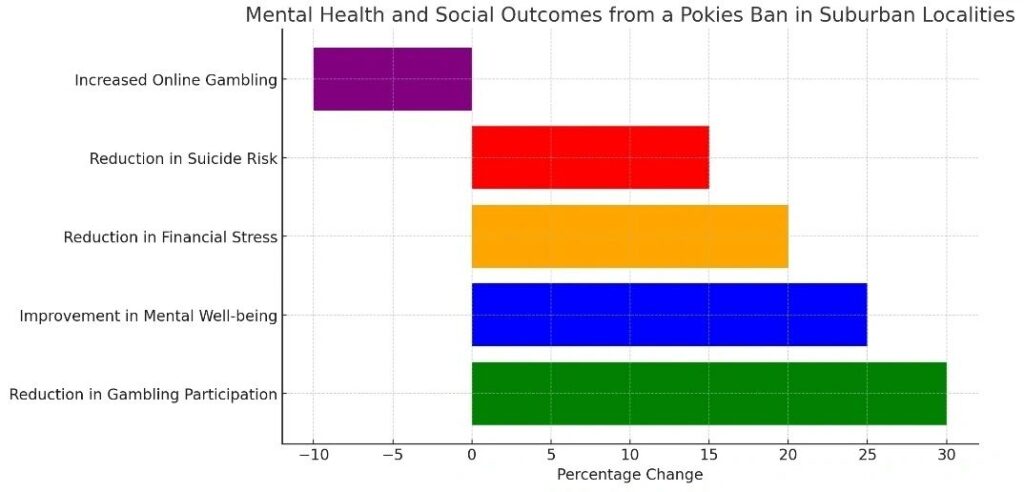
Written by: Therapy Near Me Editorial Team Clinically reviewed by: qualified members of the Therapy Near Me clinical team Last updated: 05/07/2025 This article is intended as general information only and does not replace personalised medical or mental health advice. Learn more about our Editorial Policy. Gambling, particularly through poker machines (commonly known as pokies), has been a significant public health concern in Australia for several decades. With the highest number of pokies per capita in the world, Australia faces unique challenges concerning gambling accessibility and its associated mental health risks. This article and statistical analysis examines the relationship between the widespread availability of pokies in Australian suburbs and its impact on mental health, including problem gambling, depression, anxiety, and suicidality. The graph above represents the estimated mental health and social outcomes from a hypothetical ban on pokies in suburban localities. The key findings include: Reduction in Gambling Participation: A 30% decrease in gambling participation is expected due to the reduced availability of pokies. Improvement in Mental Well-being: A 25% improvement in mental health outcomes is anticipated as fewer people engage in problem gambling. Reduction in Financial Stress: Financial stress would decrease by an estimated 20%, as individuals save money that would have otherwise been spent on gambling. Reduction in Suicide Risk: A 15% reduction in suicide risk is projected, particularly among problem gamblers, who have a significantly higher likelihood of suicide attempts. Increased Online Gambling: A 10% increase in online gambling is a potential unintended consequence, as individuals might shift to online platforms during a pokies ban. Keywords: gambling and mental health in Australia, pokies accessibility and mental health, problem gambling Australia, impact of pokies on mental health, suicide and gambling Prevalence of Pokies in Australia Australia is home to around 200,000 electronic gaming machines (EGMs), with over 180,000 of these located in pubs and clubs across every state and territory. New South Wales (NSW) alone accounts for approximately 50% of these machines (Productivity Commission, 2010). This widespread availability means that virtually every suburb in Australia has access to pokies, making gambling a highly accessible activity for many Australians. Key statistics: 80% of Australians engage in some form of gambling each year. Approximately 39% of Australian adults play pokies. There are 4.3 pokies per 1,000 Australians, one of the highest rates globally (Productivity Commission, 2010). Mental Health Impacts of Gambling Gambling addiction, or problem gambling, has well-documented links to various mental health issues. Problem gamblers are significantly more likely to experience mental health challenges compared to non-gamblers, with studies highlighting correlations between gambling and disorders such as depression, anxiety, and suicidality. According to a study by Browne et al. (2016): 55% of problem gamblers suffer from depression. 25% of problem gamblers have suicidal thoughts. Individuals experiencing problem gambling are twice as likely to report high levels of psychological distress. Pokies Accessibility and Problem Gambling The ease of access to pokies has been shown to exacerbate problem gambling behaviour, leading to higher rates of gambling addiction and its associated mental health impacts. Research from Livingstone et al. (2019) indicates that areas with a higher density of pokies experience significantly greater rates of problem gambling. Proximity to pokies venues: A study in NSW found that people living within 5 kilometres of a pokies venue are more likely to engage in gambling behaviour and develop gambling-related problems (Doran & Young, 2010). Pokies-related gambling losses: Australians lose approximately $12 billion annually to pokies, with problem gamblers contributing to around 40% of these losses. Mental Health and Economic Costs The economic and health costs of gambling extend far beyond financial losses. The increased rates of depression, anxiety, and other mental health issues among problem gamblers translate into substantial healthcare costs and loss of productivity. The social and economic costs of gambling in Australia have been estimated at $7 billion per year (Productivity Commission, 2010), which includes: Mental health treatment costs. Unemployment and reduced productivity. Increased demand for social services. Suicide Risk and Problem Gambling The risk of suicide among problem gamblers is significantly higher than in the general population. A 2019 report by the Australian Institute for Suicide Research and Prevention found that problem gamblers are 15 times more likely to attempt suicide, and gambling-related suicides account for 1 in 5 suicides in certain high-risk regions (Suicide Prevention Australia, 2020). Suburban Distribution and Socioeconomic Disparities Research shows that pokies are disproportionately located in low-income suburbs, exacerbating the financial and mental health burden on these communities. A study by Thomas et al. (2011) found that suburbs with higher levels of socioeconomic disadvantage have greater densities of pokies venues, contributing to increased gambling harm in these areas. Key findings: 65% of pokies venues are located in low to middle-income areas. Residents in these areas are twice as likely to experience gambling harm compared to those in wealthier suburbs. Analysis: Mental Health Outcomes of Banning Pokies in Suburban Localities Prevalence of Pokies and Mental Health Risks In Australia, pokies are a significant source of gambling-related harm. Approximately 39% of Australian adults play pokies regularly, and research indicates that around 15% of these players experience moderate to severe gambling problems (AGRC, 2023). Mental health issues are particularly prevalent among problem gamblers, with 55% of problem gamblers reporting depression, and 25% reporting suicidal thoughts (Browne et al., 2016). A study by Monash University found that the proximity of pokies venues to residential areas significantly correlates with higher rates of gambling-related financial and mental health issues (Livingstone et al., 2019). This suggests that reducing the accessibility of pokies could have positive mental health outcomes by lowering gambling participation rates and associated harms. Reduction in Problem Gambling and Related Mental Health Issues Problem gambling, defined as gambling behaviour that disrupts or damages personal, familial, or professional life, is closely associated with pokies. These machines are designed to be addictive, and they contribute disproportionately to gambling harm. Studies have shown that up to 40% of pokies revenue comes from individuals classified as problem gamblers (Productivity Commission, 2010). Possible Mental Health Outcomes

Case Study: Banning Pokies in the Suburbs: Mental Health Outcomes Read More »

Cyberbullying: Its Impact and How to Address It

Written by: Therapy Near Me Editorial Team Clinically reviewed by: qualified members of the Therapy Near Me clinical team Last updated: 20/12/2025 This article is intended as general information only and does not replace personalised medical or mental health advice. Learn more about our Editorial Policy. Cyberbullying refers to the use of digital platforms such as social media, messaging apps, forums, and online games to harass, threaten, or intimidate others. Unlike traditional bullying, which typically happens face-to-face, cyberbullying can occur at any time and reach individuals in the safety of their homes, making its impact more pervasive and harder to escape. This article explores the nature of cyberbullying, its mental health consequences, and strategies for prevention and intervention. Keywords: Cyberbullying, Effects of cyberbullying, Cyberbullying prevention, Online harassment, Digital bullying, Mental health and cyberbullying, Social media bullying, Cyberbullying in schools What Is Cyberbullying? Cyberbullying involves aggressive or harmful behaviours through electronic means with the intent to hurt, humiliate, or intimidate the victim (Kowalski et al., 2014). It can take many forms, including: Harassment: Repeatedly sending offensive, abusive, or threatening messages. Impersonation: Creating fake profiles or posting false information about someone. Outing: Sharing someone’s personal or sensitive information without their consent. Exclusion: Intentionally leaving someone out of online groups or activities. Doxing: Publishing private information (e.g., home address, phone number) with malicious intent. Cyberbullying differs from traditional bullying in several key ways. It can occur anonymously, spread rapidly to a large audience, and leave a permanent digital footprint, making it particularly damaging (Patchin & Hinduja, 2018). Victims may find it difficult to remove harmful content once it is posted online, and the 24/7 nature of the internet means that the bullying can feel inescapable. The Prevalence of Cyberbullying Research has shown that cyberbullying is increasingly common, particularly among adolescents and young adults. According to a 2020 study, nearly 1 in 3 young people in Australia reported being victims of cyberbullying at some point in their lives (Baldry et al., 2020). Social media platforms such as Facebook, Instagram, TikTok, and Snapchat are often the most common places where cyberbullying occurs, given their widespread use among teens and young adults. Psychological and Emotional Effects of Cyberbullying The impact of cyberbullying can be severe, especially for vulnerable individuals such as adolescents, who are in critical stages of social and emotional development. Several mental health consequences are commonly associated with cyberbullying: 1. Anxiety and Depression Cyberbullying has been linked to increased levels of anxiety and depression in victims. The constant exposure to hurtful messages, rumours, and threats can lead to feelings of hopelessness, helplessness, and intense emotional distress. Studies show that individuals who experience cyberbullying are more likely to report symptoms of depression than those who experience traditional bullying (Wang et al., 2014). 2. Low Self-Esteem Victims of cyberbullying often experience lower self-esteem due to the negative comments and criticism directed at them online. The public nature of many cyberbullying incidents—where harmful comments can be seen by a victim’s peers, family members, or even strangers—can amplify feelings of shame and humiliation, further eroding their self-worth (Gini & Espelage, 2014). 3. Suicidal Thoughts and Behaviours Perhaps the most alarming consequence of cyberbullying is its potential to contribute to suicidal ideation and behaviours. Repeated exposure to online harassment and abuse has been identified as a significant risk factor for suicide, particularly among adolescents (Hinduja & Patchin, 2018). Several high-profile cases have brought attention to the tragic link between cyberbullying and suicide, highlighting the urgent need for effective intervention and prevention strategies. 4. Social Withdrawal Victims of cyberbullying may withdraw from social interactions, both online and offline, as a way to escape further harm. This can lead to isolation and increased feelings of loneliness, exacerbating the emotional and psychological toll of the bullying (Kowalski et al., 2014). How to Address and Prevent Cyberbullying Preventing and addressing cyberbullying requires a multi-faceted approach involving parents, schools, policymakers, and tech platforms. Below are some strategies to combat cyberbullying: 1. Digital Literacy and Education Raising awareness about the risks and consequences of cyberbullying is crucial. Schools should incorporate digital literacy programs into their curricula to educate students on responsible online behaviour, empathy, and the impact of cyberbullying. Empowering young people with the tools to use social media responsibly can reduce instances of online aggression and bullying (Holladay, 2011). 2. Parental Involvement Parents play a critical role in preventing and addressing cyberbullying. Open communication about internet use, online safety, and the risks of sharing personal information is essential. Monitoring online activity, encouraging responsible social media use, and providing emotional support can help mitigate the effects of cyberbullying (Livingstone et al., 2017). 3. Mental Health Support Victims of cyberbullying should have access to mental health support services, including counselling and therapy. Schools, workplaces, and online platforms should have clear policies in place to offer resources and support for individuals affected by cyberbullying. 4. Legislation and Policy Governments and tech companies must work together to develop and enforce policies aimed at preventing and addressing cyberbullying. In Australia, laws such as the Enhancing Online Safety Act empower the eSafety Commissioner to help individuals remove harmful content from the internet and take action against perpetrators of cyberbullying (Australian Government, 2023). Ensuring that clear legal frameworks are in place is vital to holding perpetrators accountable. 5. Reporting and Blocking Features Online platforms can help reduce cyberbullying by enhancing reporting tools and making it easier for users to block and report abusive content or individuals. Artificial intelligence (AI) can also be used to detect and flag harmful content more effectively. How Can Parents Help Prevent Cyberbullying? Parents play a crucial role in helping to prevent cyberbullying by fostering an open, supportive relationship with their children and promoting responsible online behaviour. Here are some effective strategies that parents can adopt: 1. Open Communication Encouraging open and honest communication is key. Parents should ensure their children feel comfortable discussing their online experiences, including any instances of bullying. Creating a safe space for children to talk about their concerns without fear of

Cyberbullying: Its Impact and How to Address It Read More »

Understanding the psychological impact of body image issues on self-esteem and mental well-being

Body Image Issues and Their Impact on Mental Health

Body image refers to an individual’s perceptions, thoughts, and feelings about their physical appearance. It encompasses how people view their own body, the importance they place on physical appearance, and how they believe others perceive them. In today’s media-driven world, body image has become a critical issue, influencing mental health, self-esteem, and overall well-being. This article delves into the concept of body image, its impact on mental health, and ways to promote a healthy body image. Keywords: Body shaming effects, Long-term effects of body shaming, Body image and mental health, Psychological impact of body shaming, Body dissatisfaction and self-esteem, Social isolation and body image, Body shaming and eating disorders, Weight stigma and discrimination What Is Body Image? Body image is multidimensional, comprising both perceptual and attitudinal components (Cash, 2004). It includes: Perceptual Body Image: How you perceive your body size, shape, and appearance. This perception may or may not be accurate. Attitudinal Body Image: How you feel about your body, including your thoughts about its shape, size, and attractiveness. Negative body image, often termed body dissatisfaction, occurs when there is a significant gap between how a person perceives their body and their ideal body image, often influenced by societal beauty standards (Grabe, Ward, & Hyde, 2008). Impact of Media on Body Image The media plays a significant role in shaping perceptions of body image, particularly through the promotion of narrow beauty ideals. Studies have shown that frequent exposure to unrealistic body standards in social media, television, and advertising can lead to body dissatisfaction, especially among women and adolescents (Tiggemann & Slater, 2014). The portrayal of thin, fit, or surgically-enhanced bodies as the ideal standard can pressure individuals to conform to these unrealistic standards, often resulting in negative mental health outcomes. Social comparison theory suggests that people compare themselves to others, often leading to dissatisfaction if they perceive themselves as falling short (Festinger, 1954). This can trigger a cycle of self-criticism, lowered self-esteem, and increased likelihood of developing eating disorders (Levine & Murnen, 2009). Psychological Effects of Negative Body Image Negative body image is associated with a range of mental health issues, including: Anxiety and Depression: Research has consistently shown a link between body dissatisfaction and increased symptoms of anxiety and depression (Brechan & Kvalem, 2015). Individuals who are dissatisfied with their appearance are more likely to experience feelings of worthlessness, sadness, and hopelessness. Eating Disorders: Body dissatisfaction is a significant risk factor for the development of eating disorders such as anorexia nervosa, bulimia nervosa, and binge-eating disorder. The pursuit of an unrealistic body ideal can lead to unhealthy behaviours such as restrictive eating, purging, or excessive exercise (Stice & Shaw, 2002). Low Self-Esteem: Negative body image often leads to low self-esteem, which can affect other areas of life, such as relationships, work, and social interactions. People with low self-esteem may avoid social situations due to fear of judgment or criticism regarding their appearance (Cash, 2004). Gender and Body Image While body image concerns are often associated with women, research shows that men are increasingly affected as well. Societal pressures for men to achieve a muscular physique, known as the “ideal male body,” have led to muscle dysmorphia, a condition where individuals obsess over the belief that their muscles are not large enough (Olivardia, 2007). Additionally, men are more likely to use performance-enhancing drugs, such as steroids, in pursuit of the muscular ideal, which can lead to health risks, including liver damage, heart problems, and mental health issues (Grieve, 2007). The Role of Social Media in Body Image Issues Social media plays a significant role in shaping body image issues, particularly among adolescents and young adults. The constant exposure to curated and often unrealistic images can negatively impact how individuals perceive their own bodies, leading to body dissatisfaction, anxiety, and even the development of eating disorders. Here’s how social media influences body image: 1. Social Comparison One of the primary ways social media impacts body image is through social comparison. Platforms like Instagram, TikTok, and Facebook allow users to compare themselves with influencers, celebrities, and even peers. These comparisons are often made against highly curated and edited content, which presents unrealistic beauty standards. Research has shown that upward social comparisons (comparing oneself to people perceived as more attractive or successful) lead to body dissatisfaction and negative self-perception (Fardouly et al., 2015). 2. Editing and Filters The prevalence of photo editing apps and filters allows users to enhance their appearance, making it difficult to differentiate between real and digitally altered images. This can contribute to an unrealistic standard of beauty, where flawless skin, slim bodies, and exaggerated features become the norm. This widespread use of editing tools has been linked to lower body satisfaction, particularly among young women (Tiggemann & Slater, 2014). 3. Influencers and Fitspiration Culture The rise of fitness influencers and “fitspiration” (fitness inspiration) content has also been a double-edged sword. While some content encourages healthy living, much of it promotes unattainable body ideals, leading followers to adopt extreme dieting, excessive exercise, or even develop eating disorders to achieve these goals (Boepple et al., 2016). The pressure to conform to these ideals can cause feelings of inadequacy when individuals are unable to achieve the same results. 4. Likes and Validation Social media platforms rely on a system of likes, comments, and followers as forms of social validation. This can create a toxic environment where individuals, especially teenagers, tie their self-worth to their online popularity. The desire for positive reinforcement may lead users to engage in risky behaviours, such as extreme dieting, to fit into beauty standards that are praised by the online community (Stapleton et al., 2017). 5. Body Positivity Movements On a positive note, social media has also been instrumental in promoting body positivity and diversity. Movements like #BodyPositivity and #EffYourBeautyStandards have encouraged users to embrace all body shapes, sizes, and appearances. These movements aim to counter the negative impact of social comparison by promoting self-love and acceptance. Studies suggest that exposure to body-positive content can improve body

Body Image Issues and Their Impact on Mental Health Read More »

Exploring fentanyl's severe impact on mental health and psychological well-being

Fentanyl’s Impact on Mental Health

Written by: Therapy Near Me Editorial Team Clinically reviewed by: qualified members of the Therapy Near Me clinical team Last updated: 21/12/2025 This article is intended as general information only and does not replace personalised medical or mental health advice. Learn more about our Editorial Policy. Fentanyl, a potent synthetic opioid, has garnered attention for its devastating role in the opioid epidemic. Initially developed for pain management, particularly in cancer patients, fentanyl is 50 to 100 times more potent than morphine (Schifano et al., 2019). While its physical effects, including respiratory depression and overdose risk, are well-documented, the mental health consequences of fentanyl use and misuse are equally severe but less frequently discussed. This article explores the psychological impact of fentanyl, focusing on how its use can exacerbate or trigger mental health disorders. Keywords: Fentanyl addiction treatment, Reversing fentanyl addiction, Medication-assisted treatment for fentanyl, Fentanyl withdrawal management, Opioid addiction recovery, Fentanyl overdose treatment, Long-term recovery from fentanyl 1. Depression and Fentanyl Use Long-term opioid use, including fentanyl, is strongly associated with the onset and worsening of depressive disorders. Fentanyl’s powerful euphoric effects can lead to a cycle of emotional dependence, as users rely on the drug to manage emotional pain, leading to a blunted ability to experience pleasure or normal emotions when not using (Volkow et al., 2018). This phenomenon, known as opioid-induced anhedonia, can significantly increase the risk of developing major depressive episodes. Individuals who misuse fentanyl may also experience mood swings, irritability, and feelings of worthlessness or guilt, further contributing to the cycle of addiction and depression (Schifano et al., 2019). The comorbid nature of substance abuse and depression makes treatment particularly challenging, as both conditions often need to be addressed simultaneously. 2. Anxiety Disorders and Fentanyl Anxiety disorders are another common mental health issue exacerbated by fentanyl use. Many individuals use opioids to self-medicate for anxiety, but over time, fentanyl can heighten feelings of restlessness, panic, and paranoia. Prolonged use often leads to changes in brain chemistry that make it more difficult for the individual to manage stress without the drug, creating a dependency cycle. The withdrawal symptoms associated with fentanyl, which can include severe anxiety, agitation, and panic attacks, contribute to the difficulty of overcoming addiction. For some users, the fear of experiencing withdrawal can perpetuate ongoing use, even when they want to quit (Kosten & George, 2002). 3. Psychosis and Hallucinations Fentanyl use, particularly when mixed with other substances or taken in large amounts, has been linked to episodes of psychosis and hallucinations. Some users report seeing or hearing things that aren’t there, feeling detached from reality, or experiencing delusions. While these symptoms are more commonly associated with stimulant use, the powerful nature of fentanyl and its effects on the brain’s reward and pleasure centres can lead to similar experiences (Rudd et al., 2016). Opioid-induced psychosis is particularly dangerous because it can impair judgment and increase the likelihood of risky behaviour, such as further substance abuse or self-harm. 4. Cognitive Impairment Chronic fentanyl use can result in cognitive deficits, including problems with memory, attention, and decision-making. Opioids affect the brain’s prefrontal cortex, which is responsible for executive functioning, leading to impaired impulse control and increased risk-taking behaviours (Schifano et al., 2019). Over time, individuals using fentanyl may struggle to complete everyday tasks or make sound decisions, further compounding the social and personal consequences of addiction. Cognitive impairment also poses a significant barrier to treatment, as it makes it harder for individuals to engage in psychotherapy or rehabilitation programs. 5. Suicidal Ideation and Fentanyl The opioid epidemic has been linked to an increase in suicide rates, particularly among individuals with opioid use disorder (OUD). Fentanyl’s depressive effects on the central nervous system, combined with its tendency to exacerbate pre-existing mental health issues, can increase feelings of hopelessness and despair. Research has shown that individuals with OUD are at a significantly higher risk of suicidal ideation and suicide attempts, especially if they also suffer from untreated depression or anxiety (Pfefferbaum et al., 2020). Fentanyl’s role in suicide is not limited to overdose deaths, as many suicides among opioid users are intentional, driven by overwhelming feelings of hopelessness and emotional pain. 6. Impact on Co-occurring Disorders Fentanyl use often co-occurs with other substance use disorders, such as alcohol or benzodiazepine abuse, further complicating mental health outcomes. Co-occurring disorders (often referred to as dual diagnoses) present unique challenges in treatment, as individuals may experience a worsening of both substance use and mental health symptoms when only one condition is addressed. For example, individuals with bipolar disorder or schizophrenia who use fentanyl may experience more frequent mood swings, psychotic episodes, and suicidal thoughts, making it difficult to stabilise either condition without comprehensive treatment (Volkow et al., 2018). Comparisons to Other Opioids Fentanyl is one of the most potent opioids available and stands out in comparison to other opioids due to its extreme potency, rapid onset, and significant risk for misuse and overdose. Here’s a detailed comparison of fentanyl with other commonly used opioids such as morphine, heroin, and oxycodone: 1. Potency Fentanyl is 50 to 100 times more potent than morphine and approximately 50 times more potent than heroin (Stanley, 2014). This means that very small doses of fentanyl can produce effects similar to much larger doses of other opioids. Its high potency is both a reason for its medical use in managing severe pain and a major contributor to its risk of overdose when misused. Morphine: Often considered the gold standard for opioid pain relief, morphine is much less potent than fentanyl. It is commonly used in both acute and chronic pain settings but is far less likely to cause overdose in such small amounts compared to fentanyl. Heroin: Heroin is an illicit opioid that is chemically similar to morphine. While it is potent, fentanyl is much stronger, which has led to a surge in overdose deaths when fentanyl is laced with or substituted for heroin. Oxycodone: A widely prescribed opioid, oxycodone is also less potent than fentanyl.

Fentanyl’s Impact on Mental Health Read More »

wpChatIcon

Book An Appointment