Products That Help with Sensory Issues: A Science-Based Guide
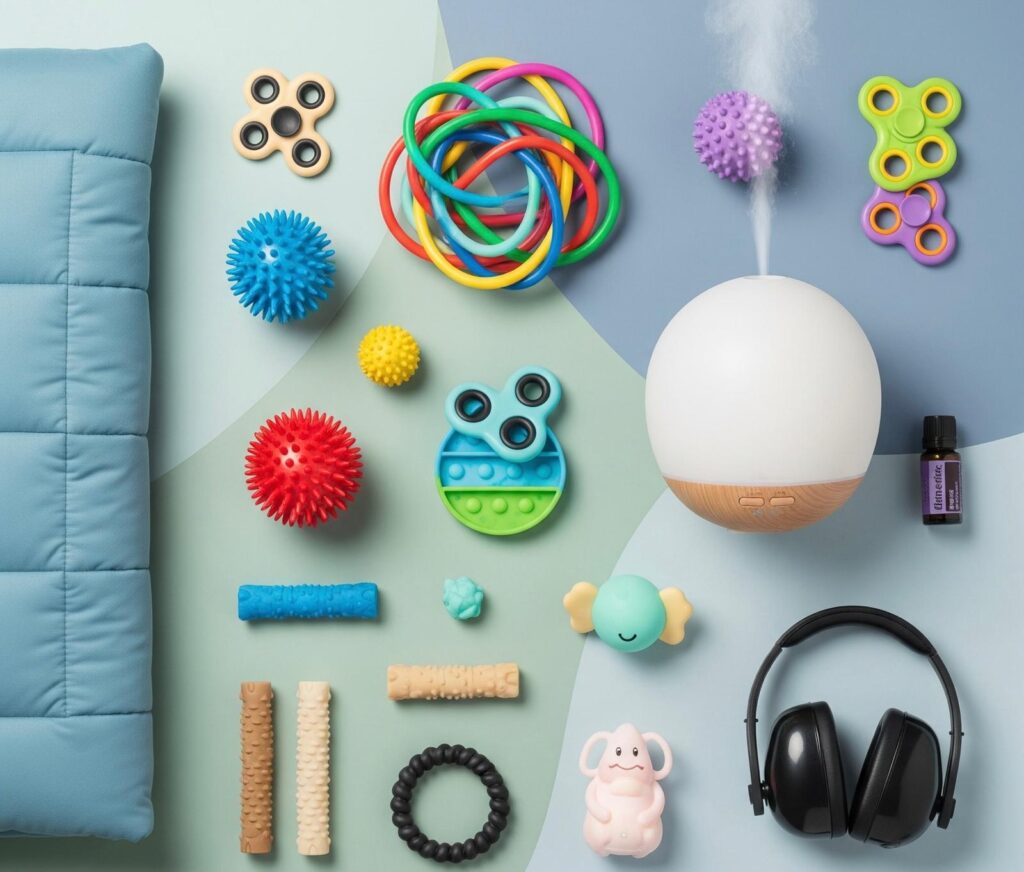
Written by: Therapy Near Me Editorial Team Clinically reviewed by: qualified members of the Therapy Near Me clinical team Last updated: 05/10/2025 This article is intended as general information only and does not replace personalised medical or mental health advice. Learn more about our Editorial Policy. Many children and adults experience sensory processing differences, where everyday sensations—sound, touch, movement, light, or smell—are perceived more intensely or weakly than usual. These challenges are common in autism spectrum disorder (ASD), attention-deficit/hyperactivity disorder (ADHD), and sensory processing disorder (SPD) (Miller et al., 2007). Unmanaged sensory sensitivities can contribute to stress, anxiety, and functional difficulties. The good news is that a range of evidence-informed products and tools can help regulate sensory input, promote calm, and improve focus. This article reviews the science, practical considerations, and top categories of products that support individuals with sensory needs. 1. Understanding sensory issues Sensory processing involves receiving, organising, and responding to sensory information. Differences can appear as: Research shows that tailored sensory modulation strategies help reduce anxiety and behavioural outbursts (Baranek et al., 2014). 2. Evidence-based product categories a) Deep-pressure and proprioceptive tools b) Movement and vestibular aids c) Tactile and fidget tools d) Auditory supports e) Visual and light-based products f) Aromatherapy and olfactory aids 3. Selecting and using sensory products safely When choosing products: 4. Integrating products into daily life 5. Evidence and limitations While many products show positive anecdotal and preliminary research support, response varies. Effectiveness depends on individual sensory profiles, product quality, and consistent, supervised use (Baranek et al., 2014). Ongoing clinical guidance and structured follow-up are recommended. FAQs Q: What are the best products for sensory overload?Weighted blankets, noise-cancelling headphones, and fidget tools often provide effective calming input. Q: Are sensory products scientifically proven?Research supports certain tools, such as weighted blankets and swings, especially when integrated with occupational therapy. Q: Who can benefit from sensory products?Children and adults with autism, ADHD, anxiety, or sensory processing differences. Q: How do I choose the right sensory aid?Consult an occupational therapist for a personalised sensory assessment. References
Products That Help with Sensory Issues: A Science-Based Guide Read More »