
Therapy Near Me

Author name: Therapy Near Me Editorial Team

Urgent Call for Action: Reducing Mental Health Service Waiting Times.

Needed Reduction in Waiting Times for Mental Health Services

Written by: Therapy Near Me Editorial Team Clinically reviewed by: qualified members of the Therapy Near Me clinical team Last updated: 07/07/2025 This article is intended as general information only and does not replace personalised medical or mental health advice. Learn more about our Editorial Policy. Long waiting times for mental health services in Australia are a critical issue, often leading to deterioration in patients’ conditions. In response, Therapy Near Me offers a novel approach with its promise of a free consultation with a psychologist within 24 hours. This timely intervention is crucial, as mental health issues do not have a ‘pause button’ and cannot wait for the extended delays seen in traditional mental health service models. Introduction Australia’s mental health system faces a significant challenge with prolonged waiting times for therapy and psychological services. This delay can exacerbate mental health conditions, underscoring the need for immediate intervention. Therapy Near Me’s model, offering a free consultation within 24 hours, presents an innovative solution to this pressing issue. The State of Waiting Times in Australian Mental Health Services Extent of the Problem: Many Australians face months-long waiting periods to access mental health services, a delay that can lead to worsening symptoms and increased distress. Impact on Patients: Delayed access to mental health care can result in deterioration of the patient’s mental health, increased risk of crisis situations, and greater difficulty in treatment at later stages. Benefits of Therapy Near Me’s Rapid Response Service Immediate Support: By guaranteeing a consultation within 24 hours, Therapy Near Me provides immediate support, addressing the urgent needs of individuals seeking mental health care. Prevention of Condition Worsening: Early intervention can prevent the escalation of mental health issues, reducing the long-term impact and aiding in quicker recovery. Accessibility and Convenience: The service is not only prompt but also accessible through telehealth, making it a convenient option for those unable to attend in-person sessions. The Urgency of Timely Mental Health Care Mental health conditions do not operate on a timeline and waiting for months for treatment is not a viable option. Immediate access to mental health care can be lifesaving for many individuals. Therapy Near Me’s Innovative Approach Breaking Barriers: Therapy Near Me is breaking traditional barriers in mental health care delivery by significantly reducing waiting times. Quality Care: Despite the rapid response, the quality of care is not compromised, with experienced psychologists providing the initial consultation. Comprehensive Service Delivery: Following the initial consultation, Therapy Near Me offers a range of services, including ongoing therapy, telehealth sessions, and tailored treatment plans. Business and Social Implications Market Differentiation: Offering a free consultation within 24 hours sets Therapy Near Me apart in the competitive mental health market. Increased Demand and Growth Potential: As awareness of this service grows, it is likely to increase demand, necessitating strategic planning for scaling up services and workforce. Positive Social Impact: Providing timely mental health care contributes significantly to community well-being and public health outcomes. Conclusion The extended waiting times for mental health services in Australia represent a critical gap in care. Therapy Near Me’s commitment to providing a free consultation within 24 hours is a commendable step towards addressing this gap. This approach not only meets an urgent need for immediate mental health support but also sets a new standard in accessible and responsive mental health care. As the mental health landscape evolves, services like Therapy Near Me are leading the way in innovative and patient-centred care How to get in touch If you or your patient/NDIS clients need immediate mental healthcare assistance, feel free to get in contact with us on 1800 NEAR ME – admin@therapynearme.com.au.

Needed Reduction in Waiting Times for Mental Health Services Read More »

Food for Thought: Weekend Mental Health Recipes

Written by: Therapy Near Me Editorial Team Clinically reviewed by: qualified members of the Therapy Near Me clinical team Last updated: 08/02/2026 This article is intended as general information only and does not replace personalised medical or mental health advice. Learn more about our Editorial Policy. The connection between nutrition and mental health has gained increasing recognition in recent years. Research shows that diet plays a significant role in influencing mood, cognitive function, and emotional well-being (Jacka et al., 2017). While weekends often come with opportunities to relax and indulge, they can also serve as a time to nourish both the body and mind with carefully chosen meals. This article provides a selection of mental health-boosting recipes that are easy to prepare and rich in nutrients known to support emotional well-being. Keywords: Mental health recipes, Weekend meal ideas for mental health, Foods for emotional well-being, Nutrition and mental health, Healthy recipes for mental clarity, Brain-boosting meals, Mood-boosting foods, Recipes for stress relief, Breakfast for mental health 1. The Role of Nutrition in Mental Health Healthy eating habits are closely linked to improved mental health outcomes. Diets rich in whole foods, such as fruits, vegetables, whole grains, lean proteins, and healthy fats, have been associated with lower rates of depression and anxiety (Opie et al., 2015). Conversely, diets high in processed foods, refined sugars, and unhealthy fats are linked to increased risks of mental health disorders. Certain nutrients are particularly beneficial for mental health, including: Omega-3 Fatty Acids: Found in fatty fish, nuts, and seeds, these fats support brain function and reduce inflammation, which may alleviate symptoms of depression (Grosso et al., 2014). Antioxidants: Vitamins like A, C, and E, found in brightly coloured fruits and vegetables, combat oxidative stress and improve overall brain health. B Vitamins: Particularly folate and B12, these are crucial for neurotransmitter production and emotional regulation. Tip: A balanced diet that incorporates a variety of nutrients can enhance your mood and mental clarity, making weekends a perfect time to reset your eating habits. 2. Breakfast: Mood-Boosting Smoothie Bowl Starting the day with a nutrient-packed breakfast can set a positive tone for the weekend. A smoothie bowl combines antioxidants, fibre, and healthy fats to fuel your brain and stabilise your mood. Ingredients: 1 frozen banana ½ cup frozen blueberries ½ cup spinach 1 tablespoon chia seeds 1 tablespoon almond butter 1 cup unsweetened almond milk Toppings: Sliced kiwi Fresh berries Granola Coconut flakes Instructions: Blend all smoothie ingredients until smooth. Pour into a bowl and arrange toppings artfully. Mental Health Benefits: This recipe is rich in antioxidants from the berries, omega-3s from chia seeds, and magnesium from spinach, which helps regulate stress and improve sleep (Dean et al., 2011). 3. Lunch: Salmon and Avocado Salad A light yet satisfying lunch featuring salmon and avocado provides a hearty dose of omega-3 fatty acids and healthy fats that promote brain health and emotional well-being. Ingredients: 150g grilled salmon 1 avocado, sliced Mixed greens (e.g., spinach, kale, arugula) 1 tablespoon olive oil 1 tablespoon lemon juice ¼ cup pumpkin seeds Salt and pepper to taste Instructions: Arrange greens on a plate and top with salmon, avocado, and pumpkin seeds. Drizzle with olive oil and lemon juice. Add salt and pepper to taste. Mental Health Benefits: Salmon is a rich source of DHA, an omega-3 fatty acid essential for brain function, while avocado provides monounsaturated fats that support neurotransmitter function (Grosso et al., 2014). 4. Dinner: Quinoa-Stuffed Bell Peppers Quinoa-stuffed bell peppers are a nutrient-dense dinner option, packed with protein, fibre, and antioxidants to help you wind down and feel satisfied. Ingredients: 4 large bell peppers (any colour) 1 cup cooked quinoa 1 cup black beans 1 cup diced tomatoes ½ cup corn 1 teaspoon cumin 1 teaspoon paprika ½ cup shredded cheddar cheese (optional) Instructions: Preheat the oven to 180°C. Cut the tops off the bell peppers and remove seeds. In a bowl, mix quinoa, black beans, tomatoes, corn, and spices. Stuff the peppers with the mixture and place them in a baking dish. Bake for 25–30 minutes. Sprinkle cheese on top in the final 5 minutes if desired. Mental Health Benefits: Quinoa is a complete protein and a great source of magnesium, known to reduce anxiety. Black beans and corn provide fibre and essential vitamins that regulate mood (Jacka et al., 2017). 5. Snacks: Dark Chocolate Energy Bites Snacks that are both delicious and nutritious can help stabilise energy levels and keep your mood balanced throughout the day. Ingredients: 1 cup rolled oats ½ cup almond butter ¼ cup honey ¼ cup dark chocolate chips 1 tablespoon flaxseeds Instructions: Mix all ingredients in a bowl until well combined. Roll into small balls and refrigerate for at least 1 hour before serving. Mental Health Benefits: Dark chocolate is rich in flavonoids, which improve blood flow to the brain and enhance mood, while flaxseeds provide omega-3s that combat stress (Dean et al., 2011). 6. Evening Drink: Chamomile and Turmeric Tea End your day with a soothing drink to promote relaxation and prepare your body for restful sleep. Ingredients: 1 cup hot water 1 chamomile tea bag ½ teaspoon turmeric powder 1 teaspoon honey (optional) Instructions: Steep chamomile tea in hot water for 5 minutes. Stir in turmeric and honey. Mental Health Benefits: Chamomile contains apigenin, a compound that promotes relaxation, while turmeric has anti-inflammatory properties that can reduce symptoms of depression (Lopresti et al., 2014). 7. Planning Ahead for Mental Health-Boosting Meals Preparing meals that support mental health does not have to be complicated. Here are a few tips to incorporate these recipes into your weekend routine: Batch Cooking: Prepare larger quantities to enjoy leftovers during the week. Meal Prep: Pre-chop vegetables and portion out ingredients to save time. Mindful Eating: Take time to savour your meals and eat without distractions, which enhances the mental health benefits of nutritious food (Albers, 2012). Tip: Regularly including nutrient-rich meals in your routine can help establish long-term habits that support mental health. Conclusion Nutrition

Food for Thought: Weekend Mental Health Recipes Read More »

Explore Nancy Mace's PTSD struggles after rape and the psychological challenges related to her transgender identity

Nancy Mace: Issues with Trans and Her PTSD Struggles After Rape

Written by: Therapy Near Me Editorial Team Clinically reviewed by: qualified members of the Therapy Near Me clinical team Last updated: 20/06/2025 This article is intended as general information only and does not replace personalised medical or mental health advice. Learn more about our Editorial Policy. Nancy Mace, a prominent figure in American politics, has courageously shared her personal struggle with Post-Traumatic Stress Disorder (PTSD) following a rape that occurred during her teenage years. Her openness has shed light on the profound impact of sexual assault on mental health and the importance of addressing PTSD among survivors. This article delves into Nancy Mace’s journey, the psychological effects of rape-related trauma, and the pathways to recovery. By examining scientific literature, we aim to provide a comprehensive understanding of PTSD after sexual assault, highlighting the challenges and resilience of survivors. Keywords: Nancy Mace, PTSD struggles, Sexual assault survivor, Rape trauma, Mental health, Recovery journey. Trauma therapy. Post-Traumatic Stress Disorder, Survivor advocacy. Psychological impact of rape Background: Who is Nancy Mace? Nancy Mace is a U.S. Representative for South Carolina’s 1st congressional district, elected to Congress in 2020 (United States House of Representatives 2021). Before her tenure in Congress, Mace made history as the first woman to graduate from The Citadel, a prestigious military college in South Carolina, in 1999 (The Citadel 2021). Her career spans business, politics, and advocacy, with a focus on issues such as veterans’ affairs, education, and women’s rights. Nancy Mace’s Experience with Sexual Assault At the age of 16, Nancy Mace was raped by a classmate after attending a party (Mace 2019). The traumatic event had a profound impact on her life, leading to struggles with PTSD, depression, and anxiety. Mace has publicly shared her story to raise awareness about sexual assault and its long-term psychological effects, advocating for survivors and promoting legislative changes to support them (NBC News 2019). Understanding PTSD After Rape What is PTSD? Post-Traumatic Stress Disorder (PTSD) is a mental health condition that can develop after exposure to a traumatic event, such as sexual assault, warfare, or natural disasters (American Psychiatric Association 2013). Symptoms include intrusive thoughts, nightmares, avoidance behaviours, negative changes in cognition and mood, and heightened arousal or reactivity. Prevalence Among Sexual Assault Survivors Research indicates that sexual assault is one of the most likely traumatic events to lead to PTSD. According to the Australian Institute of Health and Welfare (2020), up to 50% of rape survivors develop PTSD, highlighting the significant mental health burden associated with sexual violence. Psychological Impact of Rape Intrusive Memories: Survivors often experience recurrent, involuntary, and distressing memories of the assault (Foa et al. 2009). Avoidance: There may be efforts to avoid thoughts, feelings, or reminders of the traumatic event (Resick et al. 2012). Negative Alterations in Cognition and Mood: Feelings of fear, guilt, shame, or detachment from others are common (American Psychiatric Association 2013). Hyperarousal: Symptoms such as irritability, difficulty sleeping, and heightened startle response may occur (Bisson et al. 2015). Nancy Mace’s Struggles with PTSD Immediate Aftermath Following the assault, Mace faced immense emotional turmoil. She struggled with feelings of shame and isolation, which are common among survivors (Mace 2019). The stigma surrounding sexual assault often exacerbates these feelings, hindering individuals from seeking help (Ullman 2014). Challenges in Seeking Help Mace has spoken about the difficulty in disclosing her experience to others, a barrier that many survivors face (NBC News 2019). Fear of not being believed or being blamed contributes to underreporting and delays in accessing support services (Australian Institute of Health and Welfare 2020). Long-Term Effects The long-term impact of PTSD affected Mace’s personal and professional life. She experienced symptoms such as anxiety, depression, and hypervigilance, which are consistent with PTSD diagnoses in sexual assault survivors (Frazier et al. 2009). Pathways to Recovery Therapeutic Interventions Cognitive Behavioural Therapy (CBT): Evidence-based treatments like CBT have been effective in reducing PTSD symptoms by addressing maladaptive thoughts and behaviours (Ehlers et al. 2010). Prolonged Exposure Therapy: This therapy involves repeated, detailed imagining of the trauma or confronting triggers in a controlled environment to reduce fear and avoidance (Powers et al. 2010). Eye Movement Desensitisation and Reprocessing (EMDR): EMDR combines exposure therapy with guided eye movements to process traumatic memories (Shapiro 2014). Support Networks Mace emphasises the importance of support from friends, family, and support groups in her recovery journey (Mace 2019). Social support is a critical factor in mitigating PTSD symptoms and fostering resilience (Ozbay et al. 2007). Advocacy and Legislative Efforts Turning her trauma into purpose, Mace has become an advocate for sexual assault survivors. She supports legislation aimed at preventing sexual violence and improving resources for survivors, recognising that systemic changes are essential for addressing the broader issue (United States House of Representatives 2021). The Role of Public Figures in Addressing Sexual Assault Breaking the Silence Public figures like Nancy Mace play a vital role in destigmatising sexual assault by sharing their experiences. This openness encourages others to seek help and contributes to societal understanding of the issue (Yamawaki et al. 2011). Promoting Mental Health Awareness By discussing her struggles with PTSD, Mace brings attention to mental health issues that often remain hidden. This advocacy helps to normalise mental health discussions and promotes the importance of seeking professional help (Corrigan et al. 2014). Nancy Mace’s Position on Transgender Access to Women’s Bathrooms In November 2024, Representative Nancy Mace introduced a resolution to prohibit transgender women from using women’s restrooms within the U.S. Capitol. This initiative coincided with the election of Sarah McBride, the first openly transgender member of Congress. Mace argued that “biological men do not belong in women’s private spaces,” emphasising her commitment to protecting women’s rights and privacy. The resolution proposed that members and employees of the House use restrooms corresponding to their biological sex. This move sparked significant debate, with critics viewing it as discriminatory against transgender individuals, while supporters saw it as a measure to uphold traditional gender norms in public facilities (New York Post, 2024. Rep Nancy Mace introduces

Nancy Mace: Issues with Trans and Her PTSD Struggles After Rape Read More »

Get expert advice on becoming a psychologist: education pathways, essential psychological skills, and career development tips

Advice for People Wanting to Become Psychologists

Written by: Therapy Near Me Editorial Team Clinically reviewed by: qualified members of the Therapy Near Me clinical team Last updated: 21/11/2025 This article is intended as general information only and does not replace personalised medical or mental health advice. Learn more about our Editorial Policy. Psychology is a rewarding and diverse field that offers opportunities to make a meaningful impact on individuals and communities. From clinical practice to research, education, and organisational psychology, this discipline offers a wide range of career paths. However, becoming a psychologist requires significant dedication, rigorous academic training, and personal resilience. This article provides practical advice for aspiring psychologists, outlining the educational requirements, essential skills, and steps to build a successful career in this field. Keywords: How to become a psychologist, Careers in psychology, Steps to becoming a psychologist in Australia, Psychology career advice, Educational requirements for psychologists, Skills needed to be a psychologist, Psychology registration in Australia 1. Understanding the Role of a Psychologist Psychologists study human behaviour, emotions, and cognitive processes to help individuals, groups, and organisations improve mental health and well-being. They work in various settings, including hospitals, private clinics, schools, universities, and businesses. Psychologists may work in areas such as clinical psychology, forensic psychology, educational psychology, or organisational psychology, each offering unique challenges and rewards (Australian Psychological Society, 2023). Understanding the demands and rewards of the profession is an essential first step for anyone considering this career. It involves developing empathy, critical thinking, and the ability to handle sensitive and often complex situations. Tip: Explore different branches of psychology to determine which area aligns with your interests and goals. 2. Educational Pathway to Becoming a Psychologist In Australia, the journey to becoming a registered psychologist involves several steps: Step 1: Undergraduate Degree The first step is completing a three-year undergraduate degree in psychology, such as a Bachelor of Psychology or a related discipline. This degree provides foundational knowledge in areas like cognitive psychology, developmental psychology, and social psychology. Step 2: Honours or Equivalent Fourth Year After completing an undergraduate degree, aspiring psychologists must undertake an accredited honours year or a graduate diploma in psychology. This fourth year focuses on advanced studies and research, preparing students for postgraduate training. Step 3: Postgraduate Training or Internship To become a registered psychologist, individuals must complete either: A two-year Master’s degree in psychology (e.g., Clinical Psychology, Educational Psychology) or A one-year Master’s program followed by a one-year internship, or A four-year Doctor of Psychology (PsyD) program. Step 4: Registration Upon completing postgraduate training, individuals must register with the Australian Health Practitioner Regulation Agency (AHPRA) and meet the requirements set by the Psychology Board of Australia (PBA). Step 5: Continuing Professional Development Psychologists are required to engage in ongoing professional development to maintain their registration and stay updated on best practices. Tip: Choose accredited programs to ensure your qualifications meet the standards for registration. 3. Essential Skills for Aspiring Psychologists Being a successful psychologist involves more than academic qualifications. Key skills include: Empathy and Compassion: Psychologists must build trust and rapport with clients, requiring strong interpersonal skills. Communication: Clear verbal and written communication is essential for explaining concepts, writing reports, and collaborating with clients and colleagues. Critical Thinking: Psychologists must assess complex information to make informed decisions and develop effective interventions. Resilience: Working with individuals experiencing mental health challenges can be emotionally demanding, requiring resilience and self-care strategies. Tip: Seek opportunities to develop these skills through volunteer work, internships, or mentorship programs. 4. Gaining Experience in the Field Practical experience is invaluable for aspiring psychologists. Opportunities to gain experience include: Volunteering: Many organisations, such as Lifeline or Beyond Blue, offer volunteer opportunities where you can support individuals and develop counselling skills. Internships: Seek internships during your studies to gain hands-on experience in a clinical, educational, or organisational setting. Research Projects: Participate in or assist with psychological research to build skills in data analysis and evidence-based practices. Networking: Attend psychology conferences, workshops, and webinars to connect with professionals and learn about advancements in the field. Tip: Early experience in psychology-related roles can enhance your understanding of the profession and strengthen your resume. 5. Challenges and How to Overcome Them Pursuing a career in psychology can be challenging. Common obstacles include: Academic Rigour: Psychology courses are demanding, with a focus on research, theory, and clinical practice. Maintaining a balance between studies and self-care is crucial. Emotional Demands: Working with individuals facing trauma or mental health issues can take a toll. Regular supervision and self-care practices are essential to manage this stress. Competition: Admission to postgraduate programs is highly competitive. Building a strong academic record and gaining relevant experience can improve your chances of success. Tip: Resilience and time management skills are critical for navigating these challenges. 6. Career Opportunities and Specialisations Psychology offers diverse career paths. Some specialisations include: Clinical Psychology: Focuses on diagnosing and treating mental health disorders. Educational Psychology: Works with children, families, and schools to support learning and development. Forensic Psychology: Applies psychological principles to legal and criminal justice systems. Organisational Psychology: Enhances workplace productivity and employee well-being. Sports Psychology: Helps athletes improve performance and mental resilience. Tip: Explore internships or electives in different areas of psychology to identify your preferred specialisation. 7. The Importance of Self-Care Psychology is a demanding profession that requires practitioners to prioritise their mental health. Strategies for self-care include: Setting boundaries to manage workload. Engaging in regular supervision or peer support groups. Practising mindfulness and stress management techniques. Maintaining a healthy work-life balance. Tip: Prioritising self-care ensures you can provide the best possible support to clients while maintaining your own well-being. Conclusion Becoming a psychologist is a rewarding but demanding journey that requires dedication, resilience, and a genuine passion for helping others. By understanding the educational pathway, developing essential skills, and gaining practical experience, aspiring psychologists can build a fulfilling career in this impactful field. As mental health awareness continues to grow, psychologists will play an increasingly vital role in supporting individuals and communities, making this a meaningful and

Advice for People Wanting to Become Psychologists Read More »

Understanding depression in children: key symptoms, mental health impacts, and effective psychological support strategies

Depression in Children

Written by: Therapy Near Me Editorial Team Clinically reviewed by: qualified members of the Therapy Near Me clinical team Last updated: 18/01/2026 This article is intended as general information only and does not replace personalised medical or mental health advice. Learn more about our Editorial Policy. Depression in children is a serious mental health condition that goes beyond occasional sadness or mood swings. It can affect a child’s emotional well-being, academic performance, and relationships, with long-lasting consequences if left untreated. Research suggests that approximately 3% of children worldwide suffer from depression, highlighting the importance of early identification and intervention (World Health Organization, 2022). This article explores the causes, symptoms, and evidence-based strategies for managing depression in children, offering guidance for parents, caregivers, and educators. Keywords: Depression in children, Childhood depression symptoms, Causes of depression in kids, Treating depression in children, Cognitive behavioural therapy for children, Childhood mental health, Signs of depression in kids, Supporting children with depression, How to identify depression in children 1. What Is Depression in Children? Depression in children is characterised by persistent sadness, a loss of interest in activities, and significant changes in behaviour, mood, and energy levels. Unlike normal emotional reactions to life challenges, depression interferes with a child’s ability to function in daily life and requires professional support. Common types of depression affecting children include: Major Depressive Disorder (MDD): Characterised by severe and persistent depressive episodes. Persistent Depressive Disorder (Dysthymia): Long-term, less severe depression lasting for at least a year. Adjustment Disorder with Depressed Mood: Depression triggered by a specific event or situation, such as parental divorce or bullying. Tip: Understanding the specific type of depression is crucial for tailoring effective interventions. 2. Causes of Depression in Children Depression in children often arises from a combination of genetic, biological, environmental, and psychological factors: 1. Genetic Predisposition Children with a family history of depression are at a higher risk of developing the condition due to inherited traits (Rice et al., 2002). 2. Brain Chemistry Imbalances in neurotransmitters, such as serotonin and dopamine, play a role in regulating mood and may contribute to depression. 3. Environmental Factors Stressful life events, such as parental conflict, loss of a loved one, or exposure to trauma, can trigger depression in vulnerable children. 4. Social and Peer Factors Bullying, social rejection, or difficulties in forming friendships can negatively affect a child’s mental health. Tip: Identifying the underlying causes can help parents and professionals provide targeted support. 3. Symptoms of Depression in Children The symptoms of depression in children can vary and may differ from those seen in adults. Common signs include: Emotional Symptoms: Persistent sadness, irritability, feelings of worthlessness, or excessive guilt. Behavioural Symptoms: Withdrawal from family and friends, loss of interest in hobbies, or changes in appetite and sleep patterns. Physical Symptoms: Complaints of headaches, stomachaches, or fatigue without a clear medical cause. Cognitive Symptoms: Difficulty concentrating, declining academic performance, or indecisiveness. For younger children, depression may manifest as clinginess, tantrums, or regression in developmental milestones. Adolescents may exhibit risk-taking behaviours or express thoughts of self-harm. Tip: Observing changes in behaviour and mood over time can help detect depression early. 4. Diagnosing Depression in Children Accurate diagnosis requires a thorough evaluation by a qualified psychologist, psychiatrist, or paediatrician. The process typically includes: Clinical Interviews: Discussions with the child, parents, and teachers to gather information about symptoms and behaviour. Standardised Assessments: Tools such as the Children’s Depression Inventory (CDI) help measure the severity of depressive symptoms (Kovacs, 1992). Observation: Assessing the child’s interactions and activities in different settings, such as home and school. Tip: Early diagnosis is critical for preventing the condition from worsening and improving the child’s quality of life. 5. Evidence-Based Treatments for Depression in Children Several evidence-based approaches have proven effective in treating depression in children: 1. Cognitive Behavioural Therapy (CBT) CBT is a widely used therapy that helps children identify and challenge negative thought patterns, develop problem-solving skills, and regulate emotions. Research shows that CBT significantly reduces depressive symptoms in children (Brent et al., 1997). 2. Interpersonal Therapy (IPT) IPT focuses on improving relationships and communication skills, particularly for children whose depression is linked to social or family issues. 3. Medication In severe cases, antidepressant medications such as selective serotonin reuptake inhibitors (SSRIs) may be prescribed. However, these are typically used alongside therapy and under strict medical supervision (Emslie et al., 2002). 4. Family Therapy Involving the family in therapy sessions can address conflicts, improve communication, and create a supportive home environment. Tip: Combining therapy with parental support often yields the best outcomes for children with depression. 6. Role of Parents and Educators Parents and educators play a crucial role in supporting children with depression. Key strategies include: Encouraging Open Communication: Create a safe space for children to express their feelings without fear of judgment. Building Routines: Consistent daily routines provide stability and predictability. Promoting Physical Activity: Exercise has been shown to improve mood and reduce symptoms of depression. Monitoring Social Interactions: Foster positive peer relationships and address bullying or social isolation. Seeking Professional Help: Collaborate with psychologists, counsellors, and school staff to develop a comprehensive support plan. Tip: Early intervention and ongoing support can make a significant difference in a child’s recovery. 7. Preventing Depression in Children Prevention strategies can reduce the risk of depression and promote emotional resilience: Fostering Emotional Intelligence: Teach children to recognise and manage their emotions effectively. Building Self-Esteem: Encourage children to develop a positive self-image through praise and achievements. Strengthening Family Bonds: Spend quality time together to build trust and a sense of security. Educating About Mental Health: Promote awareness and reduce stigma around seeking help for mental health concerns. Tip: Preventative measures are most effective when implemented consistently across home, school, and community settings. Conclusion Depression in children is a serious but treatable condition that requires understanding, patience, and professional intervention. By recognising the symptoms early, addressing the underlying causes, and providing evidence-based support, parents and caregivers can help children build resilience and achieve emotional well-being. With proper

Depression in Children Read More »

NDIS Under Scrutiny: Addressing Corruption Allegations

Examining Allegations of Corruption in NDIS

Written by: Therapy Near Me Editorial Team Clinically reviewed by: qualified members of the Therapy Near Me clinical team Last updated: 06/07/2025 This article is intended as general information only and does not replace personalised medical or mental health advice. Learn more about our Editorial Policy. The National Disability Insurance Scheme (NDIS) is a significant public policy in Australia, designed to provide support to people with disabilities. However, recent reports and investigations have raised concerns about alleged corruption within the scheme. This article aims to explore these allegations, their impact on service delivery, and the broader implications for the disability sector in Australia. Introduction The NDIS, heralded as a revolutionary step in providing care for the disabled, has come under scrutiny due to allegations of corruption and mismanagement. These allegations, if proven, could undermine the integrity of the scheme and impact the trust of the public and stakeholders, including service providers like Therapy Near Me. Nature of Alleged Corruption in the NDIS Fraudulent Claims: Reports have surfaced about individuals and service providers making fraudulent claims, diverting funds meant for legitimate disability support. Mismanagement of Funds: There are concerns about the misallocation and mismanagement of funds within the NDIS, leading to inefficiencies and reduced effectiveness of the scheme. Lack of Oversight: Critics argue that insufficient oversight and auditing mechanisms have enabled corrupt practices to go undetected. Impact on Service Delivery Resource Drain: Corruption allegations suggest that significant resources may be diverted away from those in genuine need, impacting the quality and availability of services. Eroding Public Trust: Public trust in the NDIS is crucial for its success. Allegations of corruption can erode this trust, affecting the willingness of individuals and service providers to engage with the scheme. Increased Scrutiny and Regulation: In response to these allegations, the NDIS may face increased scrutiny and tighter regulations, which could impact the operational flexibility of service providers. Broader Implications for the Disability Sector Policy Reevaluation: These allegations may prompt a reevaluation of NDIS policies and procedures to strengthen governance and reduce the risk of corruption. Impact on Beneficiaries: The most significant impact is on the beneficiaries of the NDIS. Corruption undermines their access to essential services and support. Stakeholder Confidence: For stakeholders, including service providers, government bodies, and the public, restoring confidence in the NDIS is paramount. Conclusion While the allegations of corruption within the NDIS are concerning, they offer an opportunity to reinforce the scheme’s integrity. For service providers like Therapy Near Me, it is important to navigate these challenges while continuing to provide high-quality care. Strengthening oversight, enhancing transparency, and ensuring accountability are essential steps in restoring trust in the NDIS and ensuring it effectively serves those it is designed to support. References National Disability Insurance Agency. (2023). NDIS Fraud Strategy. NDIA. Australian Government. (2023). Royal Commission into Violence, Abuse, Neglect and Exploitation of People with Disability. Australian Government. Department of Social Services. (2023). Review of the National Disability Insurance Scheme. DSS. How to get in touch If you or your patient/NDIS clients need immediate mental healthcare assistance, feel free to get in contact with us on 1800 NEAR ME – admin@therapynearme.com.au.

Examining Allegations of Corruption in NDIS Read More »

Discover psychological insights and strategies to maintain a youthful spirit through mental well-being and a positive mindset

Maintaining a Youthful Spirit: Psychological Insight

Written by: Therapy Near Me Editorial Team Clinically reviewed by: qualified members of the Therapy Near Me clinical team Last updated: 07/12/2025 This article is intended as general information only and does not replace personalised medical or mental health advice. Learn more about our Editorial Policy. Maintaining a youthful spirit goes beyond physical appearance; it reflects an attitude of vitality, curiosity, and positivity towards life. Research in psychology and gerontology suggests that nurturing a youthful mindset can enhance mental well-being, improve cognitive functioning, and even contribute to physical health. This article explores evidence-based strategies for fostering a youthful spirit, drawing on scientific studies and practical insights. Keywords: Maintaining a youthful spirit, How to stay youthful, Youthful mindset tips, Psychology of staying young, Mental health and youthfulness, Growth mindset and vitality, Lifelong learning benefits, Staying active for mental health, Positive outlook and ageing, Gratitude and youthful spirit 1. The Psychology of a Youthful Spirit Psychologically, a youthful spirit is associated with traits like optimism, resilience, and a growth mindset. These attributes can help individuals adapt to life’s challenges and maintain emotional well-being (Dweck, 2006). Studies show that people who engage in lifelong learning and remain curious about the world around them report higher levels of life satisfaction and happiness (Arnett, 2000). 2. Benefits of Maintaining a Youthful Spirit 1. Mental Health A youthful outlook has been linked to reduced stress and anxiety levels. Positive thinking and resilience can act as protective factors against depression and other mental health conditions (Lyubomirsky, 2007). 2. Cognitive Functioning Staying mentally active by engaging in new experiences or learning activities supports cognitive health. Research indicates that individuals who maintain an active lifestyle are less likely to experience cognitive decline as they age (Hertzog et al., 2008). 3. Physical Health A youthful spirit often encourages physical activity and healthy habits. Studies have found that people with a positive outlook are more likely to engage in regular exercise and maintain a balanced diet, which are essential for long-term health (Warburton et al., 2006). 3. Strategies for Nurturing a Youthful Spirit 1. Cultivate a Growth Mindset Adopting a growth mindset, where challenges are seen as opportunities for growth, can help individuals stay engaged and motivated. This mindset fosters resilience and a sense of purpose (Dweck, 2006). 2. Stay Physically Active Exercise is one of the most effective ways to maintain physical vitality and mental sharpness. Activities like yoga, dance, or walking not only promote fitness but also enhance mood through the release of endorphins (Warburton et al., 2006). 3. Embrace Lifelong Learning Learning new skills, exploring hobbies, or reading regularly stimulates the brain and keeps it adaptable. This can range from picking up a new language to taking up a creative pursuit like painting or writing (Hertzog et al., 2008). 4. Foster Positive Relationships Social connections are vital for emotional health. Engaging with friends and family and building new relationships can provide a sense of belonging and purpose (Holt-Lunstad et al., 2010). 5. Practice Gratitude and Mindfulness Daily gratitude practices and mindfulness exercises can improve overall happiness and reduce stress, helping individuals maintain a positive outlook on life (Lyubomirsky, 2007). 4. Challenges to Maintaining a Youthful Spirit 1. Societal Attitudes Towards Ageing Negative stereotypes about ageing can discourage individuals from pursuing activities that promote a youthful spirit. Challenging these stereotypes is essential for fostering inclusivity and self-confidence (Levy et al., 2002). 2. Health Barriers Chronic illnesses or mobility issues can make it harder to stay active. However, adaptive activities such as chair yoga or aquatic therapy can help individuals stay engaged despite physical limitations (Warburton et al., 2006). 5. Case Studies and Success Stories Example 1: Lifelong Learners Research has highlighted individuals in their 80s and 90s who continue to pursue higher education or creative interests, demonstrating the mental and emotional benefits of lifelong learning (Hertzog et al., 2008). Example 2: Community Connections Programs that promote intergenerational activities, such as community gardening or volunteer work, have been shown to boost morale and build a sense of purpose in older adults (Holt-Lunstad et al., 2010). Conclusion Maintaining a youthful spirit is a multifaceted process that involves psychological resilience, physical activity, social connections, and an openness to learning. By embracing these practices, individuals can enhance their mental and physical well-being, ensuring a vibrant and fulfilling life at any age. Promoting a youthful spirit is not just about defying age but about living with energy, enthusiasm, and purpose. References Arnett, J. J. (2000). Emerging adulthood: A theory of development from the late teens through the twenties. American Psychologist, 55(5), pp. 469–480. Dweck, C. S. (2006). Mindset: The new psychology of success. New York: Random House. Hertzog, C., et al. (2008). Enrichment effects on adult cognitive development: Can the functional capacity of older adults be preserved and enhanced? Psychological Science in the Public Interest, 9(1), pp. 1–65. Holt-Lunstad, J., et al. (2010). Social relationships and mortality risk: A meta-analytic review. PLOS Medicine, 7(7), e1000316. Levy, B. R., et al. (2002). Longevity increased by positive self-perceptions of aging. Journal of Personality and Social Psychology, 83(2), pp. 261–270. Lyubomirsky, S. (2007). The how of happiness: A scientific approach to getting the life you want. New York: Penguin Press. Warburton, D. E. R., et al. (2006). Health benefits of physical activity: The evidence. CMAJ, 174(6), pp. 801–809. How to get in touch If you or your NDIS participant need immediate mental healthcare assistance, feel free to get in contact with us on 1800 NEAR ME – admin@therapynearme.com.au.

Maintaining a Youthful Spirit: Psychological Insight Read More »

Explore the appropriateness of telehealth psychology for NDIS children under 10, emphasizing accessibility and mental health support

Is Telehealth Psychology Appropriate for NDIS Children Under 10?

Written by: Therapy Near Me Editorial Team Clinically reviewed by: qualified members of the Therapy Near Me clinical team Last updated: 17/07/2025 This article is intended as general information only and does not replace personalised medical or mental health advice. Learn more about our Editorial Policy. The National Disability Insurance Scheme (NDIS) plays a vital role in supporting the mental health and developmental needs of Australian children living with disabilities. Telehealth psychology has emerged as an accessible and flexible option, providing psychological services through virtual platforms. While telehealth has proven effective for adults and adolescents, its appropriateness for children under 10—particularly those supported by the NDIS—raises important questions about its benefits, limitations, and suitability. This article explores whether telehealth psychology is an appropriate modality for NDIS children under 10, considering developmental needs, family involvement, and evidence-based practices. Keywords: Telehealth psychology for NDIS children, NDIS telehealth services for kids under 10, Virtual therapy for young NDIS participants, Telehealth for children with developmental delays, Benefits of telehealth psychology for kids, Challenges of telehealth for young children, Interactive telehealth therapy for children. NDIS mental health support online, Play-based therapy via telehealth, Parental involvement in telehealth sessions 1. The Growing Role of Telehealth in NDIS Services Telehealth psychology has transformed the delivery of mental health services, providing a solution for families in rural and remote areas and those with logistical challenges. It allows NDIS children and their families to access support without the barriers of travel and long wait times, making it a critical resource in areas where in-person services are scarce (Hilty et al., 2021). For NDIS children under 10, telehealth offers additional flexibility. Children can engage with therapy from the comfort of their own homes, reducing anxiety often associated with unfamiliar clinical environments. Moreover, telehealth ensures continuity of care, particularly during disruptions such as the COVID-19 pandemic, when face-to-face services may not be available (Ormstad et al., 2022). Tip: Telehealth is a practical option for families facing geographical or scheduling barriers, providing accessible psychological services within the NDIS framework. 2. Developmental Considerations for Young Children Children under 10 have unique developmental needs that influence their engagement in therapy. At this stage, children rely heavily on non-verbal communication, play-based interactions, and hands-on activities, which can be more challenging to facilitate in a virtual format. Attention spans are also limited, requiring shorter and highly interactive sessions to maintain focus and engagement (McCrae et al., 2020). For NDIS participants, developmental delays, behavioural challenges, or communication difficulties may add complexity to telehealth sessions. Psychologists must adapt their approaches to ensure that therapy is both engaging and developmentally appropriate. Tip: Tailoring telehealth sessions to align with the developmental stage of the child is crucial for achieving therapeutic success. 3. Benefits of Telehealth Psychology for NDIS Children Under 10 Despite these challenges, telehealth psychology offers significant benefits for young NDIS participants: 1. Accessibility Telehealth enables children in rural or remote areas to access qualified psychologists who work in NDIS services. This is particularly important for families who might otherwise face long travel distances or limited local providers (Gordon et al., 2021). 2. Familiar Environment Children often feel more comfortable in their home environment, leading to better engagement and reduced anxiety. For NDIS children, this familiar setting can provide a sense of security that enhances the therapeutic process. 3. Parental Involvement Telehealth facilitates greater involvement of parents and caregivers, who can participate in sessions and learn strategies to support their child’s development. This collaboration can be especially beneficial for NDIS children, as parents play a key role in reinforcing therapeutic techniques. 4. Flexibility Virtual sessions can be scheduled at convenient times, accommodating family routines and minimising disruptions. This flexibility ensures consistent care and reduces the likelihood of missed appointments. Tip: Parents and caregivers can play an active role in telehealth therapy, strengthening its effectiveness for young children. 4. Challenges of Telehealth for NDIS Children Under 10 While telehealth offers numerous advantages, it also presents challenges when used with young children: 1. Engagement Difficulties Young children may struggle to focus during virtual sessions, especially if the format lacks interactive elements or if technical issues arise. 2. Limited Non-Verbal Cues Psychologists rely heavily on observing body language, facial expressions, and play behaviours, which can be harder to assess through a screen. 3. Play-Based Therapy Many therapeutic approaches for young children involve play-based activities that are more challenging to replicate virtually. Psychologists may need to adapt these techniques, using digital tools or guiding parents to facilitate activities. 4. Technical Barriers Poor internet connectivity, lack of appropriate devices, or unfamiliarity with technology can disrupt sessions and reduce their effectiveness. Tip: Addressing these challenges requires creative adaptations and strong collaboration between psychologists and families. Telehealth with NDIS Children Under 10 For telehealth psychology to be effective with young children, it must be adapted to their needs. Best practices include: 1. Engaging Parents and Caregivers Parental involvement is essential for telehealth sessions with children under 10. Parents can facilitate activities, provide behavioural context, and reinforce therapeutic strategies between sessions (McCrae et al., 2020). 2. Shorter, Interactive Sessions Limiting sessions to 20–30 minutes can help maintain a child’s focus. Using interactive tools such as virtual whiteboards, drawing apps, and games can enhance engagement. 3. Preparing the Environment Parents should set up a quiet, distraction-free space for therapy, ensuring access to necessary materials such as toys, art supplies, or sensory items. 4. Ongoing Training for Psychologists Psychologists must be trained in telehealth-specific approaches, including how to adapt play-based therapy to virtual platforms and how to manage technological issues effectively. Tip: Collaborative planning between psychologists and parents is crucial for optimising telehealth therapy for young children. 6. Evidence Supporting Telehealth for Young Children Research on telehealth for children under 10 is still developing, but early findings are promising. A study by Ormstad et al. (2022) demonstrated that telehealth interventions can be effective for children with anxiety, developmental delays, and behavioural challenges, provided that sessions are tailored to the child’s developmental level and involve active caregiver participation. Another

Is Telehealth Psychology Appropriate for NDIS Children Under 10? Read More »

NDIS Provider Finder: Simplifying Access to Essential Services

Written by: Therapy Near Me Editorial Team Clinically reviewed by: qualified members of the Therapy Near Me clinical team Last updated: 19/07/2025 This article is intended as general information only and does not replace personalised medical or mental health advice. Learn more about our Editorial Policy. The National Disability Insurance Scheme (NDIS) is a transformative initiative in Australia that provides support to individuals with disabilities to achieve their goals and enhance their quality of life. A critical aspect of the NDIS is the ability for participants to access the right services through registered providers. The NDIS Provider Finder, available through the NDIS website and myplace portal, is a tool designed to connect participants with service providers that meet their specific needs. This article explores the importance of the NDIS Provider Finder, how to use it effectively, and tips for selecting the best providers. Keywords: NDIS Provider Finder, Finding NDIS providers, NDIS-registered service providers, NDIS provider directory, How to use NDIS Provider Finder, NDIS support services, NDIS myplace portal, Choosing NDIS providers, Accessing NDIS services 1. What Is the NDIS Provider Finder? The NDIS Provider Finder is an online directory that helps participants locate NDIS-registered service providers. It is accessible through the myplace portal, a secure online platform for managing NDIS plans. The Provider Finder allows participants to search for providers based on location, service category, and other criteria, making it a vital resource for connecting with suitable support services (NDIS, 2023). Providers listed on the tool include those offering therapeutic supports, home modifications, assistive technologies, transport, and more. This ensures that participants can access a comprehensive range of services tailored to their individual needs. Tip: The Provider Finder is user-friendly and updated regularly to ensure accurate information about registered providers. 2. How to Use the NDIS Provider Finder Navigating the Provider Finder is straightforward. Participants can follow these steps: Log in to myplace: Use your NDIS login credentials to access the secure portal. Navigate to the Provider Finder: Locate the tool within the portal’s menu. Search by Criteria: Enter your postcode, the type of service you need, and any other preferences to refine your search. Review Results: The tool will display a list of providers that meet your criteria, including their contact details and a description of their services. Contact Providers: Reach out to shortlisted providers to discuss your needs, availability, and how they can support you. Tip: Use filters to narrow down your options based on specific services or accessibility requirements. 3. Benefits of the NDIS Provider Finder The NDIS Provider Finder offers several advantages for participants: 1. Convenience The online directory streamlines the process of finding and comparing providers, saving participants time and effort. 2. Personalisation By allowing participants to search for services tailored to their needs, the Provider Finder ensures a more personalised approach to support. 3. Transparency Participants can access detailed information about providers, including their qualifications, experience, and service offerings, promoting informed decision-making. 4. Accessibility The tool is designed to be accessible for individuals with varying levels of digital literacy, making it inclusive for all NDIS participants. Tip: The Provider Finder is especially useful for participants in remote areas, where locating local services can be challenging. 4. Challenges and Limitations While the NDIS Provider Finder is a valuable tool, it does have some limitations: 1. Limited Listings Not all providers may be listed, particularly those that are not registered with the NDIS. This can exclude some smaller or workd services. 2. Overwhelming Options Participants in metropolitan areas may find the extensive list of providers overwhelming and struggle to choose the best fit. 3. Lack of Reviews The tool does not include participant reviews, which can make it harder to assess the quality of services offered by a provider. Tip: Supplement your search with independent research and recommendations from peers or support coordinators. 5. How to Choose the Best NDIS Provider Selecting the right NDIS provider is crucial for achieving your goals and maximising the benefits of your plan. Here are some tips: 1. Assess Your Needs Identify the specific supports you require and ensure the provider works in those areas. 2. Check Credentials Verify that the provider is NDIS-registered and qualified to deliver the services you need. 3. Read Reviews Seek feedback from other participants or trusted sources to gauge the provider’s reputation and reliability. 4. Consider Accessibility Ensure the provider is located within a reasonable distance and offers accessible facilities. 5. Communicate Clearly Contact potential providers to discuss your needs and evaluate their responsiveness, professionalism, and willingness to accommodate your preferences. Tip: Building a good rapport with your provider is essential for a positive and effective working relationship. 6. The Role of Support Coordinators For participants who find it challenging to navigate the Provider Finder or make decisions, support coordinators can offer valuable assistance. Support coordinators help participants understand their plans, identify suitable providers, and manage the transition to new services. Their expertise ensures that participants receive the best possible support tailored to their goals (Australian Government, 2023). Tip: If your NDIS plan includes funding for support coordination, utilise this resource to simplify the process. 7. The Future of the NDIS Provider Finder The NDIS Provider Finder is expected to evolve as the scheme grows. Future enhancements may include: Integration of participant reviews and ratings to increase transparency. Improved filtering options for more precise searches. Real-time updates on provider availability and service changes. These improvements aim to make the tool even more user-friendly and effective in meeting participants’ needs. Conclusion The NDIS Provider Finder is an invaluable tool for connecting participants with the right services to achieve their goals. By streamlining the process of locating and selecting providers, it empowers individuals to take control of their NDIS plans and access the support they need. While challenges remain, careful planning, clear communication, and the assistance of support coordinators can ensure a successful experience. For participants seeking personalised and effective support, the NDIS Provider Finder is a key resource. References Australian Government. (2023). NDIS Support

NDIS Provider Finder: Simplifying Access to Essential Services Read More »

Understand the key differences and overlaps between ADHD and ASD with comprehensive psychological insights

ADHD vs ASD: Understanding the Differences and Overlaps

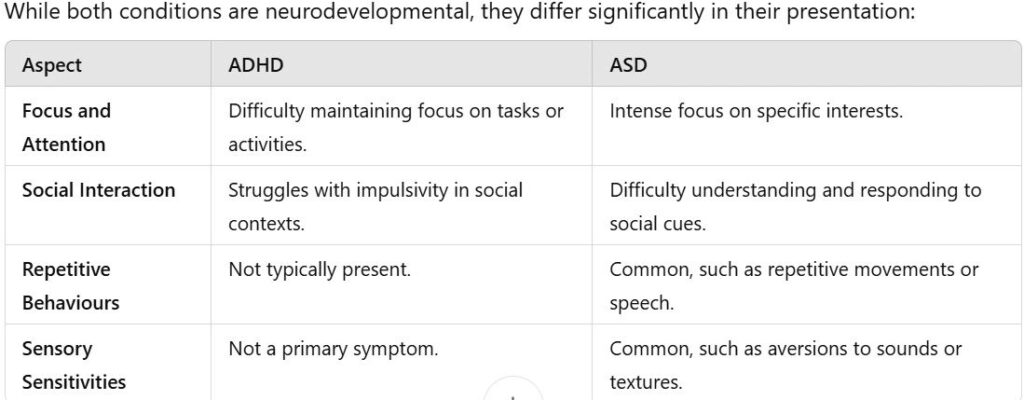
Written by: Therapy Near Me Editorial Team Clinically reviewed by: qualified members of the Therapy Near Me clinical team Last updated: 21/01/2026 This article is intended as general information only and does not replace personalised medical or mental health advice. Learn more about our Editorial Policy. Attention Deficit Hyperactivity Disorder (ADHD) and Autism Spectrum Disorder (ASD) are two neurodevelopmental conditions that share some similarities but also have distinct characteristics. Both conditions can significantly impact an individual’s social, academic, and occupational functioning. This article explores the key differences, overlaps, and strategies for managing ADHD and ASD, drawing on scientific research and clinical insights. Keywords: ADHD vs ASD, Differences between ADHD and ASD, ADHD and Autism Spectrum Disorder, ADHD symptoms and diagnosis, ASD symptoms and diagnosis, Overlap between ADHD and ASD, ADHD and ASD comorbidities, Managing ADHD and ASD, ADHD treatment strategies, ASD treatment strategies, ADHD vs ASD in children 1. What is ADHD? ADHD is a neurodevelopmental disorder characterised by persistent patterns of inattention, hyperactivity, and impulsivity that interfere with functioning or development (American Psychiatric Association, 2013). It is typically diagnosed in childhood but can persist into adulthood. Core Symptoms of ADHD: Difficulty sustaining attention. Impulsivity and acting without thinking. Hyperactivity, such as excessive movement or inability to stay seated. ADHD affects approximately 5–7% of children worldwide (Polanczyk et al., 2014), with symptoms often continuing into adulthood. 2. What is ASD? ASD is a developmental condition characterised by challenges in social communication and interaction, as well as restricted and repetitive behaviours or interests (American Psychiatric Association, 2013). ASD exists on a spectrum, meaning the severity and type of symptoms can vary widely among individuals. Core Symptoms of ASD: Difficulty with social communication and understanding social cues. Restricted, repetitive patterns of behaviour or interests. Sensory sensitivities, such as hypersensitivity to sounds or textures. ASD affects about 1 in 100 individuals globally, with diagnosis rates increasing as awareness and diagnostic tools improve (World Health Organization, 2022). 3. Differences Between ADHD and ASD As shown the Table above, ADHD is often characterised by difficulty maintaining attention and impulsivity in social settings, while ASD features include challenges in social understanding and repetitive behaviours. Recognising these differences is critical for accurate diagnosis and tailored intervention. ADHD and ASD are both neurodevelopmental disorders that differ significantly in their presentation. Individuals with ADHD often struggle with maintaining focus on tasks or activities, a challenge tied to deficits in attention regulation (American Psychiatric Association, 2013). Conversely, those with ASD typically display intense focus on specific interests, often referred to as “restricted interests” (Hyman, Levy & Myers, 2020). Social challenges also differ: ADHD is characterised by impulsivity, which can hinder appropriate social interactions, while ASD involves difficulties in understanding and responding to social cues, often resulting in more profound social communication deficits (Lord, Elsabbagh, Baird & Veenstra-Vanderweele, 2018). Repetitive behaviours, such as stereotyped movements or speech, are a hallmark of ASD but are not commonly observed in ADHD (Hyman, Levy & Myers, 2020). Additionally, sensory sensitivities, such as strong aversions to certain sounds or textures, are prevalent in ASD but are not considered a core feature of ADHD (Robertson & Baron-Cohen, 2017). These distinctions highlight the importance of comprehensive assessments to ensure accurate diagnosis and effective interventions for each condition. 4. Overlaps Between ADHD and ASD There are several overlapping traits between ADHD and ASD, making differential diagnosis challenging: Executive Functioning Deficits: Both conditions can involve difficulties with planning, organisation, and emotional regulation. Social Challenges: Individuals with ADHD may struggle with social norms due to impulsivity, while those with ASD may face challenges understanding social cues. Comorbidities: Anxiety and sleep disturbances are common in both conditions. Research suggests that 20–50% of individuals with ASD also meet the criteria for ADHD, highlighting the complexity of distinguishing between the two conditions (Leitner, 2014). 5. Diagnosing ADHD and ASD A thorough assessment by qualified professionals is essential for accurate diagnosis. This process often includes: Detailed developmental history. Standardised diagnostic tools such as the DSM-5 criteria. Observations across multiple settings, such as home and school. Misdiagnosis can occur due to overlapping symptoms, which is why a comprehensive evaluation is critical. 6. Managing ADHD and ASD Management strategies should be tailored to the individual’s specific needs and may include: For ADHD: Medication: Stimulants like methylphenidate are commonly prescribed to improve attention and reduce impulsivity (Faraone et al., 2021). Behavioural Therapy: Focuses on developing organisational skills and managing impulsivity. Parent and Teacher Training: Helps create supportive environments. For ASD: Behavioural Interventions: Applied Behaviour Analysis (ABA) and social skills training can improve communication and reduce repetitive behaviours (Dawson et al., 2010). Sensory Integration Therapy: Helps individuals manage sensory sensitivities. Speech and Occupational Therapy: Supports communication and daily living skills. 7. Supporting Individuals with ADHD and ASD Early Intervention: Both conditions benefit from early diagnosis and intervention. Individualised Support: Tailoring strategies to the individual’s strengths and challenges ensures better outcomes. Inclusive Environments: Creating supportive settings in schools and workplaces fosters development and reduces stigma. Conclusion While ADHD and ASD share some overlapping traits, they are distinct conditions that require specific diagnostic and management approaches. Understanding these differences and similarities is essential for providing effective support. With early intervention, tailored strategies, and ongoing research, individuals with ADHD or ASD can lead fulfilling lives. References American Psychiatric Association. (2013). Diagnostic and Statistical Manual of Mental Disorders (5th ed.). Arlington, VA: American Psychiatric Publishing. Dawson, G., et al. (2010). Early behavioral intervention is associated with normalized brain activity in young children with autism. Journal of the American Academy of Child & Adolescent Psychiatry, 49(11), pp. 1150-1161. Hyman, S. L., Levy, S. E., & Myers, S. M. (2020). Identification, evaluation, and management of children with autism spectrum disorder. Pediatrics, 145(1), e20193447. doi:10.1542/peds.2019-3447 Faraone, S. V., et al. (2021). The world federation of ADHD international consensus statement: 208 evidence-based conclusions about the disorder. Neuroscience & Biobehavioral Reviews, 128, pp. 789-818. Leitner, Y. (2014). The co-occurrence of autism and attention deficit hyperactivity disorder in children – what do we know? Frontiers in Human

ADHD vs ASD: Understanding the Differences and Overlaps Read More »

wpChatIcon

Book An Appointment